
Circuit Documentation
Summary of the Circuit
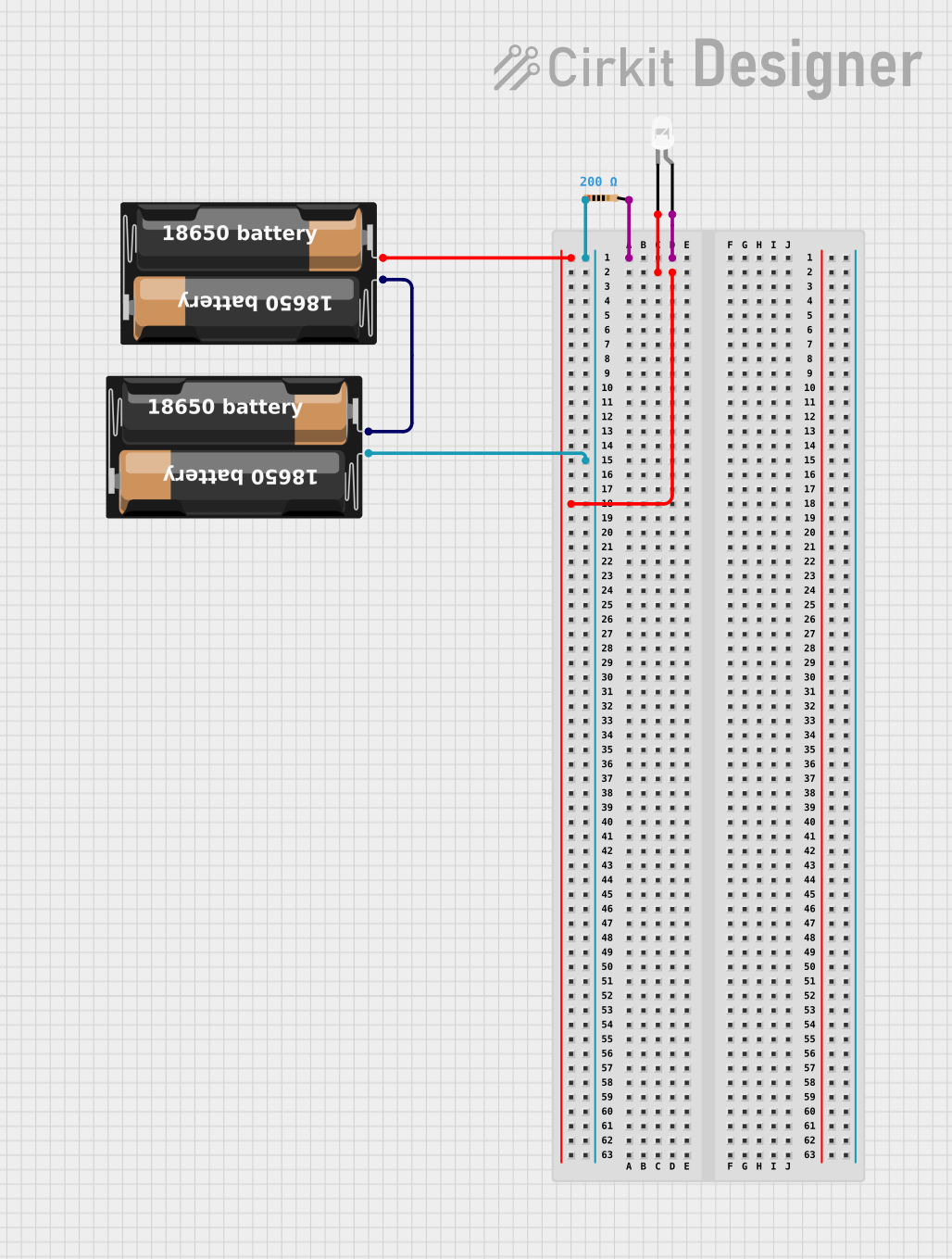
This circuit consists of a simple LED lighting setup powered by two battery cases. The LED is connected in series with a resistor to limit the current flowing through the LED, thereby protecting it from damage due to overcurrent. The two battery cases are connected in series to potentially double the voltage output. However, without specific battery information, we cannot determine the exact voltage across the LED. There is no microcontroller or embedded code associated with this circuit.
Component List
My battery case
- Description: A container for batteries, typically providing a positive and a negative terminal for power supply.
- Purpose: To provide a voltage source for the circuit.
Resistor
- Description: A passive two-terminal electrical component that implements electrical resistance as a circuit element.
- Purpose: To limit the current flowing through the LED, protecting it from damage.
- Properties:
- Resistance: 200 Ohms
LED: Two Pin (white)
- Description: A two-pin Light Emitting Diode that emits white light when powered.
- Purpose: To emit light when current flows through it.
Wiring Details
My battery case
- Positive Terminal: Connected to the cathode of the LED.
- Negative Terminal: Connected to the positive terminal of the second battery case.
My battery case (Second Instance)
- Positive Terminal: Connected to the negative terminal of the first battery case.
- Negative Terminal: Connected to pin1 of the Resistor.
Resistor
- Pin1: Connected to the negative terminal of the second battery case.
- Pin2: Connected to the anode of the LED.
LED: Two Pin (white)
- Anode: Connected to pin2 of the Resistor.
- Cathode: Connected to the positive terminal of the first battery case.
Documented Code
There is no embedded code associated with this circuit as no microcontroller or programmable device is included in the design.
This documentation provides an overview of the circuit components, their purpose, and how they are interconnected. It should serve as a guide for assembling or analyzing the circuit.