
How to Use BMI270: Examples, Pinouts, and Specs
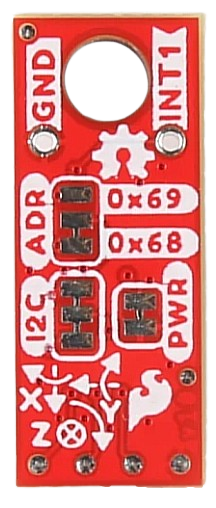
 Design with BMI270 in Cirkit Designer
Introduction
The BMI270 is a low-power, 6-axis inertial measurement unit (IMU) that integrates a 3-axis accelerometer and a 3-axis gyroscope. It is specifically designed for motion tracking applications, offering precise orientation and motion data while maintaining minimal power consumption. This makes it an ideal choice for wearable devices, fitness trackers, augmented reality (AR) systems, and other motion-sensitive applications.
Explore Projects Built with BMI270
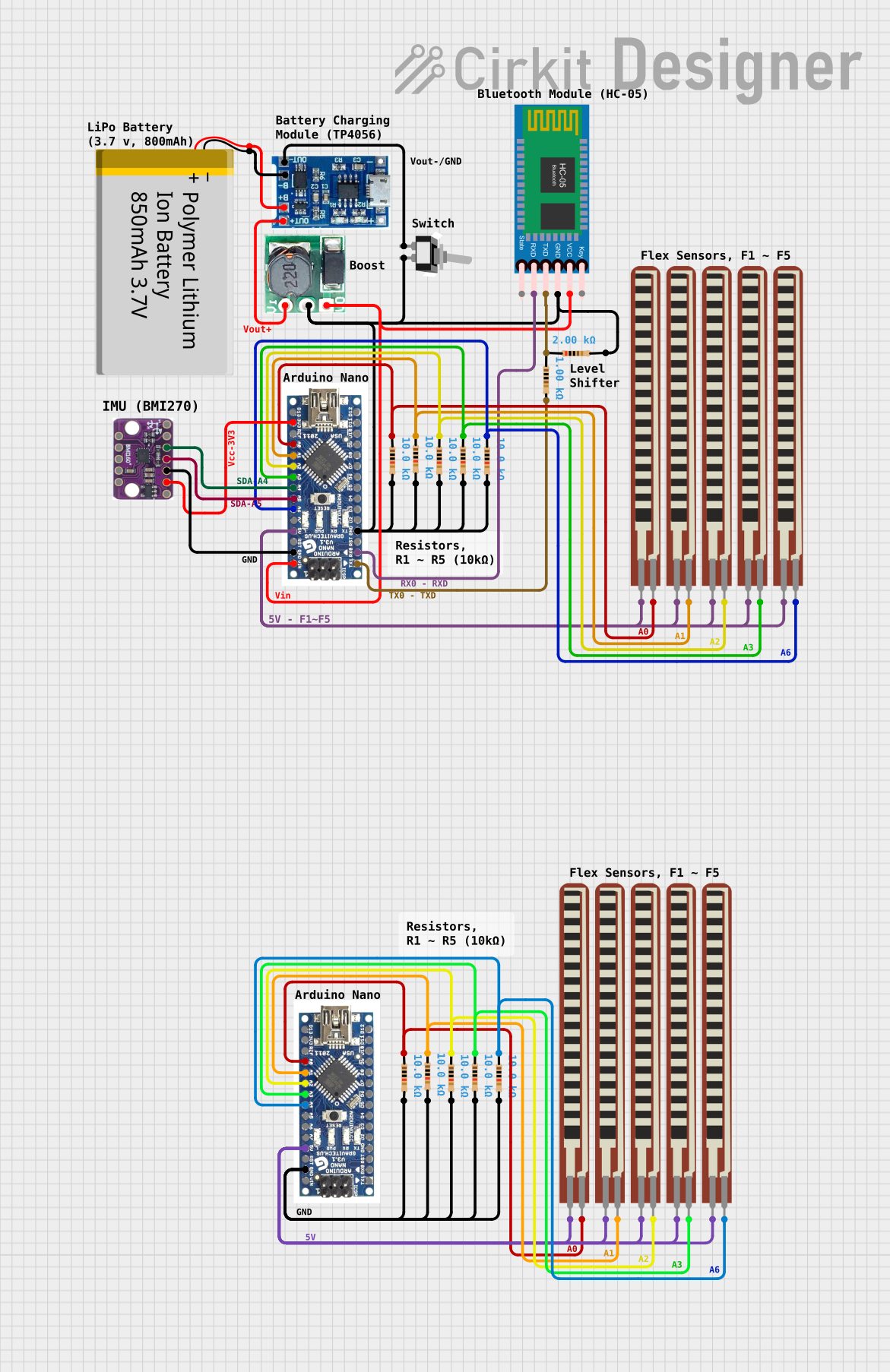 Open Project in Cirkit Designer
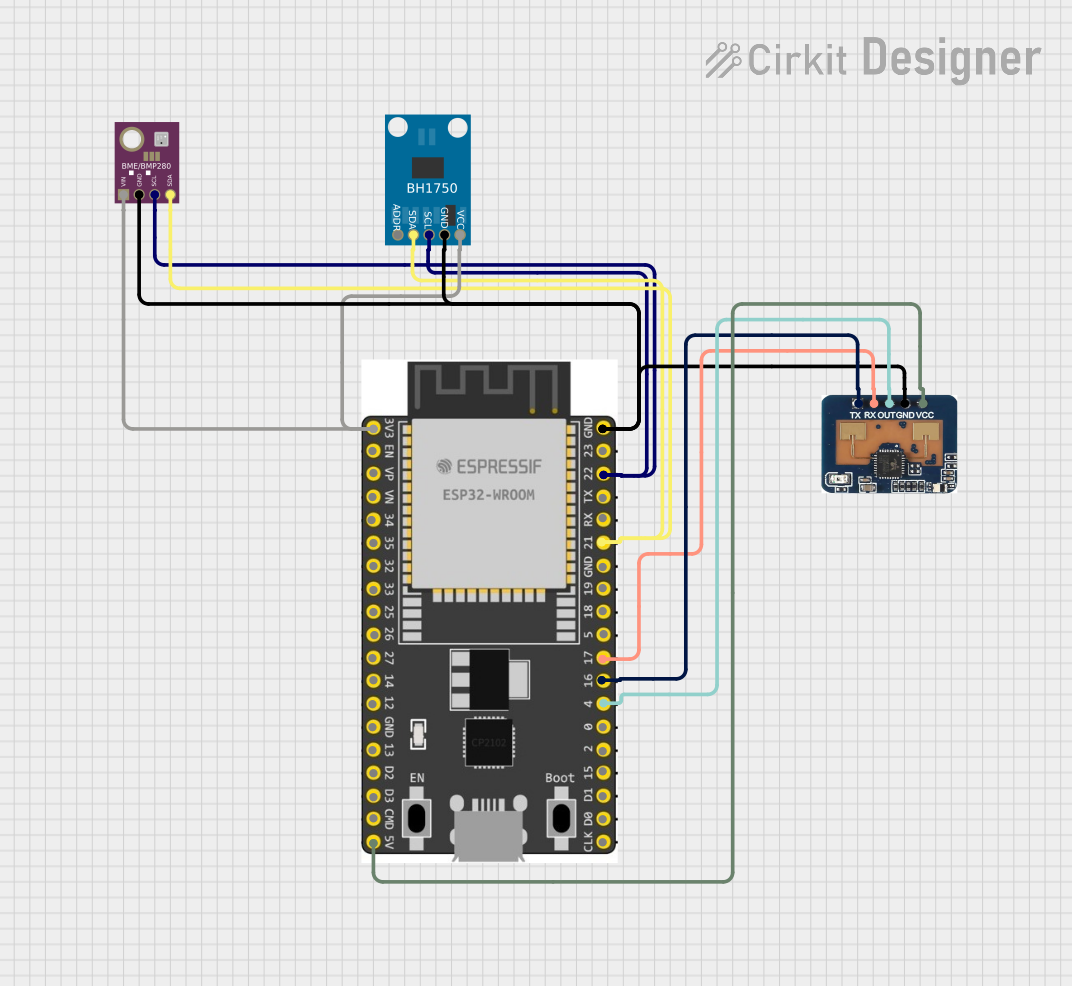 Open Project in Cirkit Designer
 Open Project in Cirkit Designer
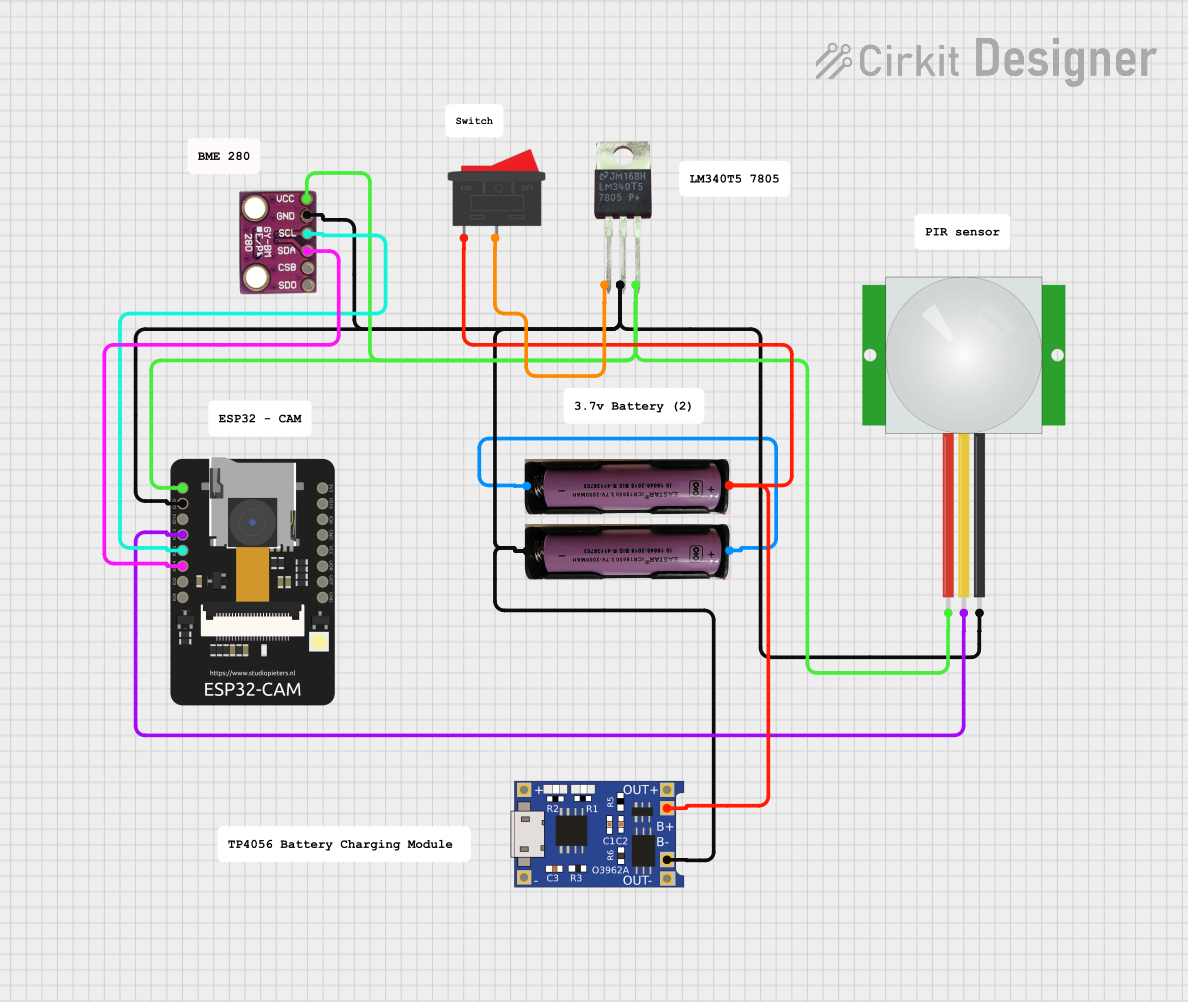 Open Project in Cirkit Designer
Explore Projects Built with BMI270
Open Project in Cirkit DesignerOpen Project in Cirkit DesignerOpen Project in Cirkit DesignerOpen Project in Cirkit DesignerCommon Applications and Use Cases
- Wearable devices (e.g., fitness trackers, smartwatches)
- Augmented reality (AR) and virtual reality (VR) systems
- Gesture recognition and motion tracking
- Robotics and drone stabilization
- Industrial IoT (Internet of Things) applications
Technical Specifications
The BMI270 is a highly versatile IMU with the following key technical specifications:
| Parameter | Value |
|---|---|
| Operating Voltage | 1.71V to 3.6V |
| Power Consumption | 30 µA (accelerometer in low-power mode) |
| Accelerometer Range | ±2g, ±4g, ±8g, ±16g |
| Gyroscope Range | ±125°/s, ±250°/s, ±500°/s, ±1000°/s, ±2000°/s |
| Communication Interface | I2C, SPI |
| Operating Temperature Range | -40°C to +85°C |
| Dimensions | 2.5 mm x 3.0 mm x 0.8 mm |
Pin Configuration and Descriptions
The BMI270 is typically available in a 14-pin LGA package. Below is the pin configuration:
| Pin Number | Pin Name | Description |
|---|---|---|
| 1 | VDD | Power supply (1.71V to 3.6V) |
| 2 | VDDIO | I/O voltage supply |
| 3 | GND | Ground |
| 4 | CS | Chip select for SPI (active low) |
| 5 | SDO | Serial data output (SPI) / I2C address |
| 6 | SDA/SDI | I2C data line / SPI data input |
| 7 | SCL/SCK | I2C clock line / SPI clock |
| 8 | INT1 | Interrupt 1 output |
| 9 | INT2 | Interrupt 2 output |
| 10-14 | NC | Not connected (leave floating) |
Usage Instructions
How to Use the BMI270 in a Circuit
- Power Supply: Connect the VDD pin to a stable power source (1.71V to 3.6V) and the GND pin to ground. Ensure the VDDIO pin is connected to the appropriate I/O voltage level.
- Communication Interface: Choose between I2C or SPI for communication:
- For I2C, connect the SDA and SCL pins to the corresponding lines on your microcontroller, and pull them up with 4.7kΩ resistors.
- For SPI, connect the CS, SDO, SDI, and SCK pins to the respective SPI lines on your microcontroller.
- Interrupts: Use the INT1 and INT2 pins to handle motion-based interrupts if required.
- Bypass Unused Pins: Leave the NC pins floating as they are not connected internally.
Important Considerations and Best Practices
- Power Optimization: Use the low-power mode of the accelerometer to minimize power consumption in battery-powered applications.
- Filtering: Implement digital filtering to reduce noise in accelerometer and gyroscope data.
- Mounting: Ensure proper PCB layout and mounting to avoid mechanical stress on the BMI270, which could affect sensor accuracy.
- I2C Address: The I2C address of the BMI270 can be configured using the SDO pin. Connect SDO to GND for one address or to VDDIO for another.
Example Code for Arduino UNO
Below is an example of how to interface the BMI270 with an Arduino UNO using the I2C protocol:
#include <Wire.h>

#define BMI270_I2C_ADDRESS 0x68 // Default I2C address of BMI270

void setup() {
  Wire.begin(); // Initialize I2C communication
  Serial.begin(9600); // Initialize serial communication for debugging

  // Configure BMI270
  Wire.beginTransmission(BMI270_I2C_ADDRESS);
  Wire.write(0x7E); // Register address for command register
  Wire.write(0x11); // Command to initialize accelerometer
  Wire.endTransmission();

  delay(100); // Wait for initialization to complete
}

void loop() {
  // Request accelerometer data
  Wire.beginTransmission(BMI270_I2C_ADDRESS);
  Wire.write(0x12); // Register address for accelerometer data
  Wire.endTransmission(false);
  Wire.requestFrom(BMI270_I2C_ADDRESS, 6); // Request 6 bytes (X, Y, Z)

  if (Wire.available() == 6) {
    int16_t accelX = (Wire.read() << 8) | Wire.read();
    int16_t accelY = (Wire.read() << 8) | Wire.read();
    int16_t accelZ = (Wire.read() << 8) | Wire.read();

    // Print accelerometer data
    Serial.print("Accel X: ");
    Serial.print(accelX);
    Serial.print(" Y: ");
    Serial.print(accelY);
    Serial.print(" Z: ");
    Serial.println(accelZ);
  }

  delay(500); // Delay for readability
}
Troubleshooting and FAQs
Common Issues and Solutions
No Communication with the Sensor:
- Ensure the correct I2C address is used (check the SDO pin configuration).
- Verify pull-up resistors are connected to the SDA and SCL lines.
- Check for loose or incorrect wiring.
Incorrect or No Data Output:
- Confirm the sensor is properly initialized by writing the correct configuration commands.
- Ensure the power supply voltage is within the specified range.
High Noise in Sensor Data:
- Implement digital filtering in your microcontroller code.
- Verify the sensor is securely mounted to avoid mechanical vibrations.
Interrupts Not Triggering:
- Check the interrupt configuration in the BMI270 registers.
- Ensure the INT1 and INT2 pins are properly connected to the microcontroller.
FAQs
Q: Can the BMI270 operate in both I2C and SPI modes simultaneously?
A: No, the BMI270 can operate in either I2C or SPI mode, but not both at the same time. The mode is determined by the connections and initialization.
Q: What is the default I2C address of the BMI270?
A: The default I2C address is 0x68 when the SDO pin is connected to GND, and 0x69 when connected to VDDIO.
Q: How do I reduce power consumption further?
A: Use the low-power mode of the accelerometer and gyroscope, and disable unused features through the configuration registers.
Q: Can the BMI270 be used for gesture recognition?
A: Yes, the BMI270 supports gesture recognition and activity tracking through its built-in motion detection features.