
How to Use ESP32-C3: Examples, Pinouts, and Specs
 Design with ESP32-C3 in Cirkit Designer
Introduction
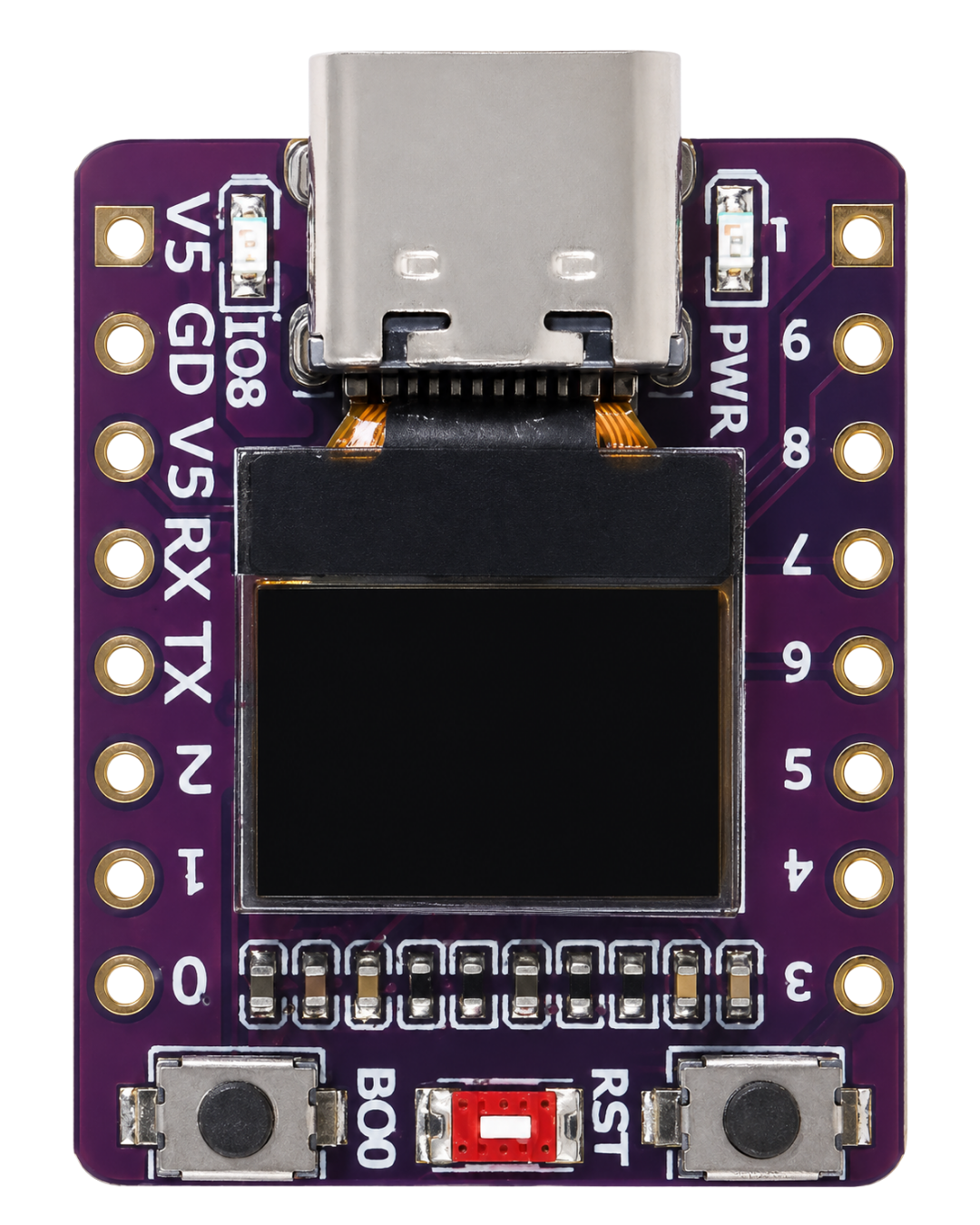
The ESP32-C3 SUPER MINI, manufactured by ESP, is a low-power system-on-a-chip (SoC) designed for Internet of Things (IoT) applications. It integrates Wi-Fi and Bluetooth Low Energy (BLE) capabilities, making it a versatile choice for smart devices, sensor networks, and other connected applications. The ESP32-C3 features a RISC-V single-core processor, multiple GPIOs, and support for various communication protocols, ensuring high performance and flexibility in a compact form factor.
Explore Projects Built with ESP32-C3
 Open Project in Cirkit Designer
 Open Project in Cirkit Designer
 Open Project in Cirkit Designer
 Open Project in Cirkit Designer
Explore Projects Built with ESP32-C3
Open Project in Cirkit DesignerOpen Project in Cirkit DesignerOpen Project in Cirkit DesignerOpen Project in Cirkit DesignerCommon Applications
- Smart home devices (e.g., smart plugs, lights, and thermostats)
- Wearable devices
- Industrial IoT systems
- Wireless sensor networks
- Remote monitoring and control systems
- Low-power Bluetooth and Wi-Fi applications
Technical Specifications
Key Technical Details
| Parameter | Specification |
|---|---|
| Processor | RISC-V single-core, 32-bit, up to 160 MHz |
| Flash Memory | 4 MB (external) |
| RAM | 400 KB |
| Wi-Fi Standard | 802.11 b/g/n (2.4 GHz) |
| Bluetooth | BLE 5.0 |
| GPIO Pins | 22 |
| Operating Voltage | 3.0V to 3.6V |
| Power Consumption | Ultra-low power in deep sleep mode |
| Communication Interfaces | UART, SPI, I2C, I2S, PWM, ADC |
| ADC Resolution | 12-bit |
| Operating Temperature | -40°C to +85°C |
| Package Size | 10 mm x 10 mm |
Pin Configuration and Descriptions
The ESP32-C3 SUPER MINI has 22 GPIO pins, each with multiple functions. Below is a summary of the pin configuration:
| Pin Number | Pin Name | Function(s) | Notes |
|---|---|---|---|
| 1 | GPIO0 | Digital I/O, Boot Mode Selection | Pull low for flashing firmware |
| 2 | GPIO1 | Digital I/O, UART TX | UART communication |
| 3 | GPIO2 | Digital I/O, ADC Channel 1 | Supports PWM |
| 4 | GPIO3 | Digital I/O, UART RX | UART communication |
| 5 | GPIO4 | Digital I/O, ADC Channel 2 | Supports PWM |
| 6 | GPIO5 | Digital I/O, SPI CLK | SPI clock line |
| 7 | GPIO6 | Digital I/O, SPI MOSI | SPI data output |
| 8 | GPIO7 | Digital I/O, SPI MISO | SPI data input |
| 9 | GPIO8 | Digital I/O, I2C SDA | I2C data line |
| 10 | GPIO9 | Digital I/O, I2C SCL | I2C clock line |
| ... | ... | ... | ... |
For a complete pinout, refer to the official ESP32-C3 datasheet.
Usage Instructions
How to Use the ESP32-C3 in a Circuit
- Power Supply: Connect the ESP32-C3 to a stable 3.3V power source. Ensure the power supply can provide sufficient current (at least 500 mA).
- Boot Mode: To flash firmware, pull GPIO0 low during reset. For normal operation, ensure GPIO0 is pulled high.
- Communication Interfaces: Use UART, SPI, or I2C for communication with other devices. Configure the pins according to your application.
- Programming: The ESP32-C3 can be programmed using the Arduino IDE, ESP-IDF, or other compatible environments.
Example: Connecting to an Arduino UNO
The ESP32-C3 can communicate with an Arduino UNO via UART. Below is an example of how to send data from the Arduino to the ESP32-C3.
Arduino Code
// Example: Sending data from Arduino UNO to ESP32-C3 via UART
void setup() {
  Serial.begin(9600); // Initialize UART communication at 9600 baud
}

void loop() {
  Serial.println("Hello from Arduino!"); // Send data to ESP32-C3
  delay(1000); // Wait for 1 second
}
ESP32-C3 Code (Arduino IDE)
// Example: Receiving data on ESP32-C3 from Arduino UNO via UART
void setup() {
  Serial.begin(9600); // Initialize UART communication at 9600 baud
  Serial.println("ESP32-C3 Ready!"); // Notify that ESP32-C3 is ready
}

void loop() {
  if (Serial.available() > 0) { // Check if data is available
    String data = Serial.readString(); // Read the incoming data
    Serial.print("Received: "); // Print received data
    Serial.println(data);
  }
}
Important Considerations
- Voltage Levels: Ensure all connected devices operate at 3.3V logic levels. Use level shifters if necessary.
- Antenna Placement: For optimal Wi-Fi and Bluetooth performance, avoid placing the ESP32-C3 near metal objects or inside enclosures that block RF signals.
- Deep Sleep Mode: Use deep sleep mode to minimize power consumption in battery-powered applications.
Troubleshooting and FAQs
Common Issues and Solutions
ESP32-C3 Not Responding
- Cause: Incorrect power supply or wiring.
- Solution: Verify the power supply voltage (3.3V) and check all connections.
Cannot Flash Firmware
- Cause: GPIO0 not pulled low during reset.
- Solution: Ensure GPIO0 is connected to GND when flashing firmware.
Wi-Fi Connection Fails
- Cause: Incorrect SSID or password.
- Solution: Double-check the Wi-Fi credentials in your code.
Bluetooth Not Discoverable
- Cause: Bluetooth not initialized properly.
- Solution: Verify that the BLE initialization code is correct and the device is in pairing mode.
FAQs
Q: Can the ESP32-C3 operate on 5V?
A: No, the ESP32-C3 operates on 3.3V. Use a voltage regulator or level shifter for 5V systems.
Q: How do I reset the ESP32-C3?
A: Press the reset button on the development board or toggle the EN pin.
Q: Can I use the ESP32-C3 for both Wi-Fi and Bluetooth simultaneously?
A: Yes, the ESP32-C3 supports concurrent Wi-Fi and BLE operation.
Q: What is the maximum range of the ESP32-C3's Wi-Fi?
A: The range depends on the environment but typically extends up to 100 meters in open spaces.
This concludes the documentation for the ESP32-C3 SUPER MINI. For further details, refer to the official ESP datasheet and user manual.