
How to Use VEML7700: Examples, Pinouts, and Specs
 Design with VEML7700 in Cirkit Designer
Introduction
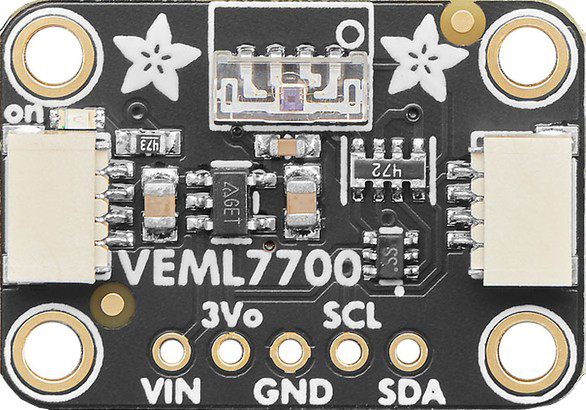
The VEML7700 is a high-precision digital ambient light sensor manufactured by Adafruit (Part ID: 4162). It is designed to provide accurate light intensity measurements with a wide dynamic range, making it ideal for applications in devices such as smartphones, tablets, and other systems requiring ambient light detection. The sensor communicates via the I2C interface, ensuring easy integration into microcontroller-based projects.
Explore Projects Built with VEML7700
 Open Project in Cirkit Designer
 Open Project in Cirkit Designer
 Open Project in Cirkit Designer
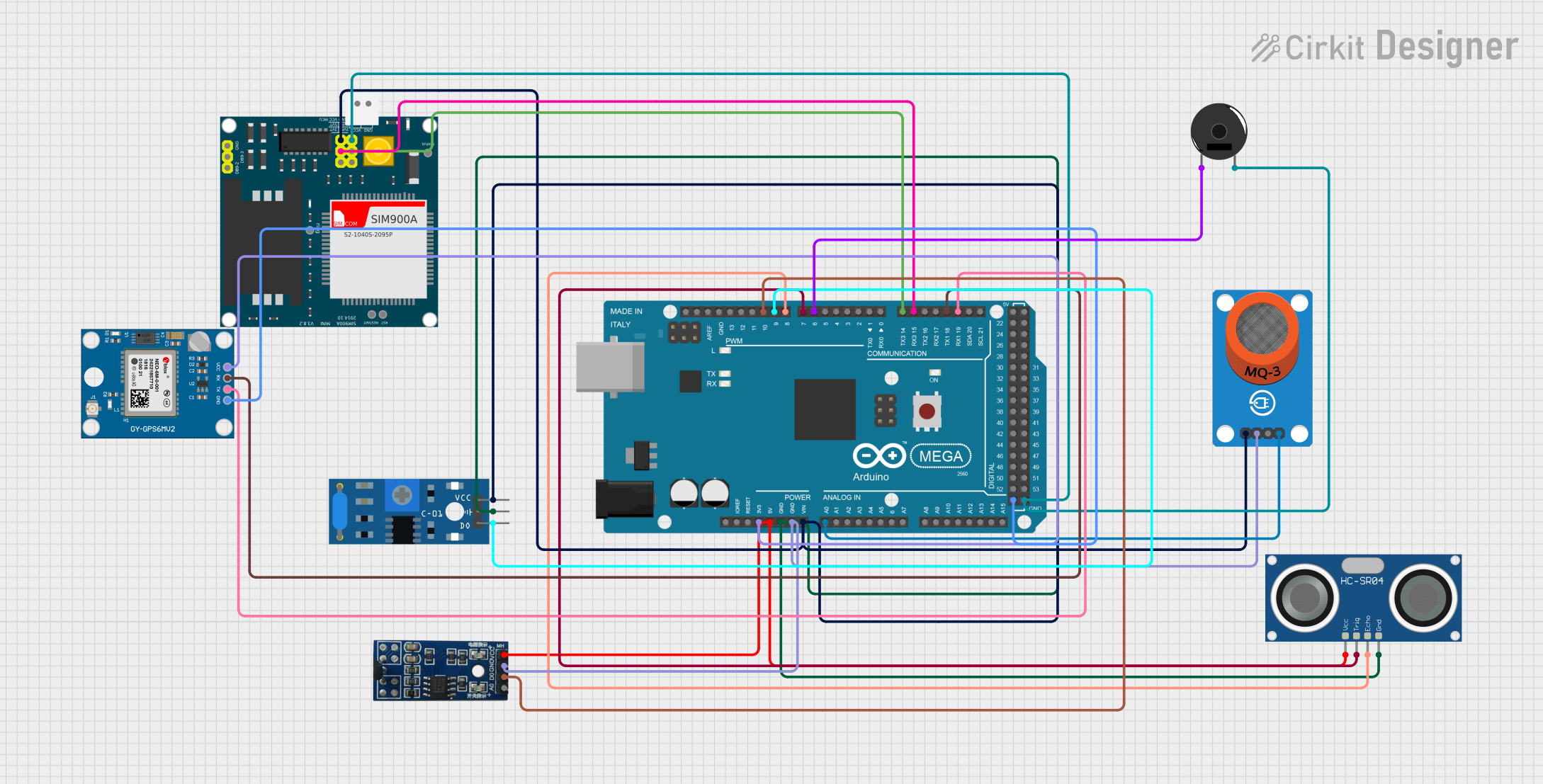 Open Project in Cirkit Designer
Explore Projects Built with VEML7700
Open Project in Cirkit DesignerOpen Project in Cirkit DesignerOpen Project in Cirkit DesignerOpen Project in Cirkit DesignerCommon Applications
- Automatic brightness adjustment in displays (e.g., smartphones, tablets, laptops)
- Smart home devices for ambient light detection
- Industrial lighting control systems
- Wearable devices
- IoT applications requiring light intensity monitoring
Technical Specifications
The following table outlines the key technical details of the VEML7700:
| Parameter | Value |
|---|---|
| Operating Voltage | 2.5V to 3.6V |
| Communication Interface | I2C |
| I2C Address (Default) | 0x10 |
| Ambient Light Range | 0.0036 lux to 120,000 lux |
| Resolution | 0.0036 lux |
| Operating Temperature Range | -25°C to +85°C |
| Power Consumption | 2 µA (typical in shutdown mode) |
Pin Configuration
The VEML7700 sensor is typically available as a breakout board from Adafruit. Below is the pin configuration for the breakout board:
| Pin | Name | Description |
|---|---|---|
| 1 | VIN | Power supply input (2.5V to 5.5V). Connect to the 3.3V or 5V pin of your MCU. |
| 2 | GND | Ground connection. |
| 3 | SDA | I2C data line. Connect to the SDA pin of your microcontroller. |
| 4 | SCL | I2C clock line. Connect to the SCL pin of your microcontroller. |
| 5 | INT | Interrupt pin (optional). Can be used for event-driven light detection. |
Usage Instructions
Connecting the VEML7700 to an Arduino UNO
To use the VEML7700 with an Arduino UNO, follow these steps:
- Connect the VIN pin of the VEML7700 to the 5V pin of the Arduino.
- Connect the GND pin of the VEML7700 to the GND pin of the Arduino.
- Connect the SDA pin of the VEML7700 to the A4 pin of the Arduino (I2C data line).
- Connect the SCL pin of the VEML7700 to the A5 pin of the Arduino (I2C clock line).
Arduino Code Example
Below is an example Arduino sketch to read ambient light data from the VEML7700 using the Adafruit VEML7700 library:
#include <Wire.h>
#include "Adafruit_VEML7700.h"

// Create an instance of the VEML7700 sensor
Adafruit_VEML7700 veml = Adafruit_VEML7700();

void setup() {
  Serial.begin(9600); // Initialize serial communication for debugging
  while (!Serial) delay(10); // Wait for the serial monitor to open

  Serial.println("Adafruit VEML7700 Test");

  // Initialize the VEML7700 sensor
  if (!veml.begin()) {
    Serial.println("Failed to find VEML7700 sensor! Check wiring.");
    while (1);
  }
  Serial.println("VEML7700 sensor found!");

  // Configure the sensor settings
  veml.setGain(VEML7700_GAIN_1); // Set gain to 1x
  veml.setIntegrationTime(VEML7700_IT_100MS); // Set integration time to 100ms

  Serial.println("Sensor configuration complete.");
}

void loop() {
  // Read ambient light in lux
  float lux = veml.readLux();
  Serial.print("Ambient Light: ");
  Serial.print(lux);
  Serial.println(" lux");

  delay(1000); // Wait 1 second before the next reading
}
Important Considerations
- Power Supply: Ensure the sensor is powered within its operating voltage range (2.5V to 3.6V). If using a 5V microcontroller, the breakout board's onboard regulator will step down the voltage.
- I2C Pull-Up Resistors: The breakout board includes pull-up resistors for the I2C lines. If you experience communication issues, ensure no additional pull-up resistors are causing conflicts.
- Interrupt Pin: The INT pin is optional and can be used for event-driven applications. If unused, leave it unconnected.
Troubleshooting and FAQs
Common Issues
Sensor Not Detected
- Cause: Incorrect wiring or I2C address mismatch.
- Solution: Double-check the wiring and ensure the I2C address matches the default (0x10). Use an I2C scanner sketch to verify the address.
Incorrect Light Readings
- Cause: Improper gain or integration time settings.
- Solution: Adjust the gain and integration time using the library functions to match the lighting conditions.
No Data Output
- Cause: Serial monitor not open or incorrect baud rate.
- Solution: Ensure the serial monitor is open and set to the correct baud rate (9600 in the example).
FAQs
Q: Can the VEML7700 measure light in complete darkness?
A: The VEML7700 has a very high sensitivity and can measure light as low as 0.0036 lux. However, it cannot detect absolute darkness (0 lux).
Q: Can I use the VEML7700 with a 5V microcontroller?
A: Yes, the Adafruit breakout board includes a voltage regulator and level shifters, allowing it to work with 5V systems like the Arduino UNO.
Q: How do I change the I2C address of the VEML7700?
A: The I2C address of the VEML7700 is fixed at 0x10 and cannot be changed.
Q: Is the sensor affected by infrared light?
A: The VEML7700 includes an integrated infrared light suppression feature, ensuring accurate ambient light measurements.
By following this documentation, you can effectively integrate the VEML7700 into your projects and achieve precise ambient light sensing.