
How to Use Diode: Examples, Pinouts, and Specs
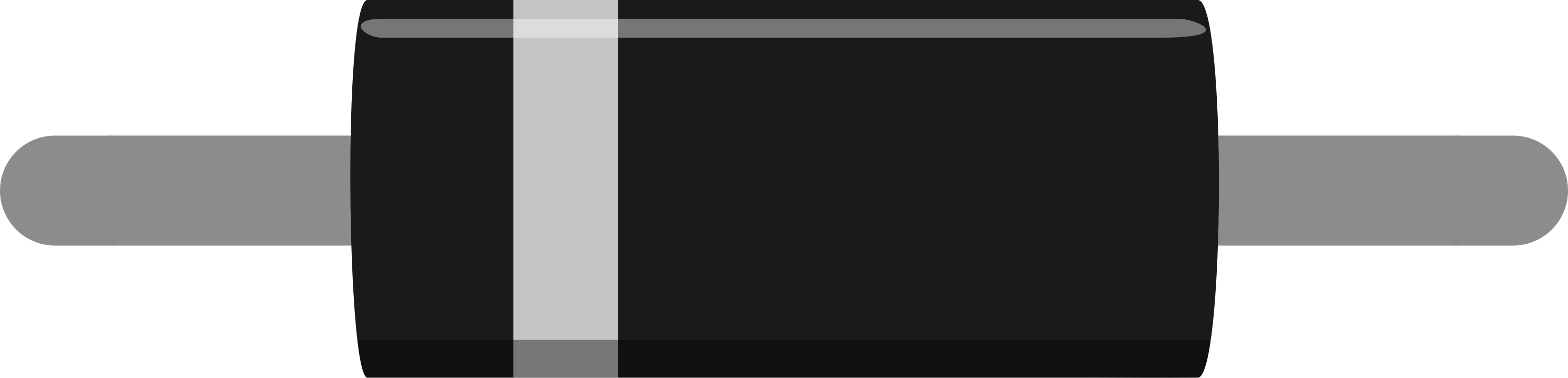
 Design with Diode in Cirkit Designer
Introduction
A diode is a semiconductor device that allows current to flow in one direction only, acting as a one-way valve for electrical current. It is one of the most fundamental components in electronics and is widely used in various applications. Diodes are essential for rectification, signal demodulation, voltage regulation, and circuit protection.
Explore Projects Built with Diode
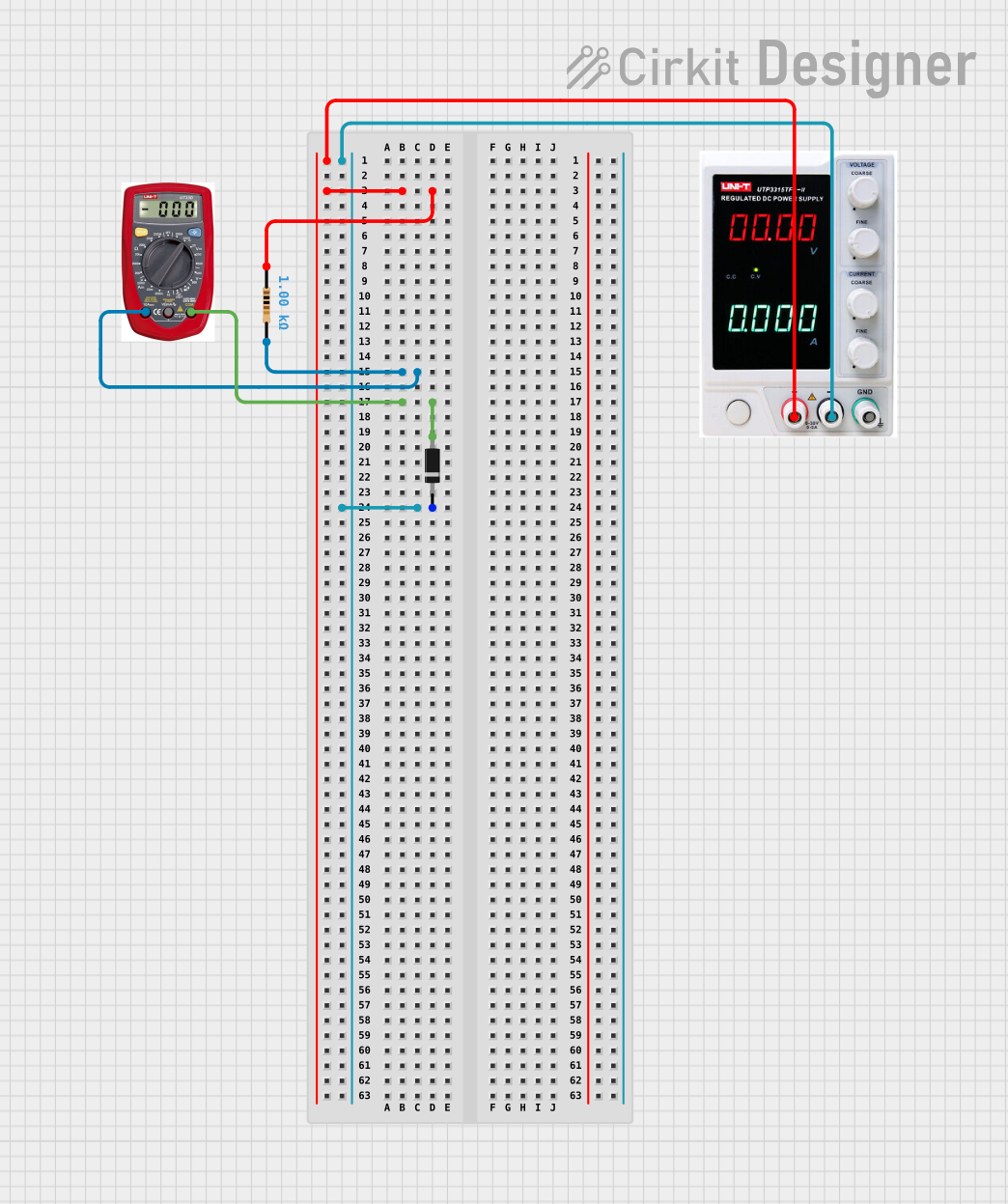 Open Project in Cirkit Designer
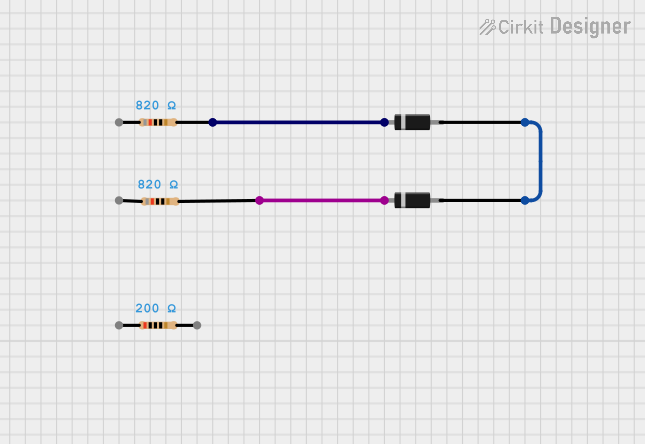 Open Project in Cirkit Designer
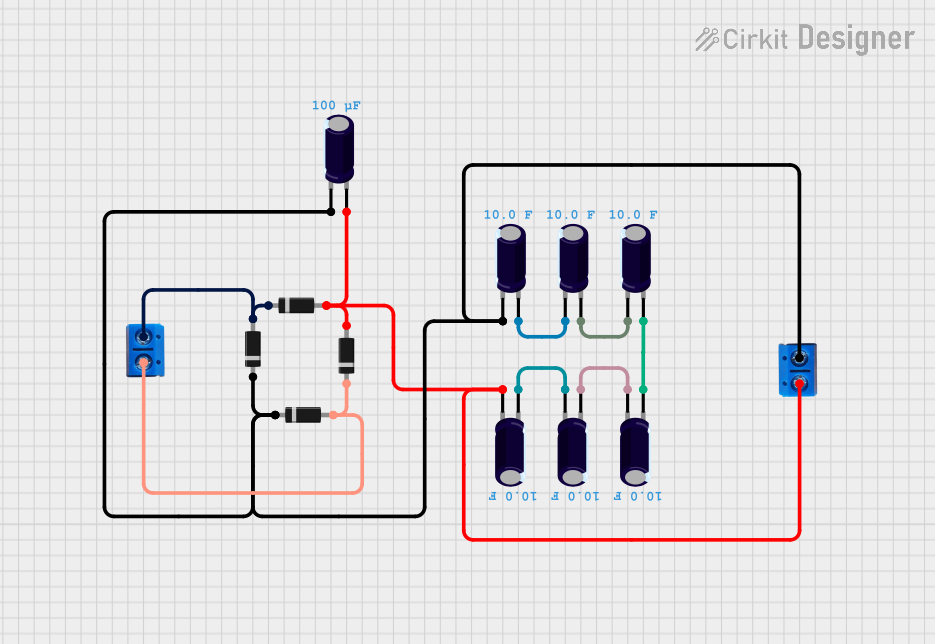 Open Project in Cirkit Designer
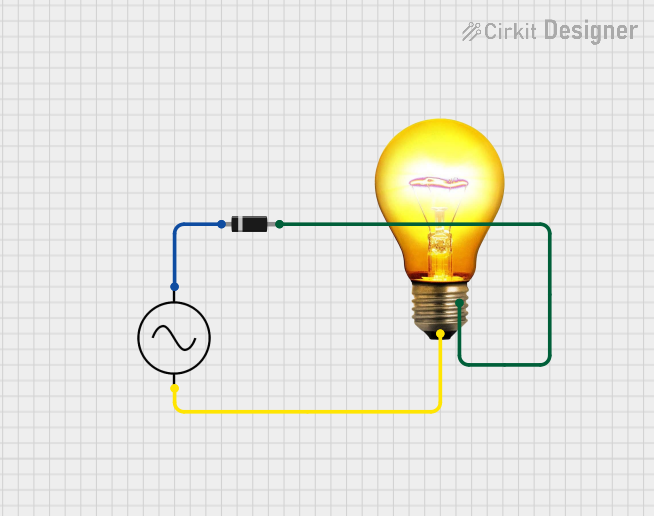 Open Project in Cirkit Designer
Explore Projects Built with Diode
Open Project in Cirkit DesignerOpen Project in Cirkit DesignerOpen Project in Cirkit DesignerOpen Project in Cirkit DesignerCommon Applications and Use Cases
- Rectification: Converting AC (alternating current) to DC (direct current) in power supplies.
- Signal Demodulation: Extracting information from modulated signals in communication systems.
- Voltage Regulation: Stabilizing voltage levels in circuits.
- Circuit Protection: Preventing reverse polarity damage in sensitive components.
- LEDs (Light Emitting Diodes): Producing light in display and lighting applications.
Technical Specifications
The specifications of a diode can vary depending on its type and intended application. Below are the general technical details for a standard silicon diode (e.g., 1N4007):
Key Technical Details
- Forward Voltage Drop (Vf): ~0.7V (silicon diode), ~0.3V (germanium diode)
- Maximum Reverse Voltage (Vr): 50V to 1000V (depending on the diode type)
- Maximum Forward Current (If): 1A to 3A (for general-purpose diodes)
- Reverse Leakage Current (Ir): Typically in the microampere range
- Power Dissipation: Varies, typically 1W or less for small diodes
- Operating Temperature Range: -55°C to +150°C
Pin Configuration and Descriptions
A diode has two terminals: the Anode and the Cathode. The cathode is typically marked with a stripe or band on the diode body.
| Pin Name | Description | Symbol on Circuit Diagram |
|---|---|---|
| Anode | Positive terminal; current enters here when forward-biased | A |
| Cathode | Negative terminal; current exits here when forward-biased | K |
Usage Instructions
How to Use the Diode in a Circuit
- Identify the Terminals: Locate the cathode (marked with a stripe) and the anode.
- Connect in Forward Bias: For current to flow, connect the anode to the positive voltage and the cathode to the negative voltage.
- Reverse Bias for Blocking: To block current, reverse the connections (anode to negative, cathode to positive).
- Use a Resistor if Necessary: When using a diode in series with an LED or other sensitive components, include a current-limiting resistor to prevent damage.
Important Considerations and Best Practices
- Voltage Ratings: Ensure the diode's reverse voltage rating exceeds the maximum voltage in your circuit.
- Current Ratings: Verify that the diode can handle the maximum current without overheating.
- Polarity: Always check the orientation of the diode before powering the circuit.
- Heat Dissipation: For high-power applications, consider using a heat sink or a diode with higher power dissipation capabilities.
Example: Connecting a Diode to an Arduino UNO
Below is an example of using a diode in a simple circuit to protect an Arduino UNO from reverse polarity:
Circuit Description
- A 1N4007 diode is placed in series with the Arduino's power input to prevent damage if the power supply is connected in reverse.
Code Example
// This code demonstrates a simple LED blink program for an Arduino UNO.
// The diode in the circuit protects the Arduino from reverse polarity damage.

const int ledPin = 13; // Pin connected to the onboard LED

void setup() {
  pinMode(ledPin, OUTPUT); // Set the LED pin as an output
}

void loop() {
  digitalWrite(ledPin, HIGH); // Turn the LED on
  delay(1000);                // Wait for 1 second
  digitalWrite(ledPin, LOW);  // Turn the LED off
  delay(1000);                // Wait for 1 second
}
Troubleshooting and FAQs
Common Issues and Solutions
Diode Not Conducting Current
- Cause: The diode may be connected in reverse bias.
- Solution: Check the orientation of the diode and ensure the anode is connected to the positive voltage.
Excessive Heat in the Diode
- Cause: The diode is handling more current than its rated capacity.
- Solution: Use a diode with a higher current rating or add a heat sink.
Circuit Not Working After Adding a Diode
- Cause: The forward voltage drop of the diode may be affecting the circuit.
- Solution: Use a Schottky diode with a lower forward voltage drop if necessary.
Reverse Leakage Current
- Cause: The diode may have a high reverse leakage current.
- Solution: Replace the diode with one that has a lower reverse leakage current.
FAQs
Q: Can I use any diode for rectification?
- A: Not all diodes are suitable for rectification. Use rectifier diodes like 1N4007 for power applications.
Q: What is the difference between a Schottky diode and a regular diode?
- A: Schottky diodes have a lower forward voltage drop (~0.2V to 0.4V) and faster switching speeds, making them ideal for high-frequency applications.
Q: How do I test a diode?
- A: Use a multimeter in diode mode. A good diode will show a low voltage drop (~0.7V for silicon) in forward bias and no conduction in reverse bias.
Q: Can a diode fail?
- A: Yes, diodes can fail due to overheating, overcurrent, or exceeding voltage ratings. Always operate within the specified limits.