
How to Use LM7805 blank board: Examples, Pinouts, and Specs
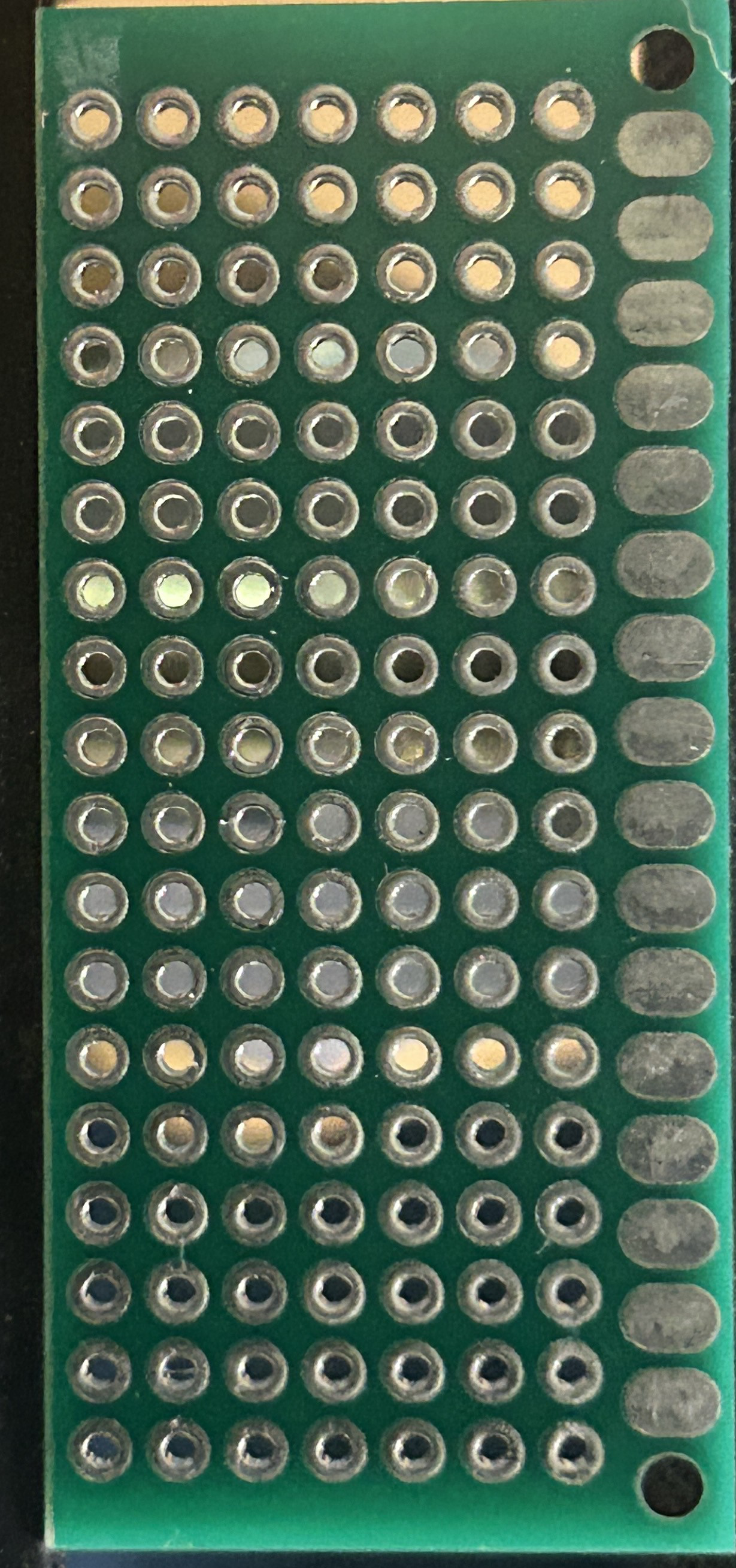
 Design with LM7805 blank board in Cirkit Designer
Introduction
The LM7805 blank board is a compact voltage regulator module designed to provide a stable 5V DC output from a higher input voltage. It is based on the LM7805 linear voltage regulator IC, which is widely used for powering low-voltage electronic circuits. The blank board format simplifies integration into projects by including necessary supporting components like capacitors and connectors.
Explore Projects Built with LM7805 blank board
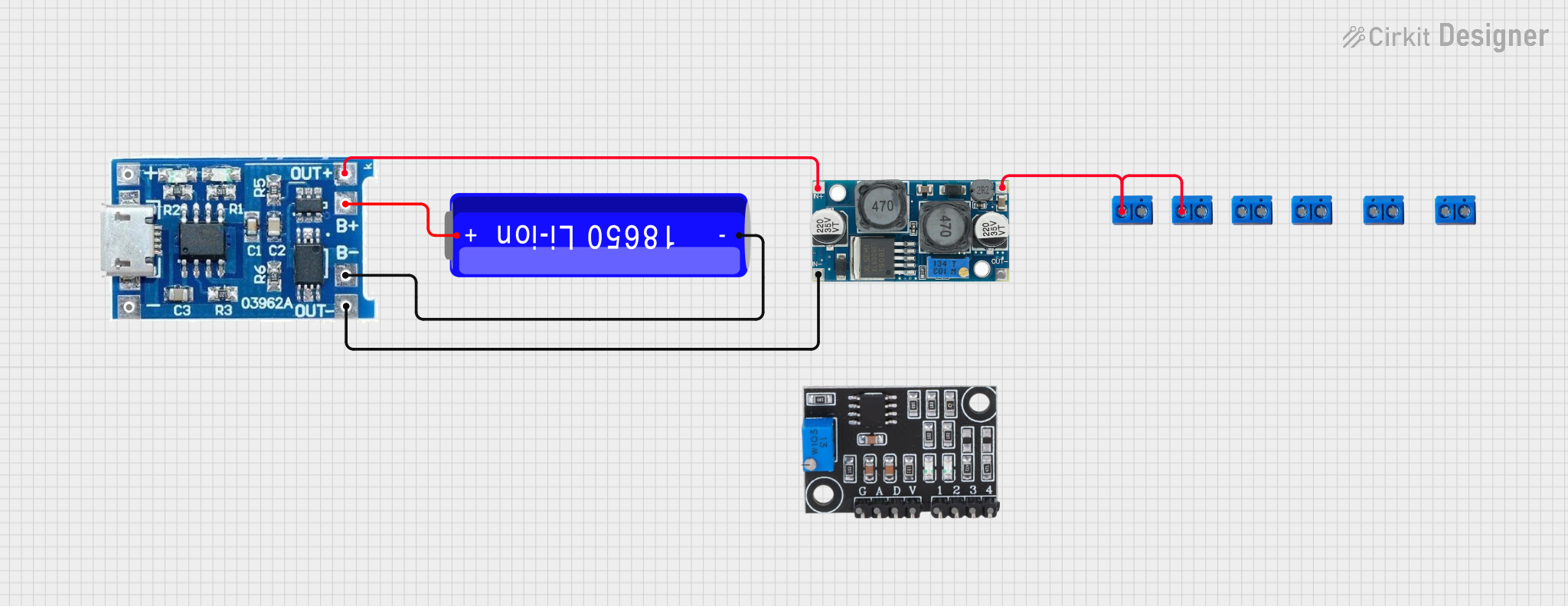 Open Project in Cirkit Designer
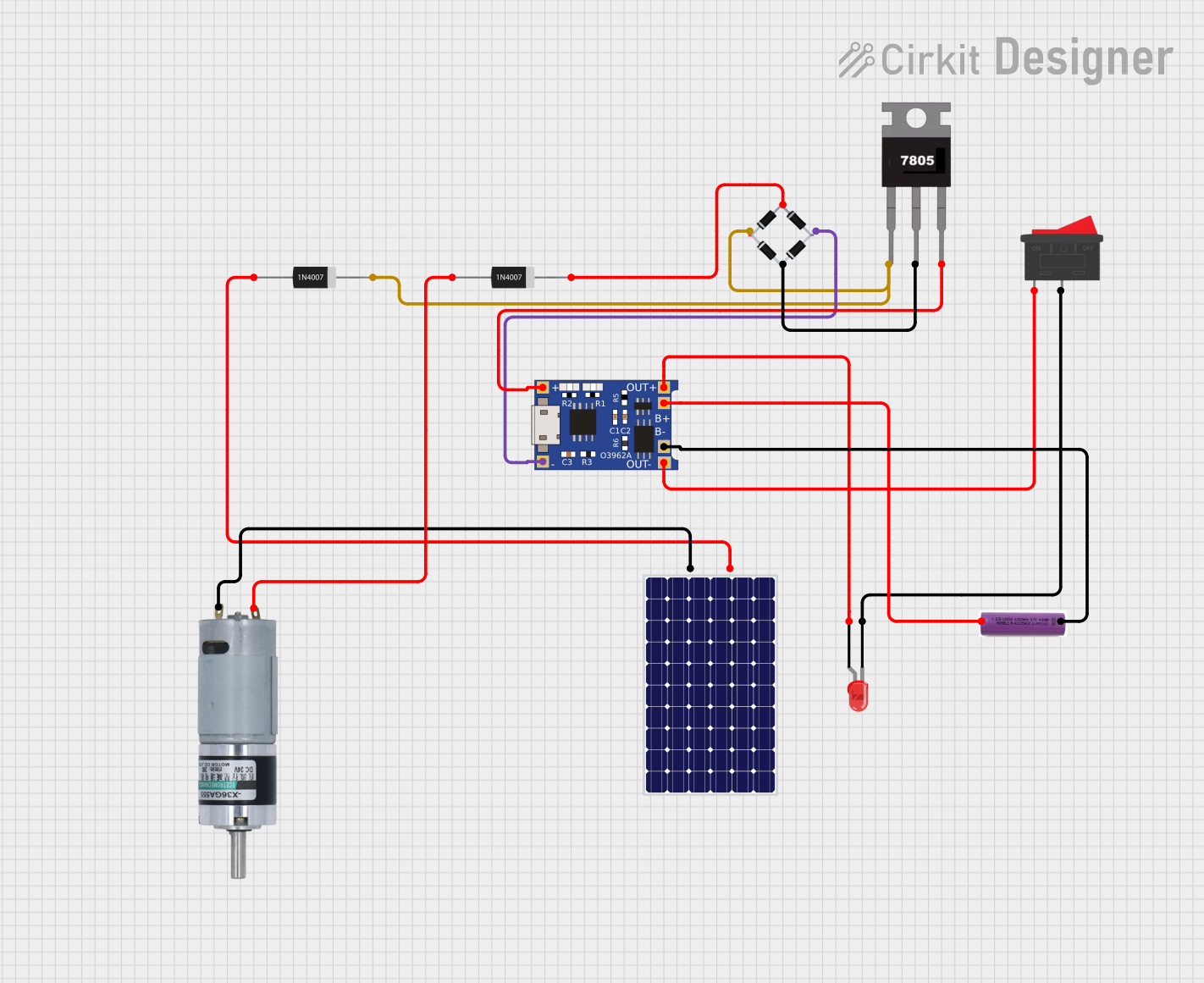 Open Project in Cirkit Designer
 Open Project in Cirkit Designer
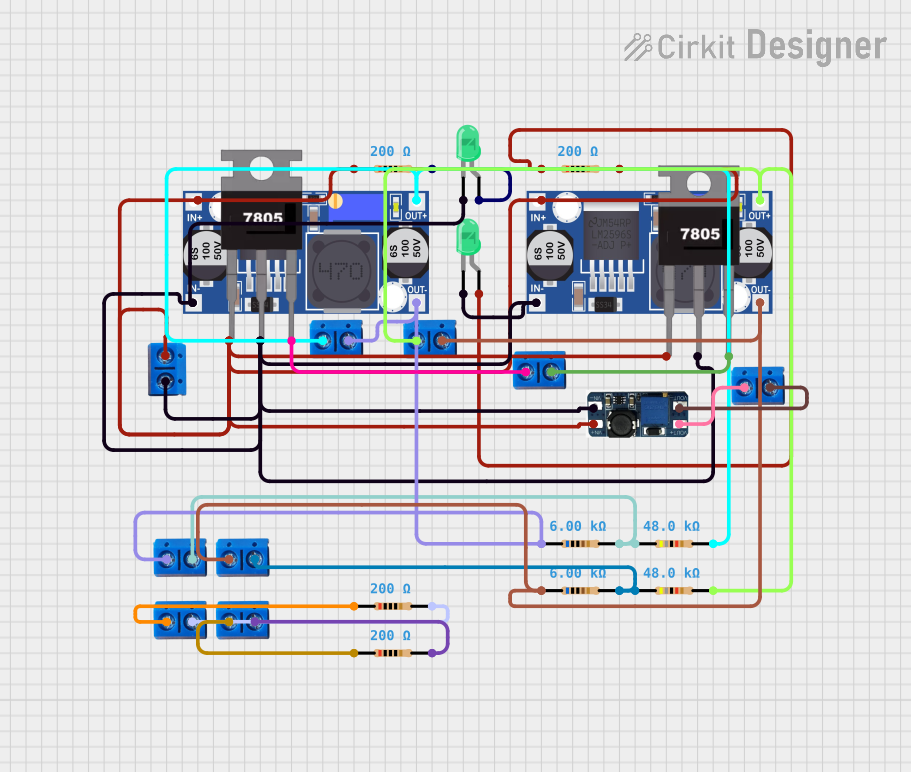 Open Project in Cirkit Designer
Explore Projects Built with LM7805 blank board
Open Project in Cirkit DesignerOpen Project in Cirkit DesignerOpen Project in Cirkit DesignerOpen Project in Cirkit DesignerCommon Applications and Use Cases
- Powering microcontrollers, sensors, and modules requiring a 5V supply
- Voltage regulation for breadboard or prototyping circuits
- Converting higher DC voltages (e.g., 9V, 12V) to a stable 5V output
- DIY electronics projects and educational purposes
Technical Specifications
Key Technical Details
- Input Voltage Range: 7V to 25V DC
- Output Voltage: 5V DC (regulated)
- Maximum Output Current: 1A (with proper heat dissipation)
- Quiescent Current: Typically 5-8 mA
- Thermal Shutdown: Built-in protection against overheating
- Short-Circuit Protection: Integrated for safe operation
- Operating Temperature Range: -40°C to +125°C
Pin Configuration and Descriptions
The LM7805 blank board typically has three main pins or terminals for input, output, and ground connections. Below is the pin configuration:
| Pin Name | Description |
|---|---|
| VIN | Input voltage (7V to 25V DC) |
| GND | Ground (common for input and output) |
| VOUT | Regulated 5V DC output |
Some blank boards may also include additional pins or connectors for convenience, such as screw terminals or headers.
Usage Instructions
How to Use the LM7805 Blank Board in a Circuit
- Connect the Input Voltage:
- Attach the positive terminal of your DC power source (7V to 25V) to the
VINpin. - Connect the negative terminal of the power source to the
GNDpin.
- Attach the positive terminal of your DC power source (7V to 25V) to the
- Connect the Output Load:
- Connect the device or circuit requiring 5V to the
VOUTpin. - Ensure the ground of your load is connected to the
GNDpin.
- Connect the device or circuit requiring 5V to the
- Verify Connections:
- Double-check all connections to avoid reverse polarity or short circuits.
- Power On:
- Turn on the power source and measure the output voltage at
VOUTto confirm it is 5V.
- Turn on the power source and measure the output voltage at
Important Considerations and Best Practices
- Heat Dissipation: The LM7805 IC can get hot under high current loads. Use a heatsink or ensure proper ventilation if the current exceeds 500mA.
- Input Voltage: Ensure the input voltage is at least 2V higher than the output voltage (minimum 7V) for proper regulation.
- Capacitors: Most blank boards include input and output capacitors for stability. If not, add a 0.33µF capacitor near the
VINpin and a 0.1µF capacitor near theVOUTpin. - Avoid Overloading: Do not exceed the maximum current rating of 1A to prevent damage to the regulator.
Example: Using LM7805 Blank Board with Arduino UNO
The LM7805 blank board can be used to power an Arduino UNO by providing a stable 5V supply. Below is an example circuit and code:
Circuit Connections
- Connect a 9V battery's positive terminal to the
VINpin of the LM7805 blank board. - Connect the battery's negative terminal to the
GNDpin. - Connect the
VOUTpin of the blank board to the 5V pin of the Arduino UNO. - Connect the
GNDpin of the blank board to the GND pin of the Arduino UNO.
Example Code
// Example code to blink an LED connected to pin 13 of Arduino UNO
// Ensure the LM7805 blank board is providing a stable 5V to the Arduino

void setup() {
  pinMode(13, OUTPUT); // Set pin 13 as an output pin
}

void loop() {
  digitalWrite(13, HIGH); // Turn the LED on
  delay(1000);            // Wait for 1 second
  digitalWrite(13, LOW);  // Turn the LED off
  delay(1000);            // Wait for 1 second
}
Troubleshooting and FAQs
Common Issues and Solutions
No Output Voltage:
- Cause: Incorrect input voltage or loose connections.
- Solution: Verify that the input voltage is within the 7V to 25V range and check all connections.
Overheating:
- Cause: High current load or insufficient heat dissipation.
- Solution: Add a heatsink to the LM7805 IC or reduce the load current.
Output Voltage Not Stable:
- Cause: Missing or inadequate capacitors.
- Solution: Add a 0.33µF capacitor near the
VINpin and a 0.1µF capacitor near theVOUTpin.
Short Circuit Protection Triggered:
- Cause: Output terminals are shorted.
- Solution: Disconnect the power source, fix the short circuit, and reconnect.
FAQs
Q1: Can I use the LM7805 blank board to power a 3.3V device?
A1: No, the LM7805 outputs a fixed 5V. To power a 3.3V device, use a step-down regulator or a dedicated 3.3V regulator like the LM7833.
Q2: What is the maximum input voltage I can use?
A2: The maximum input voltage is 25V. However, higher input voltages result in more heat dissipation, so ensure proper cooling.
Q3: Can I use the LM7805 blank board with an AC power source?
A3: No, the LM7805 requires a DC input. Use a rectifier circuit to convert AC to DC before connecting it to the blank board.
Q4: Why is the output voltage slightly less than 5V?
A4: Voltage drop may occur under high current loads. Ensure the input voltage is at least 2V higher than the output voltage and check for proper heat dissipation.