Introduction
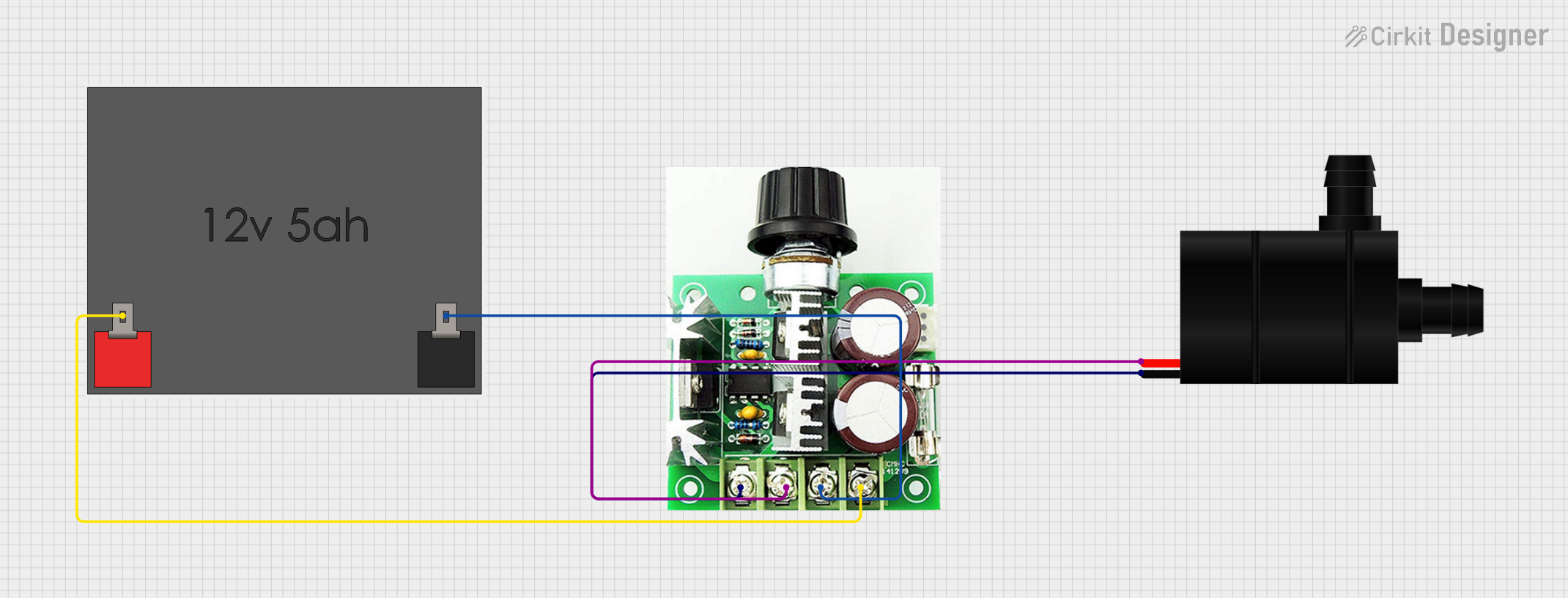
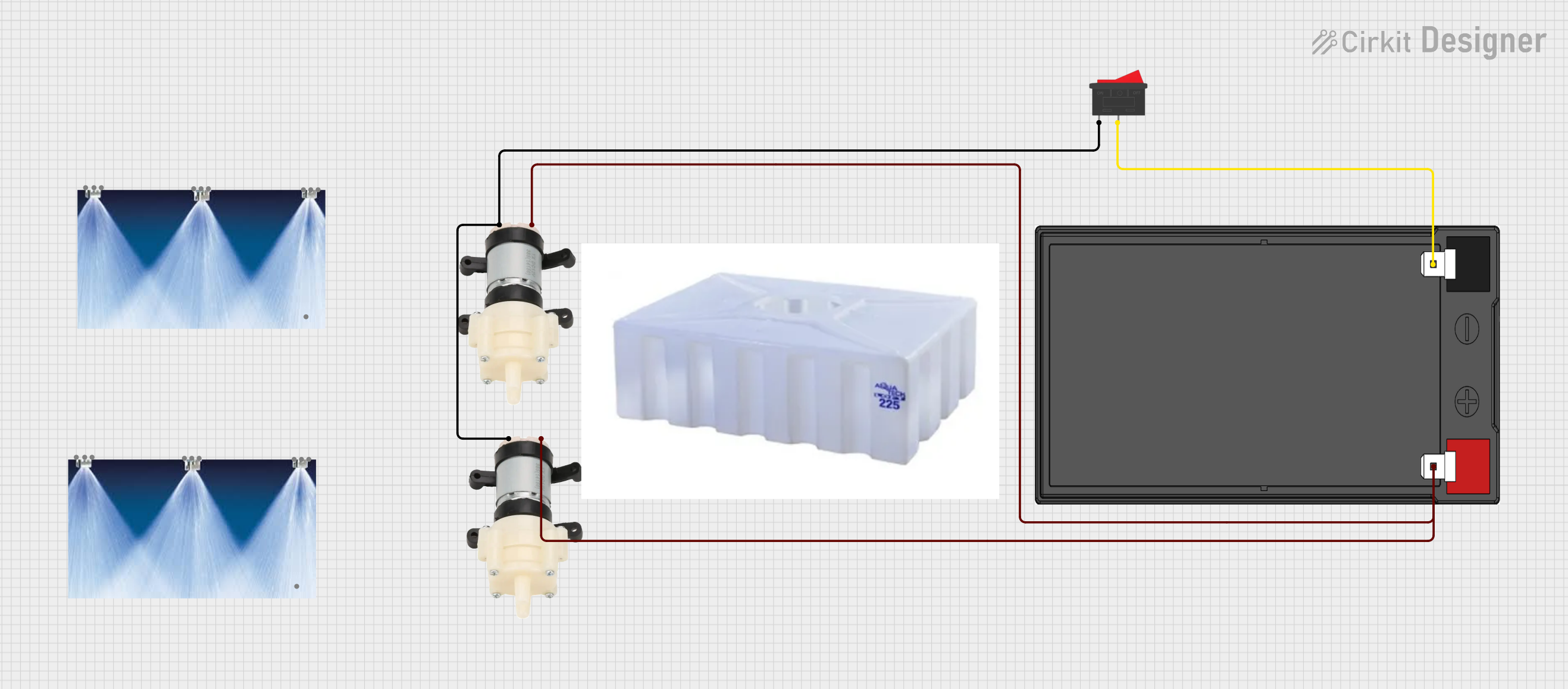
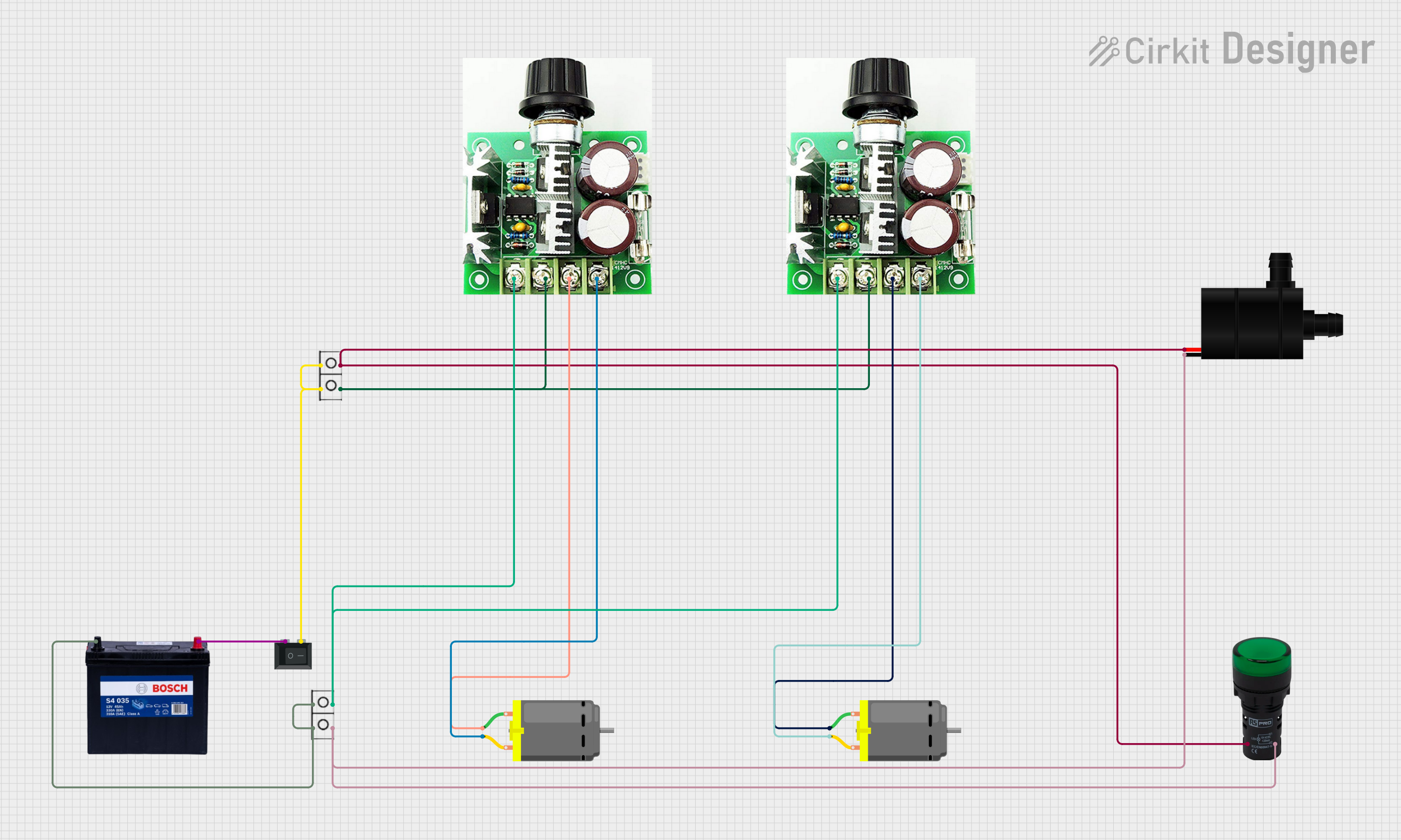
The DC 12V Submersible Water Pump is a compact and efficient device designed to operate underwater. It is commonly used for transferring water in aquariums, fountains, hydroponic systems, or small-scale irrigation setups. Powered by a 12V DC power source, this pump is reliable, energy-efficient, and easy to integrate into various water circulation or transfer applications.
Common Applications
- Aquarium water circulation
- Garden fountains and water features
- Hydroponic and aquaponic systems
- Small-scale irrigation systems
- Cooling systems for electronics or machinery
Technical Specifications
Below are the key technical details of the DC 12V Submersible Water Pump:
Pin Configuration and Descriptions
The DC 12V Submersible Water Pump typically has a simple two-wire connection:
Usage Instructions
How to Use the Pump in a Circuit
- Power Supply: Ensure you have a stable 12V DC power source capable of supplying at least 1.5A to power the pump efficiently.
- Wiring:
- Connect the red wire of the pump to the positive terminal of the power source.
- Connect the black wire to the negative terminal (ground).
- Submersion: Place the pump fully underwater before powering it on. Ensure the water level is sufficient to cover the pump completely.
- Operation: Turn on the power supply to start the pump. Water will flow from the inlet to the outlet.
- Flow Adjustment: Some models may include a flow control knob or valve. Adjust it as needed to regulate the water flow.
Important Considerations and Best Practices
- Do Not Run Dry: Always ensure the pump is submerged in water during operation. Running the pump dry can cause overheating and permanent damage.
- Polarity: Double-check the polarity of the connections. Reversing the polarity may damage the pump.
- Filtration: Use a pre-filter or ensure the water is free of debris to prevent clogging or damage to the pump.
- Voltage Range: Operate the pump strictly within the specified voltage range (12V DC). Overvoltage can damage the motor.
- Maintenance: Periodically clean the pump to remove any accumulated debris or mineral deposits.
Example: Using the Pump with an Arduino UNO
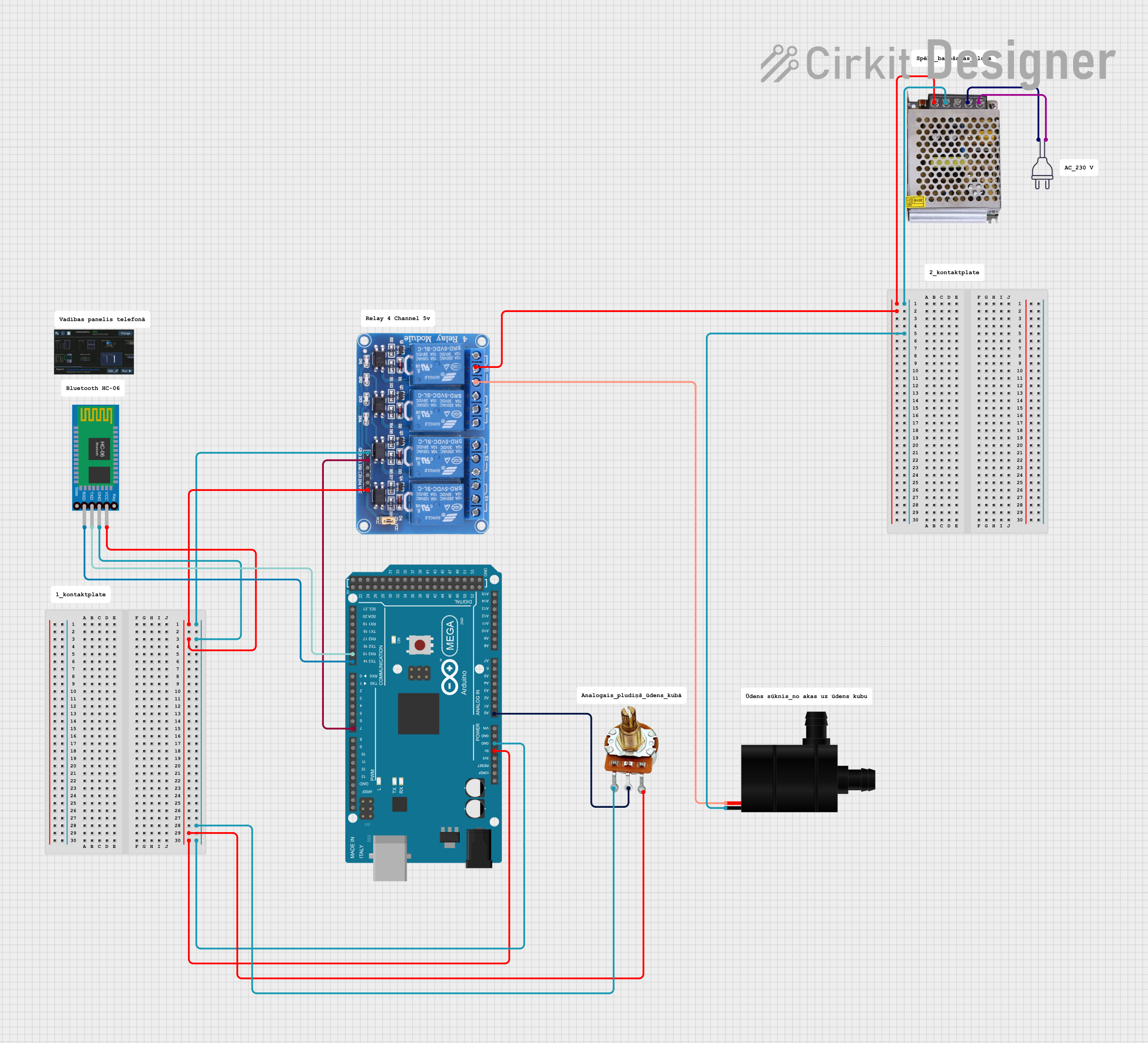
The DC 12V Submersible Water Pump can be controlled using an Arduino UNO and a relay module. Below is an example circuit and code to turn the pump on and off using a digital pin.
Circuit Diagram
- Connect the pump's red wire to the relay's NO (Normally Open) terminal.
- Connect the pump's black wire to the power supply ground.
- Connect the relay's COM (Common) terminal to the 12V DC power supply positive terminal.
- Connect the relay module's control pin to Arduino pin 7.
Arduino Code
// Example code to control a DC 12V Submersible Water Pump using Arduino UNO
// and a relay module. The pump will turn on for 5 seconds, then off for 5 seconds.

#define RELAY_PIN 7  // Define the pin connected to the relay module

void setup() {
  pinMode(RELAY_PIN, OUTPUT);  // Set the relay pin as an output
  digitalWrite(RELAY_PIN, LOW);  // Ensure the relay is off at startup
}

void loop() {
  digitalWrite(RELAY_PIN, HIGH);  // Turn the pump on
  delay(5000);  // Keep the pump on for 5 seconds
  digitalWrite(RELAY_PIN, LOW);  // Turn the pump off
  delay(5000);  // Keep the pump off for 5 seconds
}
Troubleshooting and FAQs
Common Issues and Solutions
FAQs
Can the pump be used with liquids other than water?
- The pump is designed for water. Using it with other liquids may damage the pump or reduce its lifespan.
Is the pump safe for saltwater use?
- Some models are saltwater-compatible, but check the manufacturer's specifications before use.
Can the pump be used continuously?
- Yes, the pump is designed for continuous operation, provided it is submerged and properly maintained.
What happens if the pump is run dry?
- Running the pump dry can cause overheating and permanent damage to the motor. Always ensure it is submerged during operation.
How do I clean the pump?
- Disconnect the pump from the power supply, remove it from the water, and clean the inlet, outlet, and impeller with fresh water.
By following this documentation, you can effectively use and maintain the DC 12V Submersible Water Pump for a variety of applications.


 Open Project in Cirkit Designer