
How to Use lipo battery 3S 2200mAH 45C: Examples, Pinouts, and Specs
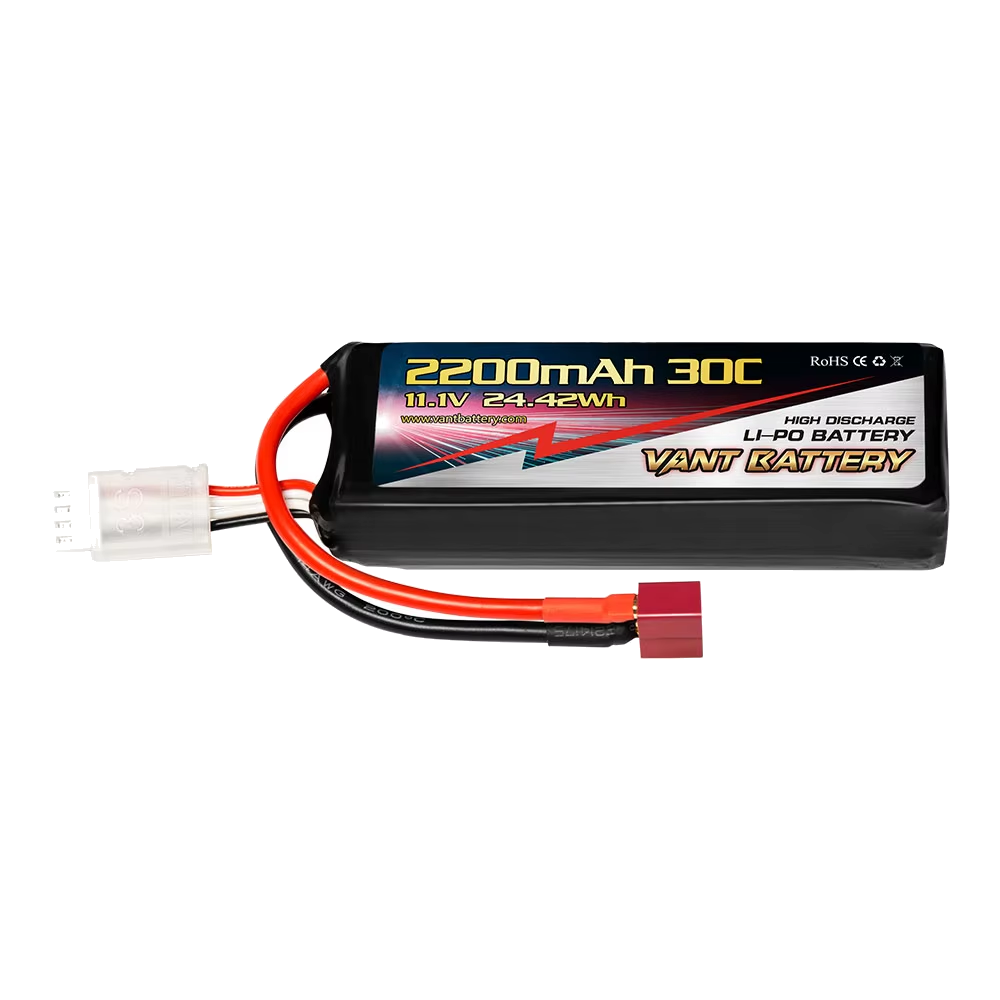
 Design with lipo battery 3S 2200mAH 45C in Cirkit Designer
Introduction
The Vant Battery LiPo Battery 3S 2200mAh 45C is a high-performance lithium polymer battery designed for applications requiring compact energy storage and high current output. With a 3-cell (3S) configuration, it provides a nominal voltage of 11.1V and a capacity of 2200mAh, making it suitable for powering devices such as remote-controlled (RC) vehicles, drones, and other high-drain electronics. The 45C discharge rate ensures the battery can deliver a continuous high current, making it ideal for demanding applications.
Explore Projects Built with lipo battery 3S 2200mAH 45C
 Open Project in Cirkit Designer
 Open Project in Cirkit Designer
 Open Project in Cirkit Designer
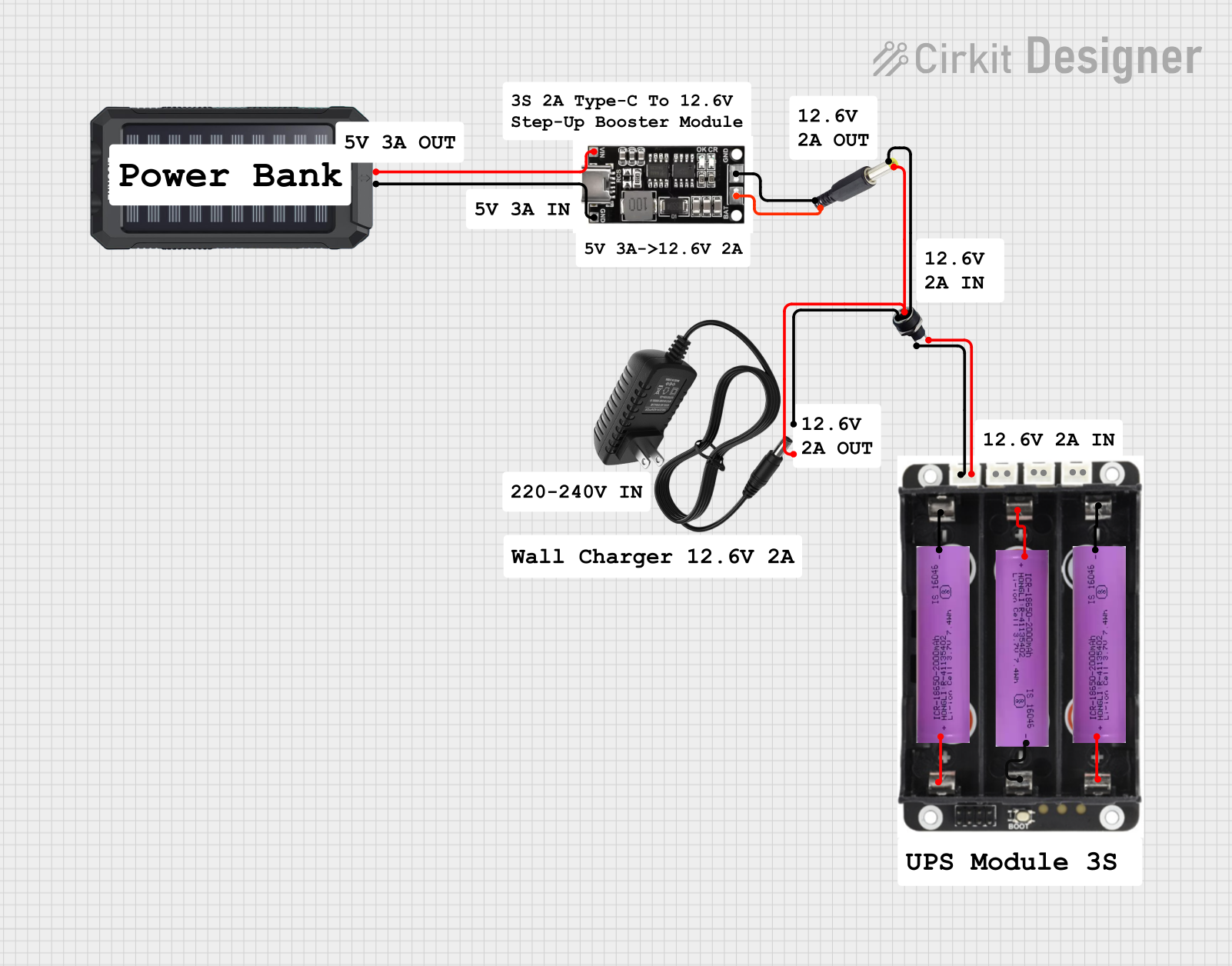 Open Project in Cirkit Designer
Explore Projects Built with lipo battery 3S 2200mAH 45C
Open Project in Cirkit DesignerOpen Project in Cirkit DesignerOpen Project in Cirkit DesignerOpen Project in Cirkit DesignerCommon Applications
- RC cars, boats, and airplanes
- Drones and quadcopters
- Robotics and hobby electronics
- Portable power systems
- DIY electronics projects requiring high current
Technical Specifications
Key Specifications
| Parameter | Value |
|---|---|
| Manufacturer | Vant Battery |
| Part ID | LiPo Battery 3S 2200mAh 45C |
| Battery Type | Lithium Polymer (LiPo) |
| Configuration | 3S (3 cells in series) |
| Nominal Voltage | 11.1V |
| Capacity | 2200mAh |
| Discharge Rate (C) | 45C (99A continuous) |
| Maximum Burst Discharge | 90C (198A for short bursts) |
| Connector Type | XT60 (common for RC devices) |
| Balance Connector | JST-XH (for cell balancing) |
| Dimensions | ~105mm x 35mm x 25mm |
| Weight | ~190g |
Pin Configuration and Descriptions
XT60 Connector (Main Power Output)
| Pin Name | Description |
|---|---|
| Positive | Positive terminal (+11.1V) |
| Negative | Negative terminal (Ground) |
JST-XH Connector (Balance Port)
| Pin Number | Description |
|---|---|
| 1 | Ground (0V, connected to cell 1) |
| 2 | Cell 1 positive terminal (~3.7V) |
| 3 | Cell 2 positive terminal (~7.4V) |
| 4 | Cell 3 positive terminal (~11.1V) |
Usage Instructions
How to Use the LiPo Battery in a Circuit
- Connect the XT60 Connector: Use the XT60 connector to supply power to your device. Ensure the polarity matches the input terminals of your circuit.
- Balance Charging: Always use a LiPo-compatible balance charger to charge the battery. Connect the JST-XH balance connector to the charger to ensure all cells are charged evenly.
- Voltage Monitoring: Use a LiPo voltage alarm or monitor to prevent over-discharging. The minimum safe voltage per cell is 3.0V (9.0V for a 3S battery).
- Mounting: Secure the battery in your device using a Velcro strap or battery holder to prevent movement during operation.
Important Considerations and Best Practices
- Charging: Always charge the battery with a LiPo-compatible charger. Set the charger to 3S (11.1V) and a current of 2.2A (1C rate) for safe charging.
- Storage: Store the battery at a voltage of 3.8V per cell (11.4V for 3S) when not in use for extended periods.
- Temperature: Avoid exposing the battery to temperatures above 60°C or below 0°C.
- Handling: Do not puncture, crush, or short-circuit the battery terminals.
- Discharge Limits: Avoid discharging the battery below 9.0V to prevent damage.
Example: Using the Battery with an Arduino UNO
To power an Arduino UNO with this battery, you can use a DC-DC step-down converter to regulate the 11.1V output to 5V. Below is an example circuit and code for monitoring the battery voltage.
Circuit Diagram
- Connect the XT60 connector to the input of the DC-DC step-down converter.
- Set the output of the converter to 5V and connect it to the Arduino UNO's VIN and GND pins.
- Use a voltage divider circuit to measure the battery voltage with an analog pin on the Arduino.
Arduino Code
// LiPo Battery Voltage Monitoring with Arduino UNO
const int voltagePin = A0; // Analog pin connected to the voltage divider
const float resistorRatio = 5.7; // Ratio of the voltage divider resistors
const float referenceVoltage = 5.0; // Arduino reference voltage (5V)

void setup() {
  Serial.begin(9600); // Initialize serial communication
}

void loop() {
  int rawValue = analogRead(voltagePin); // Read the analog input
  float batteryVoltage = (rawValue / 1023.0) * referenceVoltage * resistorRatio;

  Serial.print("Battery Voltage: ");
  Serial.print(batteryVoltage);
  Serial.println(" V");

  delay(1000); // Wait for 1 second before the next reading
}
Troubleshooting and FAQs
Common Issues and Solutions
Battery Not Charging
- Cause: Incorrect charger settings or damaged balance connector.
- Solution: Verify the charger is set to 3S (11.1V) and the balance connector is securely connected.
Battery Swelling
- Cause: Overcharging, over-discharging, or overheating.
- Solution: Stop using the battery immediately. Dispose of it safely following local regulations.
Low Runtime
- Cause: Battery degradation or excessive current draw.
- Solution: Check the battery's voltage and capacity. Replace the battery if it no longer holds a charge.
Device Not Powering On
- Cause: Incorrect polarity or insufficient voltage.
- Solution: Verify the XT60 connector polarity and ensure the battery voltage is above 9.0V.
FAQs
Q: Can I use this battery for a 12V device?
- A: Yes, but ensure the device can operate within the voltage range of 9.0V to 12.6V.
Q: How long does it take to charge the battery?
- A: At a 1C charge rate (2.2A), it takes approximately 1 hour to fully charge.
Q: Can I connect multiple batteries in series or parallel?
- A: Yes, but ensure proper balancing and use a battery management system (BMS) for safety.
This concludes the documentation for the Vant Battery LiPo Battery 3S 2200mAh 45C. Always follow safety guidelines when handling LiPo batteries to ensure optimal performance and longevity.