Cirkit Designer Logo
Cirkit Designer
Your all-in-one circuit design IDE
Home / 
Component Documentation

How to Use EE-SY310 Reflective Opto sensor: Examples, Pinouts, and Specs
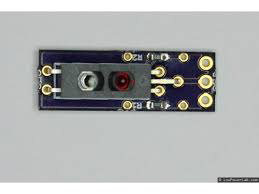

Image of EE-SY310 Reflective Opto sensor
Cirkit Designer LogoDesign with EE-SY310 Reflective Opto sensor in Cirkit Designer

Introduction

The EE-SY310 Reflective Opto Sensor by Omron is a compact and versatile sensor designed for the detection of objects through the reflection of light. It integrates an infrared light emitter and a phototransistor detector, making it ideal for applications such as object presence sensing, position control, and rotational speed detection. This sensor is commonly used in industrial automation, robotics, and various consumer electronics.

Explore Projects Built with EE-SY310 Reflective Opto sensor
Use Cirkit Designer to design, explore, and prototype these projects online. Some projects support real-time simulation. Click "Open Project" to start designing instantly!
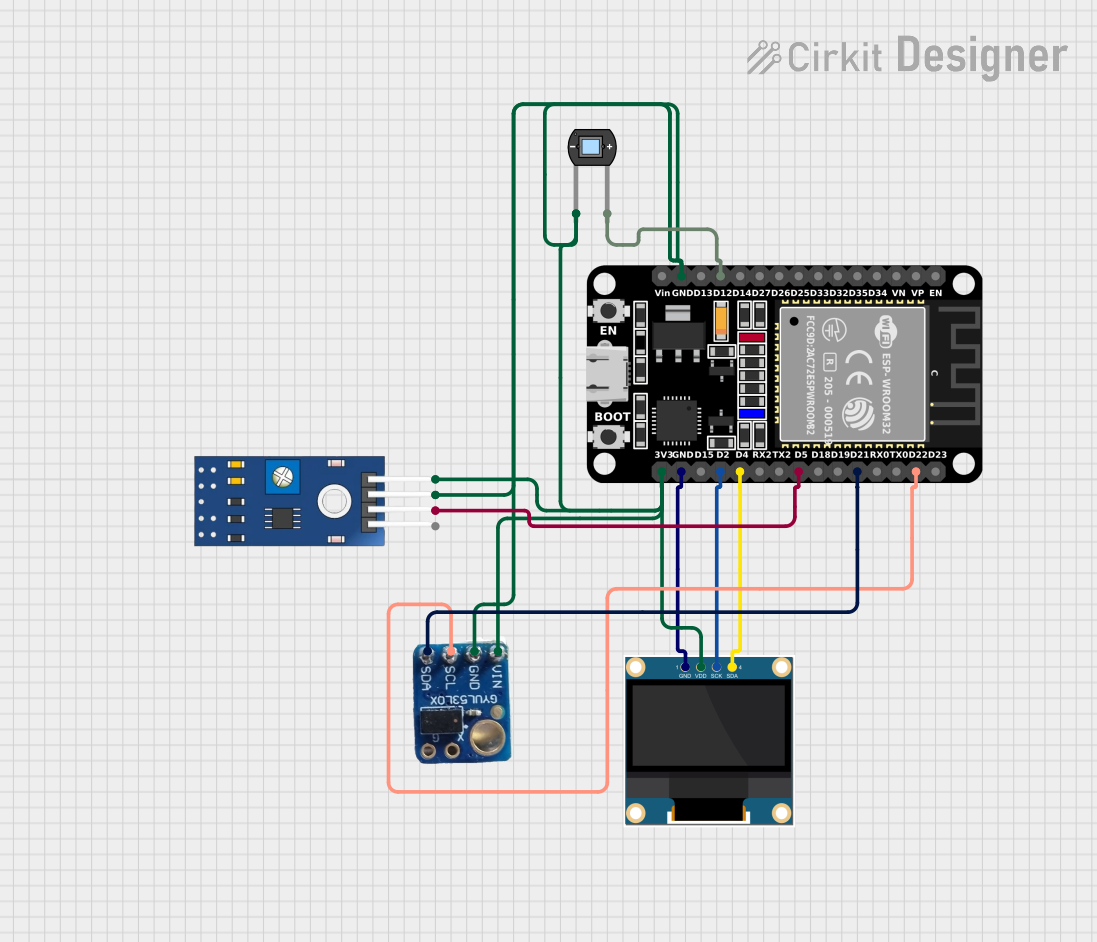
ESP32-Based Eye Pressure Monitor with OLED Display and Multiple Sensors
Image of test4: A project utilizing EE-SY310 Reflective Opto sensor in a practical application
This circuit is designed to monitor eye pressure and deformation using a photodiode, a TCRT 5000 IR sensor, and a VL53L0X time-of-flight distance sensor. The ESP32 microcontroller reads sensor data, processes it to determine eye pressure status, and displays the results on a 0.96" OLED screen. It includes safety features, sensor calibration, and the ability to display sensor values and eye pressure status in real-time.
Cirkit Designer LogoOpen Project in Cirkit Designer
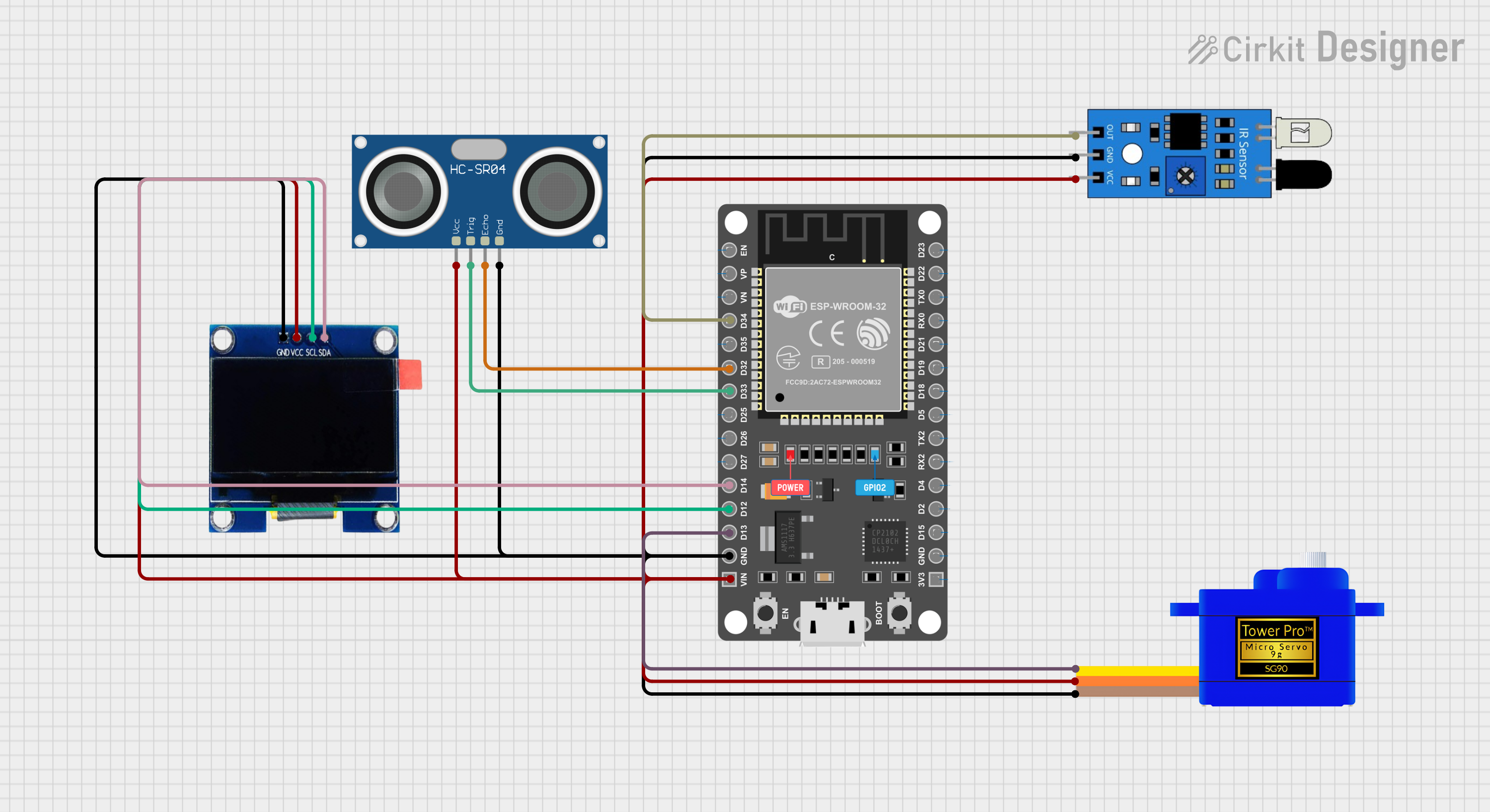
ESP32-Based Obstacle Detection System with Ultrasonic Sensor and IR Sensor
Image of Automatic Object Sensing Smart Dustbin: A project utilizing EE-SY310 Reflective Opto sensor in a practical application
This circuit features an ESP32 microcontroller connected to an HC-SR04 ultrasonic sensor, an IR sensor, a servo motor, and an OLED display. The ESP32 reads distance measurements from the ultrasonic sensor and detects IR signals, controls the servo motor, and communicates with the OLED display via I2C to provide a user interface or feedback. The circuit is likely used for distance sensing and display, with potential applications in robotics or interactive installations.
Cirkit Designer LogoOpen Project in Cirkit Designer
ESP32-Based Security System with RFID, PIR Sensor, and Laser Modules
Image of CPE doorlock system upgrade: A project utilizing EE-SY310 Reflective Opto sensor in a practical application
This circuit is designed for a security and access control system with motion detection, beam-break detection, RFID-based access, and user input via a keypad. It is managed by an ESP32 microcontroller, which also controls an OLED display and an electric lock through a relay. The system is powered by a solar panel with a charge controller and UPS battery, with buck converters for voltage regulation.
Cirkit Designer LogoOpen Project in Cirkit Designer
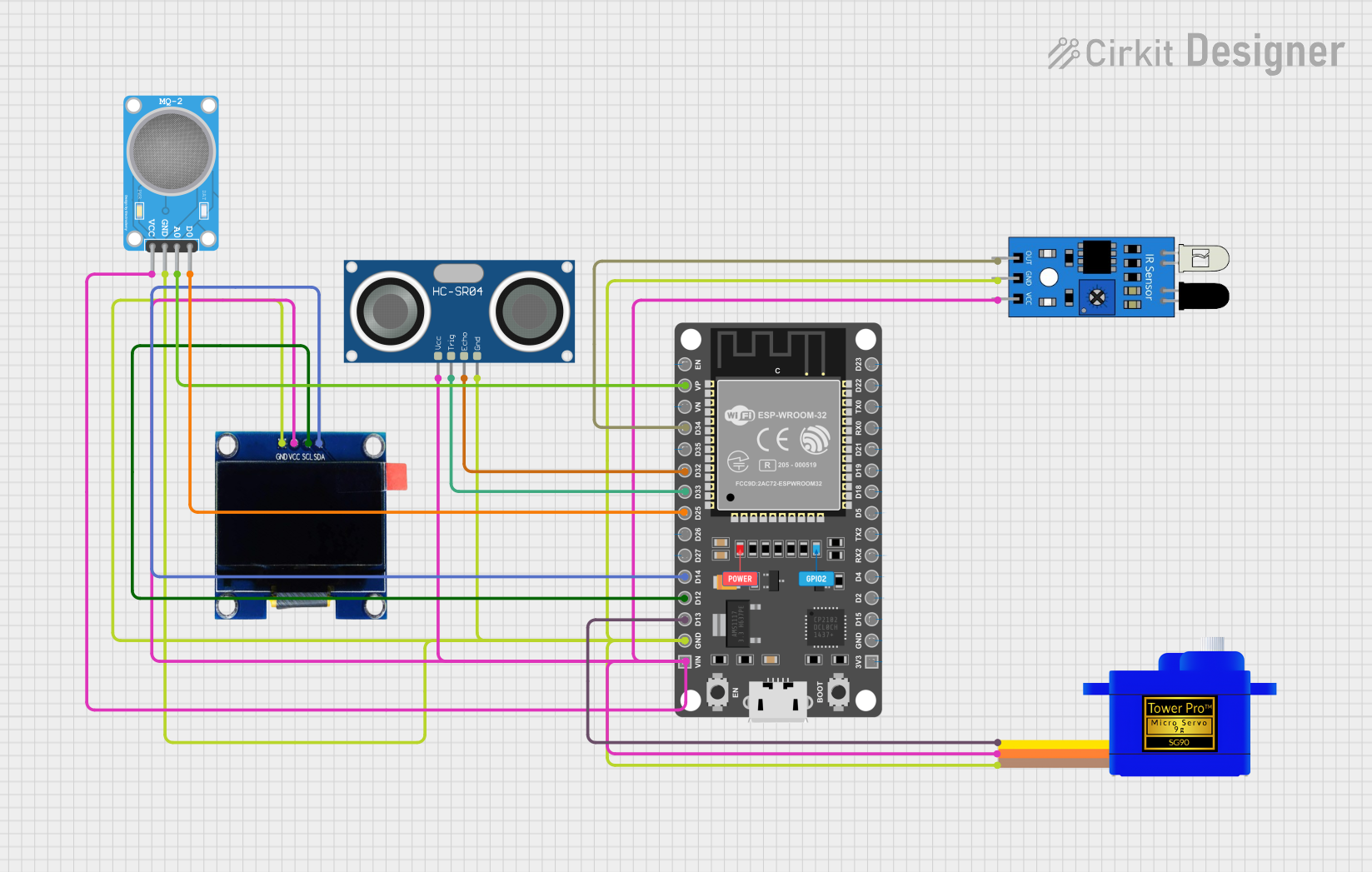
ESP32-Based Environmental Monitoring System with Ultrasonic, Gas, and IR Sensors
Image of Automatic Object Sensing Smart Dustbin: A project utilizing EE-SY310 Reflective Opto sensor in a practical application
This circuit features an ESP32 microcontroller as the central processing unit, interfacing with a variety of sensors and output devices. It includes an HC-SR04 ultrasonic sensor for distance measurement, an IR sensor for object detection, an MQ-2 gas sensor for detecting combustible gases, and an OLED display for data visualization. Additionally, a Servomotor SG90 is connected for actuation purposes. The ESP32 reads sensor data and controls the servo based on programmed logic, which is not provided in the code input.
Cirkit Designer LogoOpen Project in Cirkit Designer

Explore Projects Built with EE-SY310 Reflective Opto sensor

Use Cirkit Designer to design, explore, and prototype these projects online. Some projects support real-time simulation. Click "Open Project" to start designing instantly!
Image of test4: A project utilizing EE-SY310 Reflective Opto sensor in a practical application
ESP32-Based Eye Pressure Monitor with OLED Display and Multiple Sensors
This circuit is designed to monitor eye pressure and deformation using a photodiode, a TCRT 5000 IR sensor, and a VL53L0X time-of-flight distance sensor. The ESP32 microcontroller reads sensor data, processes it to determine eye pressure status, and displays the results on a 0.96" OLED screen. It includes safety features, sensor calibration, and the ability to display sensor values and eye pressure status in real-time.
Cirkit Designer LogoOpen Project in Cirkit Designer
Image of Automatic Object Sensing Smart Dustbin: A project utilizing EE-SY310 Reflective Opto sensor in a practical application
ESP32-Based Obstacle Detection System with Ultrasonic Sensor and IR Sensor
This circuit features an ESP32 microcontroller connected to an HC-SR04 ultrasonic sensor, an IR sensor, a servo motor, and an OLED display. The ESP32 reads distance measurements from the ultrasonic sensor and detects IR signals, controls the servo motor, and communicates with the OLED display via I2C to provide a user interface or feedback. The circuit is likely used for distance sensing and display, with potential applications in robotics or interactive installations.
Cirkit Designer LogoOpen Project in Cirkit Designer
Image of CPE doorlock system upgrade: A project utilizing EE-SY310 Reflective Opto sensor in a practical application
ESP32-Based Security System with RFID, PIR Sensor, and Laser Modules
This circuit is designed for a security and access control system with motion detection, beam-break detection, RFID-based access, and user input via a keypad. It is managed by an ESP32 microcontroller, which also controls an OLED display and an electric lock through a relay. The system is powered by a solar panel with a charge controller and UPS battery, with buck converters for voltage regulation.
Cirkit Designer LogoOpen Project in Cirkit Designer
Image of Automatic Object Sensing Smart Dustbin: A project utilizing EE-SY310 Reflective Opto sensor in a practical application
ESP32-Based Environmental Monitoring System with Ultrasonic, Gas, and IR Sensors
This circuit features an ESP32 microcontroller as the central processing unit, interfacing with a variety of sensors and output devices. It includes an HC-SR04 ultrasonic sensor for distance measurement, an IR sensor for object detection, an MQ-2 gas sensor for detecting combustible gases, and an OLED display for data visualization. Additionally, a Servomotor SG90 is connected for actuation purposes. The ESP32 reads sensor data and controls the servo based on programmed logic, which is not provided in the code input.
Cirkit Designer LogoOpen Project in Cirkit Designer

Technical Specifications

Key Technical Details

  • Supply Voltage: 5 VDC
  • Output Current: 20 mA (max)
  • Sensing Distance: 0.5 mm to 5 mm
  • Response Time: 1 ms (typical)
  • Ambient Temperature Range: -25°C to +55°C
  • Dimensions: 4.0 mm × 2.5 mm × 1.8 mm (L×W×H)

Pin Configuration and Descriptions

Pin Number Description Notes
1 Emitter (Anode) Connect to VCC with a resistor
2 Emitter (Cathode) Connect to GND
3 Collector Output signal (active low)
4 Emitter No connection (NC)

Usage Instructions

Integration into a Circuit

To use the EE-SY310 in a circuit, follow these steps:

  1. Connect the anode of the emitter to a 5 VDC power supply through a current-limiting resistor. The value of the resistor can be calculated using Ohm's law, considering the forward voltage and current of the emitter.
  2. Connect the cathode of the emitter to the ground (GND).
  3. Connect the collector of the phototransistor to the input of a microcontroller or another interface circuit. A pull-up resistor is typically used on this line.
  4. Ensure that the sensor is positioned correctly with respect to the target object to optimize the reflection of the infrared light.

Best Practices

  • Avoid exposing the sensor to direct sunlight or strong artificial light sources to prevent false triggering.
  • Ensure that the surface of the object being detected is reflective enough for reliable operation.
  • Keep the sensor clean and free from dust or other contaminants that could affect its performance.

Example Code for Arduino UNO

// Define the pin connected to the collector of the opto sensor
const int optoSensorPin = 2;

void setup() {
  // Configure the opto sensor pin as an input
  pinMode(optoSensorPin, INPUT);
  // Initialize serial communication at 9600 bits per second
  Serial.begin(9600);
}

void loop() {
  // Read the state of the opto sensor
  int sensorValue = digitalRead(optoSensorPin);
  // Print out the value to the serial monitor
  Serial.println(sensorValue);
  // Delay for a bit to avoid spamming the serial monitor
  delay(100);
}

Troubleshooting and FAQs

Common Issues

  • Sensor not responding: Ensure that all connections are secure and the power supply is at the correct voltage.
  • Inconsistent detection: Check the alignment of the sensor with the target object and the reflectivity of the object's surface.
  • Output always high or low: Verify that the pull-up resistor is correctly installed and that there are no shorts or open circuits in the wiring.

Solutions and Tips

  • If the sensor is not responding, double-check the wiring against the pin configuration table.
  • For inconsistent detection, adjust the distance between the sensor and the object or improve the object's surface reflectivity.
  • Ensure that the ambient light conditions are stable and do not interfere with the sensor's operation.

FAQs

Q: Can the EE-SY310 be used with a 3.3V system? A: While the EE-SY310 is rated for 5V, it may work at 3.3V with reduced performance. However, it is recommended to use a level shifter for proper operation.

Q: What is the maximum sensing distance of the EE-SY310? A: The maximum recommended sensing distance is 5 mm, but this can vary depending on the object's reflectivity and ambient light conditions.

Q: How can I adjust the sensitivity of the sensor? A: Sensitivity can be adjusted by changing the distance between the sensor and the object or by using a variable resistor in the emitter circuit to adjust the light intensity.

For further assistance, please contact Omron's technical support or refer to the detailed datasheet of the EE-SY310 Reflective Opto Sensor.