
How to Use DHT22: Examples, Pinouts, and Specs
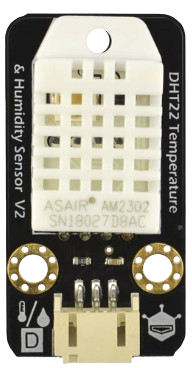
 Design with DHT22 in Cirkit Designer
Introduction
The DHT22, manufactured by DFRobot, is a digital temperature and humidity sensor designed for precise environmental monitoring. It provides accurate readings of temperature in Celsius and relative humidity in percentage. The DHT22 is widely used in applications such as weather stations, HVAC systems, greenhouses, and IoT-based environmental monitoring systems. Its ease of use, low power consumption, and reliable performance make it a popular choice for both hobbyists and professionals.
Explore Projects Built with DHT22
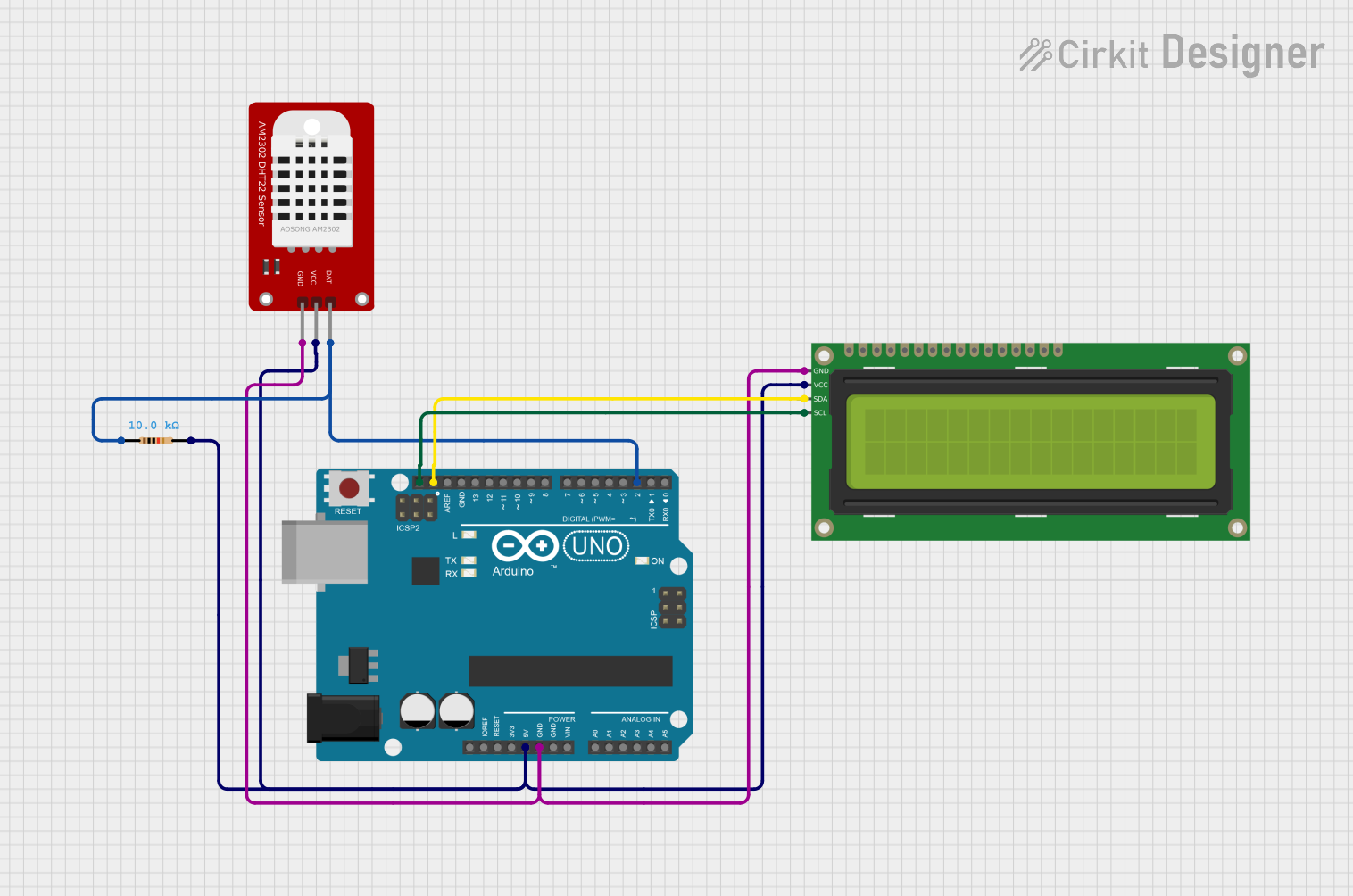 Open Project in Cirkit Designer
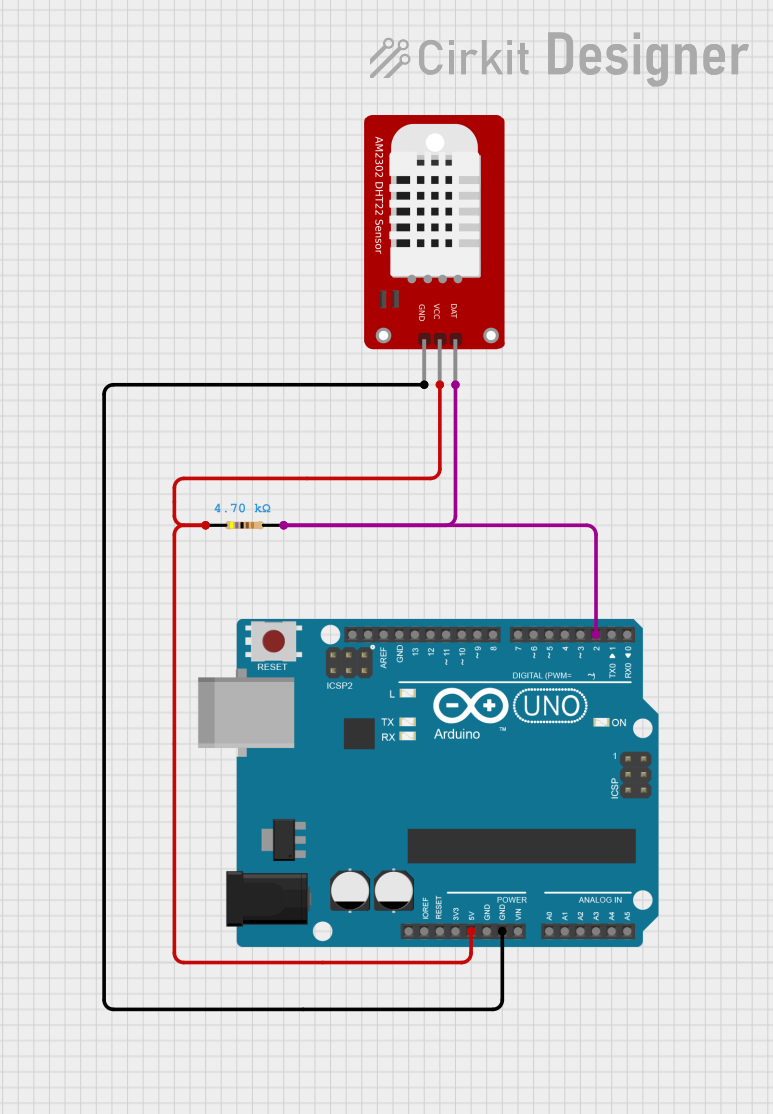 Open Project in Cirkit Designer
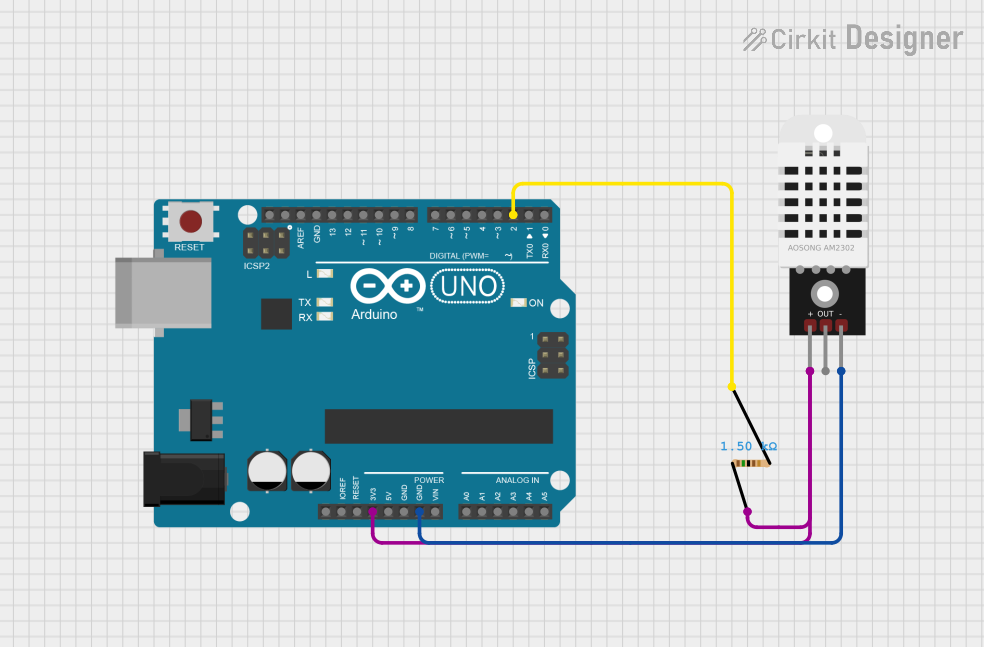 Open Project in Cirkit Designer
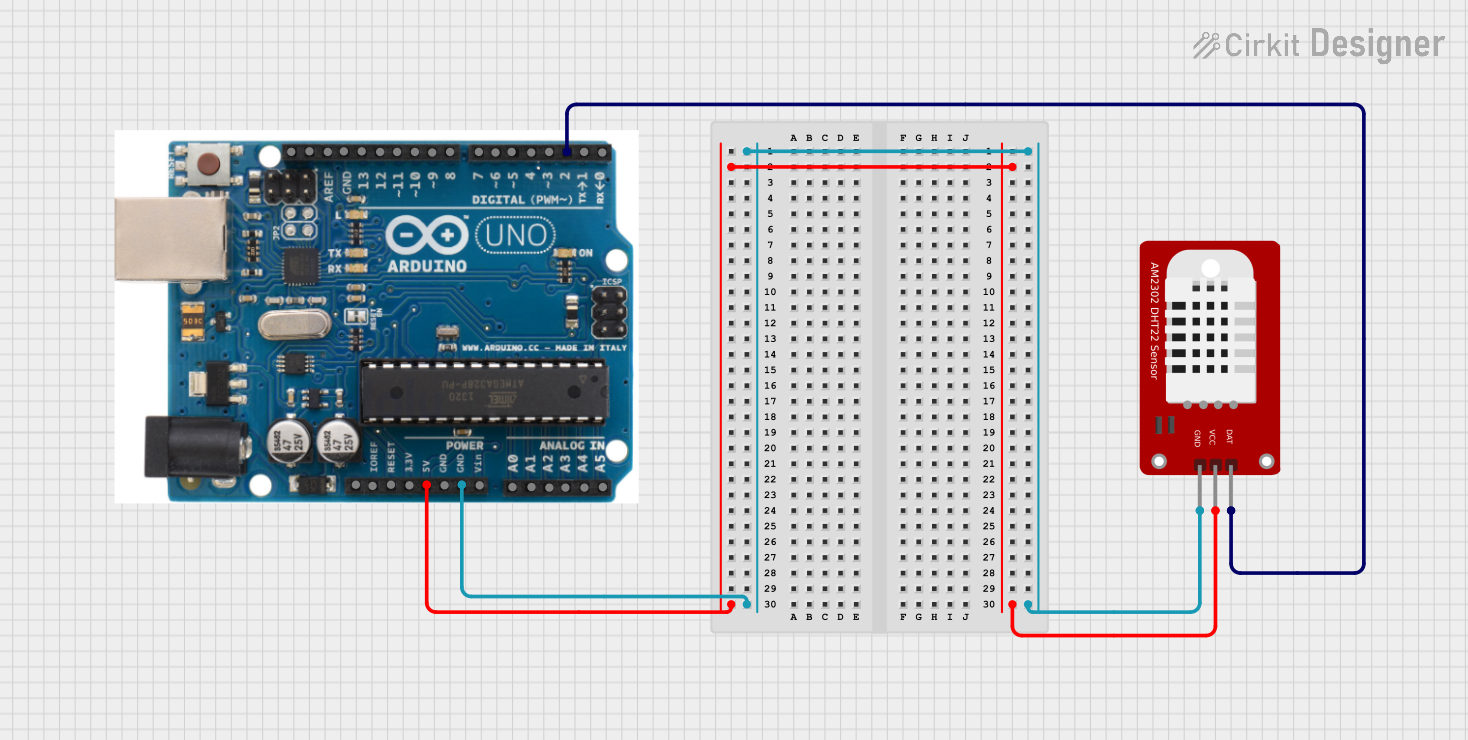 Open Project in Cirkit Designer
Explore Projects Built with DHT22
Open Project in Cirkit DesignerOpen Project in Cirkit DesignerOpen Project in Cirkit DesignerOpen Project in Cirkit DesignerTechnical Specifications
The DHT22 sensor offers the following key technical details:
| Parameter | Value |
|---|---|
| Supply Voltage | 3.3V to 6V |
| Operating Current | 0.3mA (measuring), 60µA (standby) |
| Temperature Range | -40°C to +80°C |
| Temperature Accuracy | ±0.5°C |
| Humidity Range | 0% to 100% RH |
| Humidity Accuracy | ±2% RH |
| Sampling Period | 2 seconds |
| Communication Protocol | Single-wire digital signal |
| Dimensions | 15.1mm x 25mm x 7.7mm |
Pin Configuration and Descriptions
The DHT22 has four pins, as described in the table below:
| Pin Number | Name | Description |
|---|---|---|
| 1 | VCC | Power supply pin (3.3V to 6V) |
| 2 | DATA | Digital data output pin for temperature and humidity |
| 3 | NC | Not connected (leave unconnected) |
| 4 | GND | Ground pin |
Note: A pull-up resistor (typically 10kΩ) is required on the DATA pin for proper communication.
Usage Instructions
How to Use the DHT22 in a Circuit
- Power the Sensor: Connect the VCC pin to a 3.3V or 5V power source and the GND pin to ground.
- Connect the DATA Pin: Attach the DATA pin to a digital input pin on your microcontroller (e.g., Arduino UNO). Use a 10kΩ pull-up resistor between the DATA pin and VCC to ensure stable communication.
- Leave NC Pin Unconnected: The NC pin is not used and should remain unconnected.
- Read Data: Use a compatible library or custom code to read temperature and humidity data from the sensor.
Important Considerations and Best Practices
- Sampling Interval: The DHT22 has a minimum sampling period of 2 seconds. Avoid reading data more frequently to prevent communication errors.
- Environmental Factors: Place the sensor in a location free from direct sunlight, condensation, or strong airflow for accurate readings.
- Wiring Length: Keep the wiring between the sensor and microcontroller as short as possible to minimize signal degradation.
- Power Supply: Ensure a stable power supply to avoid fluctuations in sensor readings.
Example Code for Arduino UNO
Below is an example of how to use the DHT22 with an Arduino UNO. This code uses the popular DHT library.
// Include the DHT library
#include <DHT.h>

// Define the DHT22 pin and type
#define DHTPIN 2       // Pin connected to the DATA pin of DHT22
#define DHTTYPE DHT22  // Specify the sensor type (DHT22)

// Initialize the DHT sensor
DHT dht(DHTPIN, DHTTYPE);

void setup() {
  Serial.begin(9600);  // Start serial communication
  Serial.println("DHT22 Sensor Initialization");
  dht.begin();         // Initialize the DHT sensor
}

void loop() {
  delay(2000);  // Wait 2 seconds between readings

  // Read temperature and humidity
  float humidity = dht.readHumidity();
  float temperature = dht.readTemperature();

  // Check if the readings are valid
  if (isnan(humidity) || isnan(temperature)) {
    Serial.println("Failed to read from DHT sensor!");
    return;
  }

  // Print the readings to the Serial Monitor
  Serial.print("Humidity: ");
  Serial.print(humidity);
  Serial.print(" %\t");
  Serial.print("Temperature: ");
  Serial.print(temperature);
  Serial.println(" °C");
}
Note: Install the
DHTlibrary in the Arduino IDE by navigating to Sketch > Include Library > Manage Libraries, then search for "DHT" and install the library by Adafruit.
Troubleshooting and FAQs
Common Issues and Solutions
No Data or Incorrect Readings:
- Ensure the pull-up resistor (10kΩ) is correctly connected between the DATA pin and VCC.
- Verify that the sensor is powered with a stable voltage (3.3V to 5V).
- Check the wiring for loose or incorrect connections.
Frequent Communication Errors:
- Ensure the sampling interval is at least 2 seconds.
- Reduce the length of the DATA pin wire to minimize signal interference.
Sensor Not Responding:
- Confirm that the correct pin is defined in the code (
#define DHTPIN). - Test the sensor with another microcontroller or circuit to rule out hardware issues.
- Confirm that the correct pin is defined in the code (
FAQs
Q: Can the DHT22 measure negative temperatures?
A: Yes, the DHT22 can measure temperatures as low as -40°C.
Q: What is the maximum cable length for the DHT22?
A: The recommended maximum cable length is 20 meters, but this depends on the pull-up resistor value and environmental noise. For longer distances, use a lower pull-up resistor value (e.g., 4.7kΩ).
Q: Can I use the DHT22 with a 3.3V microcontroller?
A: Yes, the DHT22 is compatible with both 3.3V and 5V systems.
Q: How do I protect the sensor in outdoor environments?
A: Use a weatherproof enclosure with proper ventilation to protect the sensor from rain and direct sunlight while allowing air circulation.
By following this documentation, you can effectively integrate the DHT22 sensor into your projects for reliable temperature and humidity monitoring.