
How to Use SOFAR 3K~6KTLM-G3: Examples, Pinouts, and Specs
 Design with SOFAR 3K~6KTLM-G3 in Cirkit Designer
Introduction
The SOFAR 3K~6KTLM-G3 is a high-performance solar inverter designed to convert direct current (DC) generated by solar panels into alternating current (AC) suitable for residential and commercial use. With a power range of 3 to 6 kilowatts, this inverter is ideal for small to medium-sized solar energy systems. It features advanced monitoring capabilities, high efficiency, and robust safety mechanisms, making it a reliable choice for sustainable energy solutions.
Explore Projects Built with SOFAR 3K~6KTLM-G3
 Open Project in Cirkit Designer
 Open Project in Cirkit Designer
 Open Project in Cirkit Designer
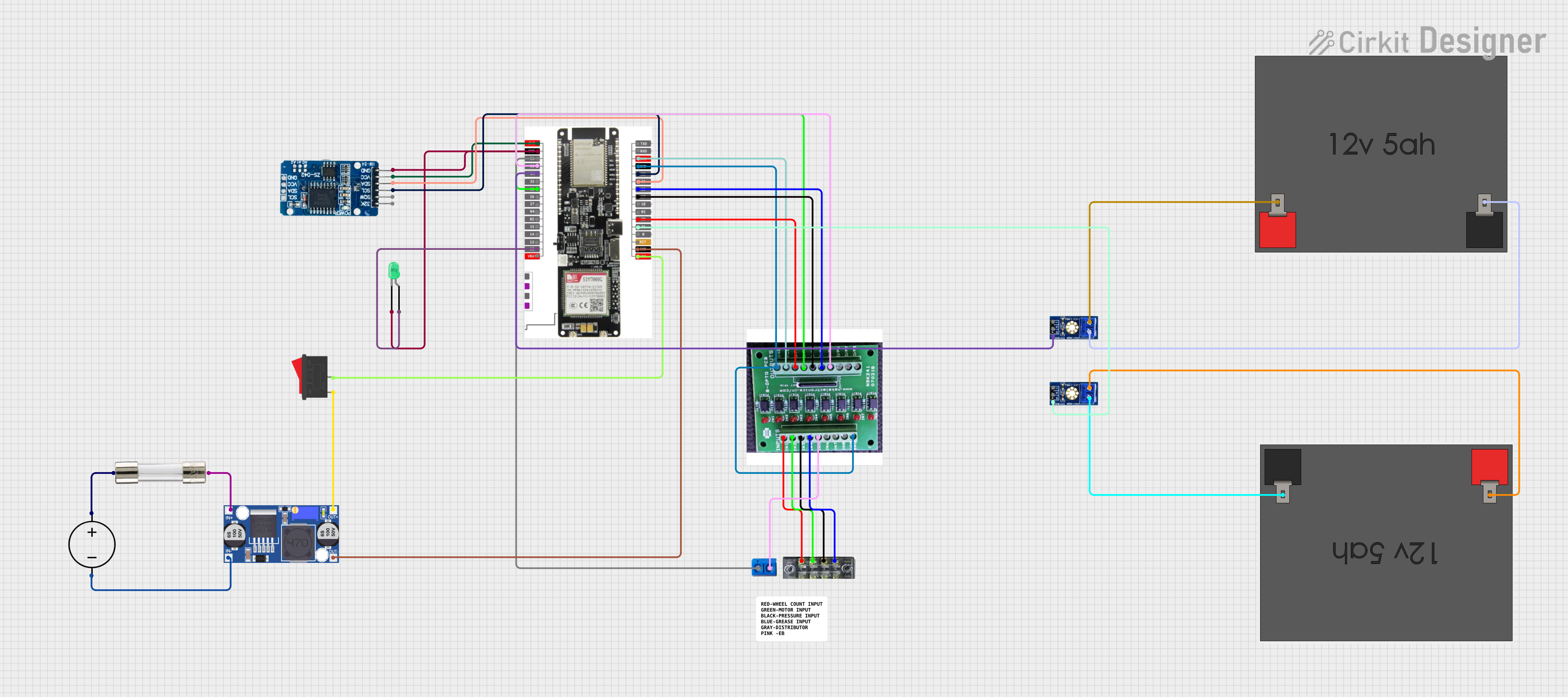 Open Project in Cirkit Designer
Explore Projects Built with SOFAR 3K~6KTLM-G3
Open Project in Cirkit DesignerOpen Project in Cirkit DesignerOpen Project in Cirkit DesignerOpen Project in Cirkit DesignerCommon Applications and Use Cases
- Residential solar energy systems for powering household appliances.
- Commercial solar installations for small businesses.
- Grid-tied solar systems to reduce electricity bills and feed excess energy back to the grid.
- Backup power systems when paired with energy storage solutions.
Technical Specifications
Key Technical Details
| Parameter | Value |
|---|---|
| Power Output Range | 3 kW to 6 kW |
| Input Voltage Range (DC) | 160 V to 1000 V |
| Maximum Input Current | 12.5 A per MPPT |
| Number of MPPTs (Trackers) | 2 |
| Output Voltage (AC) | 230 V (Single Phase) |
| Output Frequency | 50 Hz / 60 Hz |
| Efficiency | Up to 98.6% |
| Communication Interfaces | Wi-Fi, RS485, and Ethernet |
| Operating Temperature | -25°C to +60°C |
| Protection Rating | IP65 (Outdoor Rated) |
Pin Configuration and Descriptions
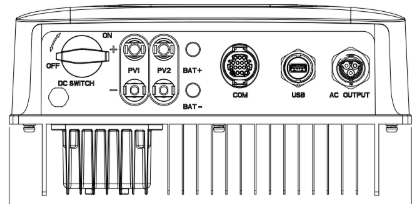
The SOFAR 3K~6KTLM-G3 features multiple input and output terminals for DC and AC connections, as well as communication ports. Below is a summary of the key connections:
DC Input Terminals
| Pin Name | Description |
|---|---|
| PV+ | Positive terminal for solar panel input |
| PV- | Negative terminal for solar panel input |
AC Output Terminals
| Pin Name | Description |
|---|---|
| L | Live wire for AC output |
| N | Neutral wire for AC output |
| PE | Protective Earth (Ground) |
Communication Ports
| Port Name | Description |
|---|---|
| RS485 | For external monitoring and control |
| Wi-Fi Module | Wireless communication for monitoring |
| Ethernet | Wired communication for monitoring |
Usage Instructions
How to Use the Component in a Circuit
- DC Input Connection: Connect the positive (PV+) and negative (PV-) terminals of the inverter to the corresponding terminals of the solar panel array. Ensure the input voltage is within the specified range (160 V to 1000 V).
- AC Output Connection: Connect the live (L), neutral (N), and protective earth (PE) terminals to the building's electrical distribution system or grid connection.
- Communication Setup: Use the RS485, Wi-Fi, or Ethernet port to connect the inverter to a monitoring system or app for real-time performance tracking.
- Power On: Once all connections are secure, switch on the inverter. The device will automatically start tracking the maximum power point (MPPT) and begin converting DC to AC.
Important Considerations and Best Practices
- Safety First: Always disconnect the inverter from the power supply before performing any maintenance or wiring changes.
- Proper Grounding: Ensure the PE terminal is securely connected to the ground to prevent electrical hazards.
- Voltage Matching: Verify that the solar panel array's voltage and current are within the inverter's input specifications.
- Monitoring: Use the manufacturer's app or software to monitor the inverter's performance and detect any issues early.
- Firmware Updates: Regularly update the inverter's firmware to ensure optimal performance and compatibility with new technologies.
Arduino Integration Example
While the SOFAR 3K~6KTLM-G3 is not directly compatible with Arduino for control purposes, it can be monitored using an RS485-to-UART module. Below is an example of how to read data from the inverter using an Arduino UNO:
#include <ModbusMaster.h>

// Instantiate ModbusMaster object
ModbusMaster node;

void setup() {
  Serial.begin(9600); // Initialize serial communication
  node.begin(1, Serial); // Set Modbus slave ID to 1 and use Serial for communication
}

void loop() {
  uint8_t result;
  uint16_t data[6];

  // Read holding registers starting at address 0x0000
  result = node.readHoldingRegisters(0x0000, 6);

  if (result == node.ku8MBSuccess) {
    // Print the retrieved data
    for (int i = 0; i < 6; i++) {
      Serial.print("Register ");
      Serial.print(i);
      Serial.print(": ");
      Serial.println(node.getResponseBuffer(i));
    }
  } else {
    Serial.println("Failed to read data from inverter.");
  }

  delay(1000); // Wait 1 second before the next read
}
Note: Ensure the RS485-to-UART module is properly connected to the Arduino and the inverter's RS485 port. Refer to the inverter's communication protocol documentation for register addresses and data formats.
Troubleshooting and FAQs
Common Issues and Solutions
Inverter Does Not Start
- Cause: Insufficient DC input voltage.
- Solution: Check the solar panel array's voltage and ensure it meets the inverter's minimum input requirement (160 V).
Low Efficiency
- Cause: Incorrect MPPT configuration or shading on solar panels.
- Solution: Ensure the solar panels are clean and free from obstructions. Verify the MPPT settings.
Communication Failure
- Cause: Faulty RS485 or Wi-Fi connection.
- Solution: Check the communication cables and ensure the Wi-Fi module is properly configured.
Overheating
- Cause: Poor ventilation or high ambient temperature.
- Solution: Install the inverter in a well-ventilated area and ensure the ambient temperature does not exceed 60°C.
FAQs
Q: Can the inverter operate without a grid connection?
A: No, the SOFAR 3K~6KTLM-G3 is designed for grid-tied systems and requires a grid connection to function.Q: How do I update the firmware?
A: Use the manufacturer's app or software to download and install the latest firmware via the Wi-Fi or Ethernet connection.Q: What is the warranty period for this inverter?
A: The standard warranty period is typically 5 years, but this may vary depending on the region and distributor.Q: Can I use this inverter with a battery storage system?
A: Yes, but additional components such as a hybrid inverter or battery management system may be required.
This concludes the documentation for the SOFAR 3K~6KTLM-G3 solar inverter. For further assistance, refer to the manufacturer's user manual or contact technical support.