
How to Use BL-R8812AF1-A: Examples, Pinouts, and Specs
 Design with BL-R8812AF1-A in Cirkit Designer
Introduction
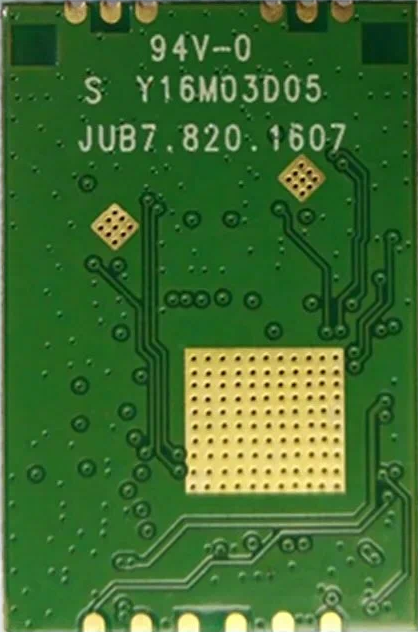
The BL-R8812AF1-A, manufactured by RealTek, is a low-power, high-performance RF transceiver designed for wireless communication applications. Operating in the 2.4 GHz ISM band, this component supports various modulation schemes, making it ideal for a wide range of applications. Its compact design and energy efficiency make it particularly suitable for Internet of Things (IoT) devices, remote control systems, wireless sensors, and smart home applications.
Explore Projects Built with BL-R8812AF1-A
 Open Project in Cirkit Designer
 Open Project in Cirkit Designer
 Open Project in Cirkit Designer
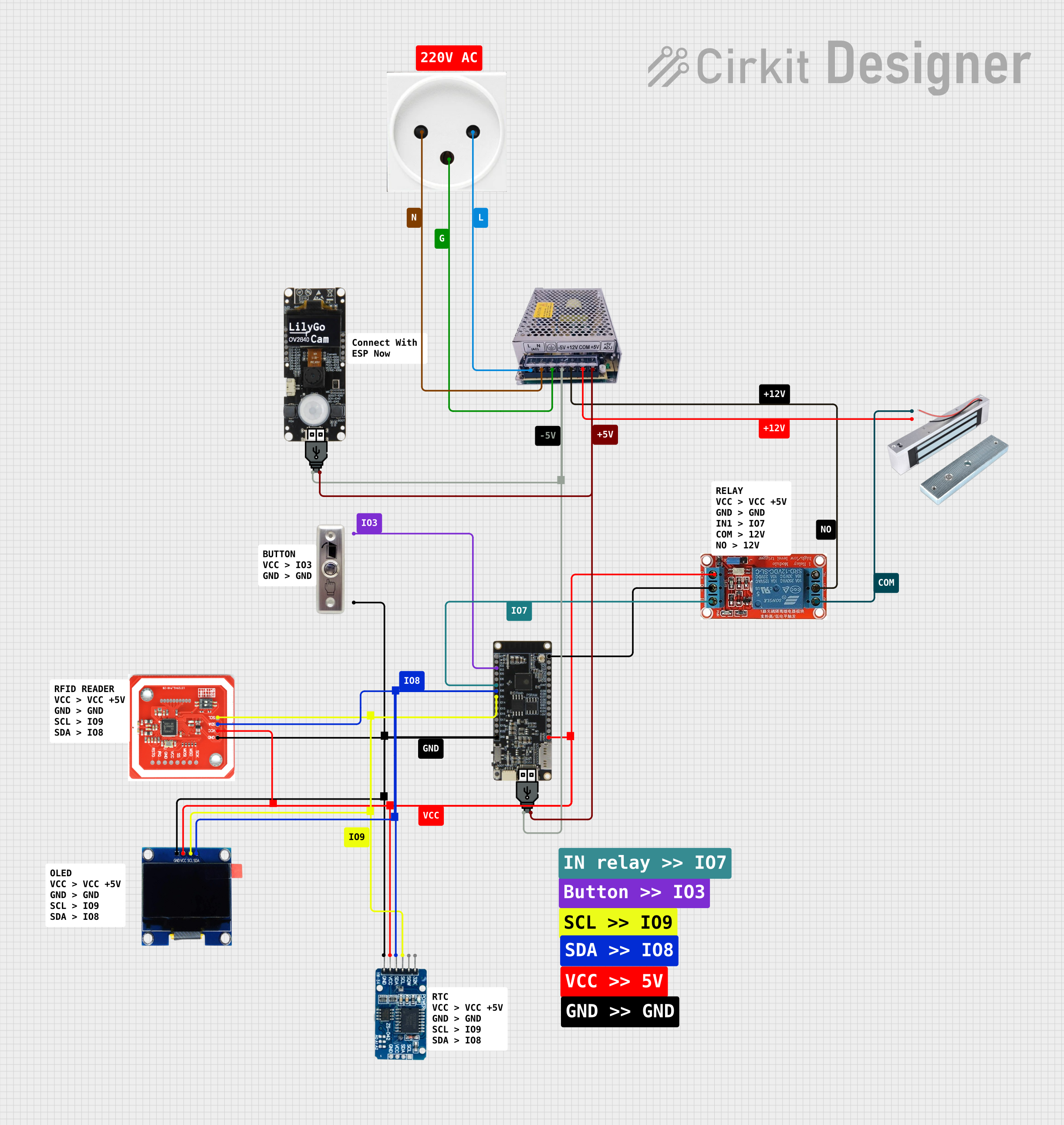 Open Project in Cirkit Designer
Explore Projects Built with BL-R8812AF1-A
Open Project in Cirkit DesignerOpen Project in Cirkit DesignerOpen Project in Cirkit DesignerOpen Project in Cirkit DesignerCommon Applications
- IoT devices and smart home systems
- Wireless remote controls
- Wireless sensor networks
- Industrial automation
- Low-power wireless communication systems
Technical Specifications
Key Technical Details
| Parameter | Value |
|---|---|
| Operating Frequency | 2.4 GHz ISM band |
| Modulation Schemes | GFSK, O-QPSK, DSSS |
| Supply Voltage | 1.8V to 3.6V |
| Current Consumption | < 15 mA (transmit mode) |
| Sensitivity | -95 dBm |
| Data Rate | Up to 2 Mbps |
| Operating Temperature | -40°C to +85°C |
| Package Type | QFN-32 |
Pin Configuration and Descriptions
The BL-R8812AF1-A comes in a QFN-32 package with the following pin configuration:
| Pin Number | Pin Name | Description |
|---|---|---|
| 1 | VDD | Power supply input (1.8V to 3.6V) |
| 2 | GND | Ground |
| 3 | RF_IN | RF input for antenna |
| 4 | RF_OUT | RF output for antenna |
| 5 | TXD | Transmit data |
| 6 | RXD | Receive data |
| 7 | SCLK | Serial clock for SPI interface |
| 8 | MOSI | Master Out Slave In (SPI data input) |
| 9 | MISO | Master In Slave Out (SPI data output) |
| 10 | CSN | Chip select (active low) |
| 11-32 | NC | Not connected |
Usage Instructions
How to Use the BL-R8812AF1-A in a Circuit
- Power Supply: Connect the VDD pin to a stable power source within the range of 1.8V to 3.6V. Ensure proper decoupling capacitors are placed near the VDD pin to reduce noise.
- Grounding: Connect the GND pin to the ground plane of the PCB to ensure proper operation and minimize noise.
- Antenna Connection: Connect an appropriate 2.4 GHz antenna to the RF_IN and RF_OUT pins. Use impedance-matched traces for optimal performance.
- SPI Communication: Use the SCLK, MOSI, MISO, and CSN pins to interface with a microcontroller via the SPI protocol. Ensure the SPI clock speed is compatible with the transceiver's specifications.
- Data Transmission and Reception: Use the TXD and RXD pins to send and receive data. Configure the modulation scheme and data rate as required by your application.
Important Considerations and Best Practices
- PCB Layout: Ensure proper grounding and minimize trace lengths for RF signals to reduce losses and interference.
- Antenna Matching: Use an impedance-matching network to optimize the antenna's performance.
- Power Management: Use low-dropout regulators (LDOs) or DC-DC converters to provide a stable power supply.
- Firmware Configuration: Configure the transceiver's registers via SPI to set the desired frequency, modulation scheme, and data rate.
Example: Connecting to an Arduino UNO
The BL-R8812AF1-A can be connected to an Arduino UNO for wireless communication. Below is an example of Arduino code to initialize the SPI interface and communicate with the transceiver:
#include <SPI.h>

// Define SPI pins for the BL-R8812AF1-A
#define CSN_PIN 10  // Chip Select (active low)
#define SCLK_PIN 13 // Serial Clock
#define MOSI_PIN 11 // Master Out Slave In
#define MISO_PIN 12 // Master In Slave Out

void setup() {
  // Initialize SPI
  SPI.begin();
  pinMode(CSN_PIN, OUTPUT);
  digitalWrite(CSN_PIN, HIGH); // Set CSN high to deselect the transceiver

  Serial.begin(9600); // Initialize serial communication for debugging
  Serial.println("BL-R8812AF1-A Initialization...");

  // Example: Write to a register (replace 0x01 and 0xFF with actual values)
  digitalWrite(CSN_PIN, LOW); // Select the transceiver
  SPI.transfer(0x01);         // Send register address
  SPI.transfer(0xFF);         // Send data to write
  digitalWrite(CSN_PIN, HIGH); // Deselect the transceiver

  Serial.println("Initialization complete.");
}

void loop() {
  // Example: Read data from the transceiver
  digitalWrite(CSN_PIN, LOW); // Select the transceiver
  SPI.transfer(0x02);         // Send register address to read
  byte data = SPI.transfer(0x00); // Read data
  digitalWrite(CSN_PIN, HIGH); // Deselect the transceiver

  Serial.print("Received data: ");
  Serial.println(data, HEX);

  delay(1000); // Wait for 1 second
}
Troubleshooting and FAQs
Common Issues and Solutions
No Communication with the Transceiver
- Cause: Incorrect SPI connections or configuration.
- Solution: Verify the SPI pin connections and ensure the SPI clock speed is within the transceiver's specifications.
Poor RF Performance
- Cause: Improper antenna matching or PCB layout issues.
- Solution: Use an impedance-matching network and follow best practices for RF PCB design.
High Power Consumption
- Cause: The transceiver is not entering low-power modes.
- Solution: Configure the transceiver to enter sleep mode when not in use.
Data Loss or Corruption
- Cause: Interference or incorrect data rate settings.
- Solution: Reduce the data rate or use error correction techniques.
FAQs
Q: Can the BL-R8812AF1-A operate in other frequency bands?
A: No, it is designed specifically for the 2.4 GHz ISM band.Q: What is the maximum range of the transceiver?
A: The range depends on the antenna and environment but typically extends up to 100 meters in open space.Q: Does the transceiver support encryption?
A: No, encryption must be implemented at the application level.Q: Can I use the BL-R8812AF1-A with a 5V microcontroller?
A: Yes, but you must use level shifters to interface the 5V logic with the transceiver's 3.3V logic levels.