
How to Use LI-ION BATTERY CHARGER MODULE: Examples, Pinouts, and Specs
 Design with LI-ION BATTERY CHARGER MODULE in Cirkit Designer
Introduction
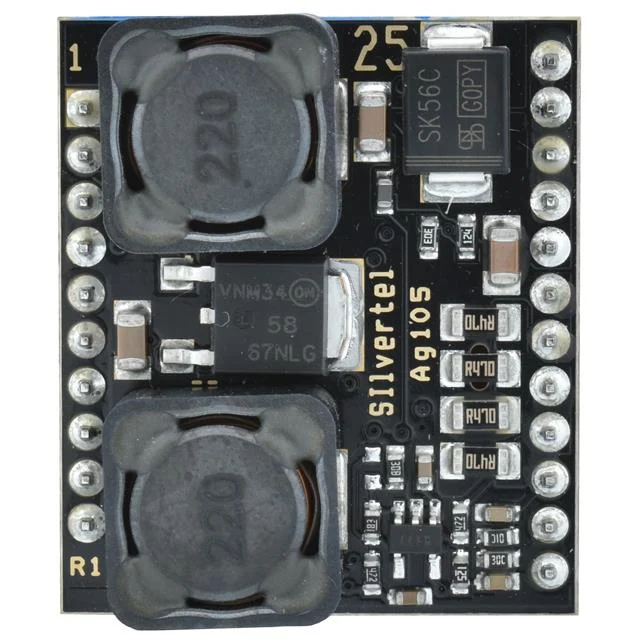
The Silvertel AG105 is a compact and efficient lithium-ion battery charger module designed to safely charge lithium-ion batteries. It ensures optimal charging by precisely controlling the voltage and current, thereby prolonging battery life and maintaining safety. The AG105 is ideal for applications requiring reliable and efficient battery charging, such as portable electronics, IoT devices, and backup power systems.
Explore Projects Built with LI-ION BATTERY CHARGER MODULE
 Open Project in Cirkit Designer
 Open Project in Cirkit Designer
 Open Project in Cirkit Designer
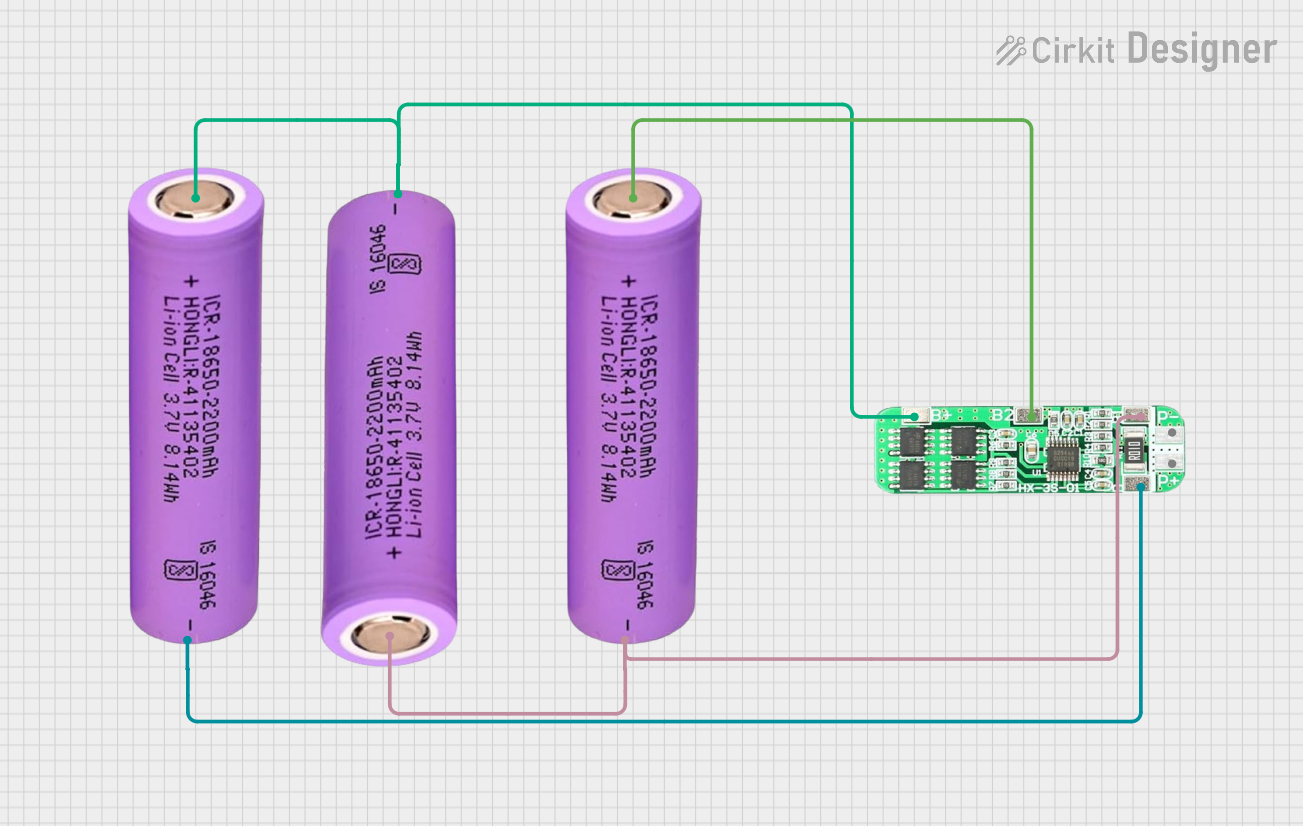 Open Project in Cirkit Designer
Explore Projects Built with LI-ION BATTERY CHARGER MODULE
Open Project in Cirkit DesignerOpen Project in Cirkit DesignerOpen Project in Cirkit DesignerOpen Project in Cirkit DesignerCommon Applications and Use Cases
- Portable electronic devices (e.g., smartphones, tablets)
- IoT devices and sensors
- Power banks and battery packs
- Backup power systems
- Robotics and drones
Technical Specifications
The AG105 module is designed to meet the requirements of lithium-ion battery charging with high efficiency and safety. Below are the key technical specifications:
Key Technical Details
| Parameter | Value |
|---|---|
| Input Voltage Range | 4.5V to 5.5V |
| Output Voltage | 4.2V (fixed) |
| Maximum Charging Current | 1A |
| Efficiency | Up to 90% |
| Operating Temperature | -40°C to +85°C |
| Dimensions | 22mm x 22mm x 8mm |
Pin Configuration and Descriptions
The AG105 module has a simple pinout for easy integration into circuits. Below is the pin configuration:
| Pin Number | Pin Name | Description |
|---|---|---|
| 1 | VIN | Input voltage (4.5V to 5.5V) |
| 2 | GND | Ground connection |
| 3 | BAT+ | Positive terminal of the lithium-ion battery |
| 4 | BAT- | Negative terminal of the lithium-ion battery |
| 5 | CHG_STAT | Charging status indicator (active low) |
Usage Instructions
The AG105 module is straightforward to use and can be integrated into a variety of circuits. Follow the steps below to use the module effectively:
How to Use the Component in a Circuit
- Power Supply: Connect a regulated DC power supply (4.5V to 5.5V) to the
VINandGNDpins. - Battery Connection: Connect the lithium-ion battery to the
BAT+andBAT-pins. Ensure correct polarity to avoid damage. - Charging Status: Use the
CHG_STATpin to monitor the charging status. This pin is active low, meaning it will be pulled low when charging is in progress. - Load Connection: If the battery is powering a load, ensure the load is connected in parallel with the battery terminals.
Important Considerations and Best Practices
- Input Voltage: Ensure the input voltage is within the specified range (4.5V to 5.5V). Exceeding this range may damage the module.
- Battery Compatibility: Use only lithium-ion batteries with a nominal voltage of 3.7V and a maximum charging voltage of 4.2V.
- Heat Dissipation: The module may generate heat during operation. Ensure adequate ventilation or heat sinking if necessary.
- Reverse Polarity Protection: The module does not have built-in reverse polarity protection. Double-check all connections before powering the circuit.
- Charging Current: The maximum charging current is 1A. Ensure the battery and power supply can handle this current.
Example: Using the AG105 with an Arduino UNO
The AG105 can be used with an Arduino UNO to monitor the charging status. Below is an example code snippet:
// Example code to monitor the charging status of the AG105 module
// Connect the CHG_STAT pin of the AG105 to Arduino pin 7

const int chargeStatusPin = 7; // Pin connected to CHG_STAT

void setup() {
  pinMode(chargeStatusPin, INPUT); // Set CHG_STAT pin as input
  Serial.begin(9600); // Initialize serial communication
}

void loop() {
  int chargeStatus = digitalRead(chargeStatusPin); // Read CHG_STAT pin

  if (chargeStatus == LOW) {
    // Charging in progress (CHG_STAT is active low)
    Serial.println("Battery is charging...");
  } else {
    // Charging complete or no battery connected
    Serial.println("Battery is fully charged or not connected.");
  }

  delay(1000); // Wait for 1 second before checking again
}
Troubleshooting and FAQs
Common Issues and Solutions
Module Not Powering On
- Cause: Input voltage is outside the specified range.
- Solution: Verify that the input voltage is between 4.5V and 5.5V.
Battery Not Charging
- Cause: Incorrect battery connection or damaged battery.
- Solution: Check the battery connections and ensure the battery is functional.
Excessive Heat
- Cause: High ambient temperature or insufficient ventilation.
- Solution: Improve ventilation or add a heat sink to the module.
CHG_STAT Pin Not Responding
- Cause: Faulty connection or damaged module.
- Solution: Verify the connection to the CHG_STAT pin and check the module for damage.
FAQs
Q1: Can I use the AG105 to charge batteries with a different chemistry?
A1: No, the AG105 is specifically designed for lithium-ion batteries with a nominal voltage of 3.7V and a maximum charging voltage of 4.2V.
Q2: What happens if I exceed the maximum charging current?
A2: Exceeding the maximum charging current of 1A may damage the module or the battery. Always ensure the current is within the specified limit.
Q3: Can I use the AG105 with a solar panel?
A3: Yes, as long as the solar panel provides a regulated output voltage between 4.5V and 5.5V.
Q4: How do I know when the battery is fully charged?
A4: The CHG_STAT pin will go high (inactive) when the battery is fully charged. You can monitor this pin using an LED or a microcontroller.
By following this documentation, you can safely and effectively use the Silvertel AG105 lithium-ion battery charger module in your projects.