
How to Use Step Up Module 5V/8V/9V/12V 1.5A: Examples, Pinouts, and Specs
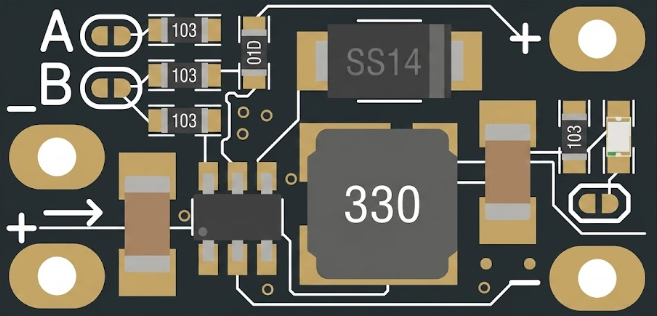
 Design with Step Up Module 5V/8V/9V/12V 1.5A in Cirkit Designer
Introduction
The Step Up Module 5V/8V/9V/12V 1.5A is a DC-DC boost converter designed to increase a lower input voltage (e.g., 5V) to a higher, selectable output voltage (e.g., 8V, 9V, or 12V). This module is ideal for applications where a stable, higher voltage is required from a lower voltage source, such as USB power supplies, batteries, or solar panels. It is compact, efficient, and capable of delivering up to 1.5A of output current.
Explore Projects Built with Step Up Module 5V/8V/9V/12V 1.5A
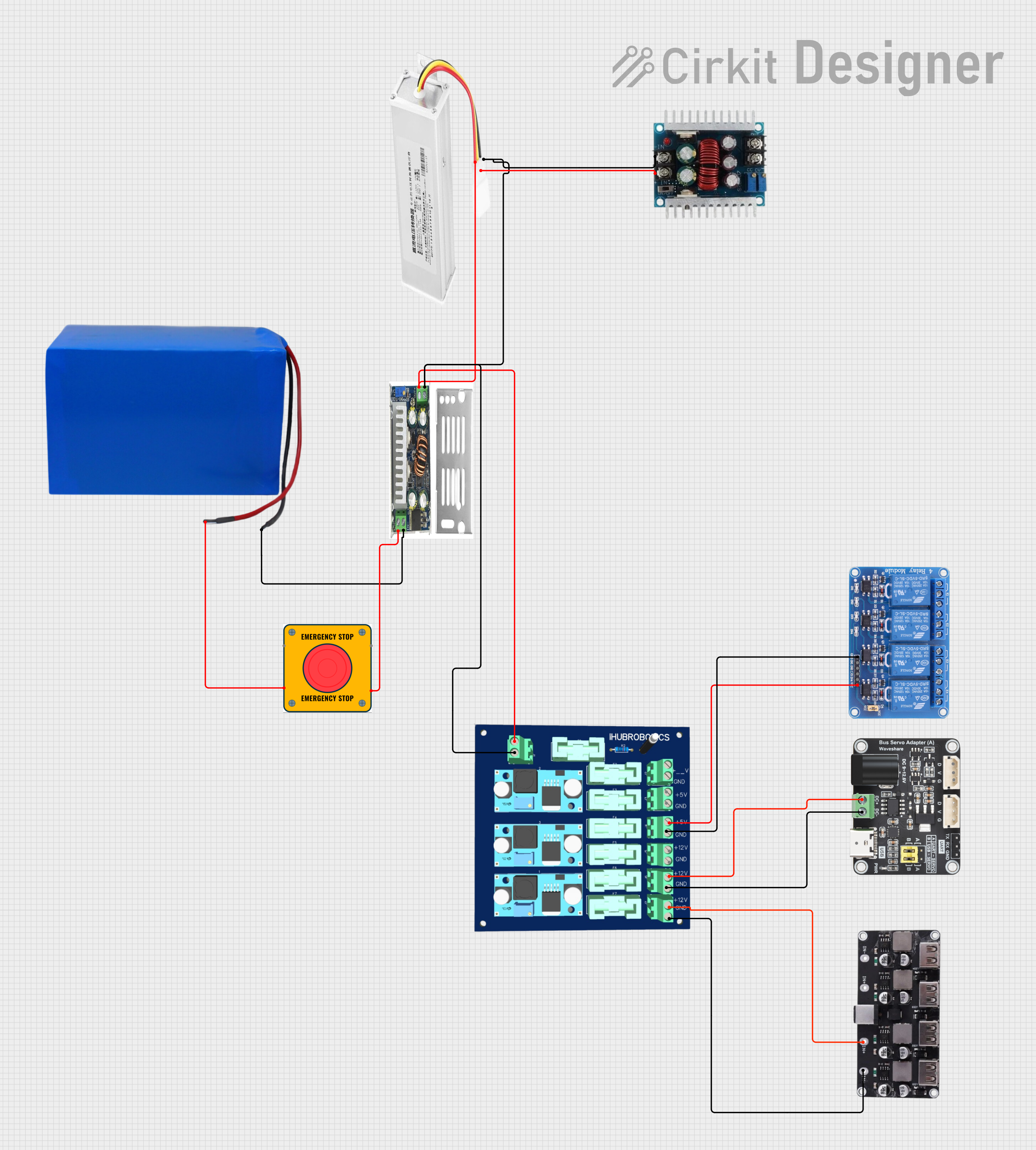 Open Project in Cirkit Designer
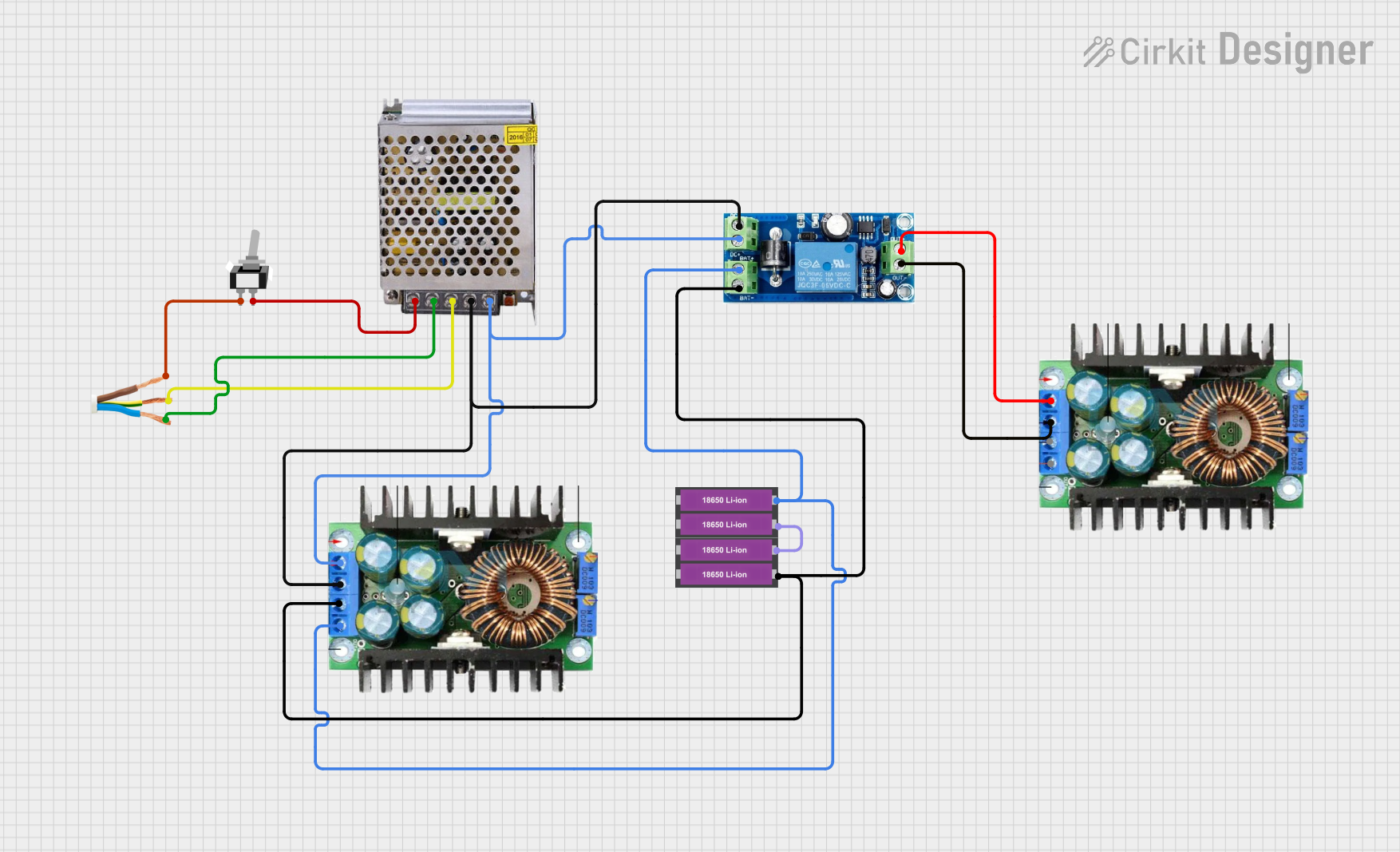 Open Project in Cirkit Designer
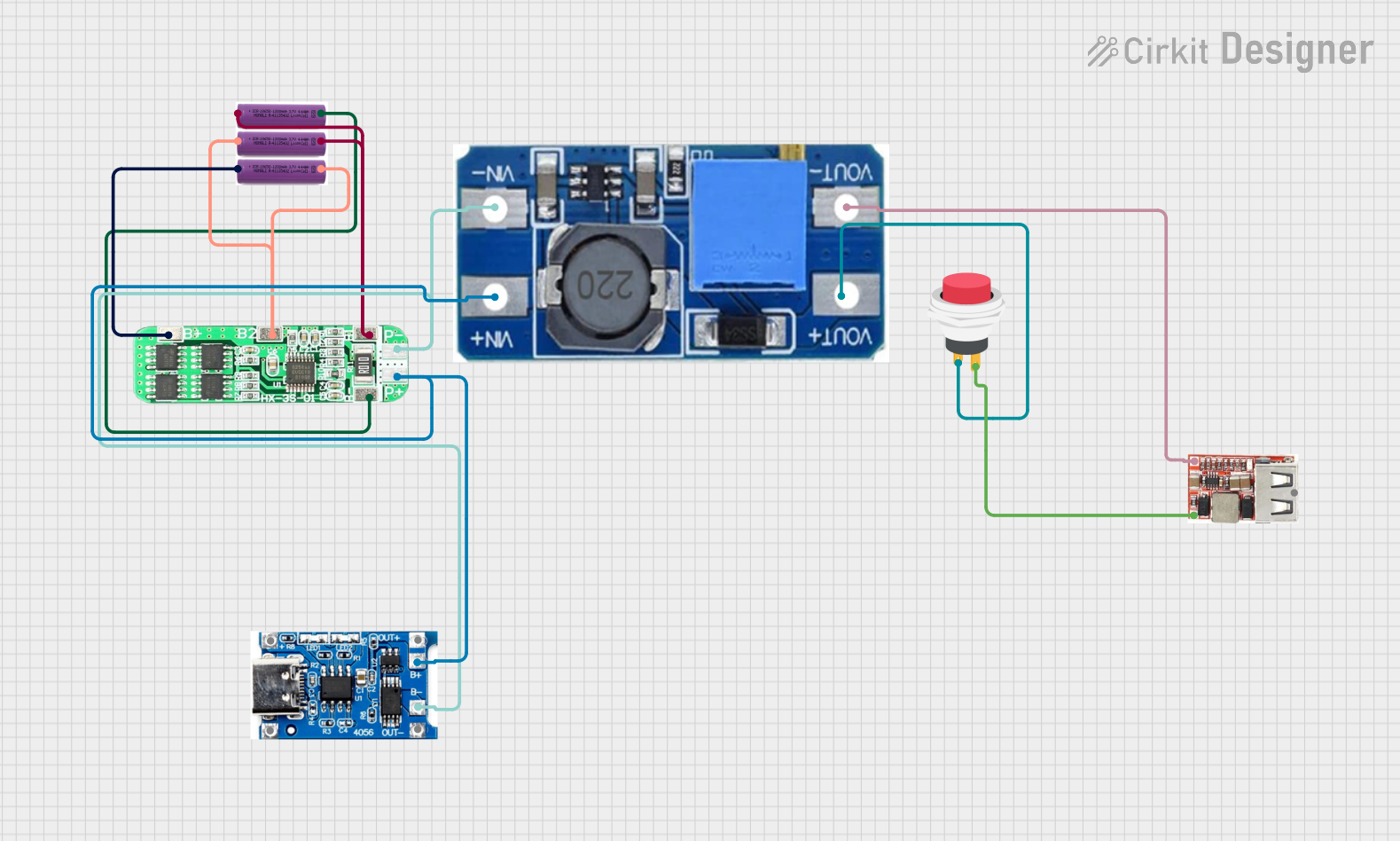 Open Project in Cirkit Designer
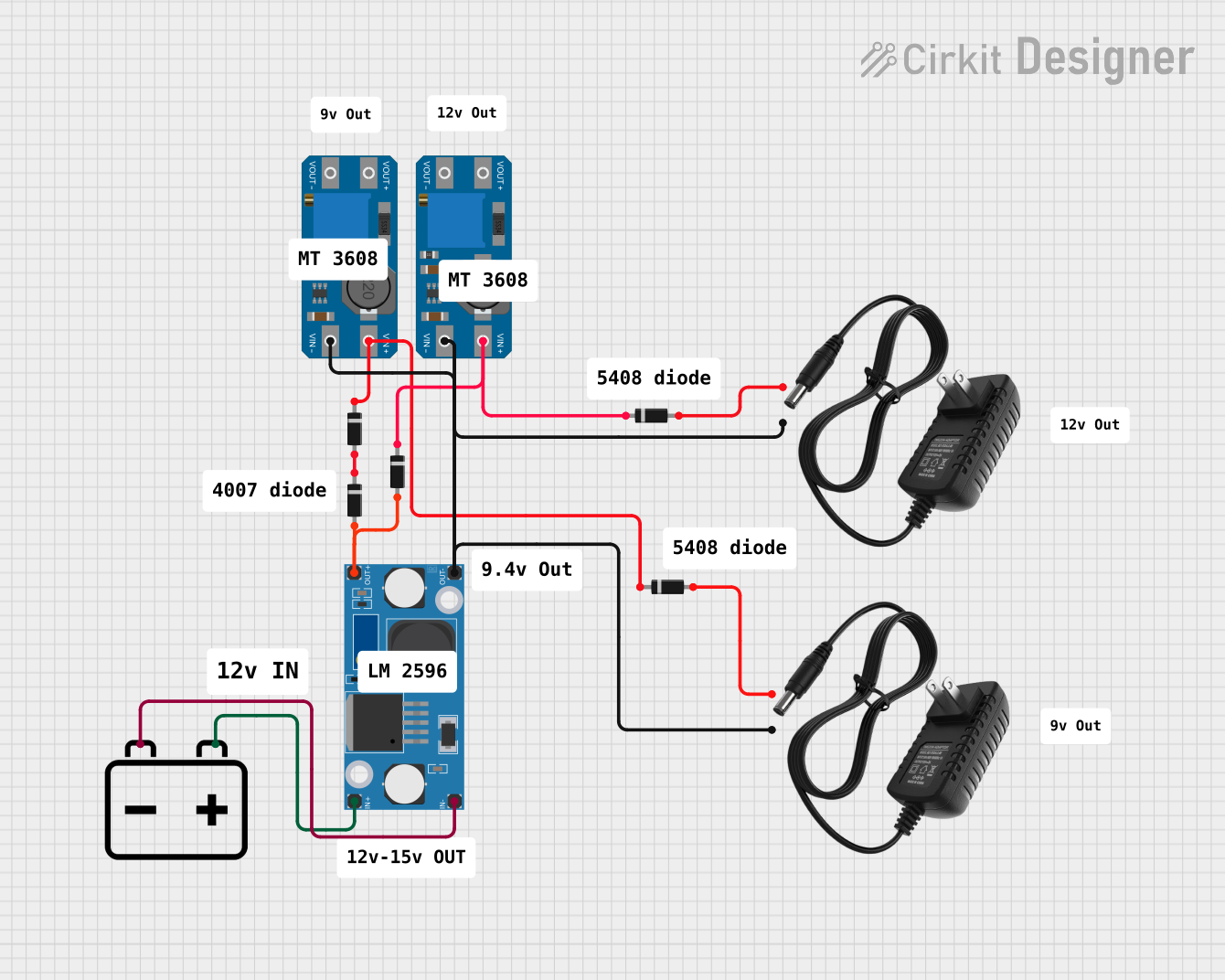 Open Project in Cirkit Designer
Explore Projects Built with Step Up Module 5V/8V/9V/12V 1.5A
Open Project in Cirkit DesignerOpen Project in Cirkit DesignerOpen Project in Cirkit DesignerOpen Project in Cirkit DesignerCommon Applications
- Powering devices that require higher voltage from a lower voltage source
- Battery-powered projects
- Portable electronics
- DIY electronics and prototyping
- Arduino and microcontroller-based projects
Technical Specifications
Key Specifications
| Parameter | Value |
|---|---|
| Input Voltage Range | 2.5V to 6V |
| Output Voltage Options | 5V, 8V, 9V, 12V (selectable) |
| Maximum Output Current | 1.5A |
| Efficiency | Up to 92% (depending on load) |
| Dimensions | ~36mm x 17mm x 14mm |
| Operating Temperature | -40°C to +85°C |
Pin Configuration and Descriptions
| Pin Name | Description |
|---|---|
| VIN | Positive input voltage (2.5V to 6V) |
| GND | Ground (common for input and output) |
| VOUT | Positive output voltage (5V, 8V, 9V, or 12V) |
| SEL | Voltage selection pin (used to set output voltage) |
Usage Instructions
How to Use the Step Up Module
Connect the Input Voltage:
- Connect the positive terminal of your power source to the
VINpin. - Connect the negative terminal of your power source to the
GNDpin. - Ensure the input voltage is within the range of 2.5V to 6V.
- Connect the positive terminal of your power source to the
Set the Output Voltage:
- Use the
SELpin to configure the desired output voltage. This is typically done by connecting theSELpin to a specific voltage level or using a jumper (refer to the module's datasheet for exact configuration).
- Use the
Connect the Load:
- Connect the positive terminal of your load to the
VOUTpin. - Connect the negative terminal of your load to the
GNDpin.
- Connect the positive terminal of your load to the
Power On:
- Turn on the power source. The module will boost the input voltage to the selected output voltage.
Important Considerations
- Input Voltage Range: Ensure the input voltage does not exceed 6V to avoid damaging the module.
- Output Current: Do not exceed the maximum output current of 1.5A to prevent overheating or failure.
- Heat Dissipation: For high current loads, consider adding a heatsink or ensuring proper ventilation to maintain efficiency and prevent overheating.
- Voltage Selection: Double-check the output voltage setting before connecting sensitive devices to avoid damage.
Example: Using with an Arduino UNO
The Step Up Module can be used to power an Arduino UNO from a 3.7V Li-ion battery by boosting the voltage to 5V. Below is an example of how to connect the module:
- Connect the battery's positive terminal to the
VINpin and the negative terminal to theGNDpin. - Set the output voltage to 5V using the
SELpin. - Connect the
VOUTpin to the Arduino's5Vpin and theGNDpin to the Arduino'sGNDpin.
Here is a simple Arduino sketch to blink an LED while powered by the Step Up Module:
// Simple LED Blink Example
// This code blinks an LED connected to pin 13 of the Arduino UNO.
// Ensure the Step Up Module is providing a stable 5V to the Arduino.

void setup() {
  pinMode(13, OUTPUT); // Set pin 13 as an output pin
}

void loop() {
  digitalWrite(13, HIGH); // Turn the LED on
  delay(1000);            // Wait for 1 second
  digitalWrite(13, LOW);  // Turn the LED off
  delay(1000);            // Wait for 1 second
}
Troubleshooting and FAQs
Common Issues and Solutions
| Issue | Possible Cause | Solution |
|---|---|---|
| No output voltage | Incorrect input voltage | Ensure input voltage is within 2.5V-6V. |
| Output voltage is unstable | Load exceeds maximum current rating | Reduce the load to below 1.5A. |
| Module overheats | High current draw or poor ventilation | Add a heatsink or improve airflow. |
| Incorrect output voltage | SEL pin not configured properly | Verify and adjust the SEL pin settings. |
FAQs
Can I use this module with a 3.7V Li-ion battery?
- Yes, the module can boost 3.7V to 5V, 8V, 9V, or 12V, depending on your configuration.
What happens if I exceed the maximum input voltage?
- Exceeding 6V on the input can damage the module. Always stay within the specified range.
Can I use this module to power a Raspberry Pi?
- While the module can provide 5V, ensure the current demand of the Raspberry Pi (and peripherals) does not exceed 1.5A.
How do I select the output voltage?
- Refer to the module's datasheet for specific instructions on configuring the
SELpin to set the desired output voltage.
- Refer to the module's datasheet for specific instructions on configuring the
By following this documentation, you can effectively use the Step Up Module 5V/8V/9V/12V 1.5A in your projects.