
How to Use LM2596: Examples, Pinouts, and Specs
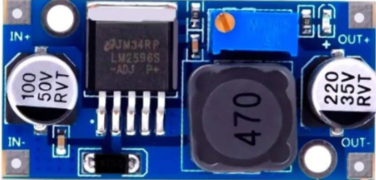
 Design with LM2596 in Cirkit Designer
Introduction
The LM2596 is a step-down (buck) voltage regulator designed to efficiently convert a higher input voltage into a stable, regulated output voltage. Manufactured by Arduino under the part ID "Nano," this component is capable of delivering up to 3A of output current. Its wide input voltage range and high efficiency make it ideal for use in power supply circuits, battery chargers, and embedded systems.
Explore Projects Built with LM2596
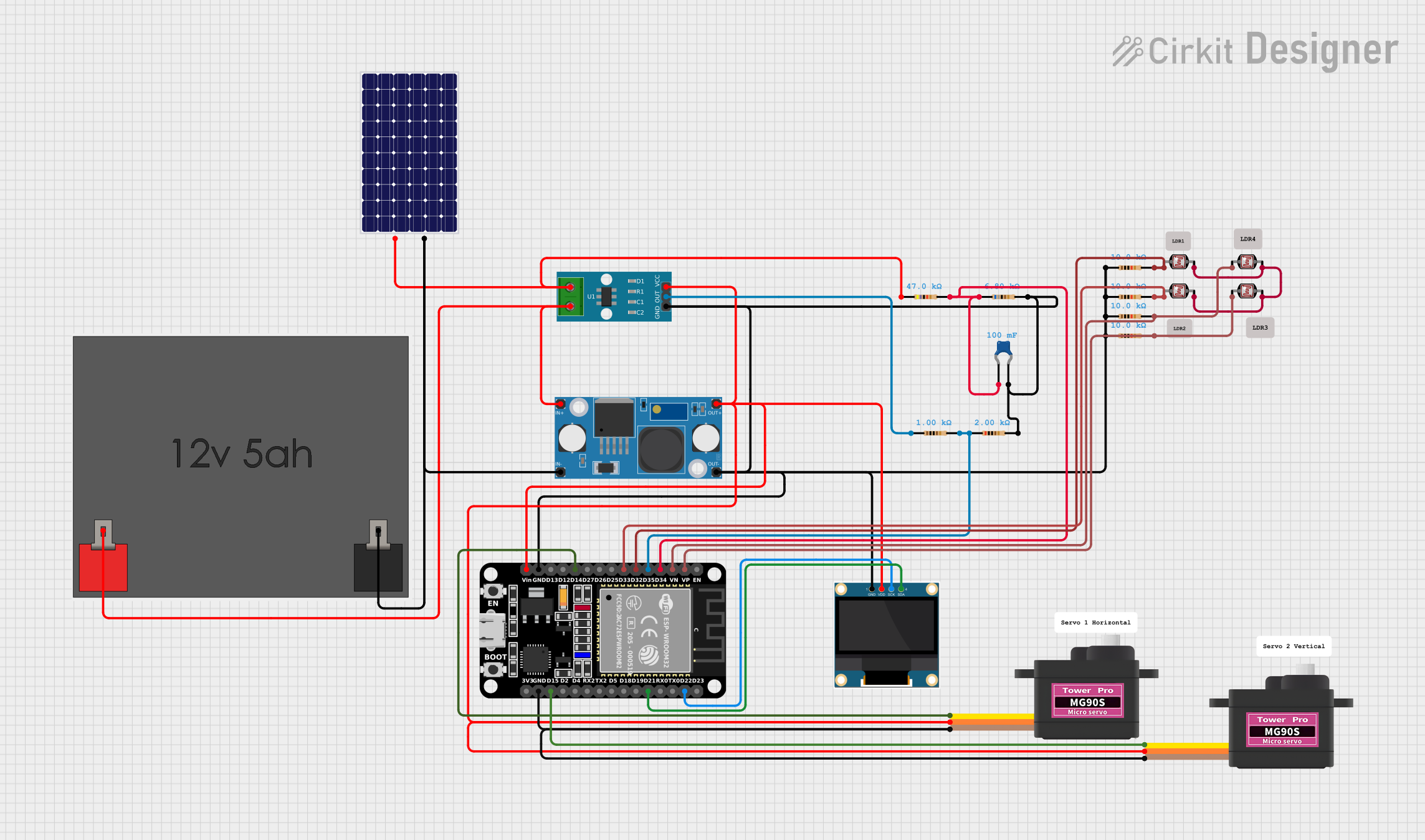 Open Project in Cirkit Designer
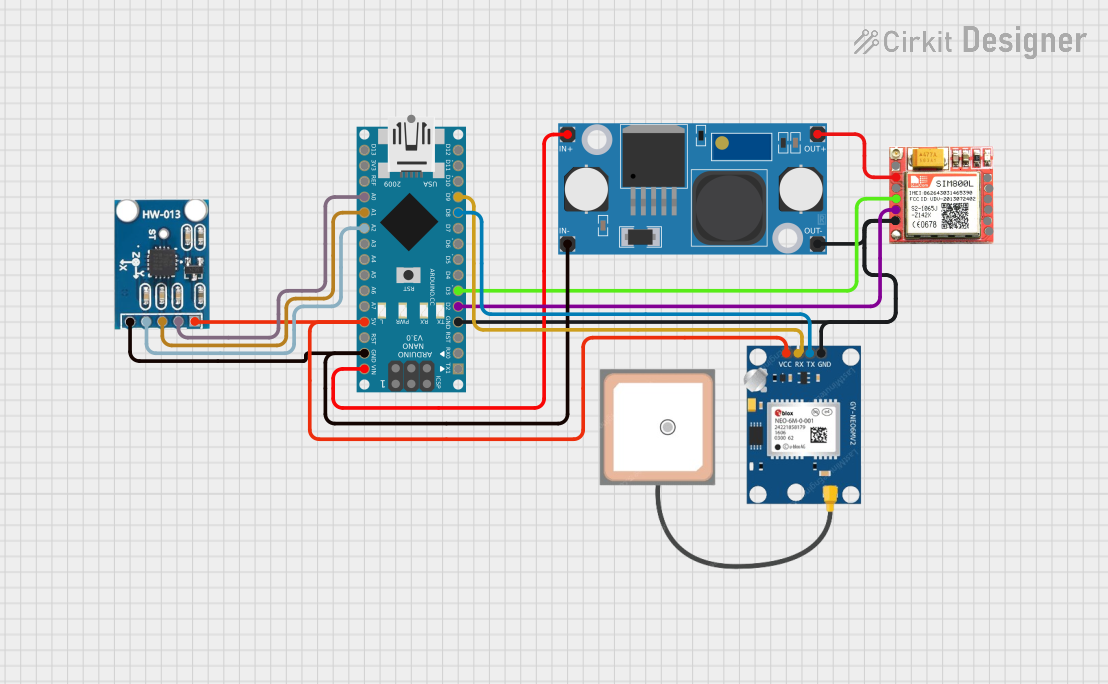 Open Project in Cirkit Designer
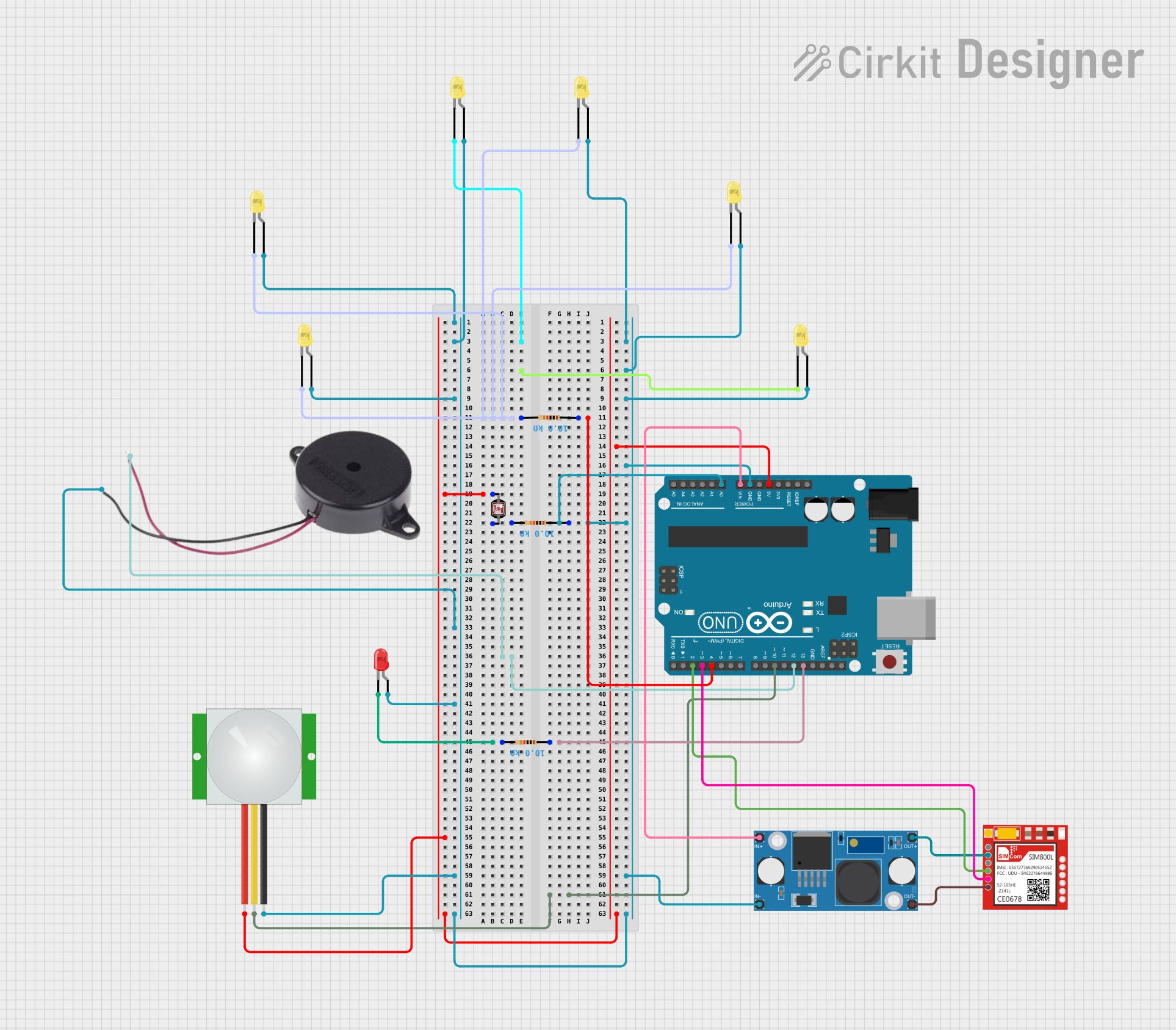 Open Project in Cirkit Designer
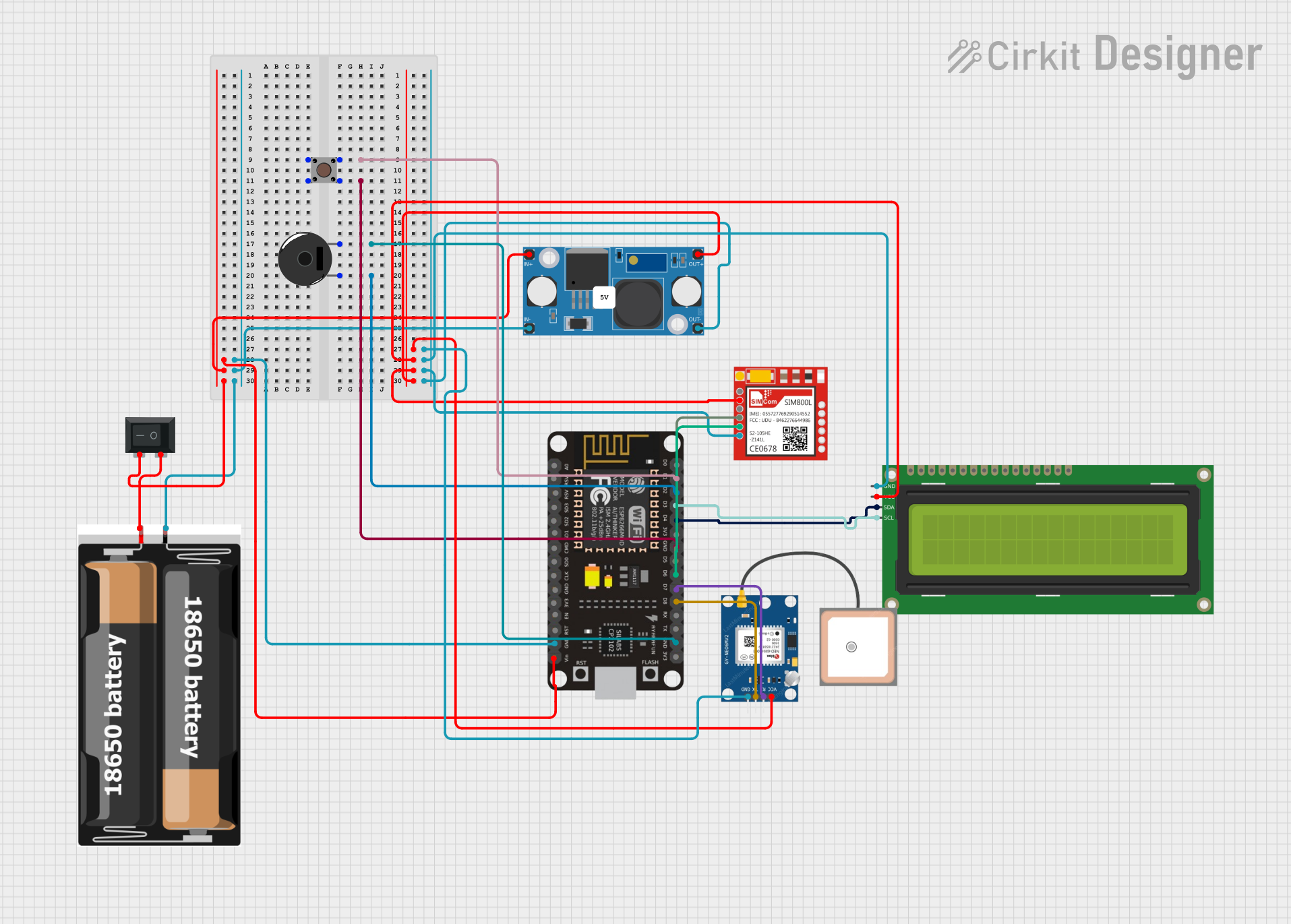 Open Project in Cirkit Designer
Explore Projects Built with LM2596
Open Project in Cirkit DesignerOpen Project in Cirkit DesignerOpen Project in Cirkit DesignerOpen Project in Cirkit DesignerCommon Applications
- DC-DC power supply modules
- Battery-powered devices
- Voltage regulation for microcontrollers and sensors
- LED drivers
- Industrial automation systems
Technical Specifications
The LM2596 is a versatile and robust voltage regulator. Below are its key technical details:
General Specifications
| Parameter | Value |
|---|---|
| Input Voltage Range | 4.5V to 40V |
| Output Voltage Range | 1.23V to 37V (adjustable version) |
| Maximum Output Current | 3A |
| Efficiency | Up to 90% |
| Switching Frequency | 150 kHz |
| Operating Temperature | -40°C to +125°C |
Pin Configuration
The LM2596 is typically available in a 5-pin TO-220 package. Below is the pinout description:
| Pin Number | Pin Name | Description |
|---|---|---|
| 1 | VIN | Input voltage pin. Connect to the unregulated DC input voltage. |
| 2 | Output | Regulated output voltage pin. Connect to the load. |
| 3 | Ground | Ground pin. Connect to the circuit ground. |
| 4 | Feedback | Feedback pin. Used to set the output voltage via an external resistor divider. |
| 5 | ON/OFF | Enable pin. Used to turn the regulator on or off. |
Usage Instructions
The LM2596 is straightforward to use in a circuit. Below are the steps and considerations for proper usage:
Basic Circuit Design
- Input Capacitor: Place a capacitor (e.g., 100 µF) close to the VIN pin to stabilize the input voltage.
- Output Capacitor: Use a capacitor (e.g., 220 µF) at the output to reduce voltage ripple.
- Feedback Resistor Divider: Connect a resistor divider to the Feedback pin to set the desired output voltage. The output voltage is calculated using the formula: [ V_{OUT} = V_{REF} \times \left(1 + \frac{R1}{R2}\right) ] where ( V_{REF} ) is typically 1.23V.
- Inductor Selection: Choose an inductor with a suitable current rating (e.g., 33 µH) to ensure stable operation.
Example Circuit
Below is a typical application circuit for the LM2596:
VIN ----[Input Capacitor]----+----> LM2596 VIN
                             |
                            Load
                             |
GND -------------------------+----> LM2596 GND
Using LM2596 with Arduino UNO
The LM2596 can be used to power an Arduino UNO by stepping down a higher voltage (e.g., 12V) to 5V. Below is an example Arduino code to monitor the output voltage using an analog pin:
// LM2596 Output Voltage Monitoring with Arduino UNO
const int voltagePin = A0; // Connect LM2596 output to A0 via a voltage divider
const float referenceVoltage = 5.0; // Arduino UNO reference voltage
const float resistorRatio = 5.7; // Ratio of the resistor divider (e.g., R1 = 10k, R2 = 2.2k)

void setup() {
  Serial.begin(9600); // Initialize serial communication
}

void loop() {
  int analogValue = analogRead(voltagePin); // Read the analog pin
  float voltage = (analogValue / 1023.0) * referenceVoltage * resistorRatio;

  // Print the measured voltage to the Serial Monitor
  Serial.print("Output Voltage: ");
  Serial.print(voltage);
  Serial.println(" V");

  delay(1000); // Wait for 1 second before the next reading
}
Best Practices
- Use low-ESR capacitors for better performance.
- Ensure proper heat dissipation by using a heatsink if the regulator operates at high currents.
- Avoid exceeding the maximum input voltage (40V) to prevent damage.
- Use shielded inductors to minimize electromagnetic interference (EMI).
Troubleshooting and FAQs
Common Issues
Output Voltage Not Stable
- Cause: Insufficient input or output capacitance.
- Solution: Add or replace capacitors with low-ESR types.
Regulator Overheating
- Cause: High current draw or inadequate heat dissipation.
- Solution: Attach a heatsink to the LM2596 and ensure proper ventilation.
No Output Voltage
- Cause: Incorrect pin connections or damaged component.
- Solution: Verify the wiring and check the input voltage.
High Output Ripple
- Cause: Poor capacitor selection or layout issues.
- Solution: Use low-ESR capacitors and minimize trace lengths.
FAQs
Q: Can the LM2596 be used for 3.3V output?
A: Yes, the LM2596 adjustable version can be configured for a 3.3V output using the appropriate resistor divider.
Q: Is the LM2596 suitable for battery charging?
A: Yes, it can be used for battery charging applications, but additional circuitry may be required for proper charge control.
Q: What is the maximum current the LM2596 can handle?
A: The LM2596 can deliver up to 3A of output current, provided proper heat dissipation is ensured.
Q: Can I use the LM2596 with an Arduino Nano?
A: Yes, the LM2596 can step down a higher voltage to 5V or 3.3V to power an Arduino Nano.
By following this documentation, users can effectively integrate the LM2596 into their projects and troubleshoot common issues.