
How to Use Light Switch: Examples, Pinouts, and Specs
 Design with Light Switch in Cirkit Designer
Introduction
A light switch is a simple yet essential electronic component used to control the flow of electricity to a light fixture. By toggling the switch, users can turn a light on or off, making it a fundamental part of residential, commercial, and industrial electrical systems. Light switches come in various designs, including toggle, rocker, push-button, and touch-sensitive types, to suit different applications and aesthetic preferences.
Explore Projects Built with Light Switch
 Open Project in Cirkit Designer
 Open Project in Cirkit Designer
 Open Project in Cirkit Designer
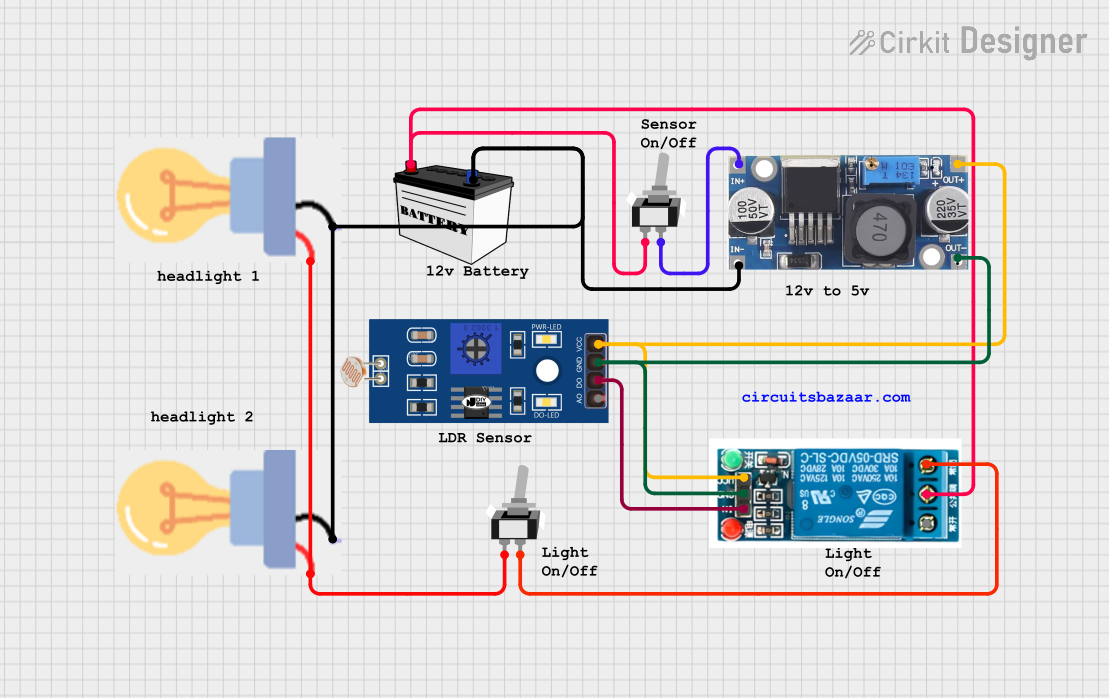 Open Project in Cirkit Designer
Explore Projects Built with Light Switch
Open Project in Cirkit DesignerOpen Project in Cirkit DesignerOpen Project in Cirkit DesignerOpen Project in Cirkit DesignerCommon Applications and Use Cases
- Controlling lighting in homes, offices, and public spaces
- Managing power to appliances or devices
- Integrating with smart home systems for automated lighting control
- Used in industrial settings to control machinery or indicator lights
Technical Specifications
The technical specifications of a light switch can vary depending on its type and intended application. Below are general specifications for a standard household light switch:
Key Technical Details
- Rated Voltage: 120V AC (North America) or 230V AC (Europe)
- Rated Current: Typically 10A to 15A
- Power Rating: Up to 1800W (for 120V systems) or 3450W (for 230V systems)
- Switch Type: Single-pole, double-pole, or three-way
- Material: Flame-retardant plastic housing with metal contacts
- Lifespan: 10,000 to 50,000 switching cycles
Pin Configuration and Descriptions
A standard single-pole light switch typically has three terminals:
| Pin Name | Description |
|---|---|
| Line (L) | Connects to the live (hot) wire from the power source. |
| Load | Connects to the live wire leading to the light fixture. |
| Ground (GND) | Connects to the ground wire for safety and to prevent electrical shock hazards. |
For three-way switches, additional terminals (e.g., traveler terminals) are present to allow control of a light fixture from two locations.
Usage Instructions
How to Use the Component in a Circuit
- Turn Off Power: Before installation, ensure the power supply to the circuit is turned off at the breaker panel.
- Identify Wires: Locate the live (line), load, and ground wires in the electrical box.
- Connect Wires:
- Attach the live wire to the Line (L) terminal.
- Attach the wire leading to the light fixture to the Load terminal.
- Connect the ground wire to the Ground (GND) terminal.
- Secure the Switch: Mount the switch into the electrical box and secure it with screws.
- Restore Power: Turn the power back on and test the switch to ensure proper operation.
Important Considerations and Best Practices
- Always follow local electrical codes and regulations when installing a light switch.
- Use a voltage tester to confirm that the power is off before handling wires.
- Ensure the switch's voltage and current ratings match the requirements of your circuit.
- For smart switches, follow the manufacturer's instructions for pairing and configuration.
Example: Connecting a Light Switch to an Arduino UNO
A light switch can be used as an input to an Arduino UNO to detect its on/off state. Below is an example code snippet:
// Define the pin connected to the light switch
const int switchPin = 2;  // Digital pin 2 is used for the light switch
const int ledPin = 13;    // Built-in LED on pin 13 for output

void setup() {
  pinMode(switchPin, INPUT_PULLUP);  // Configure switch pin as input with pull-up resistor
  pinMode(ledPin, OUTPUT);           // Configure LED pin as output
  Serial.begin(9600);                // Initialize serial communication for debugging
}

void loop() {
  int switchState = digitalRead(switchPin);  // Read the state of the switch

  if (switchState == LOW) {  // Switch is pressed (LOW due to pull-up resistor)
    digitalWrite(ledPin, HIGH);  // Turn on the LED
    Serial.println("Switch is ON");
  } else {
    digitalWrite(ledPin, LOW);   // Turn off the LED
    Serial.println("Switch is OFF");
  }

  delay(100);  // Small delay for debounce
}
Note: In this example, the light switch is connected to digital pin 2 of the Arduino UNO. A pull-up resistor is used to ensure a stable HIGH state when the switch is open.
Troubleshooting and FAQs
Common Issues Users Might Face
Light Does Not Turn On:
- Ensure the power supply is turned on and functioning.
- Verify that the wiring connections are correct and secure.
- Check if the light bulb is functional.
Switch Feels Warm:
- This may indicate an overloaded circuit. Ensure the switch's current rating matches the load.
Flickering Light:
- Check for loose connections or a faulty light bulb.
- If using a dimmer switch, ensure it is compatible with the light fixture.
Switch Does Not Respond:
- Confirm that the switch is not damaged or worn out.
- Test the circuit with a multimeter to identify potential issues.
Solutions and Tips for Troubleshooting
- Use a multimeter to test for continuity across the switch terminals when toggled.
- Replace the switch if it shows signs of wear, such as loose toggles or damaged contacts.
- For smart switches, ensure proper Wi-Fi connectivity and firmware updates.
By following this documentation, users can confidently install, use, and troubleshoot a light switch in various applications.