
How to Use 18650 Li-Ion Battery: Examples, Pinouts, and Specs
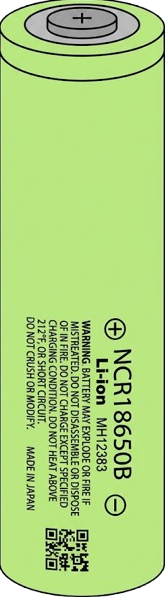
 Design with 18650 Li-Ion Battery in Cirkit Designer
Introduction
The 18650 Li-Ion battery is a cylindrical rechargeable lithium-ion battery cell, widely recognized for its high energy density, long cycle life, and reliability. With a nominal voltage of 3.6V or 3.7V and a typical capacity ranging from 2000mAh to 3500mAh, it is a popular choice for portable electronics, power tools, flashlights, and electric vehicles. Its compact size (18mm diameter and 65mm length) makes it versatile for various applications.
Common applications include:
- Powering laptops, flashlights, and other portable devices
- Battery packs for electric vehicles and e-bikes
- DIY electronics projects and robotics
- Energy storage systems (e.g., solar power banks)
Explore Projects Built with 18650 Li-Ion Battery
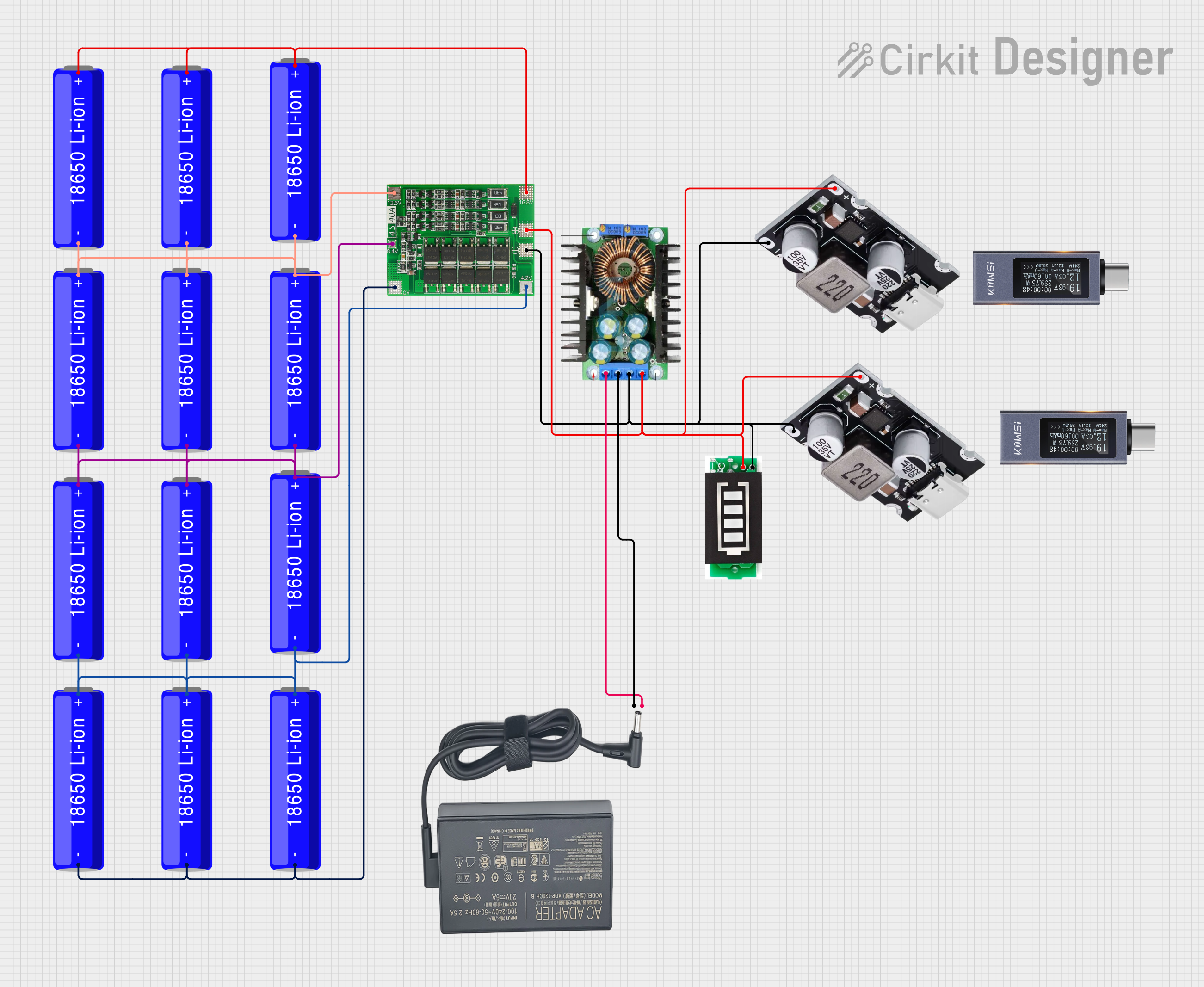 Open Project in Cirkit Designer
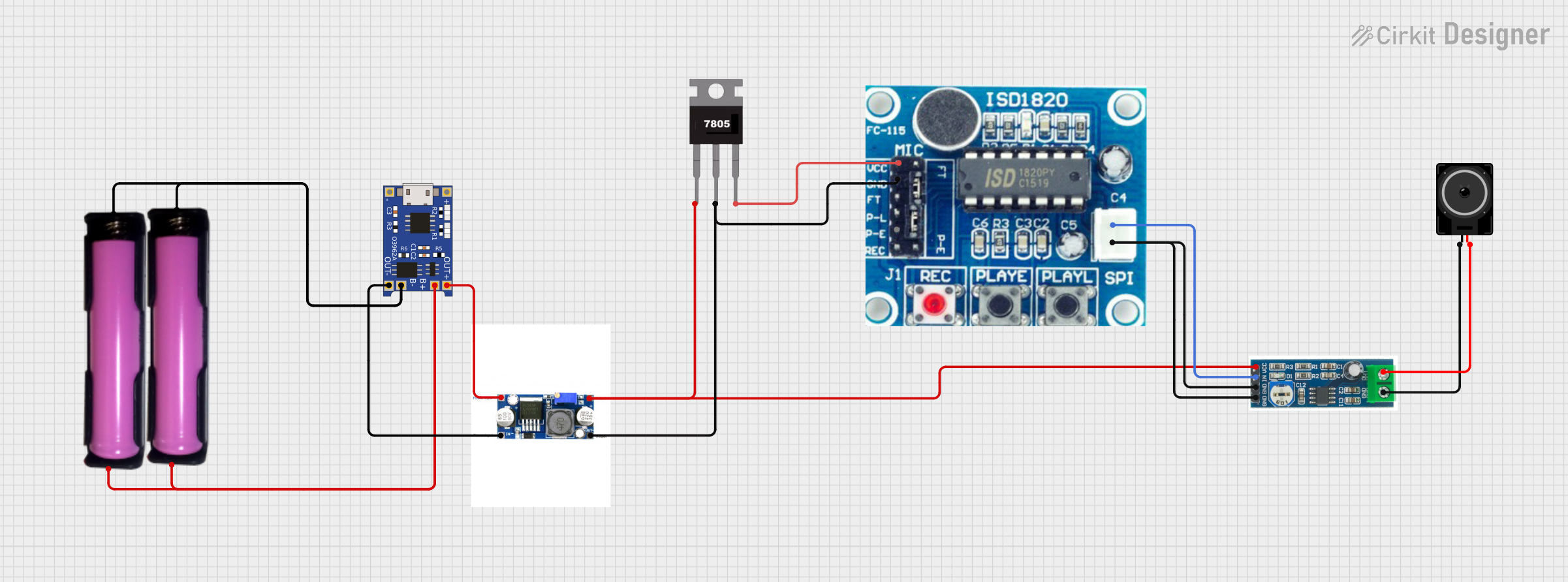 Open Project in Cirkit Designer
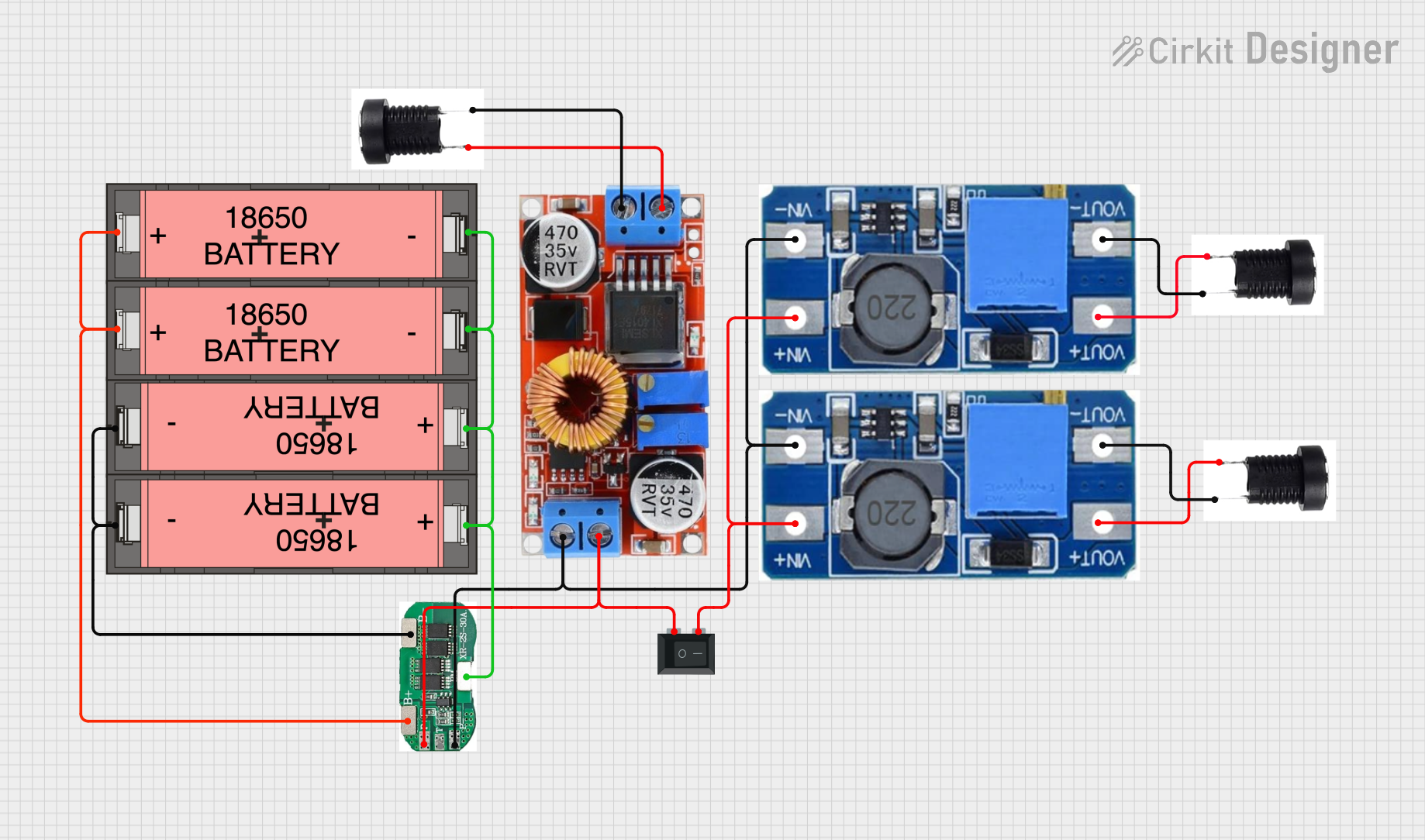 Open Project in Cirkit Designer
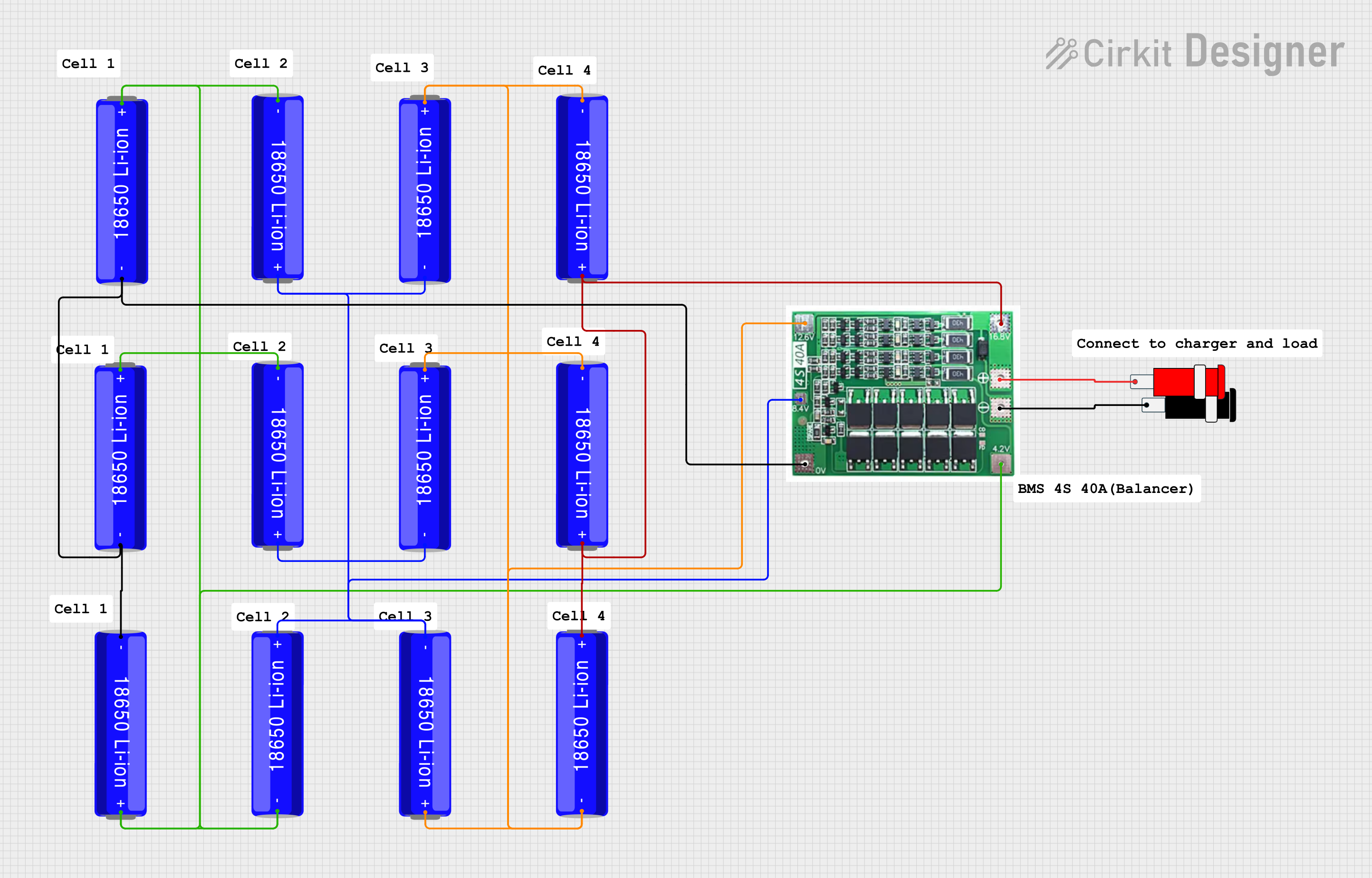 Open Project in Cirkit Designer
Explore Projects Built with 18650 Li-Ion Battery
Open Project in Cirkit DesignerOpen Project in Cirkit DesignerOpen Project in Cirkit DesignerOpen Project in Cirkit DesignerTechnical Specifications
The following table outlines the key technical details of a standard 18650 Li-Ion battery:
| Parameter | Specification |
|---|---|
| Nominal Voltage | 3.6V or 3.7V |
| Fully Charged Voltage | 4.2V |
| Cut-off Voltage | 2.5V to 3.0V |
| Typical Capacity | 2000mAh to 3500mAh |
| Maximum Discharge Current | 5A to 30A (varies by model) |
| Charging Current | Standard: 0.5C, Maximum: 1C |
| Dimensions | 18mm (diameter) x 65mm (length) |
| Weight | ~45g |
| Chemistry | Lithium Cobalt Oxide (LiCoO2) or similar |
| Cycle Life | 300 to 500 cycles (varies by usage) |
Pin Configuration and Descriptions
The 18650 battery has two terminals:
| Pin Name | Description |
|---|---|
| Positive (+) | The positive terminal of the battery. Connect to the positive side of the circuit. |
| Negative (-) | The negative terminal of the battery. Connect to the ground or negative side of the circuit. |
Note: Some 18650 batteries come with built-in protection circuits (protected cells) to prevent overcharging, over-discharging, and short circuits. These may slightly increase the battery's length.
Usage Instructions
How to Use the 18650 Li-Ion Battery in a Circuit
- Determine the Battery's Specifications: Check the battery's capacity, voltage, and maximum discharge current to ensure compatibility with your circuit.
- Use a Battery Holder: Avoid soldering directly onto the battery terminals to prevent damage. Use a battery holder or spring contacts for secure connections.
- Include a Protection Circuit: If using unprotected cells, add a Battery Management System (BMS) or protection circuit to safeguard against overcharging, over-discharging, and short circuits.
- Charging the Battery:
- Use a dedicated Li-Ion battery charger with a constant current/constant voltage (CC/CV) charging profile.
- Ensure the charging voltage does not exceed 4.2V and the charging current is within the recommended range (typically 0.5C to 1C).
- Discharging the Battery:
- Do not discharge below the cut-off voltage (2.5V to 3.0V) to avoid damaging the battery.
- Use a load that does not exceed the battery's maximum discharge current.
Important Considerations and Best Practices
- Temperature Range: Operate the battery within the recommended temperature range (typically -20°C to 60°C). Avoid exposing it to extreme heat or cold.
- Storage: Store the battery at ~50% charge in a cool, dry place if not in use for extended periods.
- Safety: Never puncture, crush, or short-circuit the battery. Dispose of used batteries responsibly according to local regulations.
Example: Using an 18650 Battery with Arduino UNO
To power an Arduino UNO with an 18650 battery, you can use a DC-DC step-up converter to boost the battery's voltage to 5V. Below is an example circuit and code:
Circuit Setup
- Connect the 18650 battery to the input terminals of the DC-DC step-up converter.
- Adjust the converter's output to 5V using a multimeter.
- Connect the converter's output to the Arduino UNO's VIN and GND pins.
Arduino Code Example
// Example code to blink an LED using Arduino UNO powered by an 18650 battery

const int ledPin = 13; // Pin connected to the onboard LED

void setup() {
  pinMode(ledPin, OUTPUT); // Set the LED pin as an output
}

void loop() {
  digitalWrite(ledPin, HIGH); // Turn the LED on
  delay(1000);               // Wait for 1 second
  digitalWrite(ledPin, LOW);  // Turn the LED off
  delay(1000);               // Wait for 1 second
}
Note: Ensure the step-up converter's output is stable and does not exceed 5V to avoid damaging the Arduino.
Troubleshooting and FAQs
Common Issues and Solutions
Battery Not Charging:
- Cause: Faulty charger or protection circuit.
- Solution: Verify the charger output voltage and current. Check for a damaged protection circuit.
Battery Drains Quickly:
- Cause: High self-discharge rate or excessive load.
- Solution: Test the battery's capacity using a battery analyzer. Replace if degraded.
Battery Overheats During Use:
- Cause: Overcurrent or short circuit.
- Solution: Ensure the load does not exceed the battery's maximum discharge current. Use a protection circuit.
Arduino Not Powering On:
- Cause: Insufficient voltage or incorrect connections.
- Solution: Check the step-up converter's output voltage and connections to the Arduino.
FAQs
Q1: Can I use an 18650 battery without a protection circuit?
A1: It is not recommended. Unprotected cells are prone to overcharging, over-discharging, and short circuits, which can lead to safety hazards.
Q2: How do I know if my 18650 battery is protected?
A2: Protected cells are slightly longer (typically 67mm) due to the built-in protection circuit. Check the manufacturer's specifications.
Q3: Can I connect multiple 18650 batteries in series or parallel?
A3: Yes, but ensure you use a proper Battery Management System (BMS) to balance the cells and provide protection.
Q4: How long does an 18650 battery last?
A4: The lifespan depends on usage and charging cycles. Typically, it lasts 300-500 cycles before significant capacity degradation.