
How to Use 테무 48V 태양광 인버터: Examples, Pinouts, and Specs
 Design with 테무 48V 태양광 인버터 in Cirkit Designer
Introduction
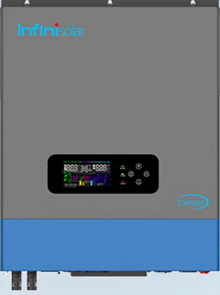
The 테무 48V 태양광 인버터 is a high-performance solar inverter designed to convert the direct current (DC) generated by solar panels into alternating current (AC). This allows the energy produced by solar panels to be used in home or commercial electrical systems. With its robust design and advanced features, this inverter is ideal for renewable energy systems requiring reliable and efficient power conversion.
Explore Projects Built with 테무 48V 태양광 인버터
 Open Project in Cirkit Designer
 Open Project in Cirkit Designer
 Open Project in Cirkit Designer
 Open Project in Cirkit Designer
Explore Projects Built with 테무 48V 태양광 인버터
Open Project in Cirkit DesignerOpen Project in Cirkit DesignerOpen Project in Cirkit DesignerOpen Project in Cirkit DesignerCommon Applications and Use Cases
- Residential solar power systems
- Commercial solar installations
- Off-grid and hybrid solar setups
- Backup power systems with battery integration
- Renewable energy projects requiring 48V DC input
Technical Specifications
Key Technical Details
| Parameter | Specification |
|---|---|
| Manufacturer | 테무 |
| Part ID | 테무 48V 태양광 인버터 |
| Input Voltage Range (DC) | 42V - 60V |
| Output Voltage (AC) | 220V ± 5% |
| Output Frequency | 50Hz / 60Hz (Selectable) |
| Maximum Output Power | 5000W |
| Efficiency | Up to 95% |
| Waveform | Pure Sine Wave |
| Operating Temperature | -10°C to 50°C |
| Cooling Method | Intelligent fan cooling |
| Communication Interface | RS485 / CAN / Wi-Fi (optional) |
| Dimensions | 450mm x 300mm x 150mm |
| Weight | 12kg |
Pin Configuration and Descriptions
The 테무 48V 태양광 인버터 features multiple input/output terminals for DC and AC connections, as well as communication ports. Below is the pin configuration:
DC Input Terminals
| Pin Name | Description |
|---|---|
| DC+ | Positive terminal for solar panel input (48V DC) |
| DC- | Negative terminal for solar panel input (48V DC) |
AC Output Terminals
| Pin Name | Description |
|---|---|
| AC-L | Live wire for AC output (220V AC) |
| AC-N | Neutral wire for AC output |
| Ground | Earth/ground connection |
Communication Ports
| Port Name | Description |
|---|---|
| RS485 | Communication interface for monitoring and control |
| CAN | CAN bus for advanced system integration |
| Wi-Fi (optional) | Wireless communication for remote monitoring (optional module) |
Usage Instructions
How to Use the Component in a Circuit
Connect the Solar Panels:
- Ensure the solar panel array provides a DC voltage within the inverter's input range (42V - 60V).
- Connect the positive terminal of the solar panel array to the
DC+input terminal and the negative terminal to theDC-input terminal.
Connect the AC Output:
- Connect the
AC-Lterminal to the live wire of your electrical system. - Connect the
AC-Nterminal to the neutral wire. - Ensure the ground terminal is properly connected to the earth for safety.
- Connect the
Power On the Inverter:
- Turn on the inverter using the power switch.
- The inverter will automatically detect the input voltage and begin converting DC to AC.
Monitor the System:
- Use the built-in display or connect via RS485, CAN, or Wi-Fi (if equipped) to monitor performance metrics such as input voltage, output power, and efficiency.
Important Considerations and Best Practices
- Battery Integration: If using batteries, ensure they are compatible with the inverter's voltage range and connect them according to the manufacturer's guidelines.
- Cooling: Install the inverter in a well-ventilated area to ensure proper cooling and avoid overheating.
- Surge Protection: Use surge protection devices to safeguard the inverter from voltage spikes.
- Grounding: Proper grounding is essential for safety and to prevent electrical faults.
- Firmware Updates: Regularly check for firmware updates from 테무 to ensure optimal performance and compatibility.
Arduino UNO Integration (Optional Monitoring)
The 테무 48V 태양광 인버터 can be monitored using an Arduino UNO via the RS485 interface. Below is an example code snippet for reading data from the inverter:
#include <ModbusMaster.h>

// Instantiate ModbusMaster object
ModbusMaster node;

void setup() {
  Serial.begin(9600); // Initialize serial communication
  node.begin(1, Serial); // Set Modbus slave ID to 1
}

void loop() {
  uint8_t result;
  uint16_t data[2];

  // Read input registers (example: voltage and current)
  result = node.readInputRegisters(0x0000, 2); // Address 0x0000, 2 registers
  if (result == node.ku8MBSuccess) {
    data[0] = node.getResponseBuffer(0); // Voltage
    data[1] = node.getResponseBuffer(1); // Current

    // Print the data to the serial monitor
    Serial.print("Voltage: ");
    Serial.print(data[0]);
    Serial.println(" V");
    Serial.print("Current: ");
    Serial.print(data[1]);
    Serial.println(" A");
  } else {
    Serial.println("Failed to read data from inverter.");
  }

  delay(1000); // Wait 1 second before next read
}
Note: Ensure you use an RS485-to-TTL module to connect the inverter's RS485 port to the Arduino UNO.
Troubleshooting and FAQs
Common Issues and Solutions
| Issue | Possible Cause | Solution |
|---|---|---|
| Inverter does not power on | Insufficient input voltage | Check solar panel connections and ensure voltage is within range. |
| Low output power | Solar panels not receiving enough sunlight | Verify solar panel placement and clean any debris. |
| Overheating | Poor ventilation or high ambient temperature | Ensure proper airflow and install in a cooler location. |
| Communication failure | Incorrect RS485 wiring or settings | Verify wiring and ensure baud rate matches inverter settings. |
| Output voltage fluctuation | Unstable DC input or load changes | Check DC input stability and ensure load is within inverter capacity. |
FAQs
Can this inverter be used with a battery system?
- Yes, the 테무 48V 태양광 인버터 supports battery integration. Ensure the battery voltage matches the inverter's input range.
What is the maximum solar panel capacity supported?
- The inverter supports up to 5000W of input power. Ensure the total panel output does not exceed this limit.
How do I update the firmware?
- Firmware updates can be performed via the RS485 or Wi-Fi interface. Refer to the manufacturer's website for detailed instructions.
Is this inverter compatible with 110V AC systems?
- No, this model is designed for 220V AC output. For 110V systems, a step-down transformer is required.
By following this documentation, users can effectively integrate and operate the 테무 48V 태양광 인버터 in their solar energy systems.