
How to Use 555 Timer IC: Examples, Pinouts, and Specs
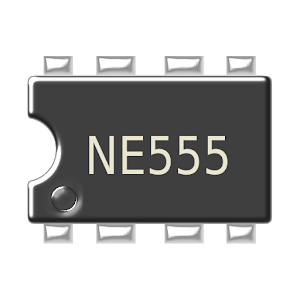
 Design with 555 Timer IC in Cirkit Designer
Introduction
The 555 Timer IC is a versatile and widely used integrated circuit designed for timer, delay, pulse generation, and oscillator applications. It is capable of operating in three primary modes: monostable (one-shot), astable (free-running oscillator), and bistable (flip-flop). Due to its simplicity, reliability, and low cost, the 555 Timer IC is a staple in both hobbyist and professional electronic projects.
Explore Projects Built with 555 Timer IC
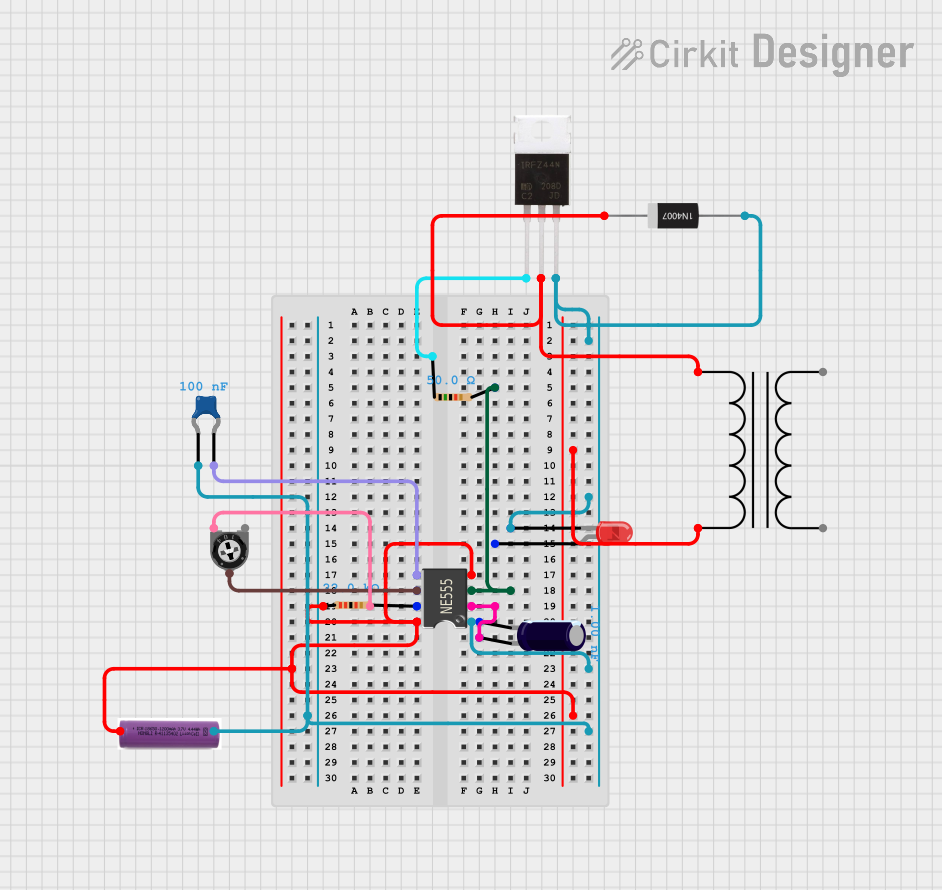 Open Project in Cirkit Designer
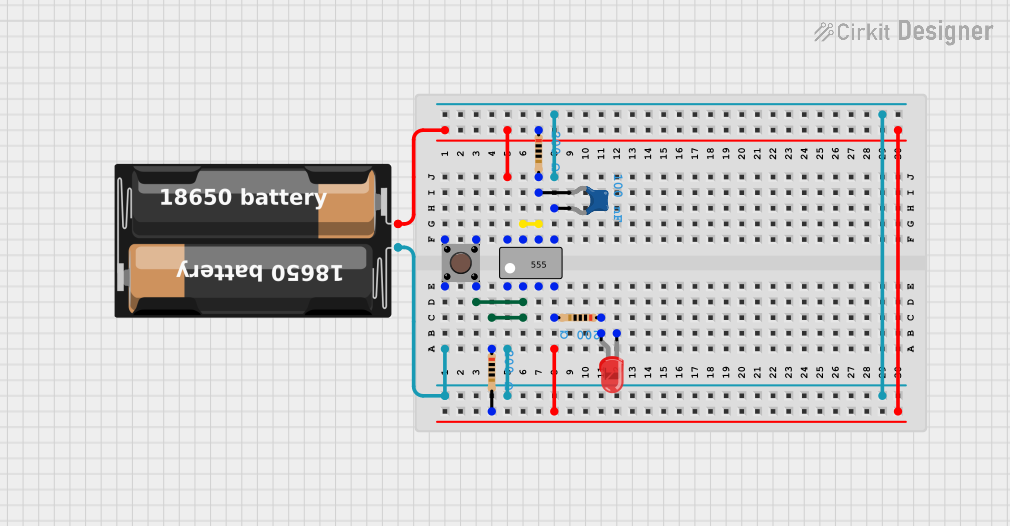 Open Project in Cirkit Designer
 Open Project in Cirkit Designer
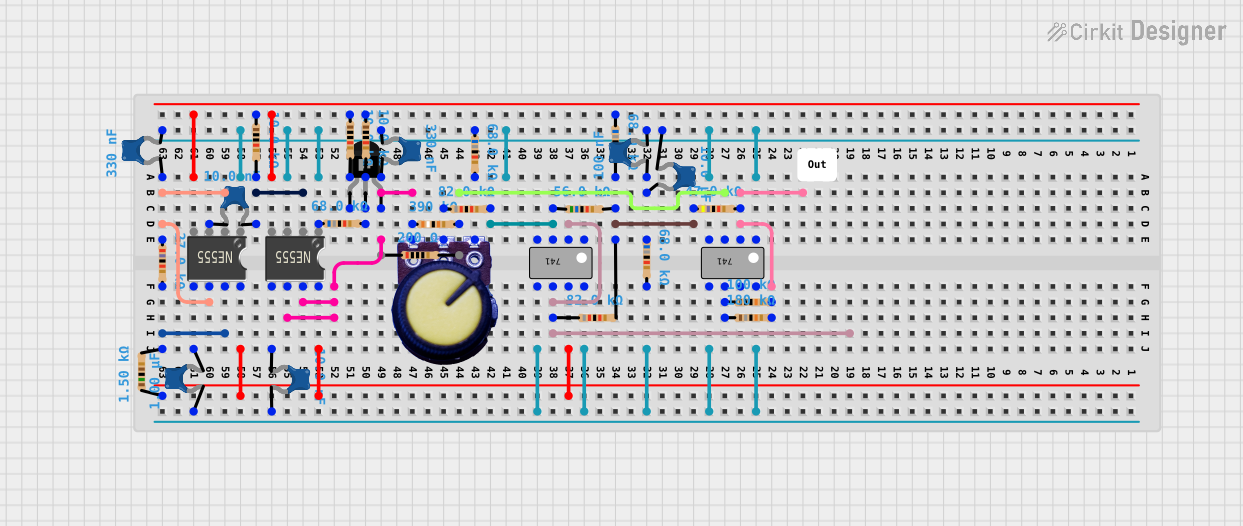 Open Project in Cirkit Designer
Explore Projects Built with 555 Timer IC
Open Project in Cirkit DesignerOpen Project in Cirkit DesignerOpen Project in Cirkit DesignerOpen Project in Cirkit DesignerCommon Applications
- Pulse width modulation (PWM)
- Frequency generation
- Time delay circuits
- LED and lamp flashers
- Tone generation
- Sequential timing circuits
- Switch debouncing
Technical Specifications
Below are the key technical details of the 555 Timer IC:
| Parameter | Value |
|---|---|
| Supply Voltage (Vcc) | 4.5V to 15V |
| Supply Current (Vcc = 5V) | 3 mA (typical) |
| Output Current (Sink/Source) | 200 mA (maximum) |
| Operating Temperature Range | 0°C to 70°C (commercial version) |
| Timing Accuracy | ±1% |
| Maximum Frequency | 500 kHz |
| Package Types | DIP-8, SOIC-8, and others |
Pin Configuration and Descriptions
The 555 Timer IC is typically available in an 8-pin Dual Inline Package (DIP). Below is the pinout and description:
| Pin Number | Pin Name | Description |
|---|---|---|
| 1 | GND | Ground pin. Connect to the negative terminal of the power supply. |
| 2 | TRIG | Trigger input. A low voltage (<1/3 Vcc) on this pin starts the timing cycle. |
| 3 | OUT | Output pin. Provides the output signal (high or low) based on the mode of operation. |
| 4 | RESET | Reset pin. Active low. Resets the timer when pulled to ground. |
| 5 | CTRL | Control voltage. Used to adjust the threshold voltage (optional). |
| 6 | THR | Threshold input. Ends the timing cycle when voltage exceeds 2/3 Vcc. |
| 7 | DISCH | Discharge pin. Used to discharge the timing capacitor. |
| 8 | VCC | Supply voltage. Connect to the positive terminal of the power supply. |
Usage Instructions
The 555 Timer IC can be configured in various modes. Below are instructions for two common configurations: monostable and astable modes.
Monostable Mode (One-Shot Timer)
In monostable mode, the 555 Timer IC generates a single pulse of a specific duration when triggered. This mode is useful for creating time delays.
Circuit Setup
- Connect Pin 1 (GND) to ground and Pin 8 (VCC) to the power supply (4.5V–15V).
- Connect a resistor (R) and capacitor (C) between Pin 7 (DISCH) and ground. These components determine the pulse duration.
- Connect Pin 2 (TRIG) to the input trigger signal.
- Leave Pin 5 (CTRL) unconnected or connect it to ground via a 10nF capacitor for noise reduction.
- Connect Pin 3 (OUT) to the load (e.g., an LED with a current-limiting resistor).
Pulse Duration Formula
The pulse width (T) is determined by the resistor and capacitor values:
T = 1.1 × R × C
Astable Mode (Oscillator)
In astable mode, the 555 Timer IC generates a continuous square wave. This mode is ideal for applications like LED blinking or tone generation.
Circuit Setup
- Connect Pin 1 (GND) to ground and Pin 8 (VCC) to the power supply.
- Connect a resistor (R1) between Pin 8 (VCC) and Pin 7 (DISCH).
- Connect another resistor (R2) between Pin 7 (DISCH) and Pin 6 (THR).
- Connect a capacitor (C) between Pin 6 (THR) and ground.
- Connect Pin 6 (THR) to Pin 2 (TRIG).
- Leave Pin 5 (CTRL) unconnected or connect it to ground via a 10nF capacitor.
- Connect Pin 3 (OUT) to the load.
Frequency and Duty Cycle Formulas
The frequency (f) and duty cycle (D) are determined by the resistor and capacitor values:
f = 1.44 / ((R1 + 2 × R2) × C)
D = (R1 + R2) / (R1 + 2 × R2)
Example: Blinking an LED with Arduino UNO
The 555 Timer IC can also be used in conjunction with an Arduino UNO. Below is an example of controlling an LED using the 555 Timer IC in astable mode.
// Example: Blinking an LED using Arduino and 555 Timer IC
// Connect the 555 Timer's output (Pin 3) to Arduino digital pin 2.

const int timerOutputPin = 2; // Pin connected to 555 Timer's output
const int ledPin = 13;        // Built-in LED on Arduino

void setup() {
  pinMode(timerOutputPin, INPUT); // Set 555 Timer output pin as input
  pinMode(ledPin, OUTPUT);        // Set LED pin as output
}

void loop() {
  int timerState = digitalRead(timerOutputPin); // Read 555 Timer output
  digitalWrite(ledPin, timerState);            // Set LED state based on timer
}
Important Considerations
- Ensure the supply voltage (Vcc) is within the specified range (4.5V–15V).
- Use decoupling capacitors (e.g., 0.1µF) near the Vcc pin to reduce noise.
- Avoid exceeding the maximum output current (200 mA) to prevent damage.
- For precise timing, use high-quality resistors and capacitors with low tolerances.
Troubleshooting and FAQs
Common Issues
No Output Signal
- Check the power supply connections (Pin 1 to GND, Pin 8 to VCC).
- Verify the trigger signal on Pin 2 is within the required range.
- Ensure the timing components (R and C) are properly connected.
Incorrect Timing
- Double-check the resistor and capacitor values.
- Ensure the formula used for calculating timing is correct for the chosen mode.
Overheating
- Ensure the output current does not exceed 200 mA.
- Use a heatsink or reduce the load if necessary.
FAQs
Q: Can the 555 Timer IC operate at 3.3V?
A: The standard 555 Timer IC requires a minimum supply voltage of 4.5V. However, low-voltage variants like the TLC555 can operate at 3.3V.
Q: How do I adjust the frequency in astable mode?
A: Modify the values of R1, R2, or C in the frequency formula. Increasing R or C decreases the frequency, while decreasing them increases it.
Q: Can I use the 555 Timer IC for PWM?
A: Yes, the 555 Timer IC can generate PWM signals by adjusting the duty cycle in astable mode.
By following this documentation, you can effectively use the 555 Timer IC in a variety of electronic projects.