
How to Use 1N5819: Examples, Pinouts, and Specs
 Design with 1N5819 in Cirkit Designer
Introduction
The 1N5819 is a Schottky diode manufactured by SCHOTTKY, designed for applications requiring low forward voltage drop and high-speed switching. Its unique characteristics make it an excellent choice for power rectification, voltage clamping, and reverse polarity protection in electronic circuits. The 1N5819 is widely used in power supplies, DC-DC converters, and solar panel systems due to its efficiency and reliability.
Explore Projects Built with 1N5819
 Open Project in Cirkit Designer
 Open Project in Cirkit Designer
 Open Project in Cirkit Designer
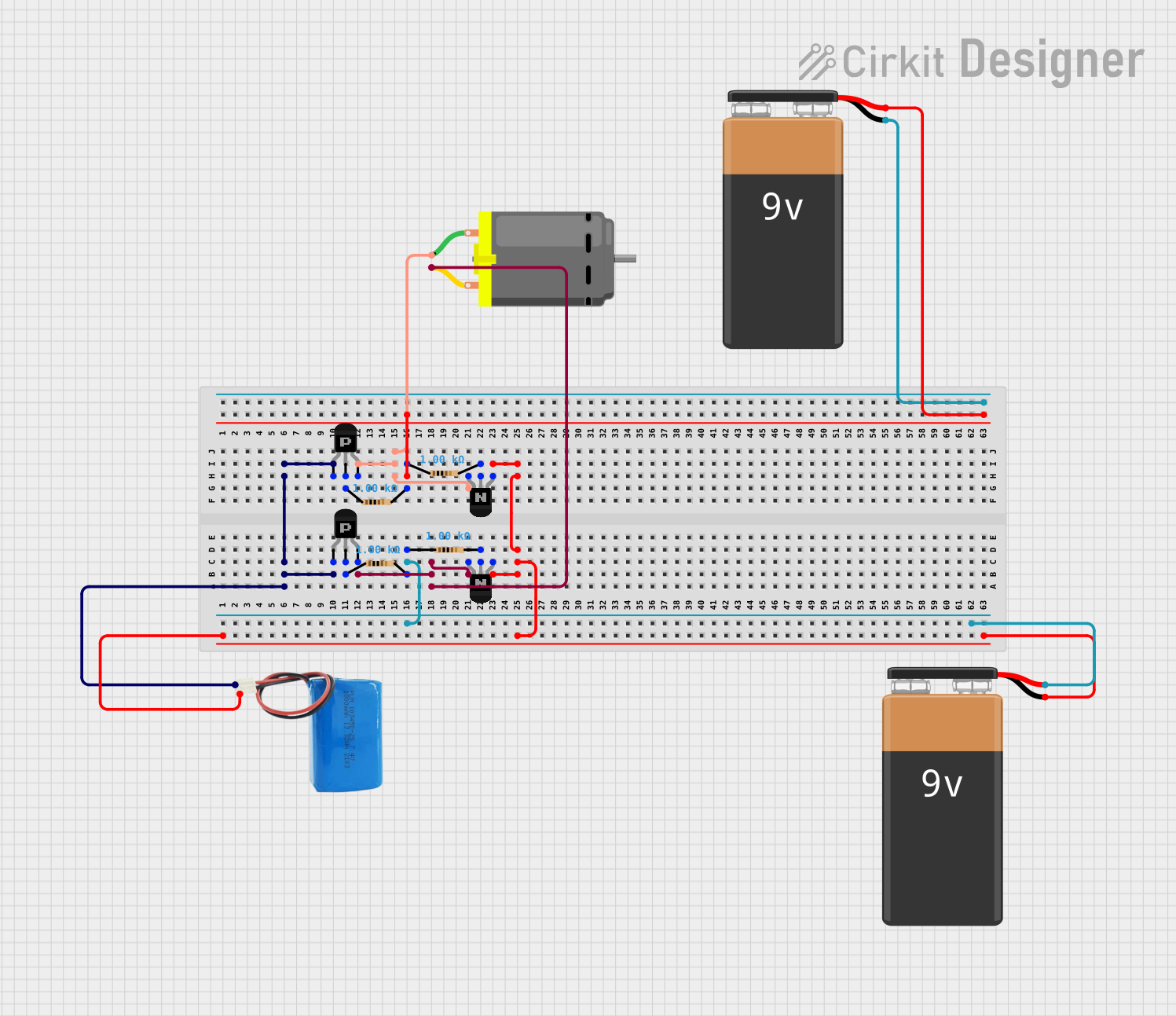 Open Project in Cirkit Designer
Explore Projects Built with 1N5819
Open Project in Cirkit DesignerOpen Project in Cirkit DesignerOpen Project in Cirkit DesignerOpen Project in Cirkit DesignerCommon Applications:
- Power rectification in low-voltage circuits
- Voltage clamping to protect sensitive components
- Reverse polarity protection in battery-powered devices
- Freewheeling diodes in motor control circuits
- DC-DC converters and switching power supplies
Technical Specifications
The following table outlines the key technical specifications of the 1N5819 Schottky diode:
| Parameter | Value |
|---|---|
| Manufacturer | SCHOTTKY |
| Part Number | 1N5819 |
| Maximum Repetitive Reverse Voltage (VRRM) | 40V |
| Maximum Average Forward Current (IF(AV)) | 1A |
| Peak Forward Surge Current (IFSM) | 25A |
| Forward Voltage Drop (VF) | 0.45V (at 1A) |
| Reverse Current (IR) | 1mA (at VR = 40V) |
| Operating Temperature Range | -65°C to +125°C |
| Package Type | DO-41 |
Pin Configuration
The 1N5819 is a two-terminal device with the following pin configuration:
| Pin | Name | Description |
|---|---|---|
| 1 | Anode | Positive terminal; current flows into this pin. |
| 2 | Cathode | Negative terminal; current flows out of this pin. |
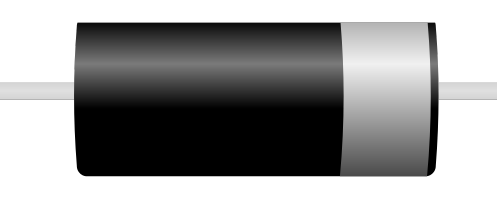
The cathode is typically marked with a silver or white band on the diode body.
Usage Instructions
How to Use the 1N5819 in a Circuit
- Identify the Anode and Cathode: The cathode is marked with a silver or white band. Ensure proper orientation in the circuit.
- Connect in Forward Bias for Rectification: Connect the anode to the positive voltage source and the cathode to the load or ground for rectification purposes.
- Use in Reverse Polarity Protection: Place the diode in series with the power supply, with the cathode connected to the positive terminal of the power source.
- Add a Heat Sink if Necessary: For high-current applications, ensure adequate heat dissipation to prevent thermal damage.
Important Considerations and Best Practices
- Voltage Ratings: Do not exceed the maximum reverse voltage (40V) to avoid breakdown.
- Current Ratings: Ensure the forward current does not exceed 1A for continuous operation.
- Thermal Management: Use proper heat sinks or cooling mechanisms in high-power applications.
- Parasitic Capacitance: Be aware of the diode's parasitic capacitance in high-frequency circuits, as it may affect performance.
Example: Using the 1N5819 with an Arduino UNO
The 1N5819 can be used to protect an Arduino UNO from reverse polarity. Below is an example circuit and code:
Circuit:
- Connect the 1N5819 in series with the Arduino's power input (VIN pin).
- The anode connects to the positive terminal of the power source.
- The cathode connects to the VIN pin of the Arduino.
Code:
// Example code to blink an LED connected to pin 13
// Ensure the 1N5819 is protecting the Arduino's power input

void setup() {
  pinMode(13, OUTPUT); // Set pin 13 as an output
}

void loop() {
  digitalWrite(13, HIGH); // Turn the LED on
  delay(1000);            // Wait for 1 second
  digitalWrite(13, LOW);  // Turn the LED off
  delay(1000);            // Wait for 1 second
}
Troubleshooting and FAQs
Common Issues
Diode Overheating:
- Cause: Exceeding the maximum forward current or insufficient heat dissipation.
- Solution: Use a heat sink or reduce the current in the circuit.
High Reverse Leakage Current:
- Cause: Operating the diode near its maximum reverse voltage.
- Solution: Ensure the reverse voltage is well below the 40V limit.
Incorrect Orientation:
- Cause: Anode and cathode are reversed in the circuit.
- Solution: Verify the orientation using the cathode marking (silver/white band).
Low Efficiency in High-Frequency Circuits:
- Cause: Parasitic capacitance of the diode.
- Solution: Consider using a diode with lower capacitance for high-frequency applications.
FAQs
Q1: Can the 1N5819 handle AC signals?
A1: Yes, the 1N5819 can rectify AC signals when used in a rectifier circuit, such as a half-wave or full-wave rectifier.
Q2: What is the difference between the 1N5819 and a standard silicon diode?
A2: The 1N5819 has a lower forward voltage drop (0.45V) and faster switching speed compared to standard silicon diodes, making it more efficient for power applications.
Q3: Can I use the 1N5819 for high-current applications?
A3: The 1N5819 is rated for a maximum average forward current of 1A. For higher currents, consider using a diode with a higher current rating.
Q4: How do I test if my 1N5819 is working?
A4: Use a multimeter in diode mode. Connect the positive probe to the anode and the negative probe to the cathode. A forward voltage drop of approximately 0.45V indicates the diode is functional. Reverse the probes to check for no conduction in reverse bias.
This concludes the documentation for the 1N5819 Schottky diode.