
How to Use lipo 3s 5000mah 50c ovonic: Examples, Pinouts, and Specs
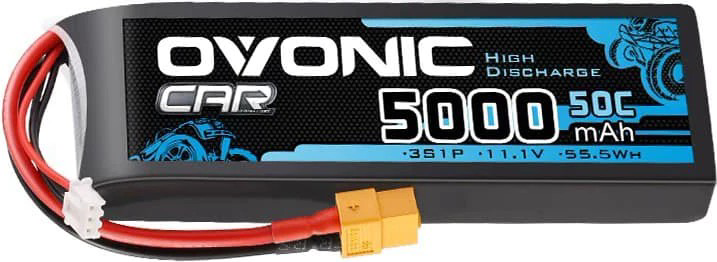
 Design with lipo 3s 5000mah 50c ovonic in Cirkit Designer
Introduction
The LiPo 3S 5000mAh 50C Ovonic is a high-performance lithium polymer battery designed for demanding applications. With a 3-cell (3S) configuration, it delivers a nominal voltage of 11.1V and a capacity of 5000mAh, making it ideal for use in RC vehicles, drones, and other high-power systems. Its 50C discharge rate ensures it can handle high current loads, providing consistent power output for performance-critical tasks.
Explore Projects Built with lipo 3s 5000mah 50c ovonic
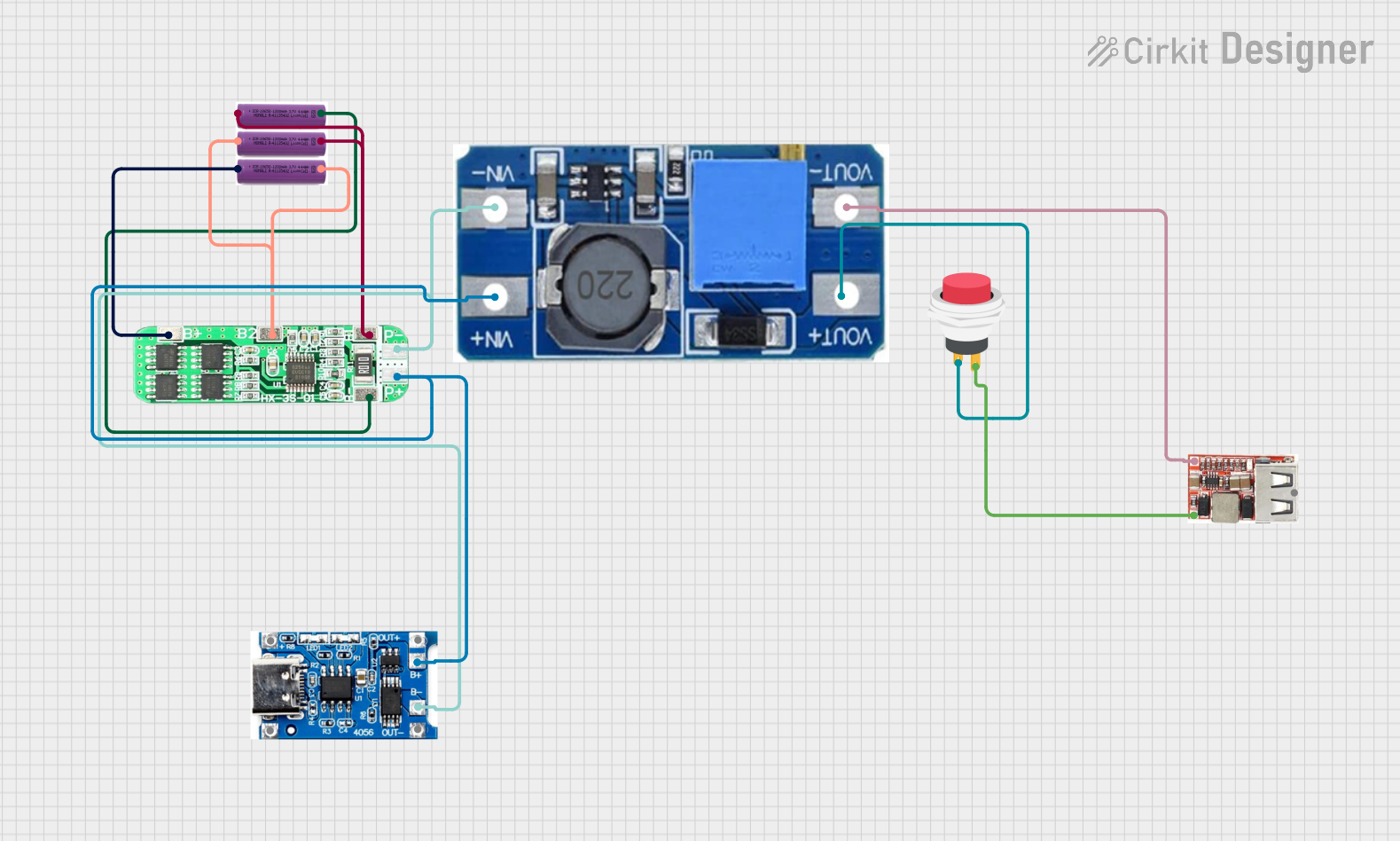 Open Project in Cirkit Designer
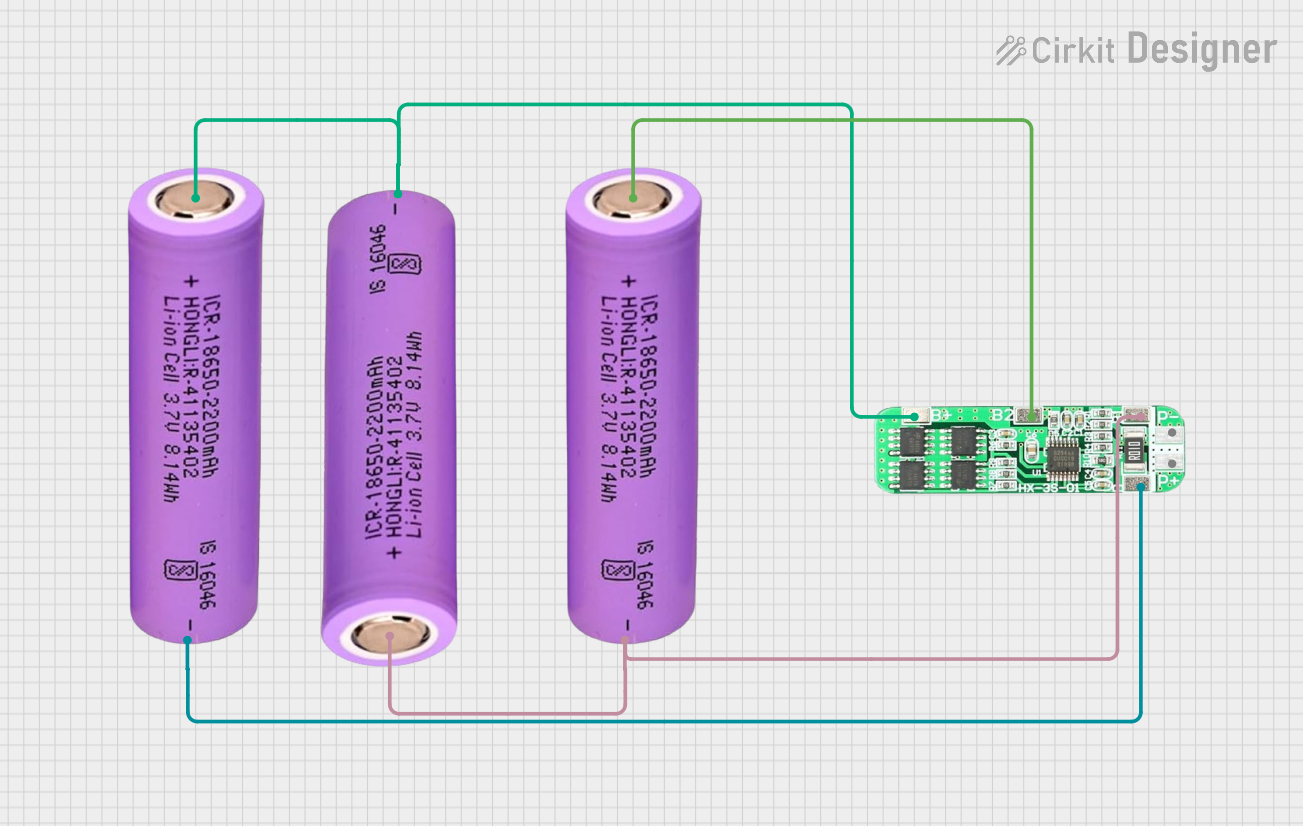 Open Project in Cirkit Designer
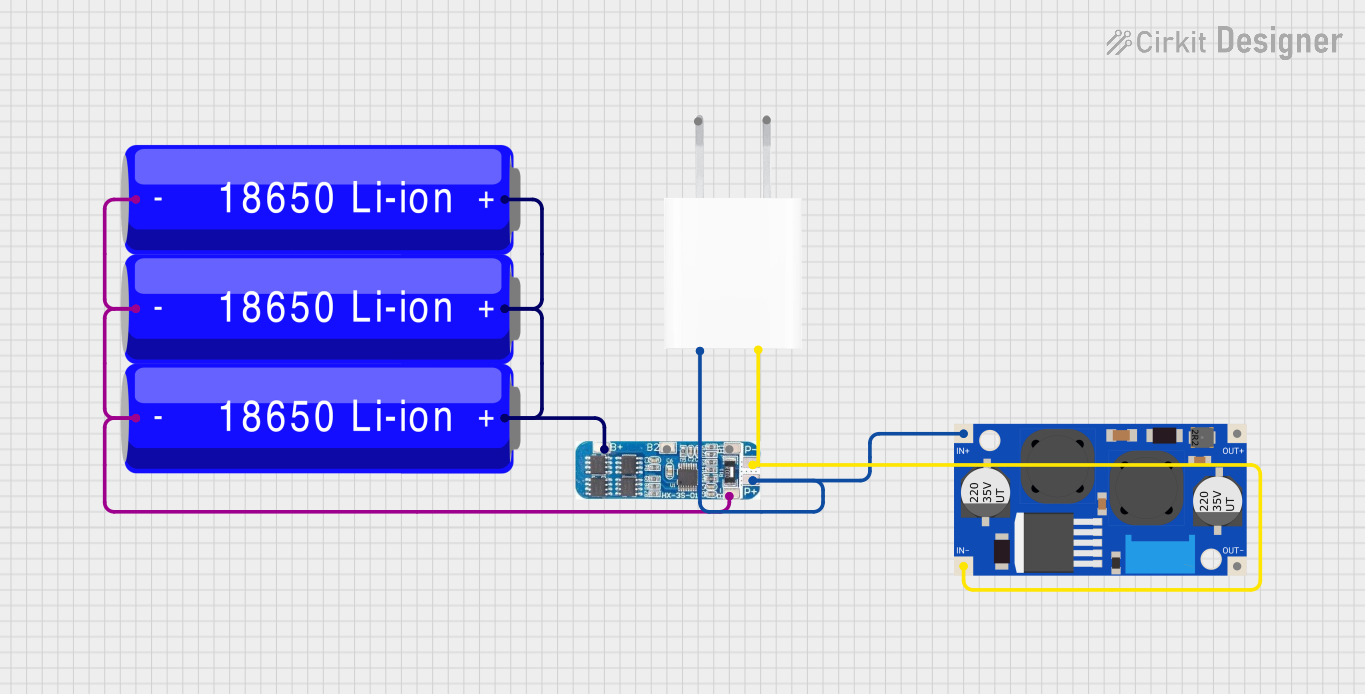 Open Project in Cirkit Designer
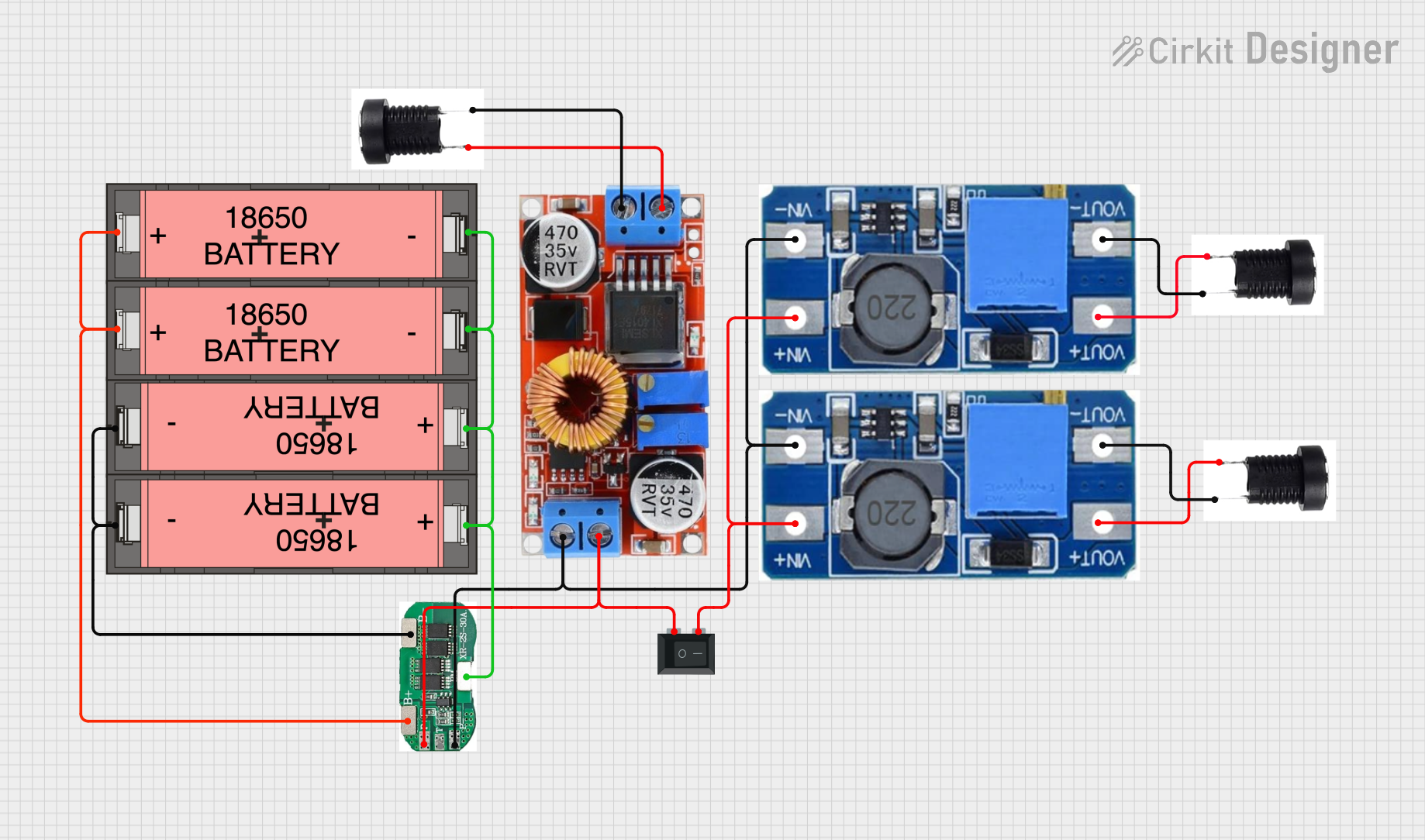 Open Project in Cirkit Designer
Explore Projects Built with lipo 3s 5000mah 50c ovonic
Open Project in Cirkit DesignerOpen Project in Cirkit DesignerOpen Project in Cirkit DesignerOpen Project in Cirkit DesignerCommon Applications
- Remote-controlled (RC) cars, boats, and airplanes
- Drones and quadcopters
- Robotics and high-power DIY projects
- Backup power for portable devices
- High-performance hobbyist electronics
Technical Specifications
Below are the key technical details of the LiPo 3S 5000mAh 50C Ovonic battery:
| Specification | Value |
|---|---|
| Nominal Voltage | 11.1V (3.7V per cell) |
| Capacity | 5000mAh |
| Discharge Rate (C Rating) | 50C |
| Maximum Continuous Current | 250A (5000mAh × 50C) |
| Maximum Burst Current | 100C (500A for short durations) |
| Cell Configuration | 3S (3 cells in series) |
| Connector Type | XT60 or Deans T-Plug (varies by model) |
| Balance Connector | JST-XH |
| Dimensions | ~138mm x 46mm x 33mm |
| Weight | ~400g |
Pin Configuration
The battery has two main connectors: the power connector and the balance connector. Below is a description of each:
Power Connector (XT60 or Deans T-Plug)
| Pin | Description |
|---|---|
| + | Positive terminal |
| - | Negative terminal |
Balance Connector (JST-XH)
| Pin | Description |
|---|---|
| 1 | Cell 1 positive |
| 2 | Cell 1 negative / Cell 2 positive |
| 3 | Cell 2 negative / Cell 3 positive |
| 4 | Cell 3 negative |
Usage Instructions
How to Use the LiPo 3S 5000mAh 50C Ovonic in a Circuit
- Connect the Power Connector: Attach the XT60 or Deans T-Plug to the power input of your device or electronic speed controller (ESC).
- Connect the Balance Connector: Plug the JST-XH balance connector into a compatible LiPo charger or battery monitor for charging or cell balancing.
- Ensure Proper Polarity: Always verify the polarity of the connectors before connecting to avoid damage to the battery or device.
- Charge Safely: Use a LiPo-compatible charger and set it to the correct voltage (11.1V for 3S) and charging current (e.g., 1C = 5A for this battery).
Important Considerations and Best Practices
- Charging: Always charge the battery using a LiPo charger with a balance charging mode. Never exceed the recommended charging current (5A for 1C charging).
- Discharging: Avoid discharging the battery below 3.0V per cell (9.0V total for 3S) to prevent damage.
- Storage: Store the battery at a voltage of 3.7V–3.85V per cell (11.1V–11.55V total) in a cool, dry place.
- Safety: Never puncture, short-circuit, or expose the battery to fire or water. Use a LiPo-safe bag for charging and storage.
- Temperature: Operate the battery within the temperature range of 0°C to 60°C. Avoid overheating during use or charging.
Example: Using the Battery with an Arduino UNO
While the LiPo 3S 5000mAh 50C Ovonic is not directly compatible with the Arduino UNO due to its high voltage, you can use a voltage regulator (e.g., LM7805 or a buck converter) to step down the voltage to 5V. Below is an example circuit and code:
Circuit Setup
- Connect the battery's power connector to the input of a buck converter.
- Set the buck converter output to 5V.
- Connect the 5V output to the Arduino UNO's 5V pin and GND.
Arduino Code Example
// Example code to read a sensor and print data to the Serial Monitor
// Ensure the battery voltage is stepped down to 5V before powering the Arduino

const int sensorPin = A0; // Analog pin connected to the sensor
int sensorValue = 0;      // Variable to store the sensor reading

void setup() {
  Serial.begin(9600); // Initialize serial communication at 9600 baud
}

void loop() {
  sensorValue = analogRead(sensorPin); // Read the sensor value
  Serial.print("Sensor Value: ");
  Serial.println(sensorValue); // Print the sensor value to the Serial Monitor
  delay(1000); // Wait for 1 second before the next reading
}
Troubleshooting and FAQs
Common Issues
Battery Not Charging
- Cause: Incorrect charger settings or damaged balance connector.
- Solution: Verify the charger is set to 3S (11.1V) and check the balance connector for damage.
Battery Swelling
- Cause: Overcharging, over-discharging, or overheating.
- Solution: Stop using the battery immediately. Dispose of it safely if swelling persists.
Device Not Powering On
- Cause: Low battery voltage or incorrect connection.
- Solution: Check the battery voltage with a multimeter and ensure proper polarity.
Short Runtime
- Cause: High current draw or degraded battery capacity.
- Solution: Ensure the device's current draw is within the battery's limits. Replace the battery if capacity has significantly decreased.
FAQs
Q: Can I use this battery for a 12V system?
A: Yes, but note that the nominal voltage is 11.1V, and the fully charged voltage is 12.6V. Ensure your system can handle this voltage range.
Q: How do I calculate the runtime of this battery?
A: Divide the battery capacity (5000mAh) by the device's current draw (in mA). For example, if your device draws 10A (10,000mA), the runtime is approximately 0.5 hours (30 minutes).
Q: Is it safe to charge the battery unattended?
A: No, always monitor the battery during charging to prevent accidents.
Q: What does the 50C rating mean?
A: The 50C rating indicates the maximum continuous discharge rate. For this battery, it can deliver up to 250A continuously (50 × 5000mAh).
By following this documentation, you can safely and effectively use the LiPo 3S 5000mAh 50C Ovonic battery in your projects.