
How to Use SLS 095 Linear Pot: Examples, Pinouts, and Specs

 Design with SLS 095 Linear Pot in Cirkit Designer
Introduction
The SLS 095 Linear Pot by Curtis-Write is a high-precision linear potentiometer designed for applications requiring adjustable voltage levels. This component features a sliding contact that moves along a resistive element, allowing for smooth and accurate control of resistance. Its robust design and reliable performance make it suitable for a wide range of electronic circuits.
Explore Projects Built with SLS 095 Linear Pot
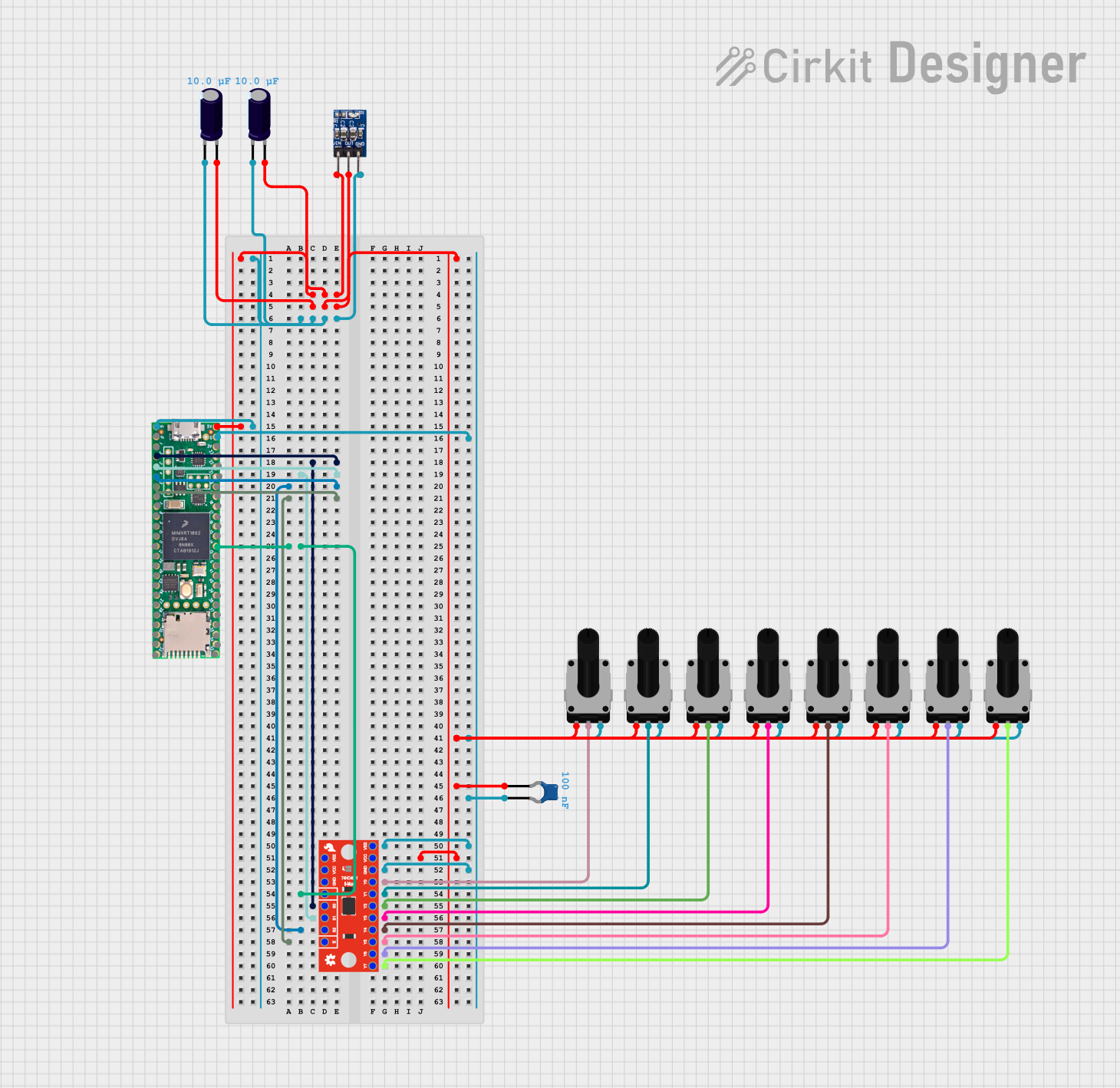 Open Project in Cirkit Designer
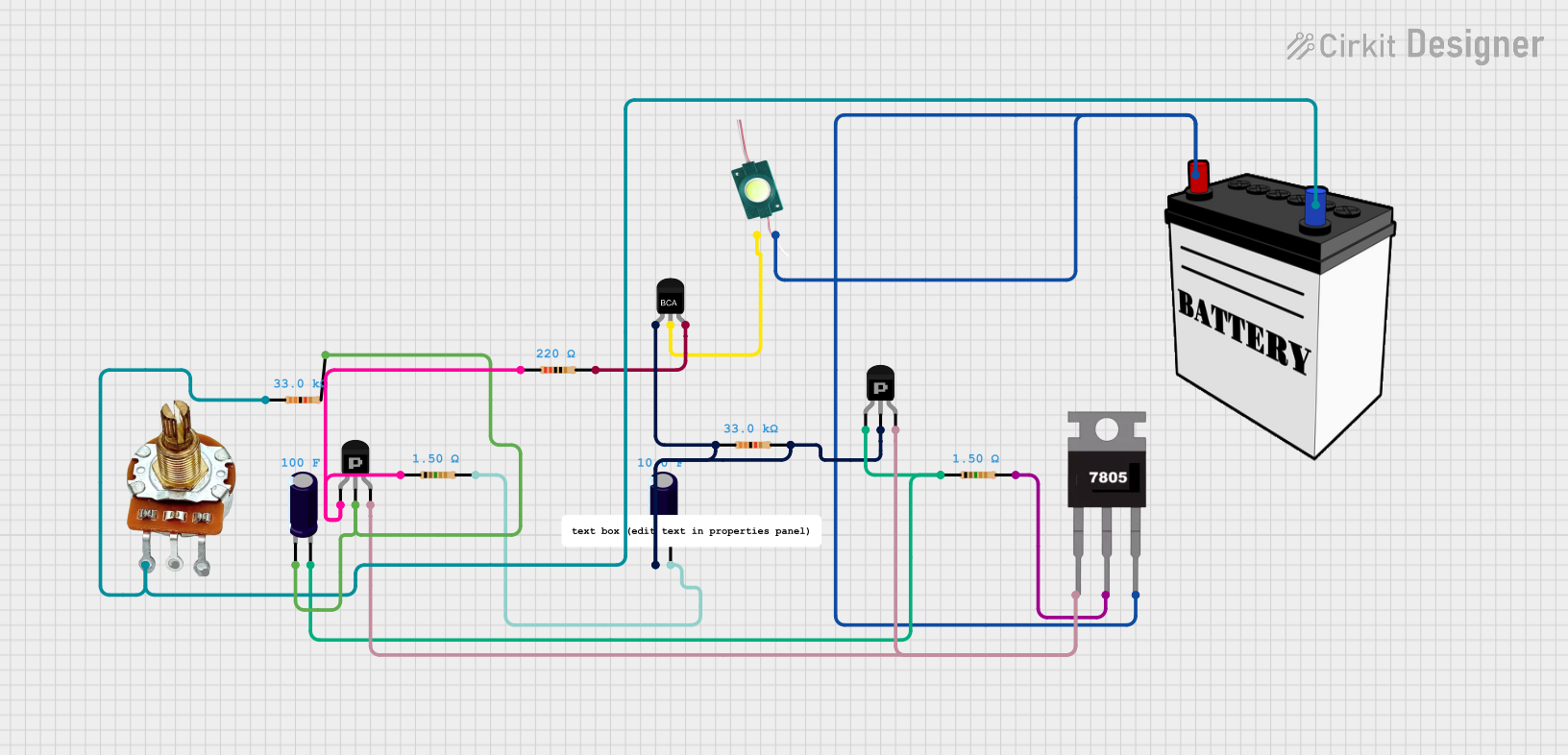 Open Project in Cirkit Designer
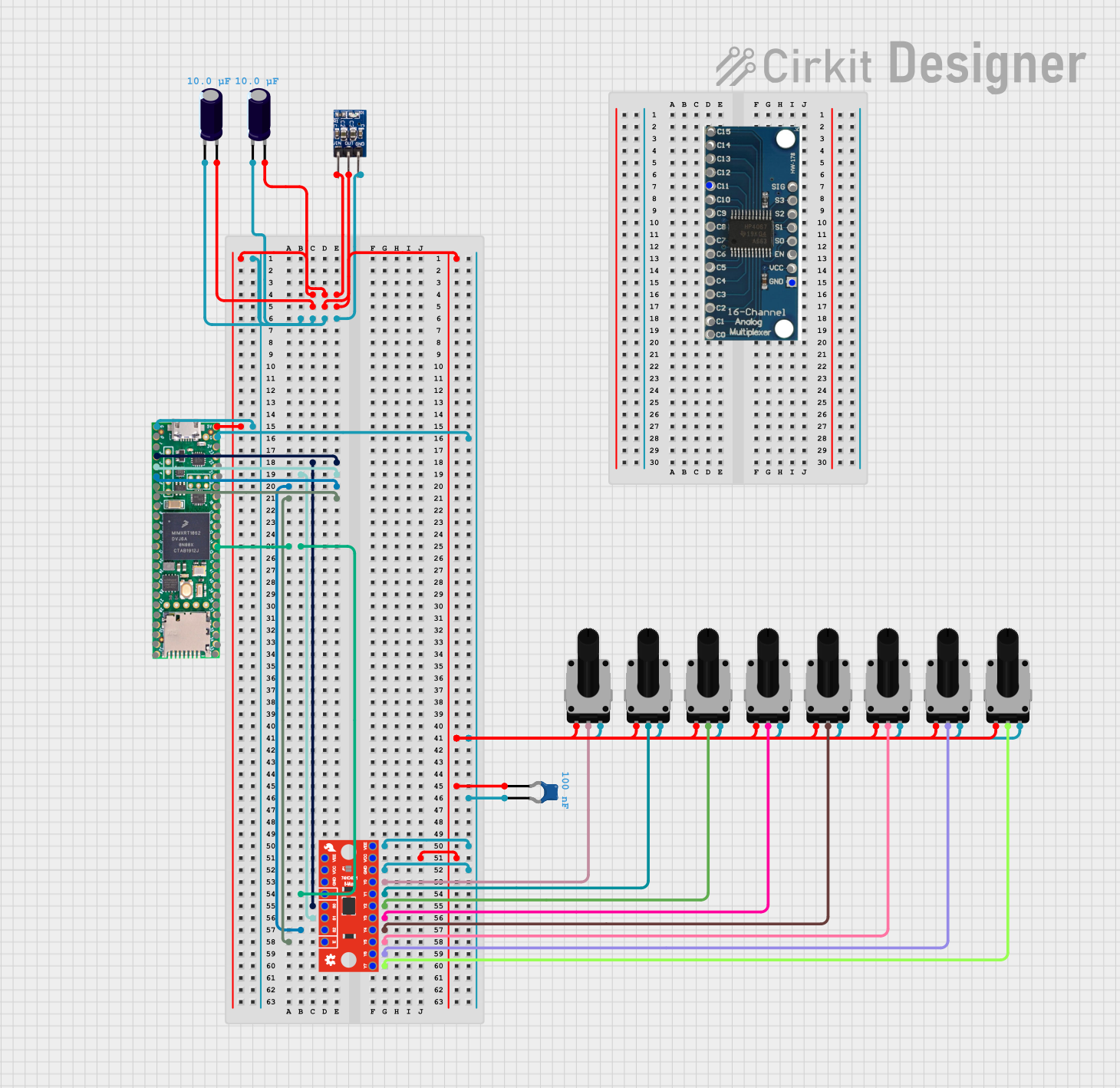 Open Project in Cirkit Designer
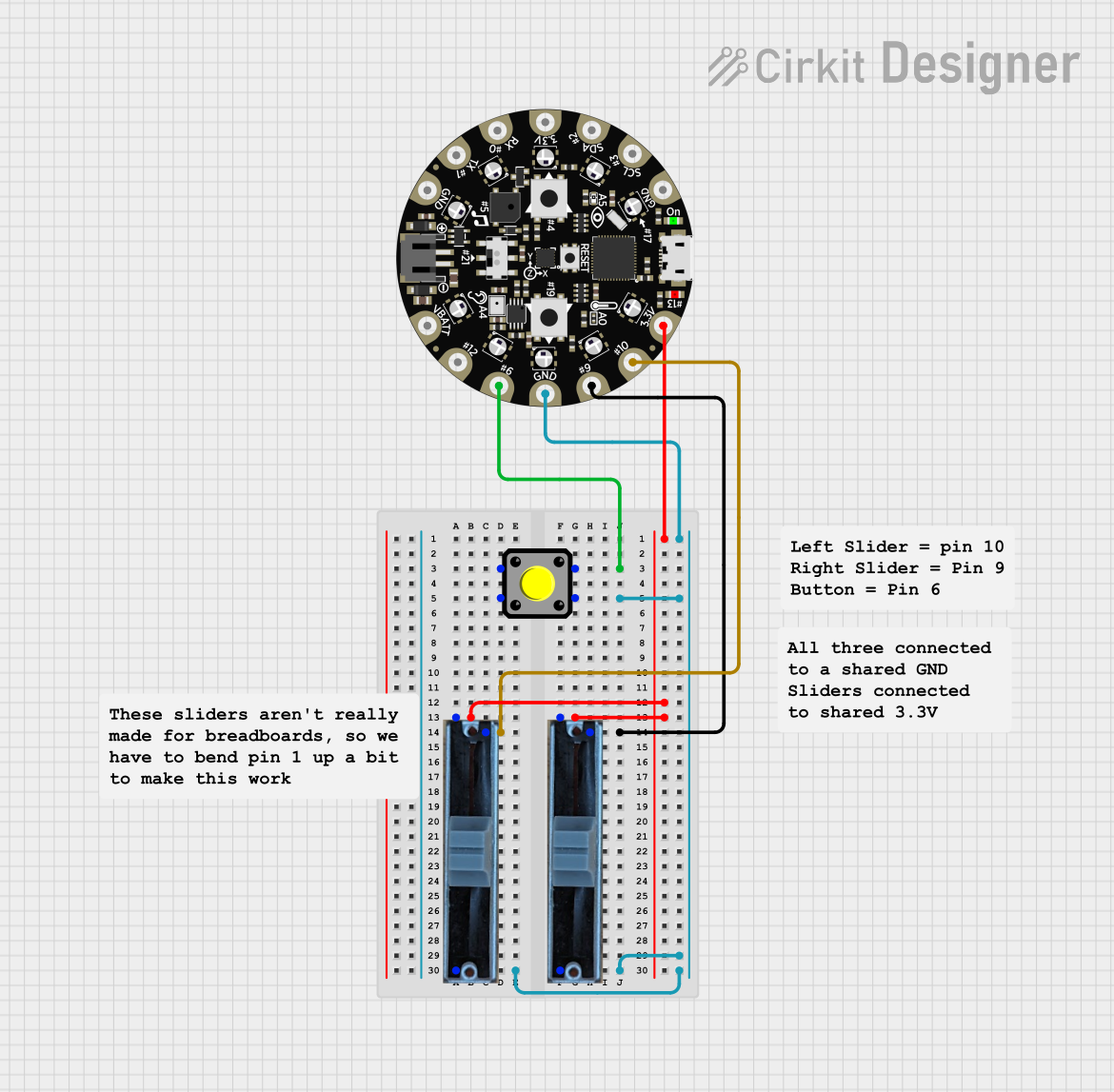 Open Project in Cirkit Designer
Explore Projects Built with SLS 095 Linear Pot
Open Project in Cirkit DesignerOpen Project in Cirkit DesignerOpen Project in Cirkit DesignerOpen Project in Cirkit DesignerCommon Applications and Use Cases
- Voltage divider circuits
- Signal conditioning in audio equipment
- Adjustable gain control in amplifiers
- Calibration and tuning in measurement devices
- User interface controls (e.g., sliders in control panels)
Technical Specifications
The following table outlines the key technical details of the SLS 095 Linear Pot:
| Parameter | Value |
|---|---|
| Manufacturer | Curtis-Write |
| Resistance Range | 10 kΩ |
| Tolerance | ±5% |
| Maximum Voltage | 250 V DC |
| Power Rating | 0.5 W |
| Operating Temperature | -40°C to +85°C |
| Mechanical Travel | 95 mm |
| Lifespan | 1,000,000 cycles |
Pin Configuration and Descriptions
The SLS 095 Linear Pot has three pins, as described below:
| Pin | Name | Description |
|---|---|---|
| 1 | Terminal 1 | One end of the resistive element. Connect to the voltage source or ground. |
| 2 | Wiper | The sliding contact that provides the adjustable output voltage. |
| 3 | Terminal 2 | The other end of the resistive element. Connect to the voltage source or ground. |
Usage Instructions
How to Use the SLS 095 Linear Pot in a Circuit
Basic Voltage Divider Setup:
- Connect Terminal 1 to the positive voltage source.
- Connect Terminal 2 to ground.
- Connect the Wiper (Pin 2) to the input of the circuit where the adjustable voltage is required.
- Adjust the slider to vary the resistance and output voltage.
Important Considerations:
- Ensure the applied voltage does not exceed the maximum rating of 250 V DC.
- Avoid exceeding the power rating of 0.5 W to prevent damage to the component.
- Use proper mechanical mounting to ensure smooth operation of the slider.
Arduino UNO Example: The SLS 095 Linear Pot can be used with an Arduino UNO to read analog voltage values. Below is an example code snippet:
// Arduino code to read the SLS 095 Linear Potentiometer const int potPin = A0; // Connect the wiper (Pin 2) to analog pin A0 int potValue = 0; // Variable to store the potentiometer value void setup() { Serial.begin(9600); // Initialize serial communication at 9600 baud } void loop() { potValue = analogRead(potPin); // Read the analog value from the potentiometer // Map the value to a voltage range (0-5V for Arduino UNO) float voltage = potValue * (5.0 / 1023.0); Serial.print("Potentiometer Value: "); Serial.print(potValue); // Print the raw analog value Serial.print(" | Voltage: "); Serial.println(voltage); // Print the calculated voltage delay(500); // Wait for 500ms before the next reading }Connections:
- Connect Pin 1 to 5V on the Arduino.
- Connect Pin 2 (Wiper) to analog pin A0.
- Connect Pin 3 to GND on the Arduino.
Best Practices
- Use a multimeter to verify the resistance range before integrating the potentiometer into your circuit.
- Avoid applying excessive force to the slider to maintain the lifespan of the component.
- If used in a high-vibration environment, secure the potentiometer to prevent mechanical damage.
Troubleshooting and FAQs
Common Issues and Solutions
Issue: The potentiometer output is unstable or noisy.
- Solution: Check for loose connections or damaged wires. Use a capacitor (e.g., 0.1 µF) across the wiper and ground to filter noise.
Issue: The slider is difficult to move or feels stuck.
- Solution: Inspect for physical obstructions or debris. Clean the slider mechanism with a suitable contact cleaner.
Issue: The output voltage does not vary as expected.
- Solution: Verify the connections to the pins. Ensure the wiper is connected to the correct input of the circuit.
Issue: The potentiometer overheats during operation.
- Solution: Ensure the power dissipation does not exceed the 0.5 W rating. Reduce the applied voltage or current if necessary.
FAQs
Q: Can the SLS 095 Linear Pot be used for AC signals?
A: Yes, it can be used for low-frequency AC signals, but ensure the voltage and power ratings are not exceeded.Q: How do I mount the potentiometer securely?
A: Use the mounting holes or brackets provided with the potentiometer. Ensure it is fixed firmly to avoid mechanical stress.Q: What is the lifespan of the SLS 095 Linear Pot?
A: The potentiometer is rated for 1,000,000 cycles under normal operating conditions.
By following this documentation, you can effectively integrate the SLS 095 Linear Pot into your projects and ensure reliable performance.