
How to Use Arduino UNO: Examples, Pinouts, and Specs
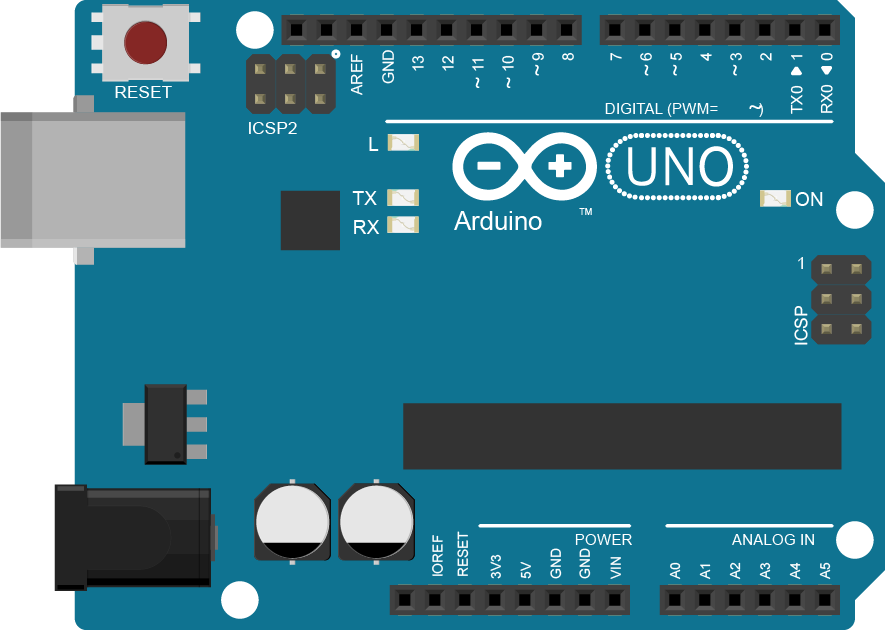
 Design with Arduino UNO in Cirkit Designer
Introduction
The Arduino UNO is a microcontroller board based on the ATmega328P. It is one of the most popular and versatile development boards in the Arduino ecosystem, widely used for building digital devices and interactive objects that can sense and control the physical world. Its simplicity, open-source nature, and extensive community support make it an excellent choice for beginners and professionals alike.
Explore Projects Built with Arduino UNO
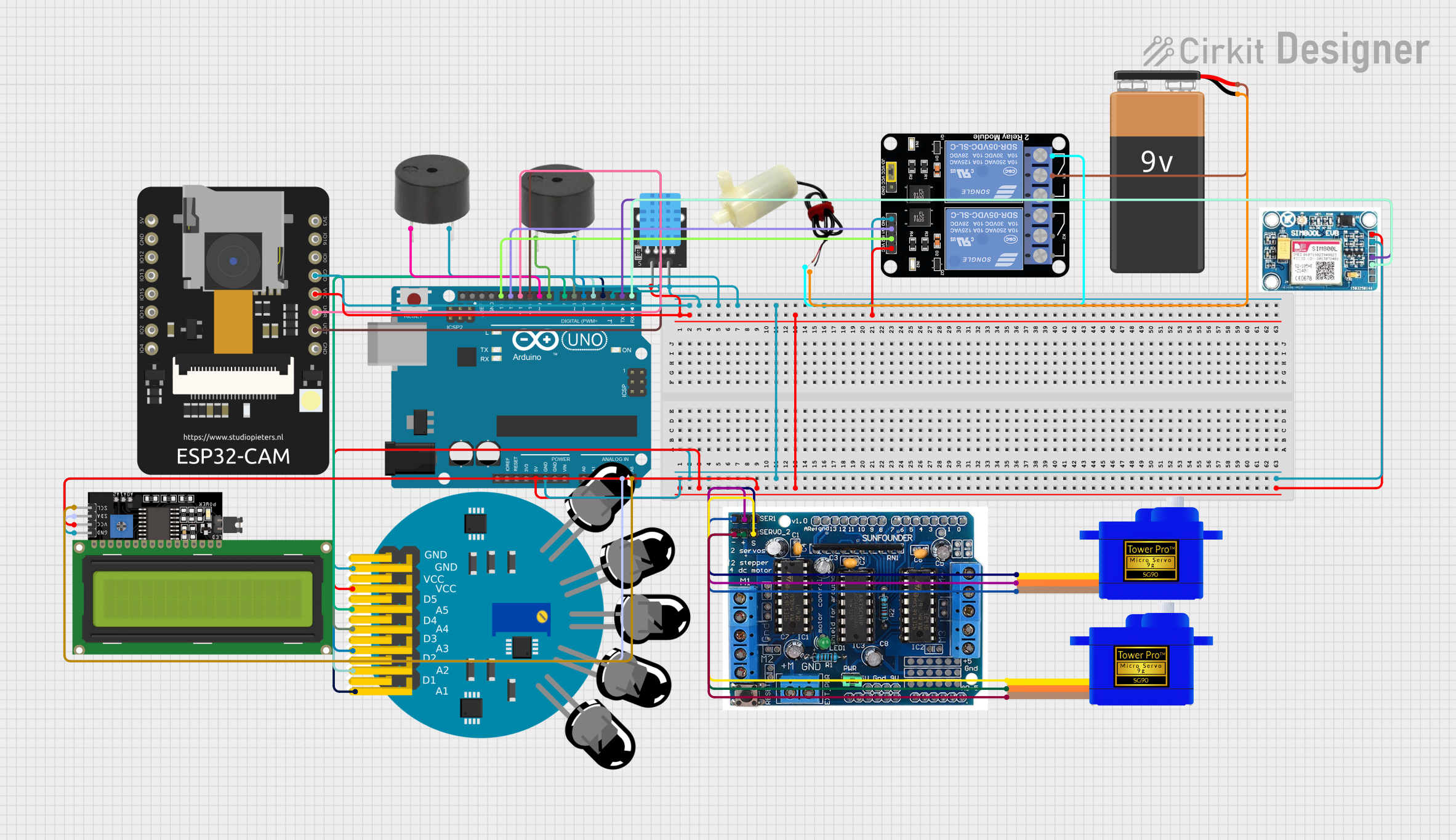 Open Project in Cirkit Designer
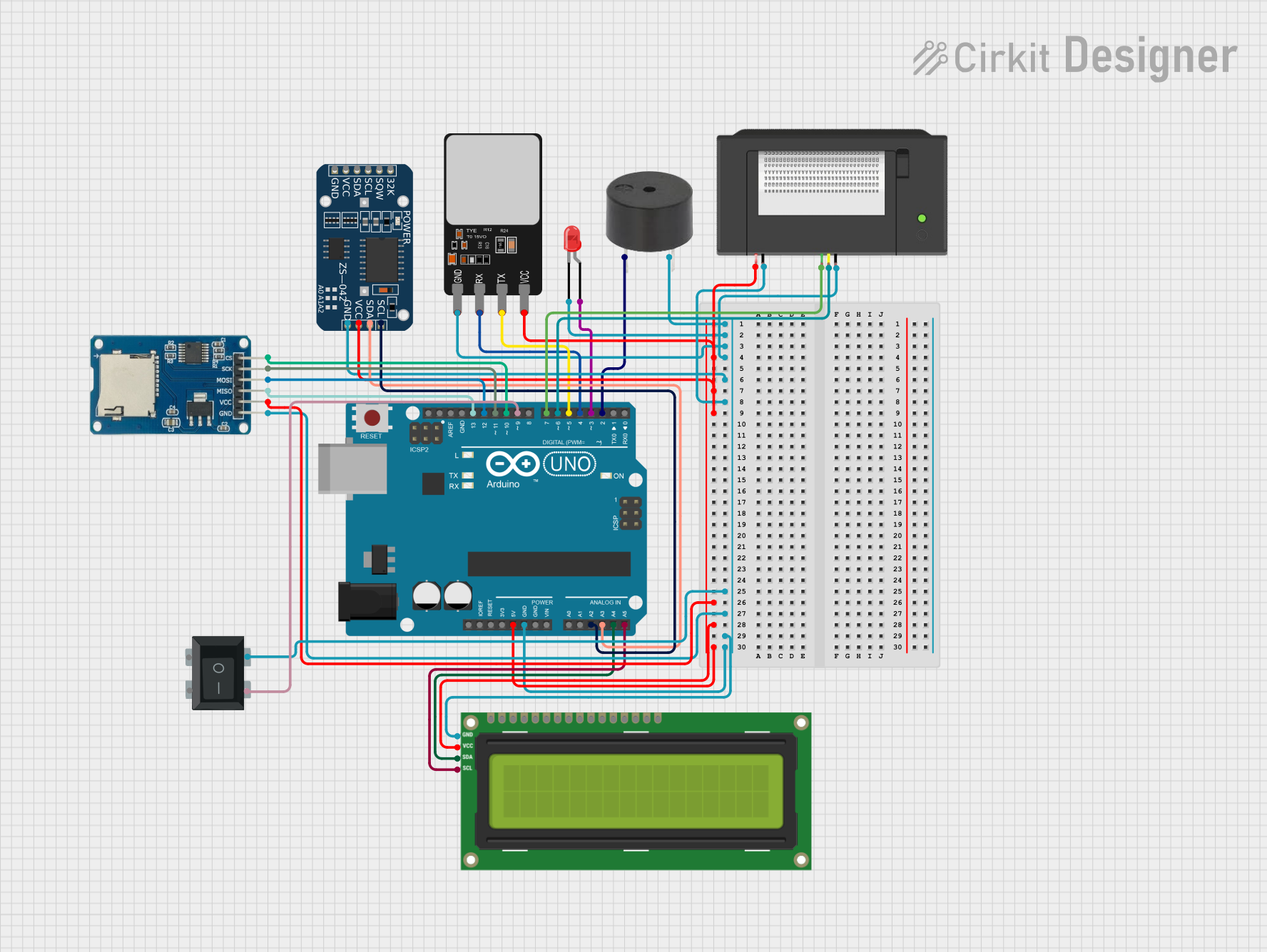 Open Project in Cirkit Designer
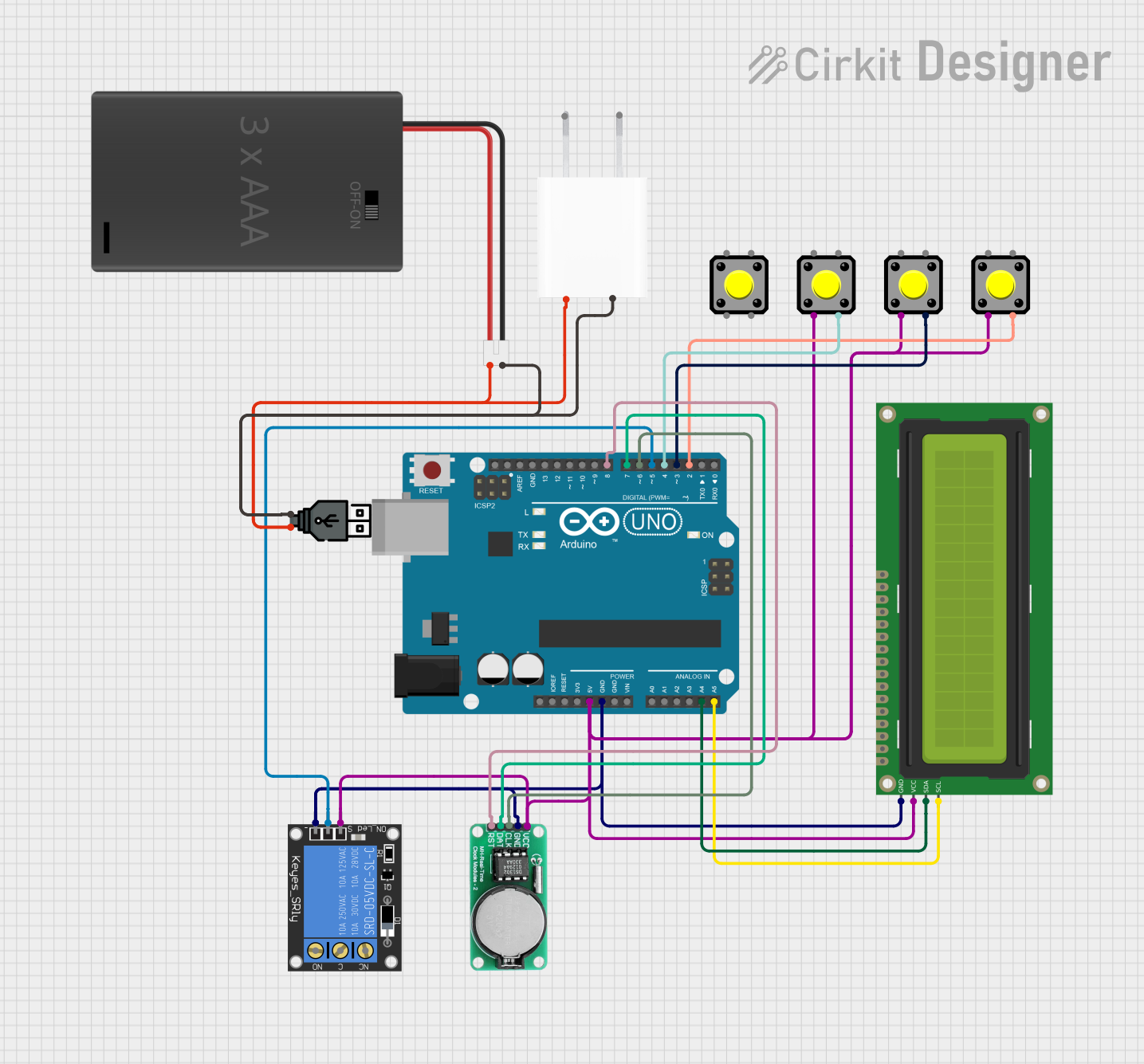 Open Project in Cirkit Designer
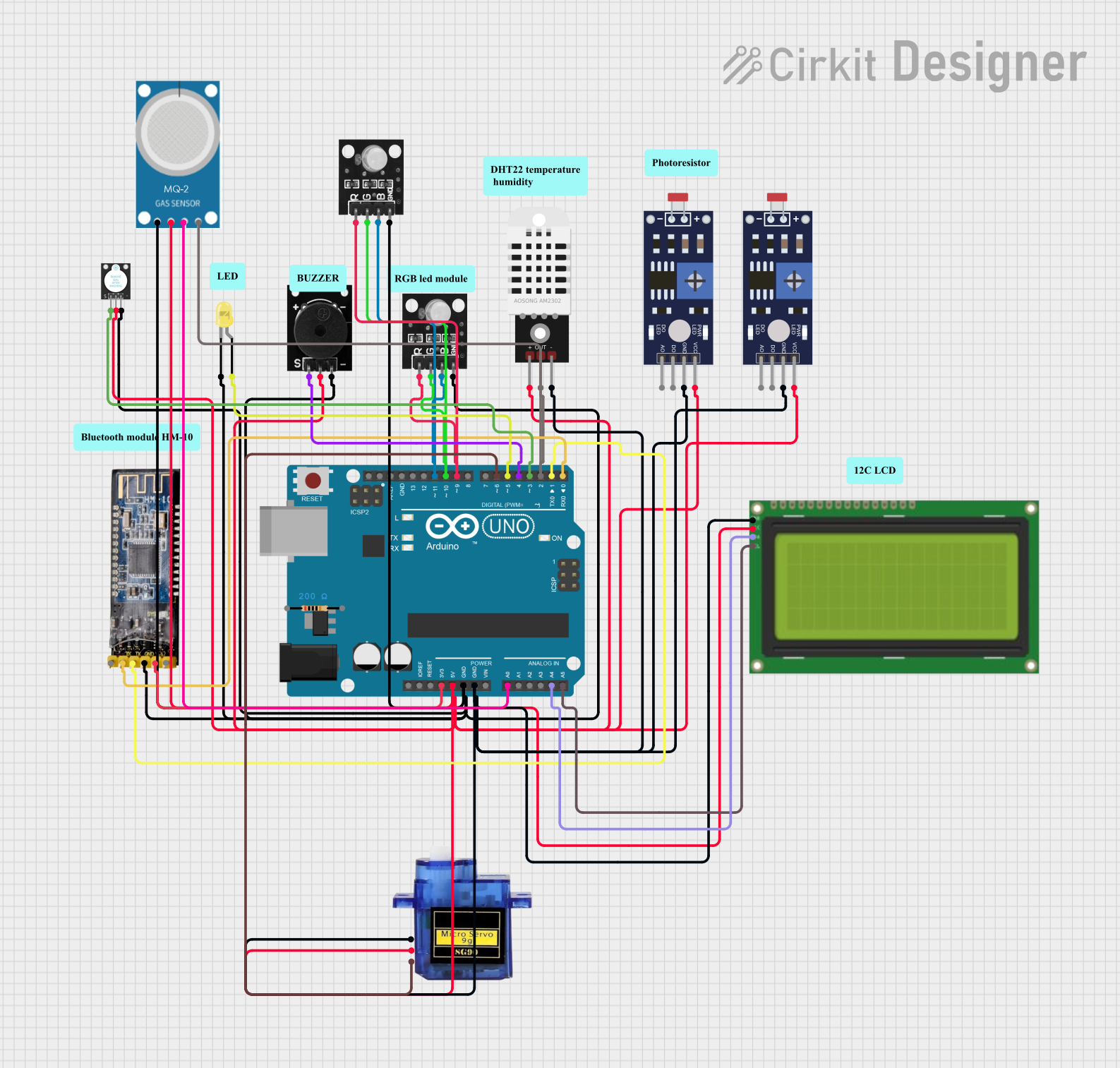 Open Project in Cirkit Designer
Explore Projects Built with Arduino UNO
Open Project in Cirkit DesignerOpen Project in Cirkit DesignerOpen Project in Cirkit DesignerOpen Project in Cirkit DesignerCommon Applications and Use Cases
- Prototyping and development of IoT (Internet of Things) devices
- Robotics and automation projects
- Sensor-based systems (e.g., temperature, motion, light sensing)
- Home automation and smart devices
- Educational purposes for learning programming and electronics
Technical Specifications
The Arduino UNO is equipped with a range of features that make it suitable for a variety of applications. Below are its key technical details:
Key Technical Details
| Specification | Value |
|---|---|
| Microcontroller | ATmega328P |
| Operating Voltage | 5V |
| Input Voltage (recommended) | 7-12V |
| Input Voltage (limit) | 6-20V |
| Digital I/O Pins | 14 (6 provide PWM output) |
| Analog Input Pins | 6 |
| DC Current per I/O Pin | 20 mA |
| Flash Memory | 32 KB (0.5 KB used by bootloader) |
| SRAM | 2 KB |
| EEPROM | 1 KB |
| Clock Speed | 16 MHz |
| USB Connector | Type-B |
| Dimensions | 68.6 mm x 53.4 mm |
| Weight | 25 g |
Pin Configuration and Descriptions
The Arduino UNO has a total of 28 pins, including digital, analog, power, and communication pins. Below is a detailed description of the pin configuration:
Digital Pins
| Pin Number | Functionality |
|---|---|
| 0 (RX) | Serial Receive (UART) |
| 1 (TX) | Serial Transmit (UART) |
| 2-13 | General-purpose digital I/O pins |
| 3, 5, 6, 9, 10, 11 | PWM output pins |
Analog Pins
| Pin Number | Functionality |
|---|---|
| A0-A5 | Analog input pins (10-bit ADC) |
Power Pins
| Pin Name | Functionality |
|---|---|
| VIN | Input voltage to the board |
| 5V | Regulated 5V output |
| 3.3V | Regulated 3.3V output |
| GND | Ground |
| RESET | Resets the microcontroller |
Communication Pins
| Pin Name | Functionality |
|---|---|
| SDA | I2C Data Line |
| SCL | I2C Clock Line |
| RX | UART Receive |
| TX | UART Transmit |
Usage Instructions
The Arduino UNO is straightforward to use and can be programmed using the Arduino IDE. Below are the steps to get started and some best practices:
How to Use the Arduino UNO in a Circuit
- Power the Board: Connect the Arduino UNO to your computer using a USB Type-B cable or use an external power supply (7-12V recommended).
- Install the Arduino IDE: Download and install the Arduino IDE from the official Arduino website.
- Connect the Board: Open the Arduino IDE, select the correct board ("Arduino UNO") and port under the "Tools" menu.
- Write and Upload Code:
- Write your program (sketch) in the Arduino IDE.
- Click the "Upload" button to transfer the code to the board.
- Connect Components: Use jumper wires to connect sensors, actuators, or other components to the appropriate pins on the Arduino UNO.
Example Code: Blinking an LED
The following example demonstrates how to blink an LED connected to pin 13 of the Arduino UNO:
// This program blinks an LED connected to pin 13 of the Arduino UNO.
// The LED will turn on for 1 second and off for 1 second in a loop.

void setup() {
  pinMode(13, OUTPUT); // Set pin 13 as an output pin
}

void loop() {
  digitalWrite(13, HIGH); // Turn the LED on
  delay(1000);            // Wait for 1 second
  digitalWrite(13, LOW);  // Turn the LED off
  delay(1000);            // Wait for 1 second
}
Important Considerations and Best Practices
- Voltage Levels: Ensure that the input voltage does not exceed the recommended range (7-12V) to avoid damaging the board.
- Pin Current Limits: Do not exceed 20 mA per I/O pin to prevent overheating or damage.
- Static Electricity: Handle the board carefully to avoid static discharge, which can damage the microcontroller.
- Breadboard Use: Use a breadboard for prototyping to avoid short circuits and ensure clean connections.
Troubleshooting and FAQs
Common Issues and Solutions
Problem: The Arduino UNO is not detected by the computer.
- Solution: Ensure the USB cable is properly connected and functional. Check if the correct port is selected in the Arduino IDE.
Problem: The code does not upload to the board.
- Solution: Verify that the correct board ("Arduino UNO") is selected in the Arduino IDE. Ensure no other program is using the COM port.
Problem: The board is not powering on.
- Solution: Check the power source and ensure the input voltage is within the recommended range. Try using a different USB cable or power adapter.
Problem: Components connected to the board are not working as expected.
- Solution: Double-check the wiring and connections. Ensure that the components are compatible with the Arduino UNO and that the code is correctly written.
FAQs
Q: Can I power the Arduino UNO with batteries?
- A: Yes, you can use a 9V battery or a battery pack with a voltage between 7-12V connected to the VIN pin or the DC power jack.
Q: Can the Arduino UNO be used for wireless communication?
- A: Yes, you can use external modules like Bluetooth, Wi-Fi (e.g., ESP8266), or RF modules to enable wireless communication.
Q: Is the Arduino UNO compatible with shields?
- A: Yes, the Arduino UNO is compatible with a wide range of shields designed for the Arduino ecosystem.
Q: How do I reset the Arduino UNO?
- A: Press the reset button on the board or connect the RESET pin to GND momentarily.
By following this documentation, you can effectively use the Arduino UNO for a variety of projects and troubleshoot common issues with ease.