
How to Use Ultrasonic Mist Maker: Examples, Pinouts, and Specs
 Design with Ultrasonic Mist Maker in Cirkit Designer
Introduction
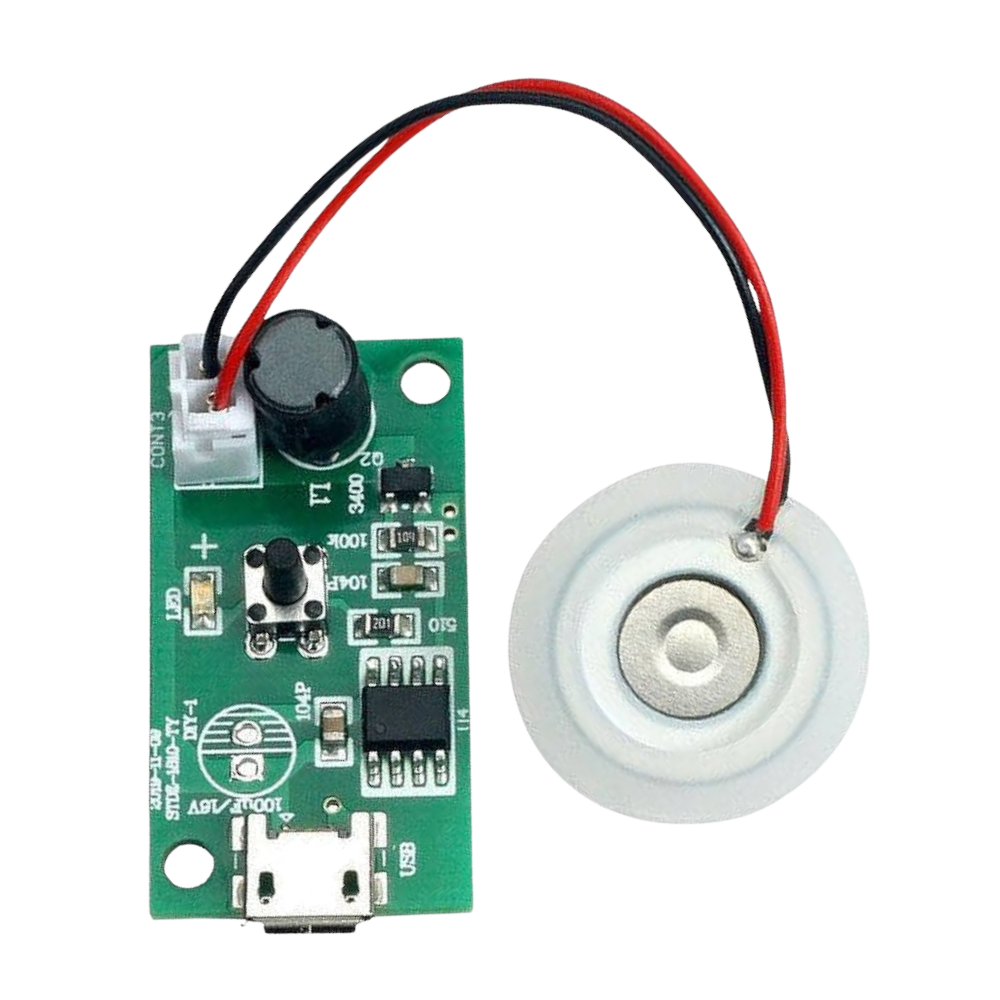
The Ultrasonic Mist Maker is a device that utilizes ultrasonic waves to generate a fine mist of water droplets. This component operates by vibrating a ceramic disc at ultrasonic frequencies, causing water to break into tiny droplets and form a mist. It is widely used in applications such as humidifiers, decorative fountains, aroma diffusers, and theatrical effects. Additionally, it is a popular choice for DIY projects and environmental control systems.
Explore Projects Built with Ultrasonic Mist Maker
 Open Project in Cirkit Designer
 Open Project in Cirkit Designer
 Open Project in Cirkit Designer
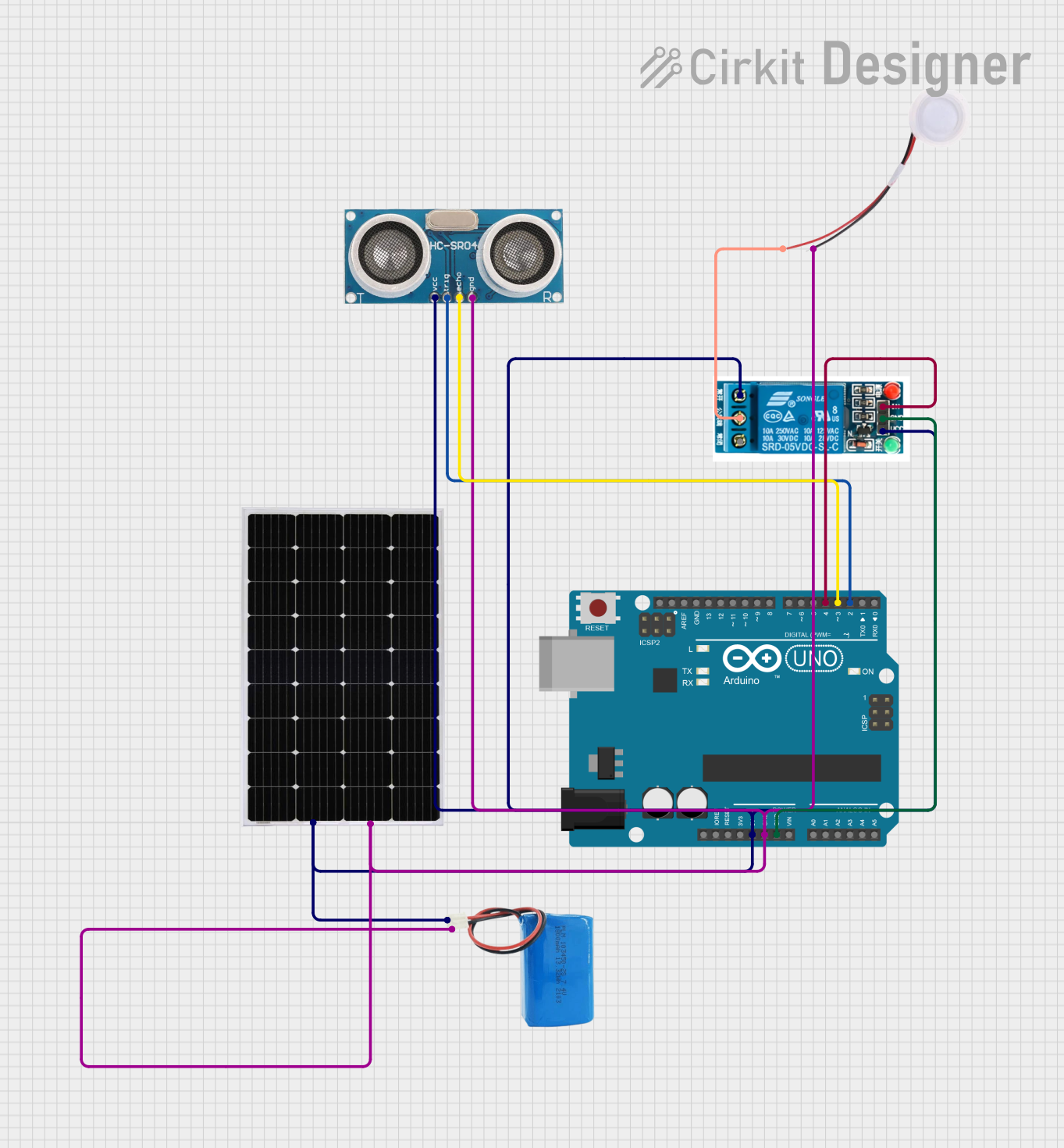 Open Project in Cirkit Designer
Explore Projects Built with Ultrasonic Mist Maker
Open Project in Cirkit DesignerOpen Project in Cirkit DesignerOpen Project in Cirkit DesignerOpen Project in Cirkit DesignerCommon Applications and Use Cases
- Humidifiers: Adds moisture to the air in dry environments.
- Decorative Fountains: Creates a visually appealing mist effect.
- Aroma Diffusers: Disperses essential oils into the air.
- Theatrical Effects: Produces mist for stage performances or displays.
- DIY Projects: Used in custom designs for environmental control or artistic installations.
Technical Specifications
The Ultrasonic Mist Maker is designed to operate efficiently with minimal power consumption. Below are its key technical details:
Key Technical Details
| Parameter | Value |
|---|---|
| Operating Voltage | 24V DC |
| Operating Current | 400-600 mA |
| Power Consumption | 10-15 W |
| Operating Frequency | 1.7 MHz |
| Water Level Requirement | Minimum 20 mm above the sensor |
| Mist Output | 300-400 mL/hour |
| Dimensions | Varies by model (e.g., 40mm disc) |
| Lifespan | ~5000 hours of continuous use |
Pin Configuration and Descriptions
The Ultrasonic Mist Maker typically has a simple interface with two wires for power input. Below is the pin configuration:
| Pin | Name | Description |
|---|---|---|
| 1 | VCC (+) | Positive power supply input (24V DC). |
| 2 | GND (-) | Ground connection for the power supply. |
Usage Instructions
How to Use the Ultrasonic Mist Maker in a Circuit
- Power Supply: Connect the Ultrasonic Mist Maker to a 24V DC power supply. Ensure the power supply can provide at least 600 mA of current.
- Water Level: Place the Mist Maker in a container with water. Ensure the water level is at least 20 mm above the ceramic disc for proper operation.
- Placement: Position the Mist Maker on a flat surface within the container to ensure even mist production.
- Control: Optionally, you can use a relay module or MOSFET to control the Mist Maker via an Arduino UNO or other microcontroller.
Important Considerations and Best Practices
- Water Quality: Use clean, distilled water to prevent mineral buildup on the ceramic disc.
- Overheating: Avoid running the Mist Maker without sufficient water, as this can damage the ceramic disc.
- Power Supply: Use a stable and regulated 24V DC power supply to ensure consistent performance.
- Safety: Keep the device away from children and ensure it is not submerged deeper than recommended.
Example: Controlling the Mist Maker with Arduino UNO
Below is an example of how to control the Ultrasonic Mist Maker using an Arduino UNO and a relay module:
// Example: Controlling an Ultrasonic Mist Maker with Arduino UNO
// This code turns the Mist Maker ON for 5 seconds and OFF for 5 seconds in a loop.

const int relayPin = 7; // Pin connected to the relay module

void setup() {
  pinMode(relayPin, OUTPUT); // Set the relay pin as an output
  digitalWrite(relayPin, LOW); // Ensure the relay is initially OFF
}

void loop() {
  digitalWrite(relayPin, HIGH); // Turn ON the Mist Maker
  delay(5000); // Keep it ON for 5 seconds
  digitalWrite(relayPin, LOW); // Turn OFF the Mist Maker
  delay(5000); // Keep it OFF for 5 seconds
}
Notes:
- Connect the relay module's control pin to pin 7 of the Arduino UNO.
- The relay module should be connected to the Mist Maker's power supply circuit to switch it ON and OFF.
Troubleshooting and FAQs
Common Issues and Solutions
| Issue | Possible Cause | Solution |
|---|---|---|
| Mist Maker not producing mist | Insufficient water level | Ensure water level is at least 20 mm above disc. |
| Device overheating | Running without water | Always operate with sufficient water. |
| Weak or no mist output | Dirty or worn-out ceramic disc | Clean or replace the ceramic disc. |
| Intermittent operation | Unstable power supply | Use a regulated 24V DC power supply. |
| Mist Maker not turning ON via Arduino | Incorrect relay wiring or code issue | Check wiring and verify Arduino code. |
FAQs
Can I use a different voltage power supply?
- No, the Ultrasonic Mist Maker is designed to operate at 24V DC. Using a different voltage may damage the device.
How do I clean the ceramic disc?
- Gently wipe the disc with a soft cloth and distilled water. Avoid using abrasive materials.
Can I use the Mist Maker in liquids other than water?
- It is recommended to use clean water only. Other liquids may damage the device or reduce its lifespan.
What is the lifespan of the ceramic disc?
- The ceramic disc typically lasts for around 5000 hours of continuous use. Replace it if mist output decreases significantly.
By following this documentation, you can effectively integrate and maintain the Ultrasonic Mist Maker in your projects.