
How to Use DC MCB: Examples, Pinouts, and Specs
 Design with DC MCB in Cirkit Designer
Introduction
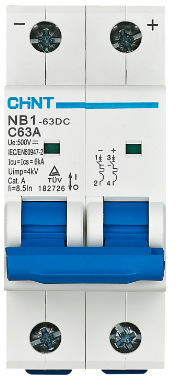
The DC MCB (Miniature Circuit Breaker), model NB1-63DC, manufactured by CHINT, is a protective device specifically designed for direct current (DC) applications. It automatically disconnects a circuit in the event of an overload or short circuit, ensuring the safety of electrical systems and preventing potential damage to connected equipment.
DC MCBs are widely used in renewable energy systems, battery banks, electric vehicles, and other DC-powered applications where reliable circuit protection is critical.
Explore Projects Built with DC MCB
 Open Project in Cirkit Designer
 Open Project in Cirkit Designer
 Open Project in Cirkit Designer
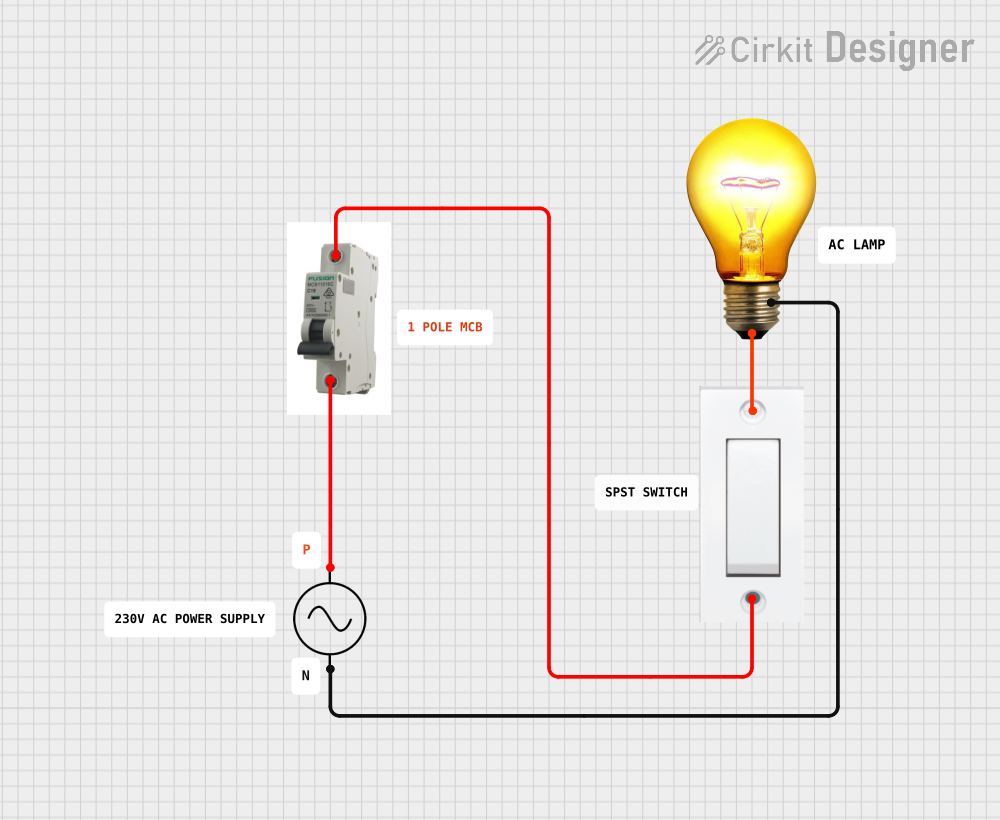 Open Project in Cirkit Designer
Explore Projects Built with DC MCB
Open Project in Cirkit DesignerOpen Project in Cirkit DesignerOpen Project in Cirkit DesignerOpen Project in Cirkit DesignerCommon Applications and Use Cases
- Solar power systems (e.g., photovoltaic arrays)
- Battery energy storage systems
- Electric vehicle charging stations
- DC distribution panels
- Industrial control systems
- Telecommunications equipment
Technical Specifications
Key Technical Details
| Parameter | Specification |
|---|---|
| Manufacturer | CHINT |
| Model | NB1-63DC |
| Rated Voltage | 250V DC (1-pole), 500V DC (2-pole) |
| Rated Current | 1A to 63A (varies by model) |
| Breaking Capacity | 10kA |
| Tripping Curve | C and D curves available |
| Number of Poles | 1P, 2P |
| Operating Temperature Range | -30°C to +70°C |
| Mounting | DIN rail (35mm) |
| Standards Compliance | IEC/EN 60947-2, GB/T 14048.2 |
Pin Configuration and Descriptions
The DC MCB does not have traditional "pins" like an IC but instead features terminal connections for input and output wiring. Below is a description of the terminals:
| Terminal Name | Description |
|---|---|
| Line (L) | Connects to the positive DC input voltage |
| Load (OUT) | Connects to the positive DC output voltage |
| Neutral (N) | For 2-pole models, connects to the DC negative |
Usage Instructions
How to Use the DC MCB in a Circuit
- Determine the Rated Current: Select the appropriate MCB model based on the current rating of your circuit. Ensure the rated current of the MCB matches or slightly exceeds the maximum current of the load.
- Mounting: Install the MCB on a standard 35mm DIN rail in your distribution panel or enclosure.
- Wiring:
- Connect the positive DC input voltage to the Line (L) terminal.
- Connect the positive DC output voltage to the Load (OUT) terminal.
- For 2-pole models, connect the DC negative to the Neutral (N) terminal.
- Tighten Connections: Ensure all terminal screws are securely tightened to prevent loose connections.
- Power On: Once all connections are verified, switch the MCB to the "ON" position to energize the circuit.
Important Considerations and Best Practices
- Polarity: Ensure correct polarity when wiring the MCB, as DC circuits are polarity-sensitive.
- Breaking Capacity: Verify that the MCB's breaking capacity (10kA) is sufficient for the fault current in your system.
- Ambient Temperature: Consider the operating temperature range (-30°C to +70°C) when installing the MCB in extreme environments.
- Regular Maintenance: Periodically inspect the MCB for signs of wear, overheating, or loose connections.
- Avoid Overloading: Do not exceed the rated current of the MCB, as this may cause nuisance tripping or damage.
Example: Using the DC MCB in a Solar Power System
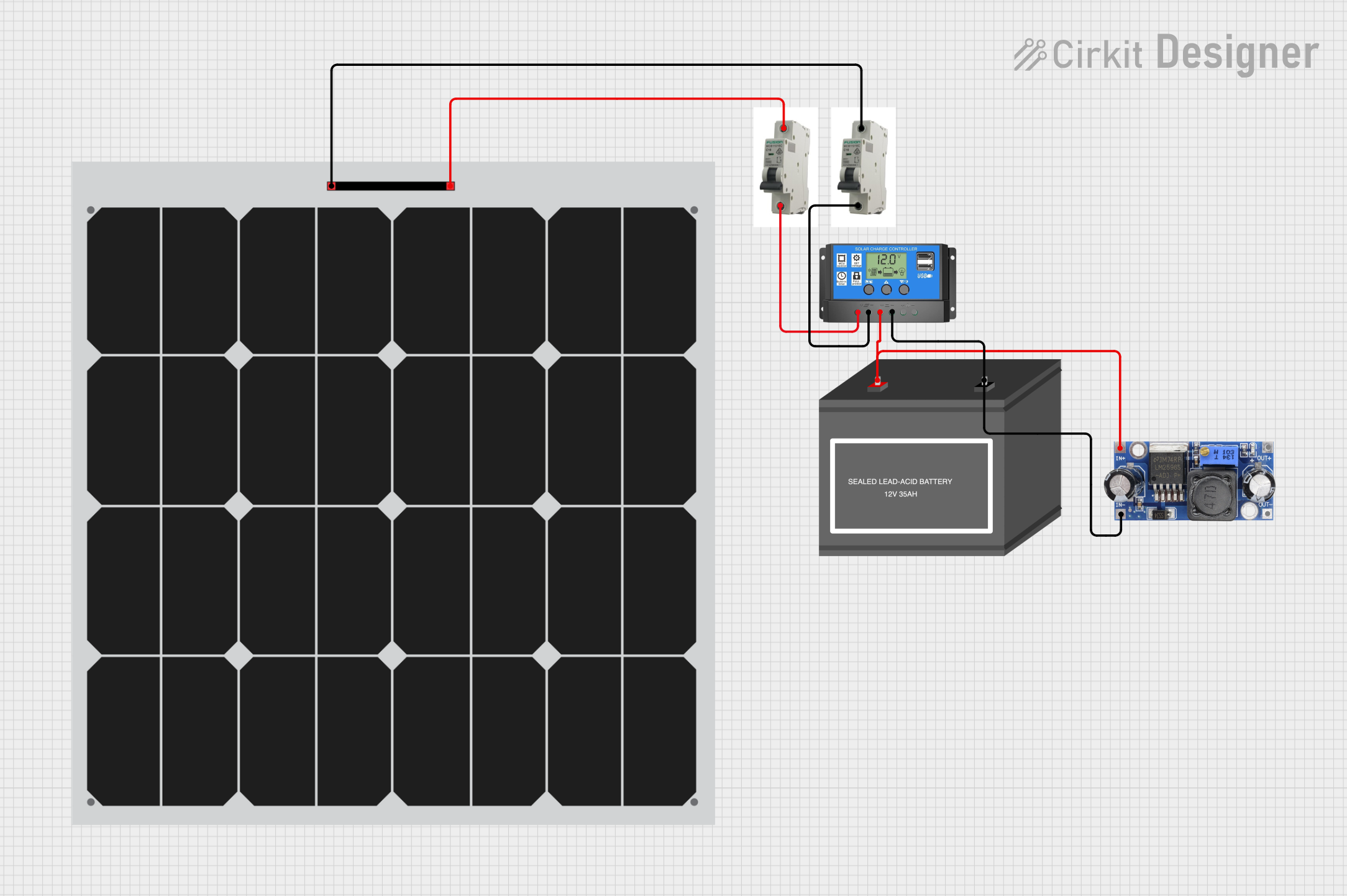
In a solar power system, the DC MCB can be installed between the solar panels and the charge controller to protect the circuit from overcurrent or short circuits. Below is a simplified wiring diagram:
Solar Panel (+) ----> Line (L) Terminal of MCB
Solar Panel (-) ----> Neutral (N) Terminal of MCB (for 2-pole models)
Load (+) ---------> Load (OUT) Terminal of MCB
Load (-) ---------> Neutral (N) Terminal of MCB (for 2-pole models)
Troubleshooting and FAQs
Common Issues and Solutions
| Issue | Possible Cause | Solution |
|---|---|---|
| MCB trips frequently | Overloaded circuit | Reduce the load or use an MCB with a higher current rating (if safe). |
| MCB does not trip during a fault | Fault current below tripping threshold | Verify the fault current and ensure the MCB's rating matches the system requirements. |
| Loose connections | Improper tightening of terminal screws | Re-tighten all terminal screws securely. |
| Overheating of MCB | High ambient temperature or poor ventilation | Improve ventilation or relocate the MCB to a cooler environment. |
FAQs
Can the NB1-63DC be used in AC circuits?
- No, this MCB is specifically designed for DC circuits. For AC applications, use an AC-rated MCB.
What is the difference between C and D tripping curves?
- The C curve is suitable for general-purpose loads with moderate inrush currents, while the D curve is designed for high inrush current loads, such as motors or transformers.
How do I select the correct MCB for my application?
- Determine the maximum current and voltage of your circuit, and choose an MCB with a matching or slightly higher rating. Also, consider the breaking capacity and tripping curve.
Can I use the NB1-63DC in a solar PV system?
- Yes, the NB1-63DC is ideal for solar PV systems and can protect circuits between solar panels, charge controllers, and inverters.
By following this documentation, users can safely and effectively integrate the CHINT NB1-63DC DC MCB into their electrical systems.