
How to Use GSA 28: Examples, Pinouts, and Specs
 Design with GSA 28 in Cirkit Designer
Introduction
The GSA 28 is a gas sensor manufactured by GARMIN, designed to detect various gases in the environment. It is widely used in safety-critical applications to monitor air quality and ensure safe working conditions. The sensor provides real-time data on gas concentrations, making it an essential component in industrial, commercial, and residential safety systems.
Explore Projects Built with GSA 28
 Open Project in Cirkit Designer
 Open Project in Cirkit Designer
 Open Project in Cirkit Designer
 Open Project in Cirkit Designer
Explore Projects Built with GSA 28
Open Project in Cirkit DesignerOpen Project in Cirkit DesignerOpen Project in Cirkit DesignerOpen Project in Cirkit DesignerCommon Applications and Use Cases
- Industrial safety systems to detect hazardous gas leaks
- Air quality monitoring in residential and commercial buildings
- Environmental monitoring for research and compliance
- Automotive applications for cabin air quality control
- Smart home systems for detecting harmful gases
Technical Specifications
The GSA 28 is a robust and reliable gas sensor with the following key specifications:
| Parameter | Value |
|---|---|
| Manufacturer | GARMIN |
| Part ID | GSA28 |
| Operating Voltage | 3.3V to 5V DC |
| Operating Current | 50 mA (typical) |
| Detection Range | 0 to 1000 ppm (parts per million) |
| Response Time | < 10 seconds |
| Operating Temperature | -20°C to +50°C |
| Humidity Range | 15% to 90% RH (non-condensing) |
| Output Signal Type | Analog voltage output |
| Dimensions | 20 mm x 15 mm x 10 mm |
| Weight | 5 grams |
Pin Configuration and Descriptions
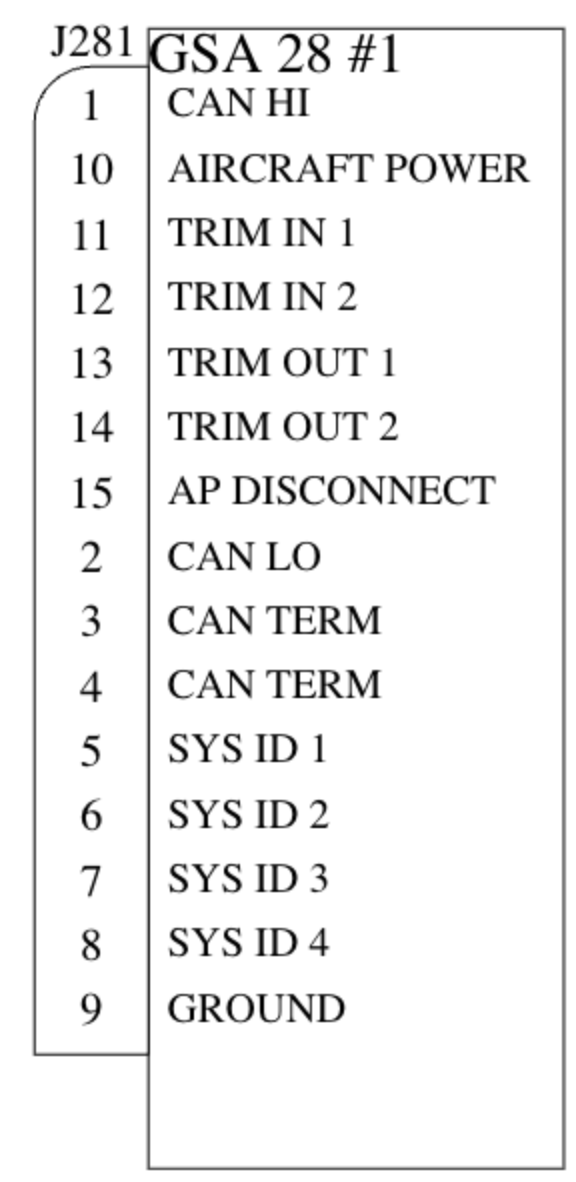
The GSA 28 has a 4-pin interface for easy integration into circuits. The pin configuration is as follows:
| Pin Number | Pin Name | Description |
|---|---|---|
| 1 | VCC | Power supply input (3.3V to 5V DC) |
| 2 | GND | Ground connection |
| 3 | OUT | Analog voltage output proportional to gas levels |
| 4 | NC | Not connected (leave unconnected in the circuit) |
Usage Instructions
How to Use the GSA 28 in a Circuit
- Power Supply: Connect the VCC pin to a 3.3V or 5V DC power source and the GND pin to the ground of the circuit.
- Signal Output: Connect the OUT pin to an analog input pin of a microcontroller (e.g., Arduino UNO) to read the gas concentration as an analog voltage.
- Calibration: Allow the sensor to warm up for 2-3 minutes after powering it on to stabilize its readings.
- Data Processing: Use the analog voltage output to calculate the gas concentration based on the sensor's response curve provided in the datasheet.
Important Considerations and Best Practices
- Ventilation: Ensure proper ventilation around the sensor for accurate gas detection.
- Avoid Contaminants: Keep the sensor away from dust, oil, and other contaminants that may affect its performance.
- Temperature and Humidity: Operate the sensor within the specified temperature and humidity range for reliable results.
- Analog-to-Digital Conversion: Use a microcontroller with a 10-bit or higher ADC resolution for precise readings.
Example Code for Arduino UNO
Below is an example code snippet to interface the GSA 28 with an Arduino UNO:
// GSA 28 Gas Sensor Example Code
// This code reads the analog output of the GSA 28 and prints the gas concentration
// to the Serial Monitor. Ensure the sensor is connected to the correct pins.

const int sensorPin = A0; // Connect the OUT pin of GSA 28 to Arduino A0
int sensorValue = 0;      // Variable to store the analog reading

void setup() {
  Serial.begin(9600); // Initialize serial communication at 9600 baud
  Serial.println("GSA 28 Gas Sensor Initialized");
}

void loop() {
  sensorValue = analogRead(sensorPin); // Read the analog value from the sensor
  float voltage = sensorValue * (5.0 / 1023.0); // Convert ADC value to voltage
  float gasConcentration = voltage * 200; // Example conversion factor (adjust as needed)

  // Print the gas concentration to the Serial Monitor
  Serial.print("Gas Concentration: ");
  Serial.print(gasConcentration);
  Serial.println(" ppm");

  delay(1000); // Wait for 1 second before the next reading
}
Troubleshooting and FAQs
Common Issues and Solutions
No Output Signal:
- Cause: Incorrect wiring or insufficient power supply.
- Solution: Verify the connections and ensure the VCC pin is receiving 3.3V to 5V DC.
Inconsistent Readings:
- Cause: Sensor not warmed up or operating outside the specified temperature range.
- Solution: Allow the sensor to warm up for 2-3 minutes and ensure it is used within the recommended temperature and humidity range.
Low Sensitivity:
- Cause: Sensor exposed to contaminants or aging.
- Solution: Clean the sensor area and replace the sensor if it has reached the end of its lifespan.
High Noise in Output:
- Cause: Electrical interference or unstable power supply.
- Solution: Use decoupling capacitors near the sensor's power pins and ensure a stable power source.
FAQs
Q1: Can the GSA 28 detect multiple gases simultaneously?
A1: The GSA 28 is designed to detect a specific range of gases. Refer to the datasheet for details on the gases it can detect.
Q2: How do I calibrate the sensor?
A2: The sensor typically does not require manual calibration. However, for precise applications, you can use a known gas concentration to adjust the output readings.
Q3: Can I use the GSA 28 with a 3.3V microcontroller?
A3: Yes, the GSA 28 operates within a voltage range of 3.3V to 5V, making it compatible with 3.3V systems.
Q4: What is the lifespan of the GSA 28?
A4: The sensor's lifespan depends on usage and environmental conditions. Under normal conditions, it can last several years.