
How to Use 18 Channel CCTV Power Supply Distribution Box: Examples, Pinouts, and Specs
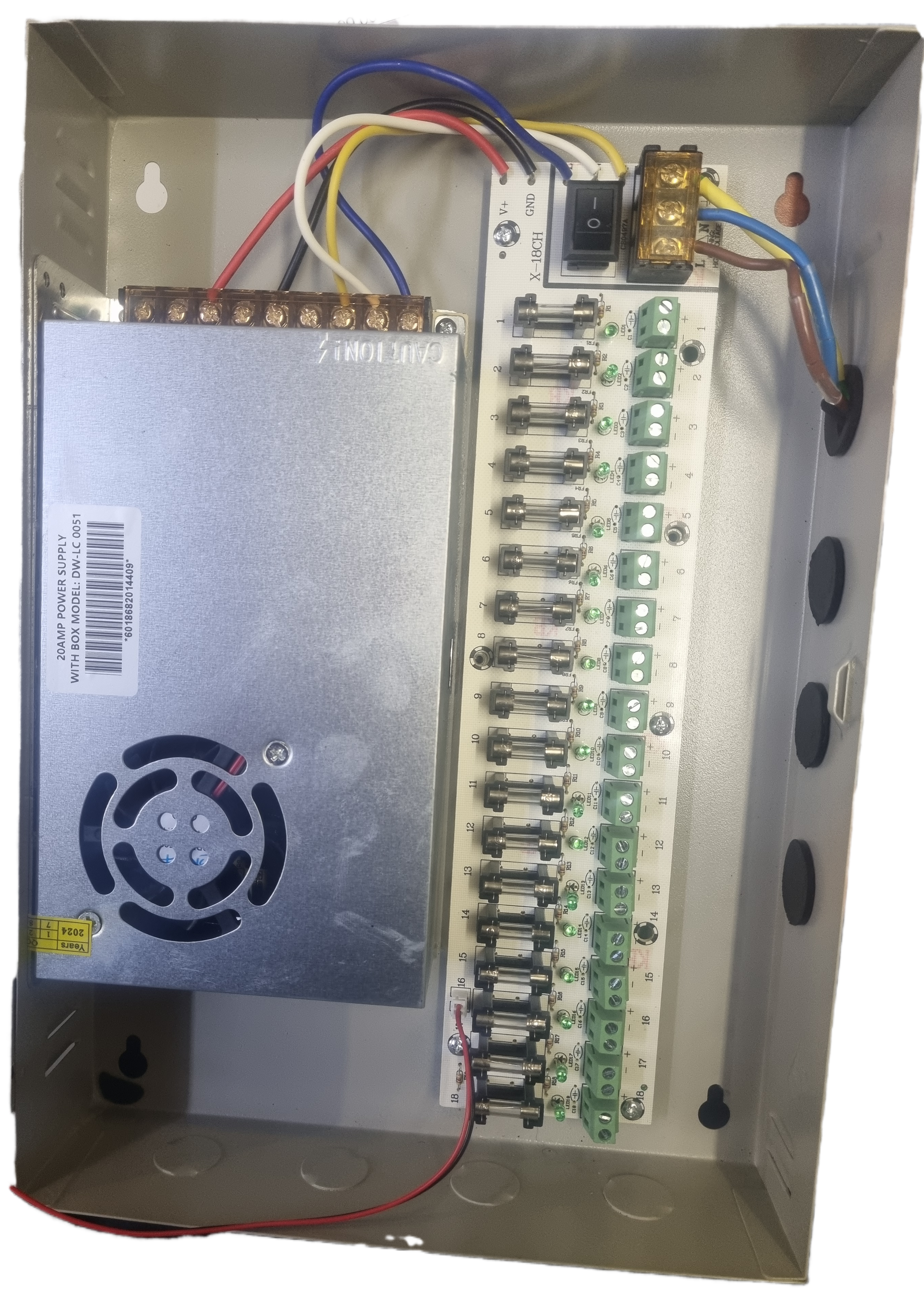
 Design with 18 Channel CCTV Power Supply Distribution Box in Cirkit Designer
Introduction
The 18 Channel CCTV Power Supply Distribution Box is an essential component for centralized power management in closed-circuit television (CCTV) systems. It is designed to distribute power efficiently to up to 18 different channels, allowing for a streamlined and organized setup for multiple CCTV cameras and related security equipment. This distribution box is commonly used in surveillance systems for commercial buildings, residential complexes, and any area requiring multiple camera installations.
Explore Projects Built with 18 Channel CCTV Power Supply Distribution Box
 Open Project in Cirkit Designer
 Open Project in Cirkit Designer
 Open Project in Cirkit Designer
 Open Project in Cirkit Designer
Explore Projects Built with 18 Channel CCTV Power Supply Distribution Box
Open Project in Cirkit DesignerOpen Project in Cirkit DesignerOpen Project in Cirkit DesignerOpen Project in Cirkit DesignerCommon Applications and Use Cases
- Commercial security systems
- Residential surveillance setups
- Retail store monitoring
- Parking lot and perimeter security
- Institutional and educational facility surveillance
Technical Specifications
Key Technical Details
- Input Voltage: 110V/220V AC
- Output Voltage: 12V DC per channel
- Total Output Current: 20A (max), distributed across 18 channels
- Power per Channel: Up to 1.1A per channel, not to exceed total output current
- Protection Features: Individual PTC (Positive Temperature Coefficient) fuse for each channel, surge protection
Pin Configuration and Descriptions
| Channel | Output Voltage | Output Current | Fuse Type | Status Indicator |
|---|---|---|---|---|
| 1 | 12V DC | Up to 1.1A | PTC | LED |
| 2 | 12V DC | Up to 1.1A | PTC | LED |
| ... | ... | ... | ... | ... |
| 18 | 12V DC | Up to 1.1A | PTC | LED |
Note: Channels are identical in specifications. The table shows a pattern that repeats for each channel.
Usage Instructions
How to Use the Component in a Circuit
- Installation: Mount the distribution box in a secure and accessible location near the CCTV monitoring area.
- Power Input Connection: Connect the AC power input to a reliable power source with the appropriate voltage rating.
- Channel Connections: Connect each CCTV camera or component to the output terminals corresponding to each channel. Ensure that the power requirements of the cameras do not exceed the output capacity of the individual channels.
- Powering On: Once all connections are secure, switch on the main power to the distribution box. Check the status indicators for each channel to ensure proper operation.
Important Considerations and Best Practices
- Load Balancing: Distribute the power load evenly across all channels to prevent overloading individual channels.
- Ventilation: Ensure that the distribution box is installed in a well-ventilated area to prevent overheating.
- Maintenance: Regularly check the status indicators and replace any blown fuses as needed.
- Safety: Do not exceed the maximum rated current for the distribution box to avoid damage and potential hazards.
Troubleshooting and FAQs
Common Issues Users Might Face
- Camera Not Powering On: Check the individual channel's status indicator and fuse. Replace the fuse if necessary and ensure the camera's power requirements do not exceed the channel's capacity.
- Overheating: Ensure adequate ventilation around the distribution box and check for overloading of channels.
- Intermittent Power: Verify that all connections are secure and that there is no damage to the power cables.
Solutions and Tips for Troubleshooting
- Fuse Replacement: If a channel's fuse has blown, replace it with a fuse of the same type and rating.
- Load Redistribution: If a channel is overloaded, redistribute the load among other channels or consider using an additional distribution box for extra capacity.
- Connection Checks: Regularly inspect all connections for signs of wear or damage and ensure they are tight and secure.
FAQs
Q: Can I use this distribution box with cameras that have different power requirements? A: Yes, as long as each camera's requirements do not exceed the individual channel's output capacity and the total current does not surpass 20A.
Q: What should I do if all LEDs are off, but the power is on? A: Check the main power input and ensure that the distribution box is receiving power. If the input is secure, inspect the internal components for any signs of damage or failure.
Q: Is it possible to replace the PTC fuses with standard fuses? A: It is not recommended to replace PTC fuses with standard fuses as they have different characteristics. Always use the same type and rating of fuse for replacements.
Note: This documentation is provided for informational purposes and should be used by qualified personnel. Always follow local electrical codes and safety regulations when installing and operating the distribution box.