
How to Use regulator: Examples, Pinouts, and Specs
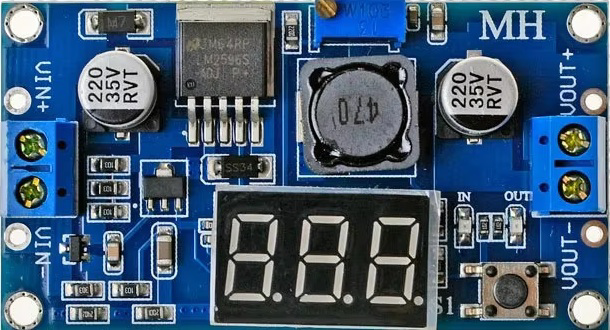
 Design with regulator in Cirkit Designer
Introduction
A regulator is an electronic component designed to maintain a constant output voltage or current, regardless of fluctuations in input voltage or load conditions. This ensures stable and reliable operation of electronic circuits, protecting sensitive components from damage caused by voltage variations. Regulators are widely used in power supply systems, embedded systems, and various electronic devices to provide a steady voltage source.
Explore Projects Built with regulator
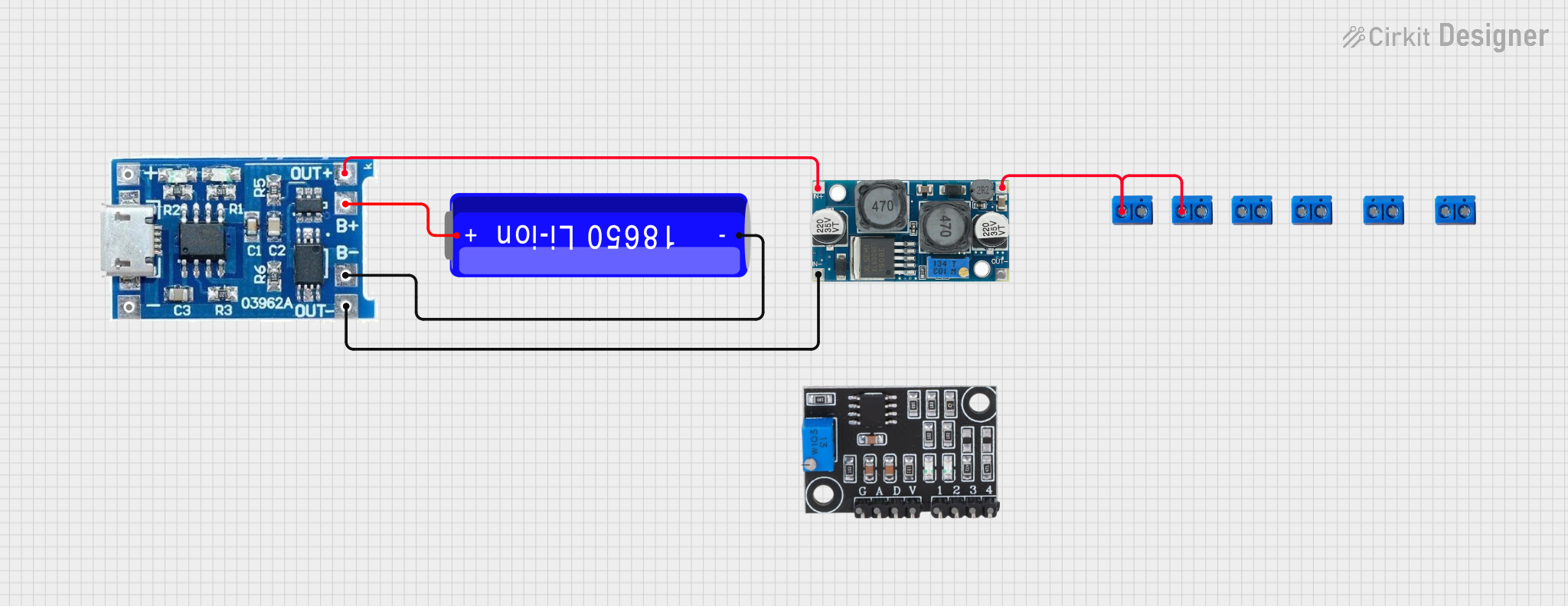 Open Project in Cirkit Designer
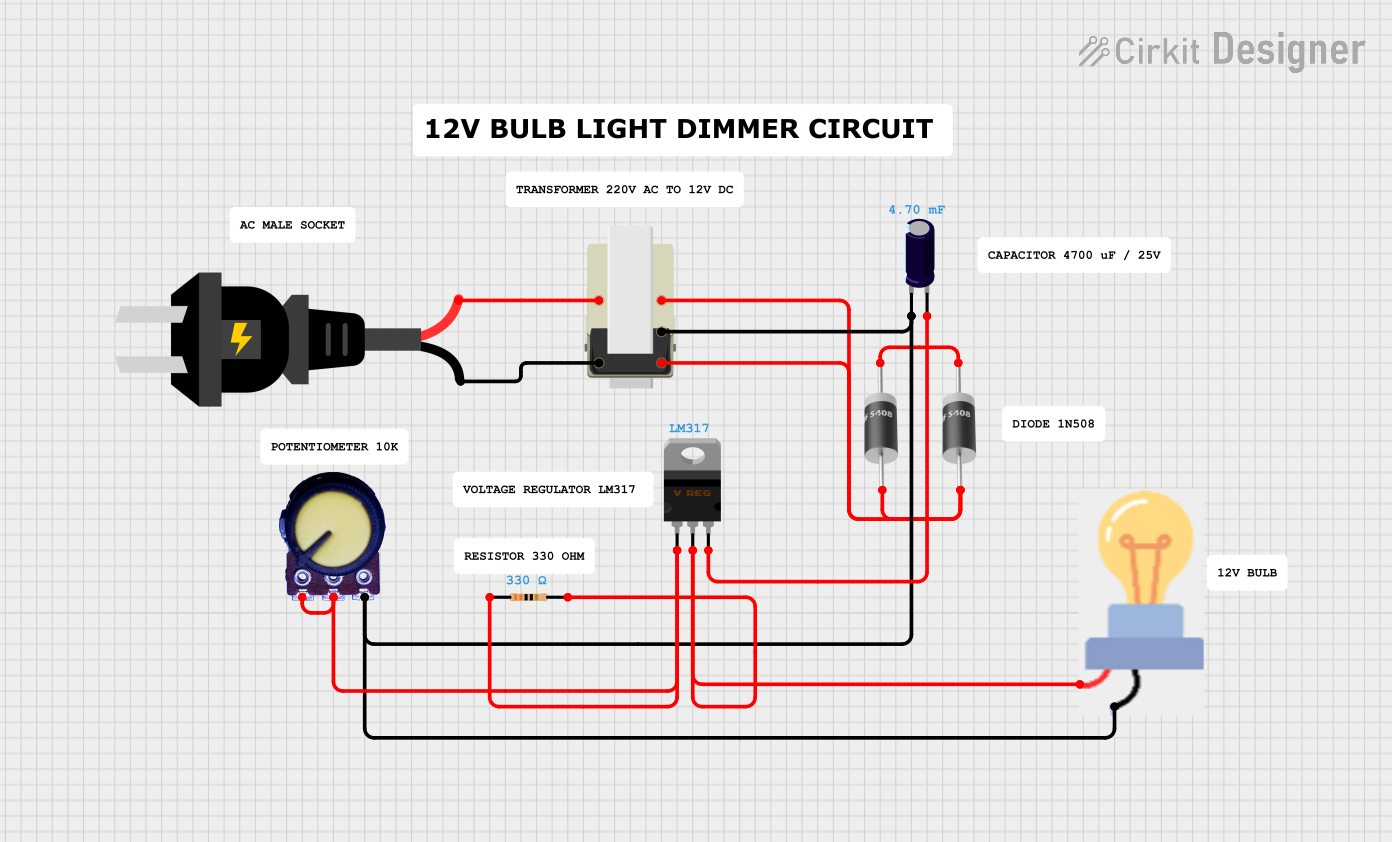 Open Project in Cirkit Designer
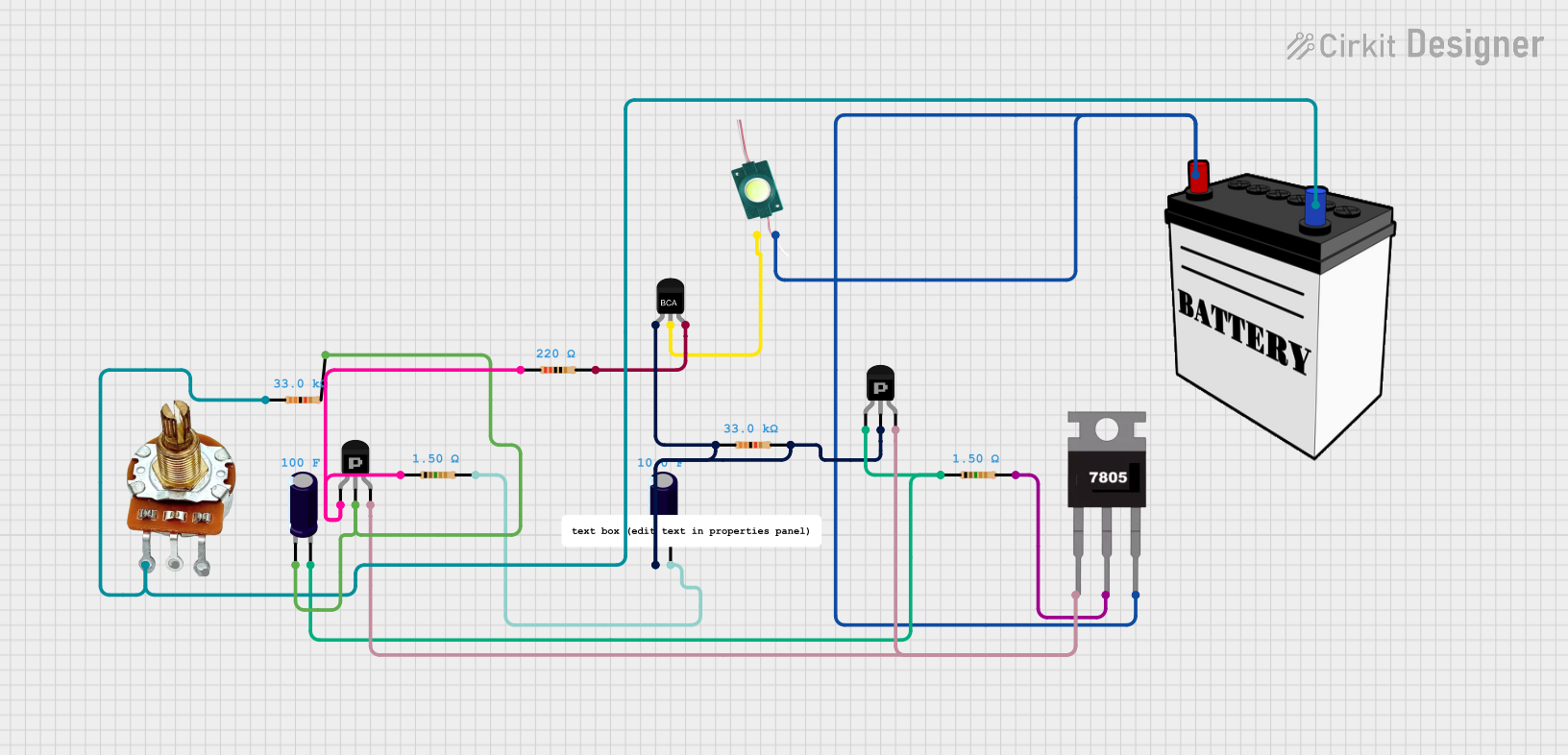 Open Project in Cirkit Designer
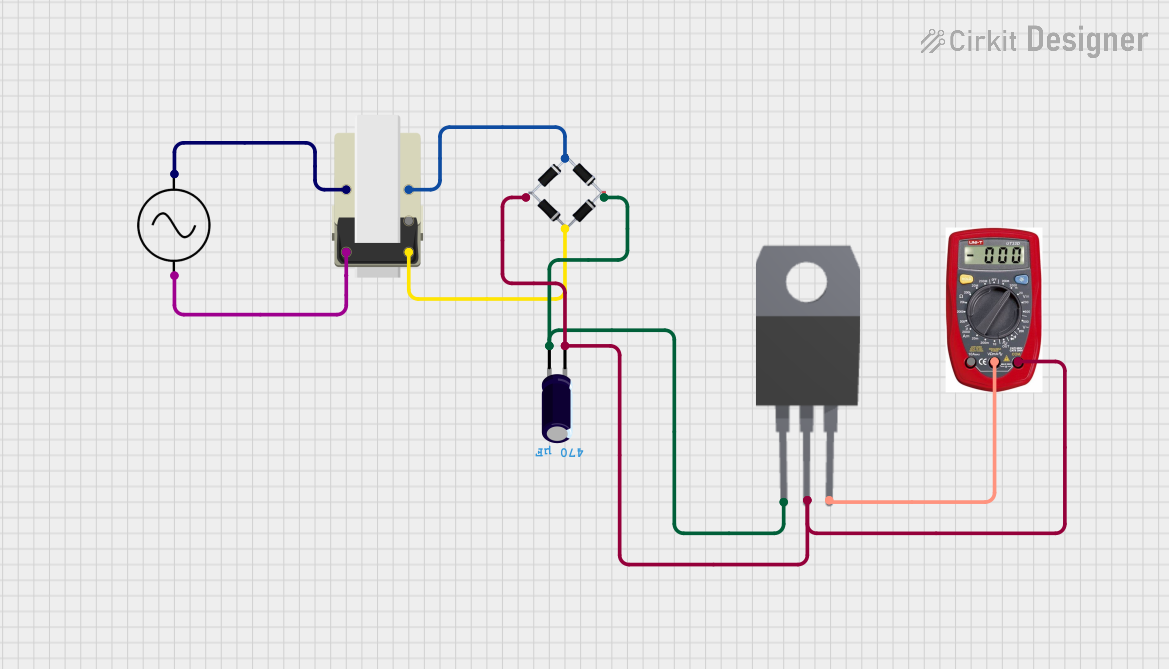 Open Project in Cirkit Designer
Explore Projects Built with regulator
Open Project in Cirkit DesignerOpen Project in Cirkit DesignerOpen Project in Cirkit DesignerOpen Project in Cirkit DesignerCommon Applications and Use Cases
- Power supply circuits for microcontrollers and sensors
- Voltage stabilization in battery-powered devices
- Protection of sensitive electronic components
- DC-DC or AC-DC conversion systems
- Industrial and automotive electronics
Technical Specifications
The technical specifications of a regulator can vary depending on its type (e.g., linear or switching regulator). Below is an example of a typical linear voltage regulator (e.g., 7805):
Key Technical Details
- Input Voltage Range: 7V to 35V
- Output Voltage: 5V (fixed)
- Output Current: Up to 1.5A
- Dropout Voltage: Typically 2V
- Efficiency: ~40% to 60% (for linear regulators)
- Thermal Protection: Built-in
- Short-Circuit Protection: Built-in
Pin Configuration and Descriptions
The following table describes the pin configuration for a standard 3-pin linear voltage regulator (e.g., 7805):
| Pin Number | Pin Name | Description |
|---|---|---|
| 1 | Input (Vin) | Connects to the unregulated input voltage source |
| 2 | Ground (GND) | Common ground for input and output |
| 3 | Output (Vout) | Provides the regulated output voltage |
Usage Instructions
How to Use the Component in a Circuit
- Connect the Input Voltage: Attach the unregulated DC voltage source to the
Input (Vin)pin. Ensure the input voltage is within the specified range (e.g., 7V to 35V for a 7805 regulator). - Connect the Ground: Connect the
Ground (GND)pin to the common ground of the circuit. - Connect the Output Voltage: Use the
Output (Vout)pin to power your load or circuit with the regulated voltage. - Add Capacitors: Place decoupling capacitors (e.g., 0.33µF on the input and 0.1µF on the output) close to the regulator pins to improve stability and reduce noise.
Important Considerations and Best Practices
- Heat Dissipation: Linear regulators can generate significant heat, especially when the input voltage is much higher than the output voltage. Use a heatsink or proper ventilation to prevent overheating.
- Input Voltage: Ensure the input voltage is at least 2V higher than the desired output voltage (dropout voltage).
- Load Current: Do not exceed the maximum output current rating of the regulator.
- Capacitor Selection: Use low-ESR capacitors for better performance and stability.
- Switching Regulators: For higher efficiency, consider using a switching regulator instead of a linear regulator, especially in battery-powered applications.
Example: Using a 7805 Regulator with an Arduino UNO
Below is an example circuit and Arduino code to demonstrate how to use a 7805 regulator to power an Arduino UNO:
Circuit Description
- Connect a 12V DC power supply to the
Input (Vin)pin of the 7805 regulator. - Connect the
Ground (GND)pin to the Arduino's GND. - Connect the
Output (Vout)pin to the Arduino's 5V pin.
Arduino Code
// Example code to blink an LED connected to pin 13 of the Arduino UNO
// Ensure the Arduino is powered via the 7805 regulator

void setup() {
  pinMode(13, OUTPUT); // Set pin 13 as an output pin
}

void loop() {
  digitalWrite(13, HIGH); // Turn the LED on
  delay(1000);            // Wait for 1 second
  digitalWrite(13, LOW);  // Turn the LED off
  delay(1000);            // Wait for 1 second
}
Troubleshooting and FAQs
Common Issues Users Might Face
Regulator Overheating:
- Cause: Excessive input voltage or high current draw.
- Solution: Use a heatsink or reduce the input voltage. Ensure the load current is within the regulator's limits.
Unstable Output Voltage:
- Cause: Missing or improperly sized capacitors.
- Solution: Add decoupling capacitors (e.g., 0.33µF on input and 0.1µF on output).
No Output Voltage:
- Cause: Incorrect wiring or damaged regulator.
- Solution: Double-check the connections and replace the regulator if necessary.
Low Efficiency:
- Cause: Using a linear regulator in high-power applications.
- Solution: Switch to a switching regulator for better efficiency.
FAQs
Can I use a 7805 regulator with a 9V battery?
- Yes, but ensure the battery can supply sufficient current for your load. Note that the regulator will dissipate excess energy as heat.
What is the difference between a linear and a switching regulator?
- Linear regulators are simpler and generate less noise but are less efficient. Switching regulators are more efficient but can introduce noise into the circuit.
Do I always need capacitors with a regulator?
- Yes, capacitors are essential for stability and noise reduction. Always follow the manufacturer's recommendations for capacitor values.
Can I use a 7805 regulator to power a 3.3V device?
- No, the 7805 outputs 5V. Use a 3.3V regulator (e.g., LD1117-3.3) for 3.3V devices.