
How to Use Raspberry Pi 3B+: Examples, Pinouts, and Specs
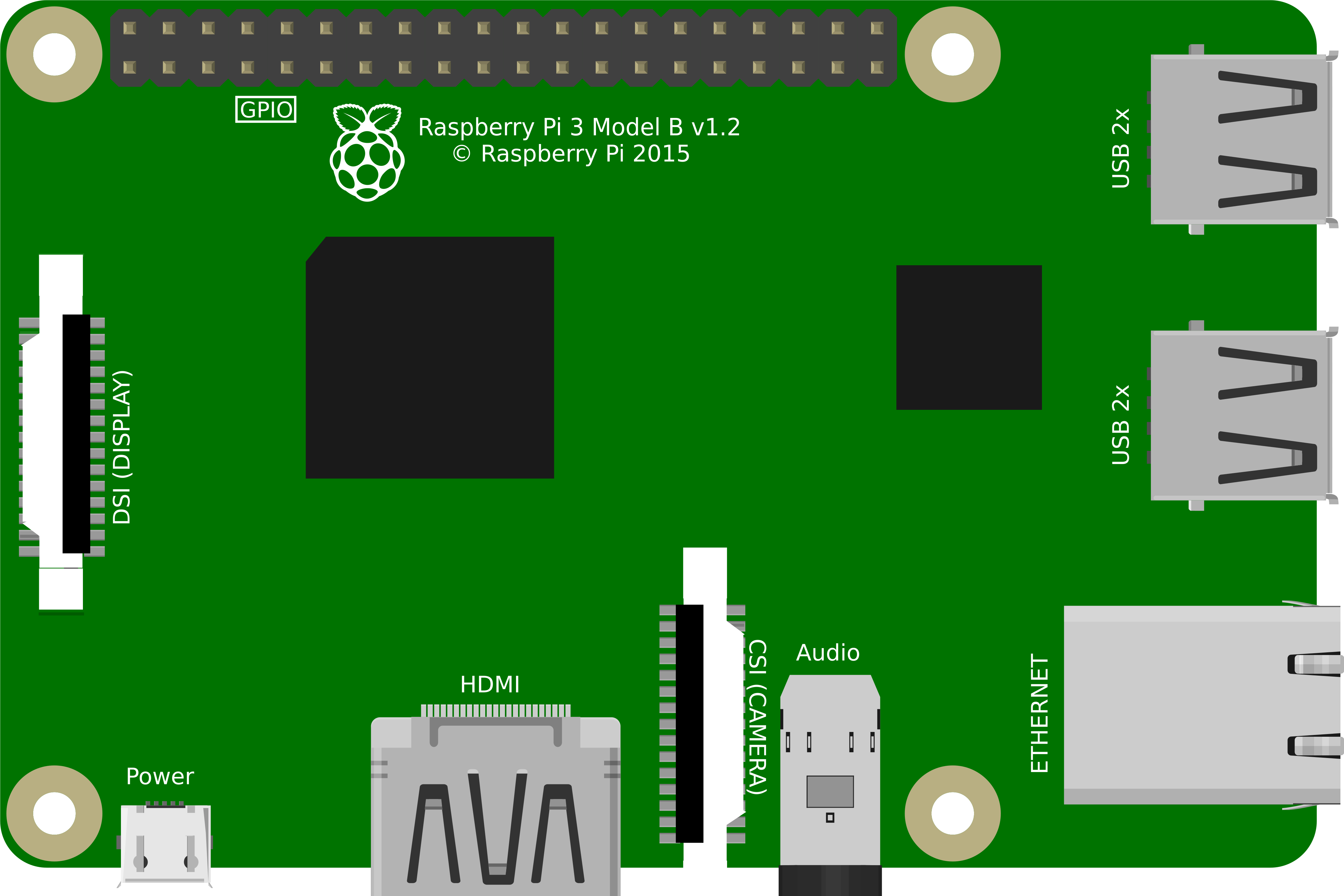
 Design with Raspberry Pi 3B+ in Cirkit Designer
Introduction
The Raspberry Pi 3B+ is a compact, affordable single-board computer developed by Raspberry Pi. It features a quad-core processor, built-in Wi-Fi, Bluetooth, and multiple USB ports, making it a versatile tool for a wide range of applications. Whether you're building a media center, learning to program, or developing robotics projects, the Raspberry Pi 3B+ offers the power and flexibility needed to bring your ideas to life.
Explore Projects Built with Raspberry Pi 3B+
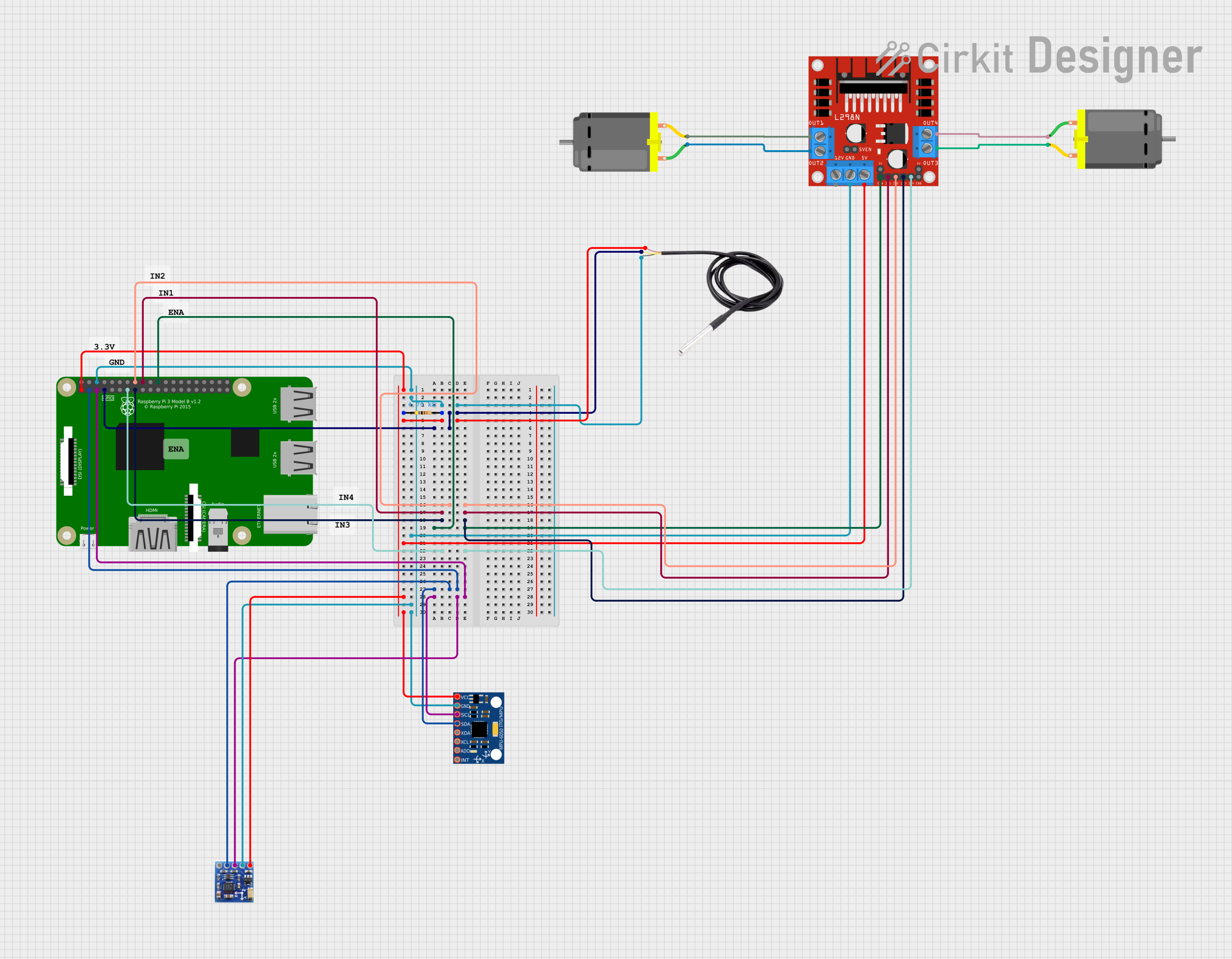 Open Project in Cirkit Designer
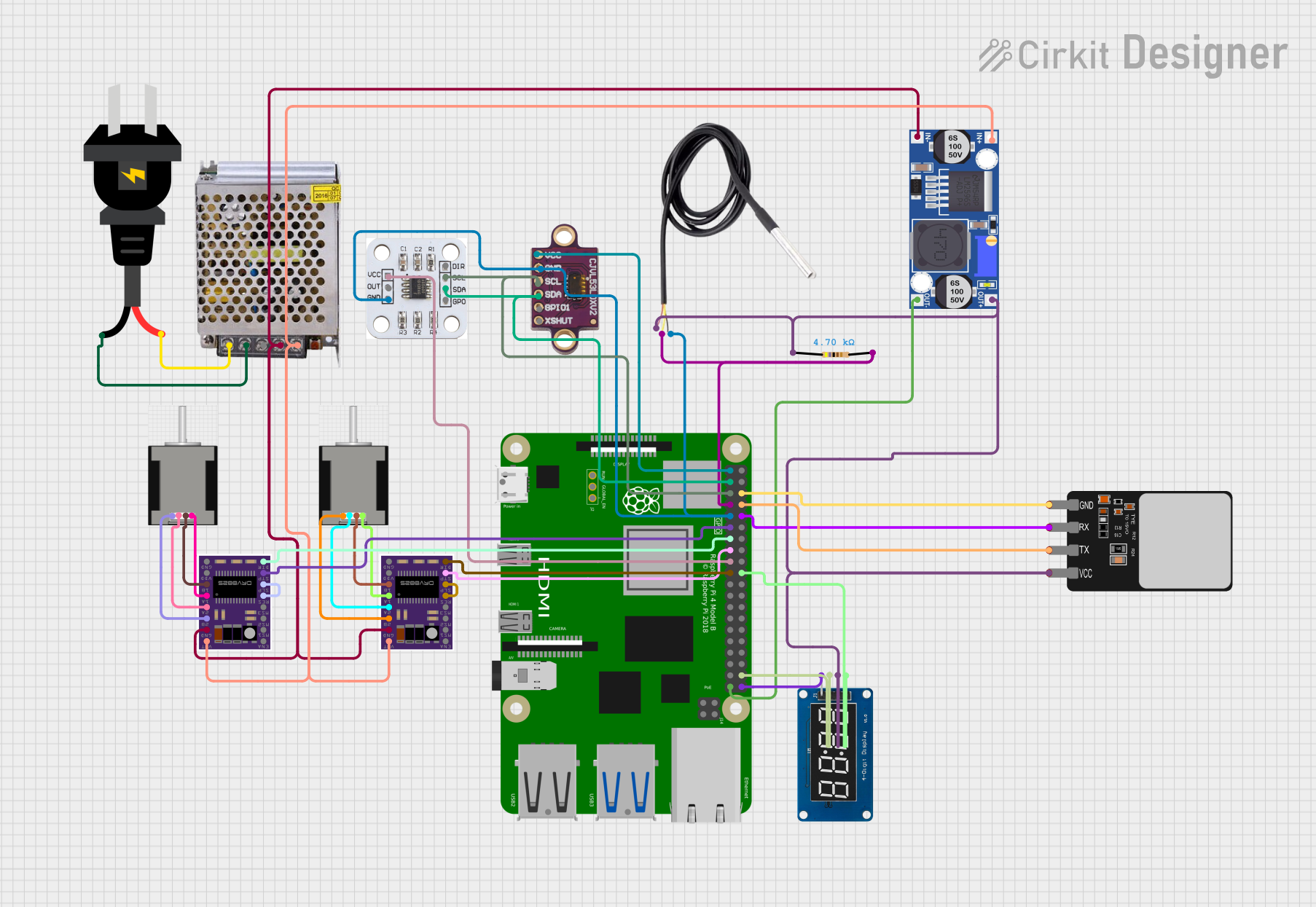 Open Project in Cirkit Designer
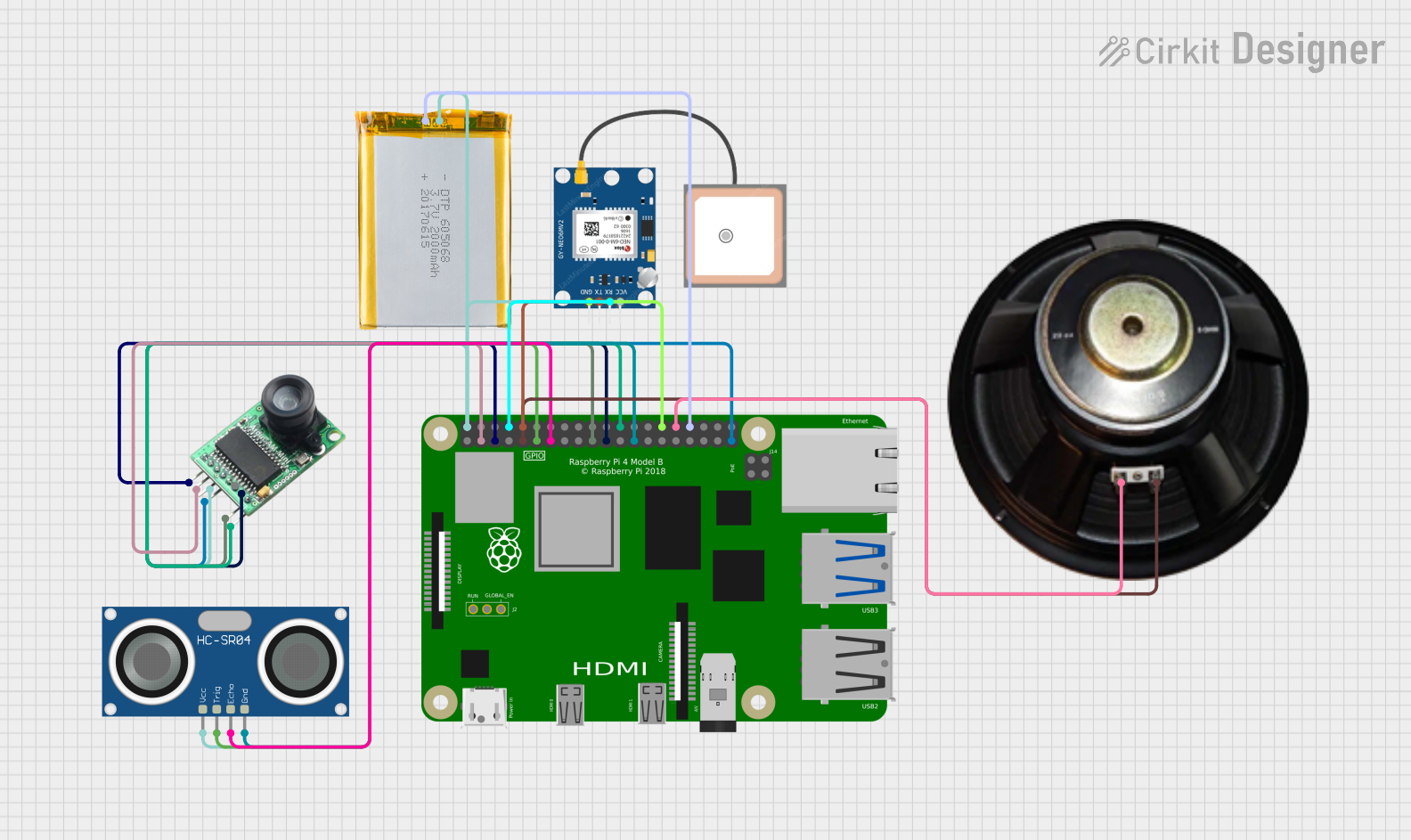 Open Project in Cirkit Designer
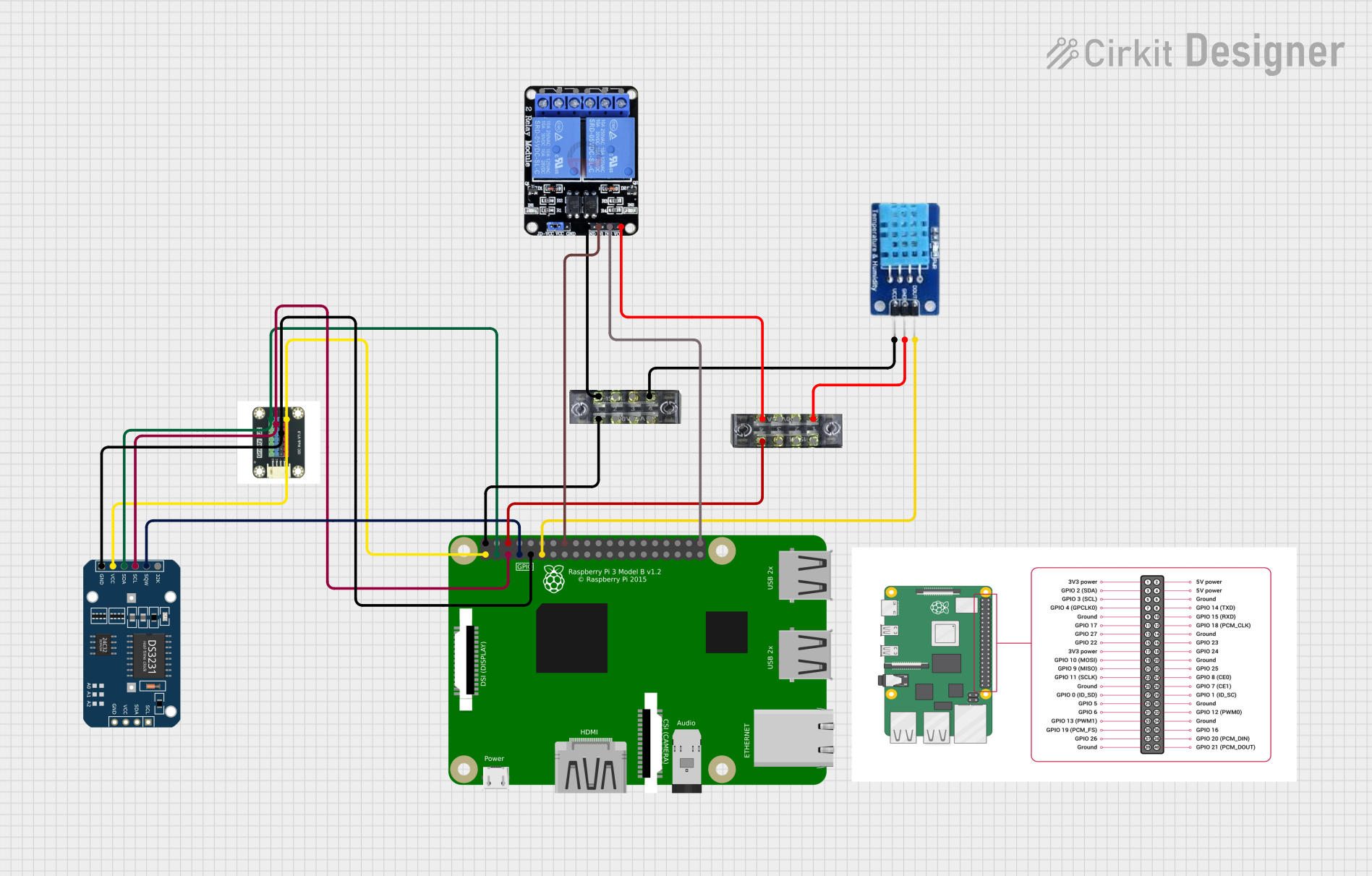 Open Project in Cirkit Designer
Explore Projects Built with Raspberry Pi 3B+
Open Project in Cirkit DesignerOpen Project in Cirkit DesignerOpen Project in Cirkit DesignerOpen Project in Cirkit DesignerCommon Applications and Use Cases
- Programming and Education: Ideal for learning programming languages like Python, Java, and C++.
- IoT Projects: Built-in Wi-Fi and Bluetooth make it perfect for Internet of Things (IoT) applications.
- Media Centers: Can be used with software like Kodi to create a home media center.
- Robotics: Serves as the brain for robotics projects, controlling sensors, motors, and more.
- Home Automation: Powers smart home systems with its connectivity and processing capabilities.
Technical Specifications
The Raspberry Pi 3B+ is packed with features that make it a powerful and versatile single-board computer.
Key Technical Details
| Specification | Details |
|---|---|
| Processor | Broadcom BCM2837B0, quad-core Cortex-A53 (ARMv8) 64-bit, 1.4 GHz |
| GPU | Broadcom VideoCore IV |
| RAM | 1 GB LPDDR2 SDRAM |
| Wireless Connectivity | 2.4 GHz and 5 GHz IEEE 802.11.b/g/n/ac Wi-Fi, Bluetooth 4.2, BLE |
| Ethernet | Gigabit Ethernet over USB 2.0 (maximum throughput 300 Mbps) |
| USB Ports | 4 x USB 2.0 ports |
| GPIO | 40-pin GPIO header |
| Video Output | HDMI, Composite video via 3.5mm jack |
| Audio Output | 3.5mm stereo audio jack, HDMI |
| Storage | MicroSD card slot |
| Power Supply | 5V/2.5A via micro-USB connector |
| Dimensions | 85.6mm x 56.5mm x 17mm |
| Weight | 50g |
Pin Configuration and Descriptions
The Raspberry Pi 3B+ features a 40-pin GPIO header for connecting peripherals and sensors. Below is the pinout:
| Pin Number | Pin Name | Description |
|---|---|---|
| 1 | 3.3V Power | 3.3V power supply |
| 2 | 5V Power | 5V power supply |
| 3 | GPIO2 (SDA1) | I2C Data |
| 4 | 5V Power | 5V power supply |
| 5 | GPIO3 (SCL1) | I2C Clock |
| 6 | Ground | Ground |
| 7 | GPIO4 | General-purpose I/O |
| 8 | GPIO14 (TXD0) | UART Transmit |
| 9 | Ground | Ground |
| 10 | GPIO15 (RXD0) | UART Receive |
| ... | ... | ... (Refer to official documentation) |
For the full GPIO pinout, refer to the official Raspberry Pi documentation.
Usage Instructions
How to Use the Raspberry Pi 3B+ in a Circuit
- Powering the Raspberry Pi: Use a 5V/2.5A micro-USB power supply to power the board.
- Connecting Peripherals: Attach a monitor via HDMI, a keyboard and mouse via USB, and a microSD card with the operating system installed.
- Booting Up: Insert the microSD card, connect the power supply, and the Raspberry Pi will boot into the operating system.
- Using GPIO Pins: Connect sensors, LEDs, or other peripherals to the GPIO pins. Be sure to use appropriate resistors and check voltage levels to avoid damage.
Important Considerations and Best Practices
- Power Supply: Always use a reliable 5V/2.5A power supply to ensure stable operation.
- Static Precautions: Handle the board with care to avoid static discharge, which can damage components.
- Cooling: For intensive tasks, consider adding a heatsink or fan to prevent overheating.
- OS Installation: Use the Raspberry Pi Imager tool to install an operating system like Raspberry Pi OS on the microSD card.
Example: Blinking an LED with GPIO and Python
Below is an example of how to blink an LED connected to GPIO pin 17 using Python:
Import the GPIO library and time module
import RPi.GPIO as GPIO import time
Set up GPIO mode and pin
GPIO.setmode(GPIO.BCM) # Use Broadcom pin numbering GPIO.setup(17, GPIO.OUT) # Set GPIO pin 17 as an output
try: while True: GPIO.output(17, GPIO.HIGH) # Turn LED on time.sleep(1) # Wait for 1 second GPIO.output(17, GPIO.LOW) # Turn LED off time.sleep(1) # Wait for 1 second except KeyboardInterrupt: # Clean up GPIO settings on exit GPIO.cleanup()
Connecting to an Arduino UNO
The Raspberry Pi 3B+ can communicate with an Arduino UNO via UART, I2C, or SPI. For example, to send data via UART:
- Connect the Raspberry Pi's GPIO14 (TXD) to the Arduino's RX pin.
- Connect the Raspberry Pi's GPIO15 (RXD) to the Arduino's TX pin.
- Use a level shifter if necessary to match voltage levels.
Troubleshooting and FAQs
Common Issues and Solutions
The Raspberry Pi does not boot:
- Ensure the microSD card is properly inserted and contains a valid operating system.
- Check the power supply for sufficient voltage and current.
Wi-Fi or Bluetooth is not working:
- Verify that the correct drivers are installed and the wireless network is configured properly.
- Ensure the Raspberry Pi is within range of the Wi-Fi router.
Overheating:
- Add a heatsink or fan to the Raspberry Pi to improve cooling.
- Avoid placing the board in an enclosed space without ventilation.
GPIO pins not working:
- Double-check the pin connections and ensure the correct GPIO numbering is used in the code.
- Verify that the pins are not damaged or shorted.
FAQs
Can I power the Raspberry Pi 3B+ via GPIO pins? Yes, you can power the board using the 5V and GND pins, but this bypasses the onboard voltage regulation and protection.
What is the maximum current output of the GPIO pins? Each GPIO pin can source/sink a maximum of 16mA, with a total limit of 50mA across all pins.
Can I use the Raspberry Pi 3B+ as a desktop computer? Yes, it can be used for basic tasks like web browsing, document editing, and programming, but it is not suitable for resource-intensive applications.
For more information, visit the official Raspberry Pi website.