
How to Use LANDRC ESC BLHeli_S 2S-6S LiPo: Examples, Pinouts, and Specs
 Design with LANDRC ESC BLHeli_S 2S-6S LiPo in Cirkit Designer
Introduction
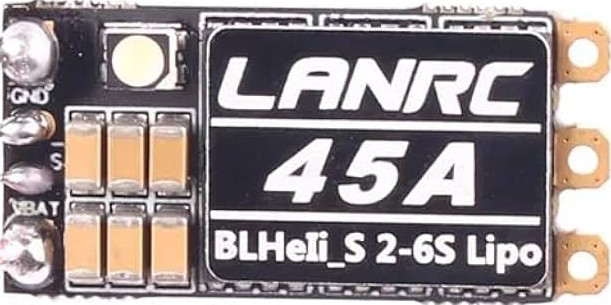
The LANDRC ESC BLHeli_S 2S-6S LiPo is a high-performance electronic speed controller (ESC) designed for brushless motors. It is compatible with 2S to 6S LiPo batteries and features BLHeli_S firmware, which provides enhanced responsiveness, smooth throttle control, and efficient operation. This ESC is widely used in drones, RC planes, and other remote-controlled vehicles where precise motor control is critical.
Explore Projects Built with LANDRC ESC BLHeli_S 2S-6S LiPo
 Open Project in Cirkit Designer
 Open Project in Cirkit Designer
 Open Project in Cirkit Designer
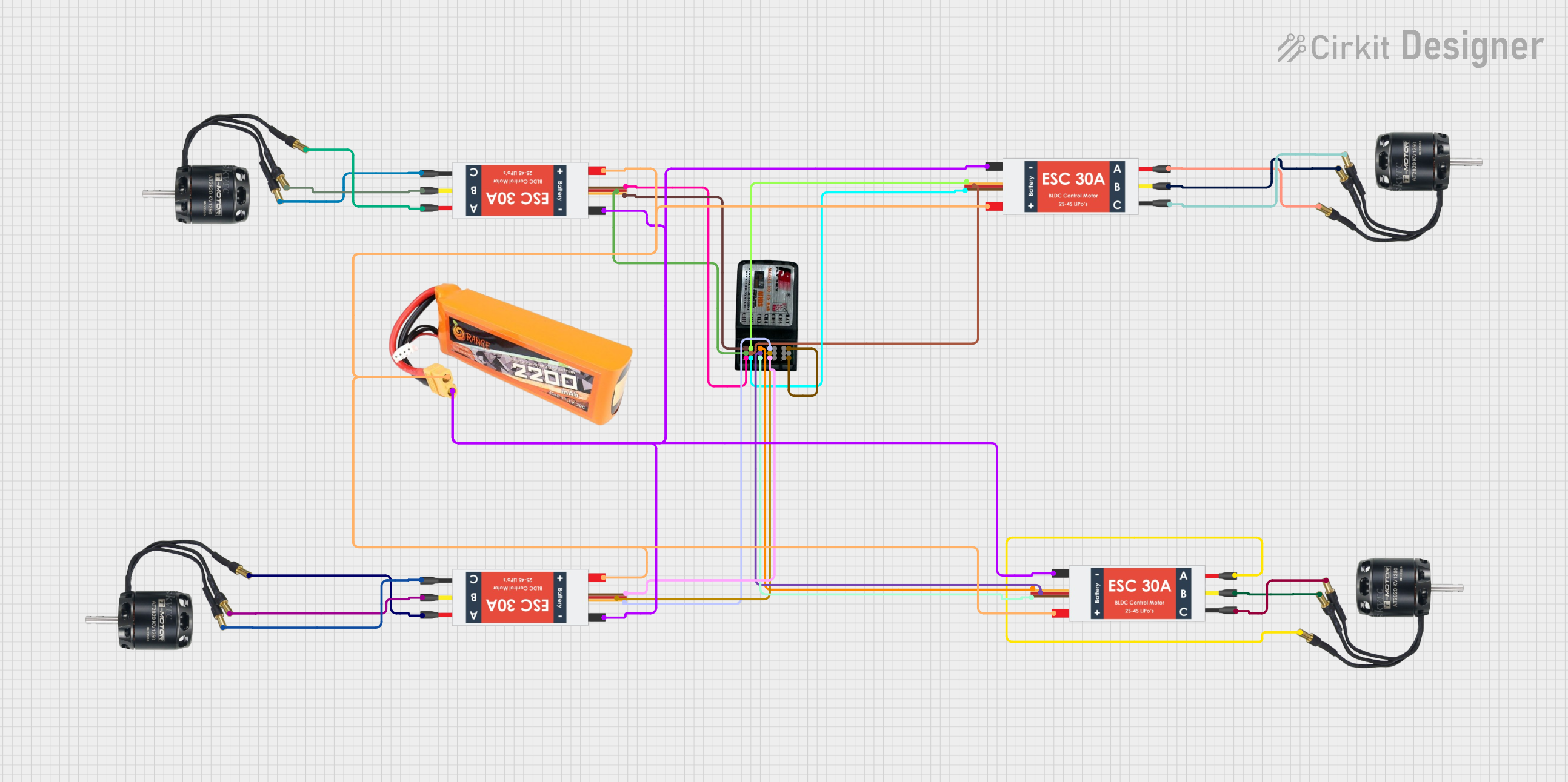 Open Project in Cirkit Designer
Explore Projects Built with LANDRC ESC BLHeli_S 2S-6S LiPo
Open Project in Cirkit DesignerOpen Project in Cirkit DesignerOpen Project in Cirkit DesignerOpen Project in Cirkit DesignerCommon Applications and Use Cases
- Drones and Quadcopters: Ensures smooth and responsive motor control for stable flight.
- RC Planes and Cars: Provides efficient power delivery for high-speed performance.
- FPV Racing: Optimized for fast throttle response and minimal latency.
- DIY Robotics: Ideal for projects requiring precise control of brushless motors.
Technical Specifications
The LANDRC ESC BLHeli_S 2S-6S LiPo is built to deliver reliable performance under demanding conditions. Below are its key technical specifications:
| Specification | Details |
|---|---|
| Input Voltage | 2S to 6S LiPo (7.4V to 25.2V) |
| Continuous Current | 30A |
| Burst Current | 40A (for 10 seconds) |
| Firmware | BLHeli_S |
| Motor Compatibility | Brushless motors |
| Signal Input | PWM, Oneshot125, Multishot, DShot |
| Weight | 7g |
| Dimensions | 23mm x 12mm x 5mm |
| BEC Output | None |
| Operating Temperature | -20°C to 80°C |
Pin Configuration and Descriptions
The LANDRC ESC has a simple pinout for easy integration into your circuit. Below is the pin configuration:
| Pin Name | Description |
|---|---|
| Signal | Receives control signal from the flight controller or RC receiver. |
| + (Positive) | Connects to the positive terminal of the LiPo battery. |
| - (Negative) | Connects to the negative terminal of the LiPo battery. |
| Motor Wires | Three wires to connect to the brushless motor (A, B, C). |
Usage Instructions
How to Use the LANDRC ESC in a Circuit
- Connect the Motor: Attach the three motor wires (A, B, C) to the brushless motor. If the motor spins in the wrong direction, swap any two wires.
- Connect the Power Source: Connect the positive (+) and negative (-) wires to the corresponding terminals of a 2S to 6S LiPo battery.
- Connect the Signal Wire: Attach the signal wire to the PWM output of your flight controller or RC receiver.
- Calibrate the ESC: Follow the BLHeli_S calibration procedure to ensure proper throttle range.
- Secure the ESC: Mount the ESC securely on your drone or RC vehicle to prevent vibrations or damage.
Important Considerations and Best Practices
- Battery Compatibility: Ensure the LiPo battery voltage is within the 2S to 6S range.
- Cooling: Avoid overheating by providing adequate airflow or heat dissipation.
- Signal Protocol: Configure your flight controller to use a compatible signal protocol (e.g., DShot or PWM).
- Firmware Updates: Use the BLHeli Configurator software to update the firmware for optimal performance.
- Wiring: Double-check all connections to prevent short circuits or damage.
Example Code for Arduino UNO
The LANDRC ESC can be controlled using an Arduino UNO. Below is an example code snippet to control the ESC using a PWM signal:
#include <Servo.h> // Include the Servo library for PWM control

Servo esc; // Create a Servo object to control the ESC

void setup() {
  esc.attach(9); // Attach the ESC signal wire to pin 9
  esc.writeMicroseconds(1000); // Set the ESC to minimum throttle
  delay(2000); // Wait for 2 seconds to initialize the ESC
}

void loop() {
  esc.writeMicroseconds(1500); // Set throttle to mid-range (adjust as needed)
  delay(5000); // Run the motor at this speed for 5 seconds

  esc.writeMicroseconds(1000); // Set throttle to minimum
  delay(2000); // Wait for 2 seconds before stopping
}
Note: Ensure the ESC is properly calibrated before running the code. The
writeMicrosecondsvalues may need adjustment based on your ESC's throttle range.
Troubleshooting and FAQs
Common Issues and Solutions
Motor Not Spinning:
- Cause: Incorrect wiring or signal protocol mismatch.
- Solution: Verify motor connections and ensure the flight controller is configured for the correct signal protocol.
Overheating:
- Cause: Insufficient cooling or excessive current draw.
- Solution: Improve airflow around the ESC and ensure the motor and propeller are within the ESC's current rating.
ESC Not Initializing:
- Cause: Throttle signal not at minimum during startup.
- Solution: Ensure the throttle is set to the lowest position before powering on the ESC.
Motor Spinning in the Wrong Direction:
- Cause: Incorrect motor wire connections.
- Solution: Swap any two motor wires to reverse the direction.
FAQs
Q: Can I use this ESC with a 1S LiPo battery?
A: No, the ESC requires a minimum input voltage of 2S (7.4V).Q: Does the ESC have a built-in BEC?
A: No, this ESC does not include a BEC. You will need an external BEC if your system requires regulated power for other components.Q: How do I update the BLHeli_S firmware?
A: Use the BLHeli Configurator software and a compatible USB linker to update the firmware.Q: Can I use this ESC for brushed motors?
A: No, this ESC is designed specifically for brushless motors.
By following this documentation, you can effectively integrate and operate the LANDRC ESC BLHeli_S 2S-6S LiPo in your projects.