
How to Use OVONIC 3s 11,1 V 5000 mAh 50C: Examples, Pinouts, and Specs

 Design with OVONIC 3s 11,1 V 5000 mAh 50C in Cirkit Designer
Introduction
The OVONIC 3s 11.1 V 5000 mAh 50C (Manufacturer Part ID: O-50C-5000-3S1P-EC5-2P) is a high-performance lithium polymer (LiPo) battery pack designed for demanding applications. With a nominal voltage of 11.1 V, a capacity of 5000 mAh, and a discharge rate of 50C, this battery is ideal for powering remote-controlled (RC) vehicles, drones, and other high-current devices. Its lightweight design and high energy density make it a popular choice for hobbyists and professionals alike.
Explore Projects Built with OVONIC 3s 11,1 V 5000 mAh 50C
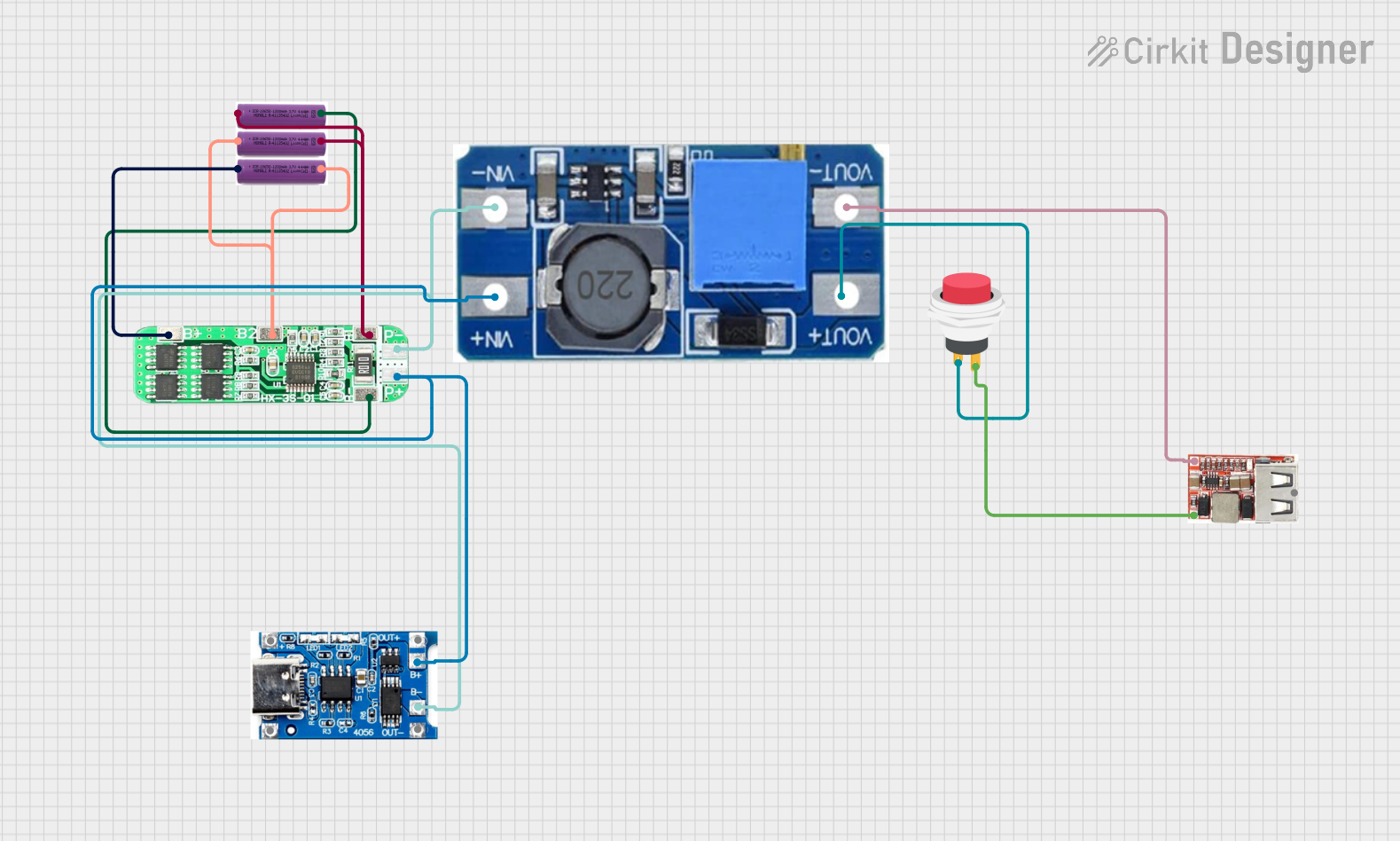 Open Project in Cirkit Designer
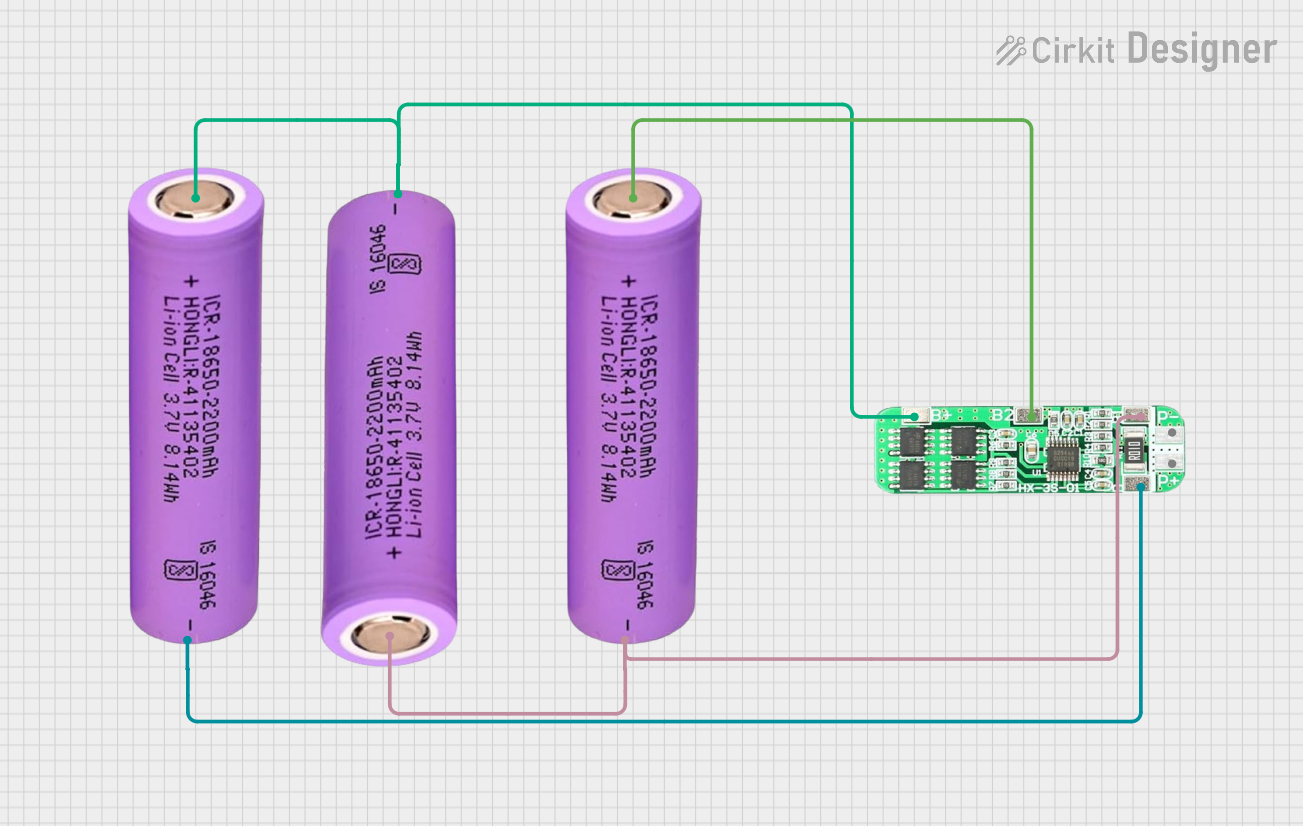 Open Project in Cirkit Designer
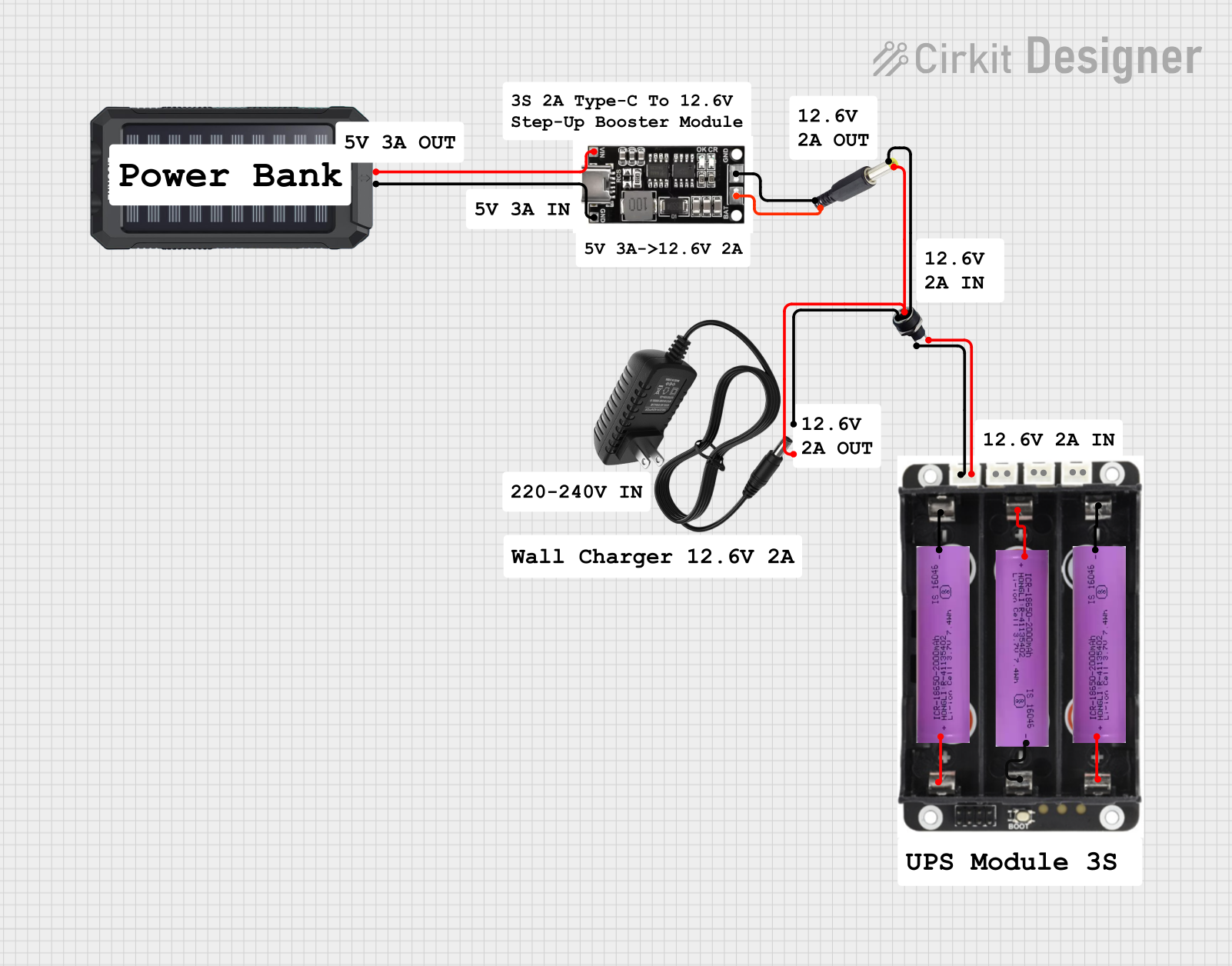 Open Project in Cirkit Designer
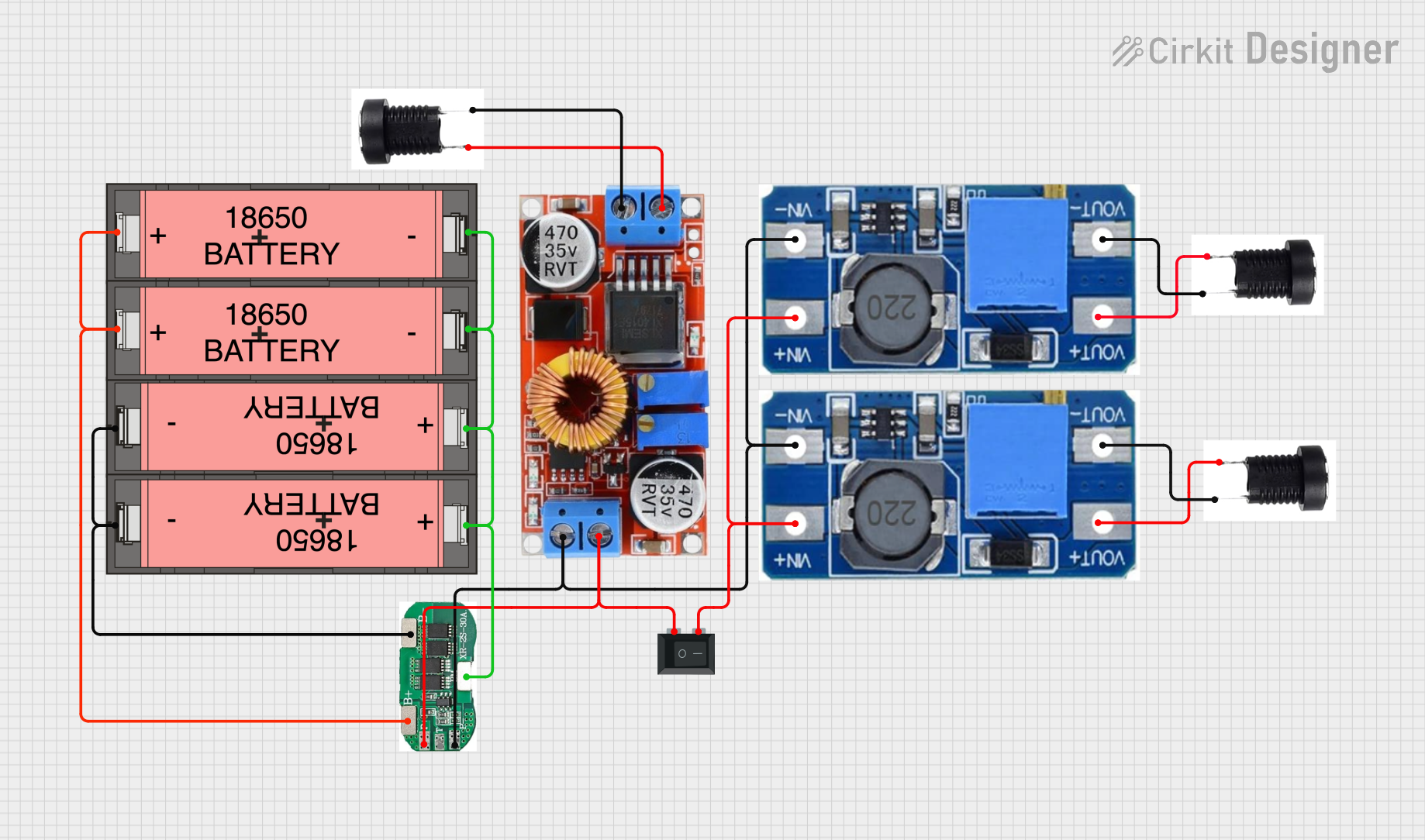 Open Project in Cirkit Designer
Explore Projects Built with OVONIC 3s 11,1 V 5000 mAh 50C
Open Project in Cirkit DesignerOpen Project in Cirkit DesignerOpen Project in Cirkit DesignerOpen Project in Cirkit DesignerCommon Applications
- RC cars, boats, and airplanes
- Drones and quadcopters
- Robotics and high-power electronics
- DIY projects requiring high current output
Technical Specifications
The following table outlines the key technical specifications of the OVONIC 3s 11.1 V 5000 mAh 50C battery:
| Parameter | Value |
|---|---|
| Nominal Voltage | 11.1 V |
| Capacity | 5000 mAh |
| Discharge Rate | 50C (250 A maximum continuous) |
| Charge Rate | 1C (5 A recommended) |
| Cell Configuration | 3S1P (3 cells in series, 1 in parallel) |
| Connector Type | EC5 |
| Dimensions | 138 x 46 x 33 mm |
| Weight | ~400 g |
| Chemistry | Lithium Polymer (LiPo) |
| Operating Temperature | -20°C to 60°C |
| Storage Voltage | 3.8 V per cell (11.4 V total) |
Pin Configuration
The OVONIC 3s battery features two connectors:
- EC5 Connector: Used for power delivery to the load.
- JST-XH Balance Connector: Used for balancing the cells during charging.
| Pin | Connector Type | Description |
|---|---|---|
| 1 | EC5 Positive (+) | Positive terminal for power output |
| 2 | EC5 Negative (-) | Negative terminal for power output |
| 1 | JST-XH Pin 1 | Cell 1 positive |
| 2 | JST-XH Pin 2 | Cell 1 negative / Cell 2 positive |
| 3 | JST-XH Pin 3 | Cell 2 negative / Cell 3 positive |
| 4 | JST-XH Pin 4 | Cell 3 negative |
Usage Instructions
How to Use the OVONIC 3s Battery in a Circuit
Connecting the Battery:
- Use the EC5 connector to connect the battery to your device's power input.
- Ensure the polarity matches the device's requirements (positive to positive, negative to negative).
- For charging, connect the JST-XH balance connector to a compatible LiPo balance charger.
Charging the Battery:
- Use a LiPo-compatible balance charger with a 3S configuration.
- Set the charge current to 1C (5 A) for optimal battery life.
- Monitor the charging process to ensure the voltage of each cell does not exceed 4.2 V.
Discharging the Battery:
- Do not discharge the battery below 3.0 V per cell (9.0 V total) to prevent damage.
- Use a voltage alarm or battery monitor to track the voltage during use.
Storage:
- Store the battery at a storage voltage of 3.8 V per cell (11.4 V total).
- Keep the battery in a cool, dry place away from flammable materials.
Important Considerations and Best Practices
- Safety: Always handle LiPo batteries with care. Avoid puncturing, overcharging, or short-circuiting the battery.
- Balancing: Regularly balance the cells during charging to maintain performance and longevity.
- Temperature: Avoid using the battery in extreme temperatures, as this can degrade its performance and lifespan.
- Inspection: Check the battery for physical damage or swelling before each use. Do not use a damaged battery.
Example: Using the Battery with an Arduino UNO
While the OVONIC 3s battery is not directly compatible with the Arduino UNO due to its high voltage, you can use a voltage regulator (e.g., LM7805 or a buck converter) to step down the voltage to 5 V. Below is an example circuit and code:
Circuit Setup
- Connect the EC5 connector to a buck converter.
- Set the buck converter output to 5 V.
- Connect the buck converter output to the Arduino UNO's 5 V and GND pins.
Example Code
// Example code to read a sensor and control an LED using Arduino UNO
// Ensure the battery voltage is stepped down to 5V before connecting to Arduino

const int sensorPin = A0;  // Analog pin connected to the sensor
const int ledPin = 13;     // Digital pin connected to the LED

void setup() {
  pinMode(ledPin, OUTPUT);  // Set LED pin as output
  Serial.begin(9600);       // Initialize serial communication
}

void loop() {
  int sensorValue = analogRead(sensorPin);  // Read sensor value
  Serial.println(sensorValue);             // Print sensor value to Serial Monitor

  if (sensorValue > 512) {                 // If sensor value exceeds threshold
    digitalWrite(ledPin, HIGH);            // Turn on the LED
  } else {
    digitalWrite(ledPin, LOW);             // Turn off the LED
  }

  delay(100);  // Delay for stability
}
Troubleshooting and FAQs
Common Issues
Battery Swelling:
- Cause: Overcharging, over-discharging, or physical damage.
- Solution: Stop using the battery immediately. Dispose of it safely.
Battery Not Charging:
- Cause: Faulty charger, damaged balance connector, or incorrect settings.
- Solution: Check the charger and connectors. Ensure the charger is set to 3S mode.
Low Runtime:
- Cause: Battery degradation or excessive current draw.
- Solution: Reduce the load or replace the battery if it is old.
Overheating:
- Cause: High discharge rate or poor ventilation.
- Solution: Ensure the battery is within its rated discharge limits and improve airflow.
FAQs
Can I use this battery for a 12 V device?
- Yes, but ensure the device can handle the voltage range of 9.0 V to 12.6 V.
How do I safely dispose of a LiPo battery?
- Discharge the battery completely, then take it to a local recycling center that accepts LiPo batteries.
What is the maximum charging current?
- The recommended charging current is 5 A (1C), but the battery can handle up to 2C (10 A) if supported by your charger.
Can I use this battery in parallel with another?
- Yes, but ensure both batteries have the same voltage, capacity, and charge level before connecting them.
By following this documentation, you can safely and effectively use the OVONIC 3s 11.1 V 5000 mAh 50C battery in your projects.