
How to Use Lifepo4 Baterai 12.8V 24 AH: Examples, Pinouts, and Specs
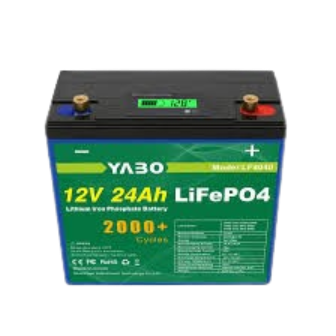
 Design with Lifepo4 Baterai 12.8V 24 AH in Cirkit Designer
Introduction
The LiFePO4 Battery 12.8V 24Ah is a lithium iron phosphate battery designed for high-performance energy storage applications. With a nominal voltage of 12.8V and a capacity of 24Ah, this battery offers excellent thermal stability, long cycle life, and enhanced safety compared to traditional lithium-ion batteries. It is manufactured by ESP32 under the part ID WROOM 32D.
Explore Projects Built with Lifepo4 Baterai 12.8V 24 AH
 Open Project in Cirkit Designer
 Open Project in Cirkit Designer
 Open Project in Cirkit Designer
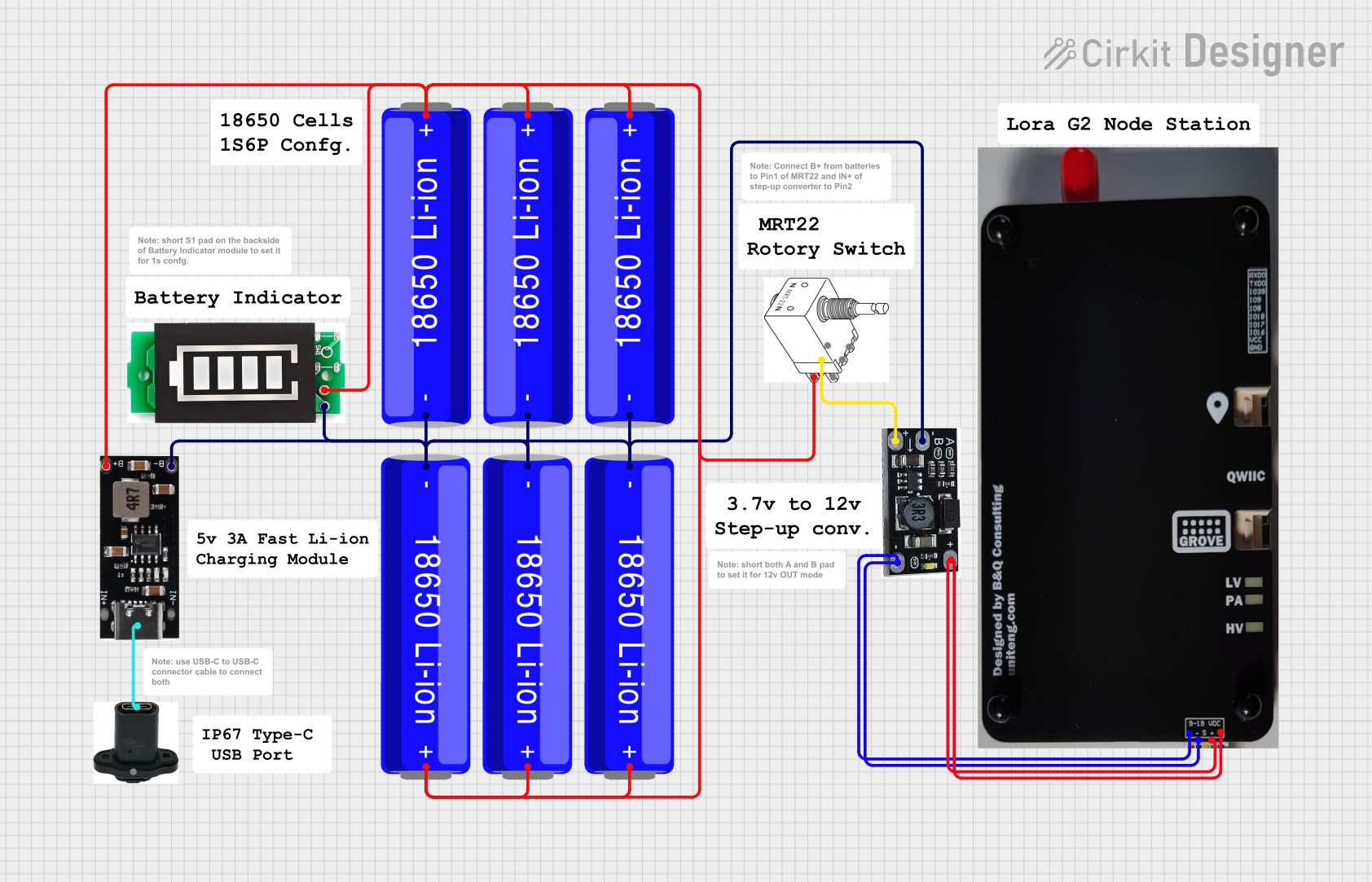 Open Project in Cirkit Designer
Explore Projects Built with Lifepo4 Baterai 12.8V 24 AH
Open Project in Cirkit DesignerOpen Project in Cirkit DesignerOpen Project in Cirkit DesignerOpen Project in Cirkit DesignerCommon Applications and Use Cases
- Renewable energy systems (e.g., solar and wind power storage)
- Uninterruptible Power Supplies (UPS)
- Electric vehicles and e-bikes
- Portable power stations
- Marine and RV applications
- Robotics and IoT devices
Technical Specifications
Key Technical Details
| Parameter | Value |
|---|---|
| Nominal Voltage | 12.8V |
| Capacity | 24Ah |
| Chemistry | Lithium Iron Phosphate (LiFePO4) |
| Cycle Life | >2000 cycles (at 80% DOD) |
| Maximum Charge Voltage | 14.6V |
| Discharge Cut-off Voltage | 10.0V |
| Maximum Continuous Discharge Current | 30A |
| Peak Discharge Current | 60A (for 10 seconds) |
| Operating Temperature | -20°C to 60°C (discharge) |
| Weight | ~3.2 kg |
| Dimensions (LxWxH) | 181mm x 77mm x 167mm |
Pin Configuration and Descriptions
The LiFePO4 battery typically has two terminals for connection:
| Pin/Terminal | Description |
|---|---|
| Positive (+) | Connects to the positive side of the circuit or load. |
| Negative (-) | Connects to the negative side of the circuit or load. |
Note: Some LiFePO4 batteries may include additional terminals for features like battery management system (BMS) communication or temperature monitoring. Refer to the specific datasheet for such configurations.
Usage Instructions
How to Use the Component in a Circuit
Charging the Battery:
- Use a LiFePO4-compatible charger with a maximum charge voltage of 14.6V.
- Ensure the charger has a current limit suitable for the battery (e.g., 10A for safe charging).
- Avoid overcharging or using chargers designed for other lithium chemistries.
Connecting to a Load:
- Connect the positive terminal of the battery to the positive input of the load.
- Connect the negative terminal of the battery to the negative input of the load.
- Use appropriately rated wires and connectors to handle the current.
Battery Management System (BMS):
- Ensure the battery includes a built-in BMS for overcharge, over-discharge, and short-circuit protection.
- If the battery does not have a BMS, consider adding an external one for safety.
Integration with Arduino UNO:
- The battery can power an Arduino UNO via its VIN pin (7-12V input range).
- Use a voltage regulator or step-down converter if the battery voltage exceeds 12V.
Example Arduino Code for Monitoring Battery Voltage
// This code reads the battery voltage using an analog pin on the Arduino UNO.
// Ensure a voltage divider is used to step down the 12.8V to a safe range (0-5V).

const int batteryPin = A0; // Analog pin connected to the voltage divider
const float voltageDividerRatio = 4.0; // Adjust based on your resistor values
const float referenceVoltage = 5.0; // Arduino UNO's ADC reference voltage

void setup() {
  Serial.begin(9600); // Initialize serial communication
}

void loop() {
  int rawValue = analogRead(batteryPin); // Read the analog value
  float batteryVoltage = (rawValue / 1023.0) * referenceVoltage * voltageDividerRatio;

  // Print the battery voltage to the Serial Monitor
  Serial.print("Battery Voltage: ");
  Serial.print(batteryVoltage);
  Serial.println(" V");

  delay(1000); // Wait for 1 second before the next reading
}
Important Considerations and Best Practices
- Avoid Deep Discharge: Do not discharge the battery below its cut-off voltage (10.0V) to prevent damage.
- Temperature Monitoring: Operate the battery within the specified temperature range to ensure safety and longevity.
- Storage: Store the battery at 50% charge in a cool, dry place if not in use for extended periods.
- Wiring: Use wires and connectors rated for the battery's maximum current to prevent overheating or fire hazards.
Troubleshooting and FAQs
Common Issues and Solutions
| Issue | Possible Cause | Solution |
|---|---|---|
| Battery not charging | Charger not compatible or faulty | Use a LiFePO4-compatible charger. |
| Battery discharges too quickly | High load current or aging battery | Reduce load or replace the battery. |
| Battery voltage too low | Over-discharge or faulty BMS | Recharge immediately or check BMS. |
| Overheating during use | Excessive current draw or poor ventilation | Reduce load or improve cooling. |
FAQs
Can I use a regular lithium-ion charger for this battery?
- No, you must use a charger specifically designed for LiFePO4 batteries to avoid overcharging or damaging the battery.
How long will this battery last?
- The battery can last over 2000 cycles at 80% depth of discharge (DOD), depending on usage and maintenance.
Can I connect multiple batteries in series or parallel?
- Yes, but ensure all batteries are of the same type, capacity, and charge level. Use a BMS designed for series or parallel configurations.
What happens if the battery is over-discharged?
- Over-discharging can damage the battery. A BMS or low-voltage cutoff circuit is recommended to prevent this.
By following these guidelines, you can safely and effectively use the LiFePO4 Battery 12.8V 24Ah in your projects and applications.