Cirkit Designer LogoCirkit DesignerYour all-in-one circuit design IDE Launch Cirkit Designer App

How to Use MCB 1 Phase schneider: Examples, Pinouts, and Specs

Image of MCB 1 Phase schneiderDesign with MCB 1 Phase schneider in Cirkit Designer

Introduction

The MCB 1 Phase Schneider is a miniature circuit breaker designed for single-phase electrical circuits. It provides overcurrent protection by automatically disconnecting the circuit in the event of an overload or short circuit. Manufactured by Schneider Electric, this MCB is known for its reliability, safety, and ease of use. It is widely used in residential, commercial, and light industrial applications to safeguard electrical systems and connected devices.

Explore Projects Built with MCB 1 Phase schneider

Use Cirkit Designer to design, explore, and prototype these projects online. Some projects support real-time simulation. Click "Open Project" to start designing instantly!
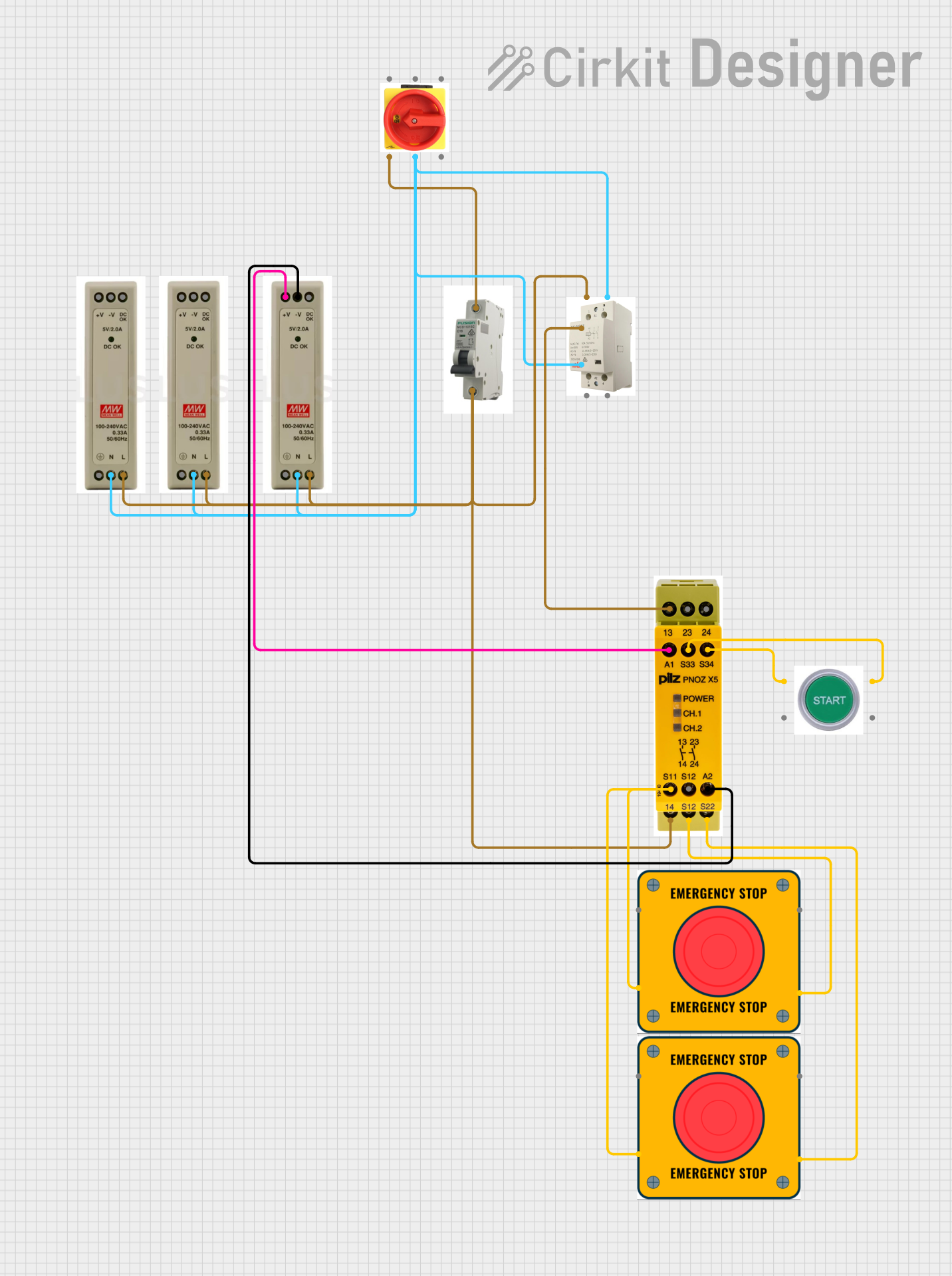
Image of Industrial Power Distribution and Safety Control System: A project utilizing MCB 1 Phase schneider in a practical application
Industrial Power Distribution and Safety Control System

This circuit is designed for power distribution and safety control in an industrial setting. It features a main isolator and circuit breaker for power management, multiple PSUs for 5V, 12V, and 24V outputs, and a safety relay system that interfaces with E-stop buttons and a start switch to control a main contactor, ensuring safe operation and emergency power cut-off capabilities.

Open Project in Cirkit Designer
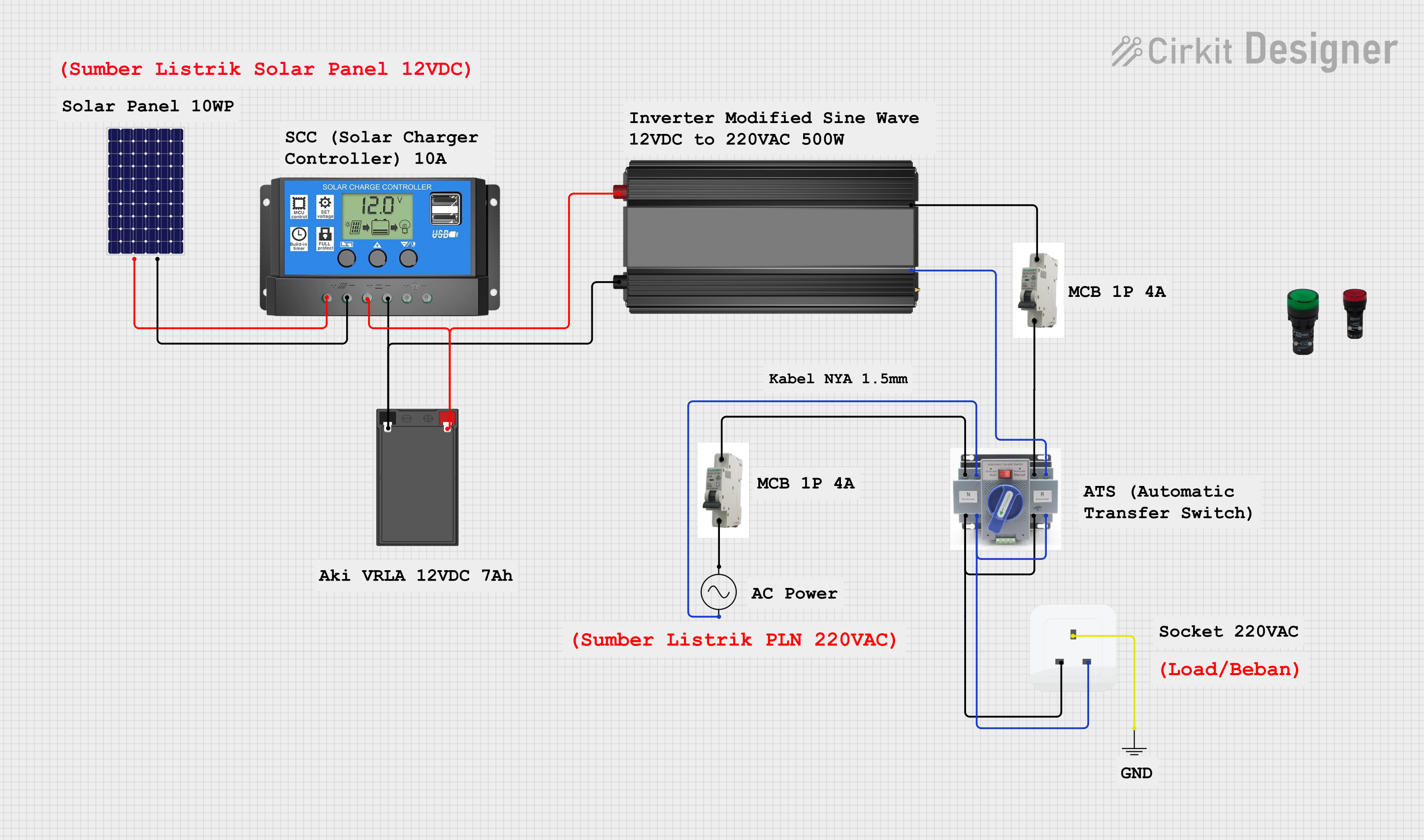
Image of Solar-Powered Home Energy System with Automatic Transfer Switch and Battery Backup: A project utilizing MCB 1 Phase schneider in a practical application
Solar-Powered Home Energy System with Automatic Transfer Switch and Battery Backup

This circuit is a solar power system with an automatic transfer switch (ATS) that manages power from both a solar panel and an AC supply. The solar panel charges a battery through a solar charge controller, and the power inverter converts the stored DC power to AC, which is then distributed through an MCB to a socket. The ATS ensures seamless switching between solar and AC power sources.

Open Project in Cirkit Designer

Common Applications and Use Cases

Technical Specifications

Key Technical Details

Parameter Value
Manufacturer Schneider Electric
Part ID MCB 1 Phase Schneider
Rated Voltage 230/240 V AC
Rated Current 6 A, 10 A, 16 A, 20 A, 32 A, 40 A (varies by model)
Breaking Capacity 6 kA or 10 kA (depending on model)
Number of Poles 1 (Single Phase)
Tripping Curve B, C, or D (varies by application)
Frequency 50/60 Hz
Mounting Type DIN Rail
Operating Temperature -5°C to +55°C
Standards Compliance IEC 60898-1, IS/IEC 60947-2

Pin Configuration and Descriptions

The MCB 1 Phase Schneider does not have traditional pins but instead features terminal connections for input and output wiring. Below is a description of the terminals:

Terminal Name Description
Line (Input) Connects to the incoming live wire from the power source.
Load (Output) Connects to the outgoing live wire to the load or circuit.
Neutral Not applicable (neutral wire is not connected to the MCB).

Usage Instructions

How to Use the Component in a Circuit

  1. Mounting the MCB:

    • Install the MCB on a standard DIN rail in the distribution box.
    • Ensure the MCB is securely locked into place.
  2. Wiring:

    • Connect the live wire from the power source to the Line (Input) terminal.
    • Connect the live wire leading to the load or circuit to the Load (Output) terminal.
    • Tighten the terminal screws to ensure a secure connection.
  3. Operation:

    • Switch the MCB to the "ON" position to allow current flow.
    • In case of an overload or short circuit, the MCB will trip to the "OFF" position automatically.
  4. Resetting the MCB:

    • After resolving the fault (e.g., removing the overload or fixing the short circuit), switch the MCB back to the "ON" position.

Important Considerations and Best Practices

Arduino UNO Integration

The MCB 1 Phase Schneider is not directly compatible with Arduino UNO or other microcontrollers, as it is designed for high-voltage AC circuits. However, it can be used in conjunction with relays or other interfacing components to control or monitor AC loads in Arduino-based projects.

Troubleshooting and FAQs

Common Issues and Solutions

Issue Possible Cause Solution
MCB trips frequently Overload or short circuit in the circuit Identify and remove the overload or fix the short circuit.
MCB does not trip during a fault Faulty MCB or incorrect rating Replace the MCB or select the correct rating for the application.
Loose connections Improperly tightened terminal screws Tighten the screws securely to ensure proper contact.
MCB does not switch "ON" Persistent fault in the circuit Inspect the circuit for faults and resolve them before resetting the MCB.

FAQs

  1. Can I use the MCB 1 Phase Schneider for DC circuits?

    • No, this MCB is designed for AC circuits only. For DC applications, use a DC-rated circuit breaker.
  2. What is the difference between B, C, and D tripping curves?

    • B Curve: Trips at 3-5 times the rated current, suitable for residential applications.
    • C Curve: Trips at 5-10 times the rated current, ideal for commercial and industrial loads.
    • D Curve: Trips at 10-20 times the rated current, used for high inrush current devices like motors.
  3. How do I choose the correct MCB rating?

    • Calculate the total load current of the circuit and select an MCB with a slightly higher rated current. Ensure the breaking capacity matches the fault current of the system.
  4. Can I install the MCB myself?

    • It is recommended to have a licensed electrician install the MCB to ensure safety and compliance with local regulations.