
How to Use BQ76925: Examples, Pinouts, and Specs
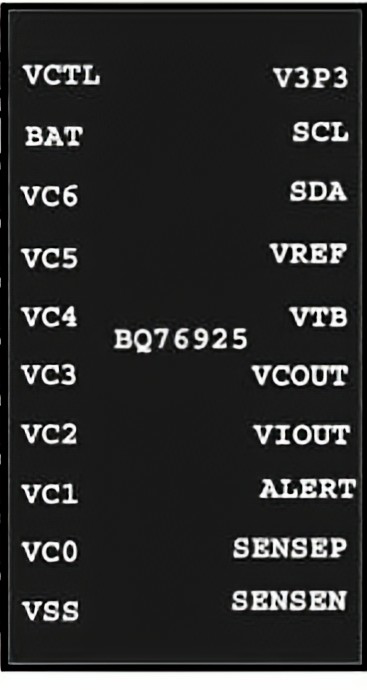
 Design with BQ76925 in Cirkit Designer
Introduction
The BQ76925 is a battery monitor and protection integrated circuit (IC) manufactured by Texas Instruments. It is specifically designed for lithium-ion battery packs and provides essential features such as cell voltage monitoring, temperature sensing, and integrated cell balancing. This IC is ideal for applications requiring precise battery management, such as electric vehicles (EVs), energy storage systems, and uninterruptible power supplies (UPS).
Explore Projects Built with BQ76925
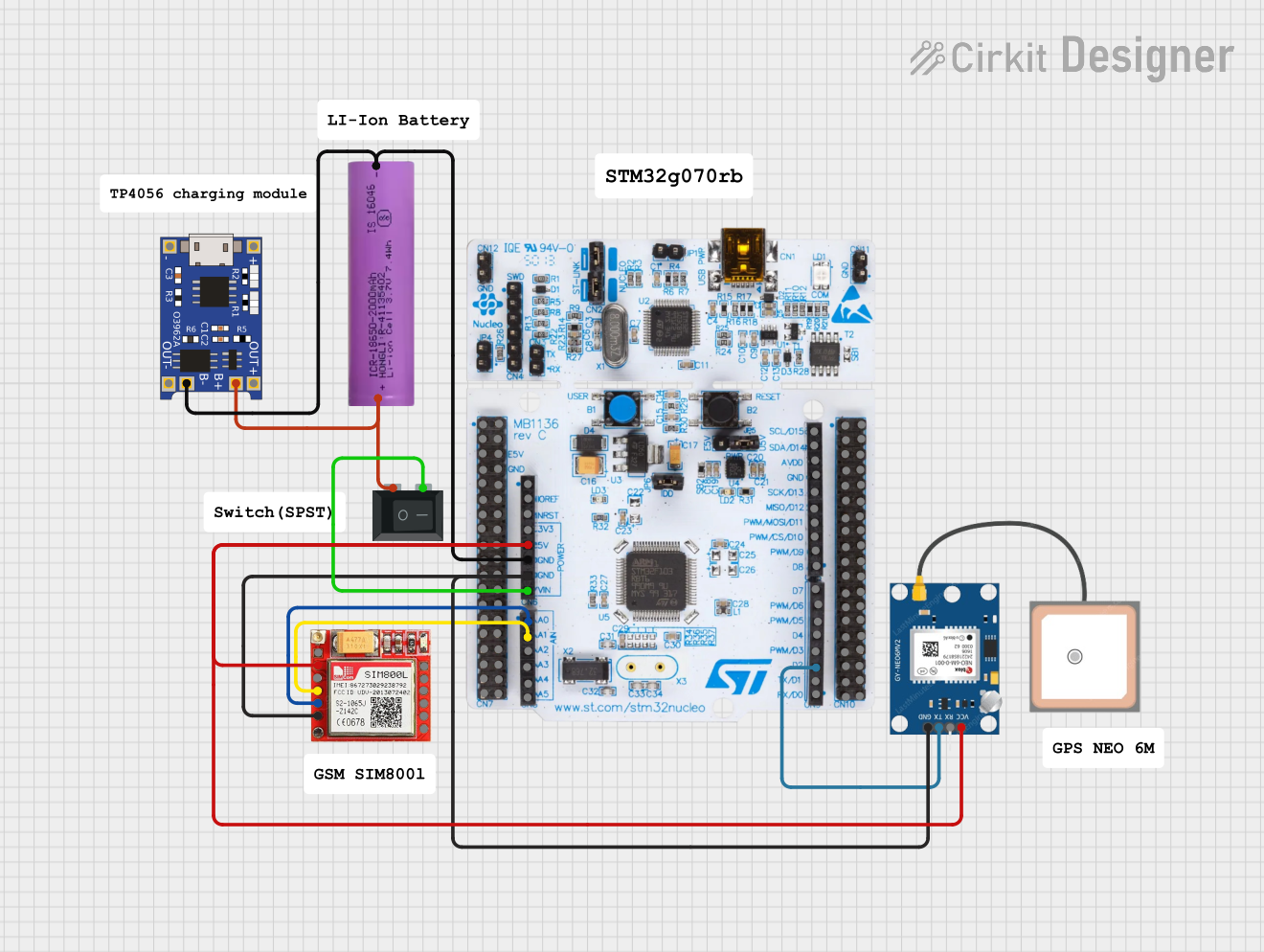 Open Project in Cirkit Designer
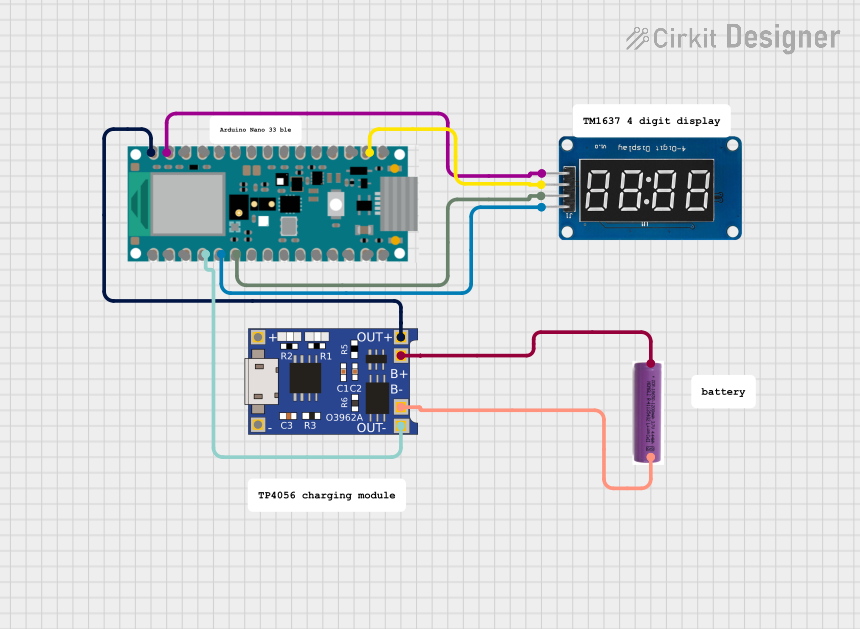 Open Project in Cirkit Designer
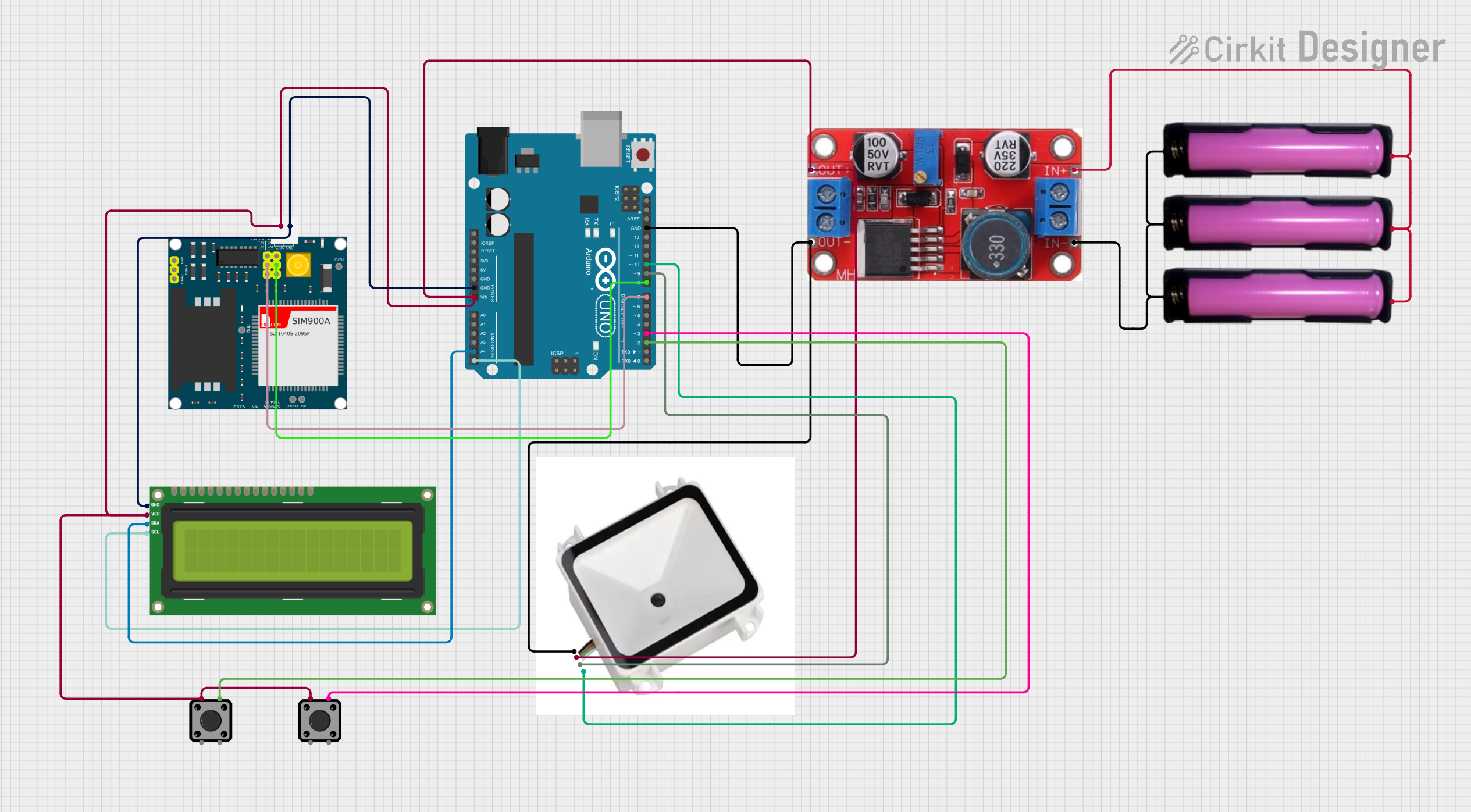 Open Project in Cirkit Designer
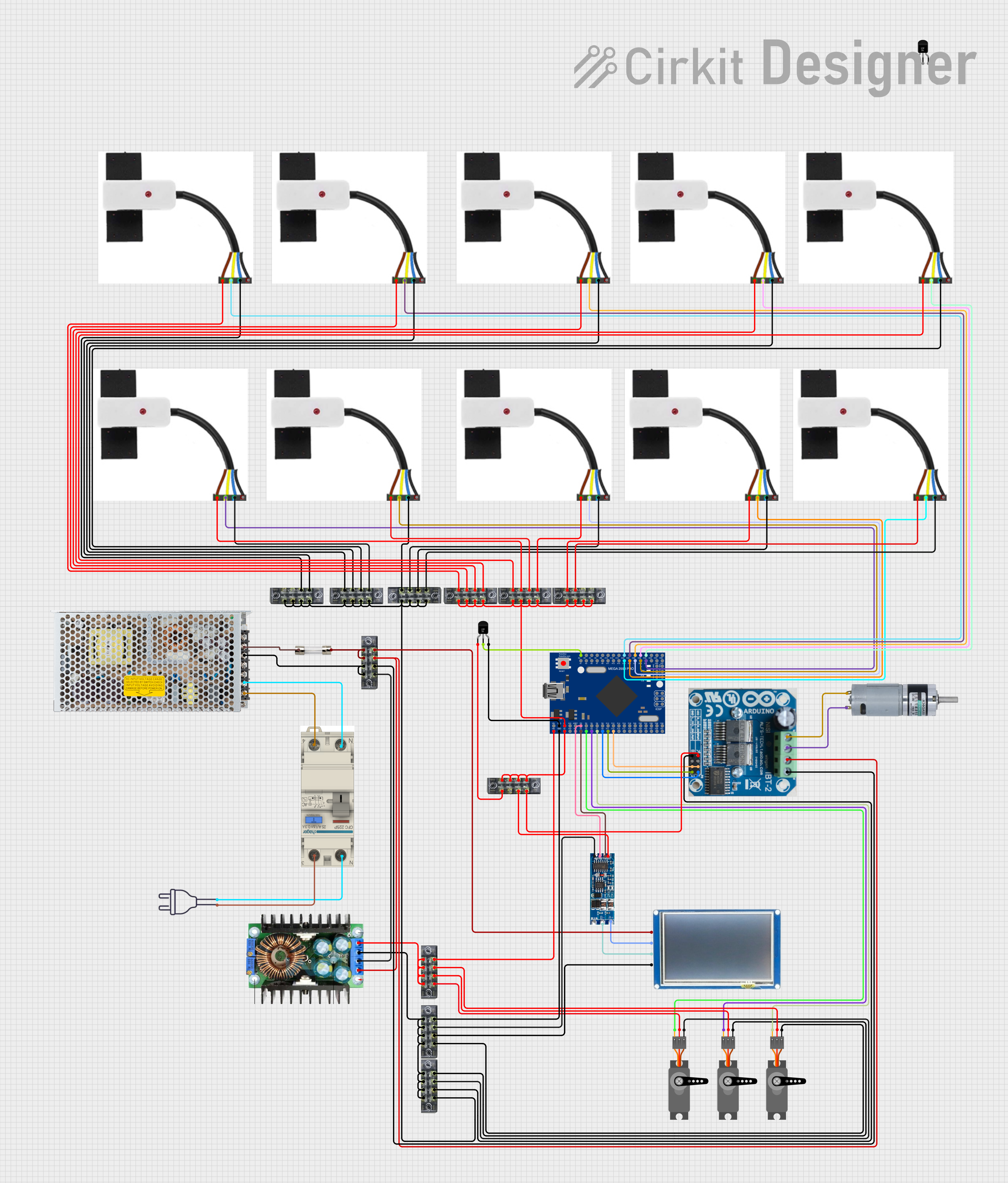 Open Project in Cirkit Designer
Explore Projects Built with BQ76925
Open Project in Cirkit DesignerOpen Project in Cirkit DesignerOpen Project in Cirkit DesignerOpen Project in Cirkit DesignerCommon Applications:
- Electric vehicles (EVs) and hybrid electric vehicles (HEVs)
- Renewable energy storage systems
- Uninterruptible power supplies (UPS)
- Portable power tools
- Industrial battery packs
The BQ76925 ensures safe and efficient operation of lithium-ion battery packs by monitoring individual cell voltages, detecting faults, and balancing cells to maintain optimal performance.
Technical Specifications
Key Technical Details:
| Parameter | Value |
|---|---|
| Operating Voltage Range | 2.5 V to 26 V (supports up to 6 series-connected cells) |
| Cell Voltage Measurement | 0 V to 5 V per cell |
| Temperature Sensing | Supports external thermistors (NTC or PTC) |
| Cell Balancing | Integrated passive balancing with external resistors |
| Communication Interface | I²C-compatible interface |
| Power Consumption | Low-power operation: < 10 µA in shutdown mode |
| Fault Detection | Overvoltage, undervoltage, and overtemperature protection |
| Package Type | TSSOP-16 (Thermally Enhanced Thin Shrink Small Outline Package) |
Pin Configuration and Descriptions:
The BQ76925 is available in a 16-pin TSSOP package. Below is the pin configuration and description:
| Pin Number | Pin Name | Description |
|---|---|---|
| 1 | VC1 | Cell 1 voltage input |
| 2 | VC2 | Cell 2 voltage input |
| 3 | VC3 | Cell 3 voltage input |
| 4 | VC4 | Cell 4 voltage input |
| 5 | VC5 | Cell 5 voltage input |
| 6 | VC6 | Cell 6 voltage input |
| 7 | VSS | Ground connection |
| 8 | TS1 | Temperature sensor input 1 |
| 9 | TS2 | Temperature sensor input 2 |
| 10 | SDA | I²C data line |
| 11 | SCL | I²C clock line |
| 12 | ALERT | Fault alert output (active low) |
| 13 | REGOUT | Regulated output voltage (3.3 V) for powering external circuits |
| 14 | BAL1 | Cell balancing control for Cell 1 |
| 15 | BAL2 | Cell balancing control for Cell 2 |
| 16 | BAL3 | Cell balancing control for Cell 3 |
Usage Instructions
How to Use the BQ76925 in a Circuit:
- Power Supply: Connect the IC to a power source within the operating voltage range (2.5 V to 26 V). Ensure proper decoupling capacitors are placed near the power pins.
- Cell Connections: Connect the battery cells to the VC1–VC6 pins. Ensure the cells are connected in series and within the supported voltage range.
- Temperature Sensing: Attach external thermistors to the TS1 and TS2 pins for temperature monitoring. Use appropriate pull-up or pull-down resistors as specified in the datasheet.
- Cell Balancing: Connect external resistors to the BAL1–BAL3 pins for passive cell balancing. The IC will control these pins to equalize cell voltages.
- Communication: Use the I²C interface (SDA and SCL pins) to communicate with a microcontroller or host system. Configure the IC and read cell voltages, temperatures, and fault status via I²C commands.
- Fault Handling: Monitor the ALERT pin for fault conditions. When active (low), check the fault registers via I²C to identify the issue.
Important Considerations:
- Voltage Divider Resistors: Use precise resistors for the voltage divider network to ensure accurate cell voltage measurements.
- Thermal Management: Ensure proper heat dissipation, especially in high-current applications.
- I²C Pull-Up Resistors: Add pull-up resistors (typically 4.7 kΩ) to the SDA and SCL lines for proper I²C communication.
- Cell Balancing Resistors: Select appropriate resistor values for cell balancing to avoid excessive heat generation.
Example Code for Arduino UNO:
Below is an example of how to interface the BQ76925 with an Arduino UNO using the I²C protocol to read cell voltages:
#include <Wire.h> // Include the Wire library for I²C communication

#define BQ76925_ADDRESS 0x18 // Default I²C address of the BQ76925

void setup() {
  Wire.begin(); // Initialize I²C communication
  Serial.begin(9600); // Initialize serial communication for debugging

  // Configure the BQ76925 (example: enable cell voltage monitoring)
  Wire.beginTransmission(BQ76925_ADDRESS);
  Wire.write(0x01); // Write to configuration register (example address)
  Wire.write(0x0F); // Example configuration value
  Wire.endTransmission();
}

void loop() {
  // Read cell voltage (example for Cell 1)
  Wire.beginTransmission(BQ76925_ADDRESS);
  Wire.write(0x02); // Address of Cell 1 voltage register
  Wire.endTransmission();

  Wire.requestFrom(BQ76925_ADDRESS, 2); // Request 2 bytes (16-bit voltage data)
  if (Wire.available() == 2) {
    uint16_t cellVoltage = Wire.read() << 8 | Wire.read(); // Combine MSB and LSB
    Serial.print("Cell 1 Voltage: ");
    Serial.print(cellVoltage * 0.001); // Convert to volts (example scaling)
    Serial.println(" V");
  }

  delay(1000); // Wait 1 second before the next reading
}
Troubleshooting and FAQs
Common Issues:
No Communication via I²C:
- Cause: Missing or incorrect pull-up resistors on SDA and SCL lines.
- Solution: Add 4.7 kΩ pull-up resistors to SDA and SCL.
Incorrect Cell Voltage Readings:
- Cause: Improper voltage divider resistor values or loose connections.
- Solution: Verify resistor values and ensure secure connections.
Fault Alert Triggered:
- Cause: Overvoltage, undervoltage, or overtemperature condition detected.
- Solution: Read the fault registers via I²C to identify the issue and take corrective action.
Excessive Heat During Cell Balancing:
- Cause: Low-value balancing resistors or prolonged balancing duration.
- Solution: Use higher-value resistors or reduce balancing time.
FAQs:
Q: Can the BQ76925 monitor more than 6 cells?
- A: No, the BQ76925 supports up to 6 series-connected cells. For larger packs, consider using multiple ICs or a different model.
Q: What type of thermistors are compatible with the BQ76925?
- A: Both NTC (negative temperature coefficient) and PTC (positive temperature coefficient) thermistors are supported.
Q: Is the BQ76925 suitable for high-current applications?
- A: Yes, but ensure proper thermal management and use external components rated for high currents.
Q: Can I use the BQ76925 with a 3.3 V microcontroller?
- A: Yes, the BQ76925 provides a 3.3 V regulated output (REGOUT) that can power a 3.3 V microcontroller.
This concludes the documentation for the BQ76925. For further details, refer to the official Texas Instruments datasheet.