
How to Use 10A 2S 8.4V BMS: Examples, Pinouts, and Specs
 Design with 10A 2S 8.4V BMS in Cirkit Designer
Introduction
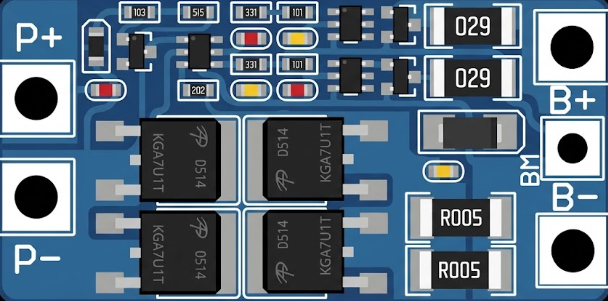
The 10A 2S 8.4V Battery Management System (BMS) is a compact and efficient module designed for managing 2-cell lithium-ion battery packs. It ensures the safe operation of batteries by monitoring their health, balancing cell voltages, and protecting against overcharge, over-discharge, overcurrent, and short circuits. This BMS is capable of handling a maximum continuous current of 10A and supports a total voltage of up to 8.4V, making it ideal for a wide range of applications.
Explore Projects Built with 10A 2S 8.4V BMS
 Open Project in Cirkit Designer
 Open Project in Cirkit Designer
 Open Project in Cirkit Designer
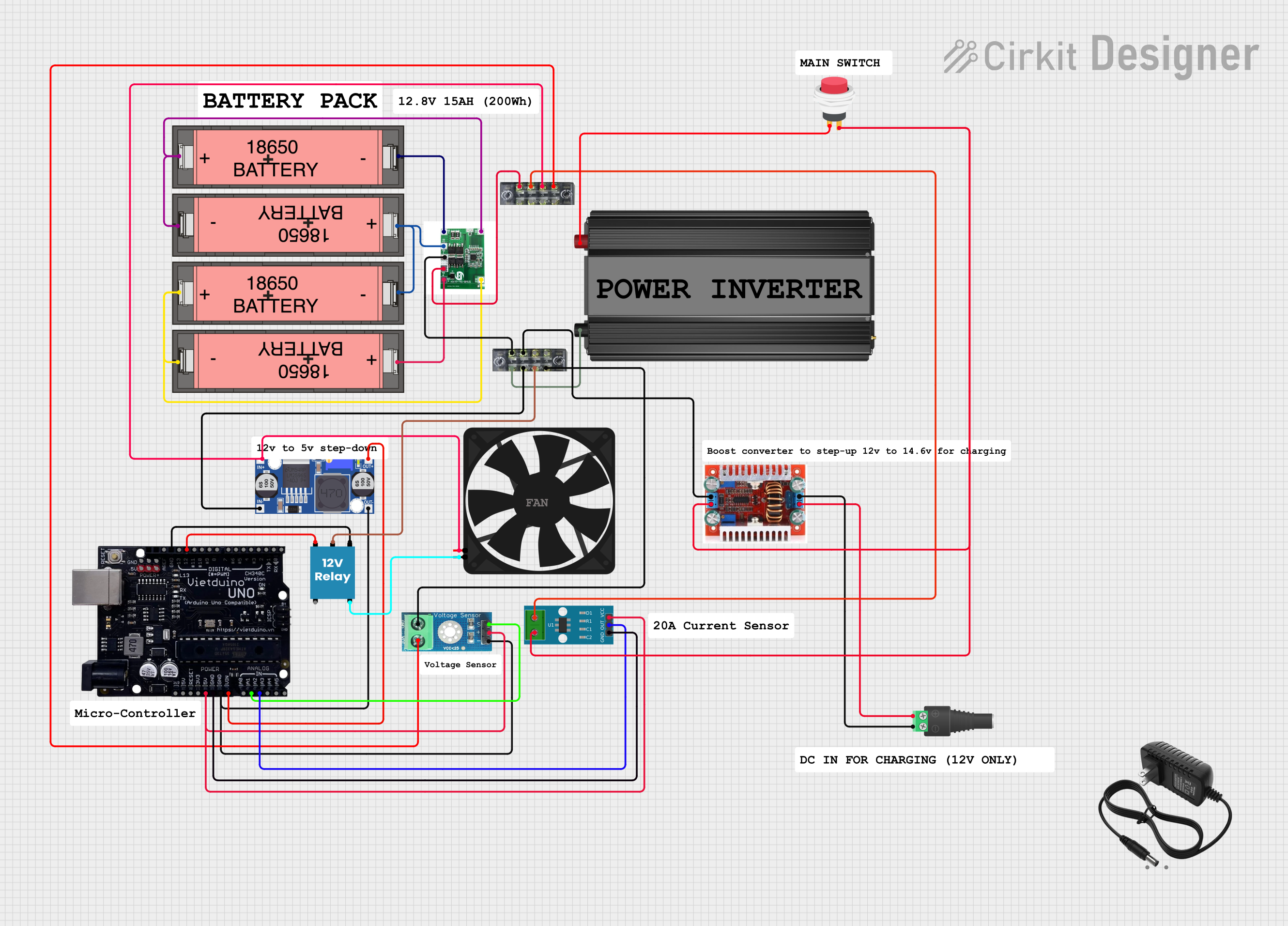 Open Project in Cirkit Designer
Explore Projects Built with 10A 2S 8.4V BMS
Open Project in Cirkit DesignerOpen Project in Cirkit DesignerOpen Project in Cirkit DesignerOpen Project in Cirkit DesignerCommon Applications
- Power banks
- Electric bicycles and scooters
- Portable electronic devices
- DIY battery packs
- Solar energy storage systems
Technical Specifications
Below are the key technical details of the 10A 2S 8.4V BMS:
| Parameter | Value |
|---|---|
| Battery Configuration | 2S (2 cells in series) |
| Maximum Continuous Current | 10A |
| Maximum Voltage | 8.4V |
| Overcharge Protection | 4.25V ± 0.05V per cell |
| Over-discharge Protection | 2.5V ± 0.05V per cell |
| Balance Current | 60mA |
| Operating Temperature | -40°C to 85°C |
| Dimensions | ~45mm x 15mm x 3mm |
Pin Configuration and Descriptions
The BMS module has several connection points for proper integration into a circuit. Below is the pin configuration:
| Pin Name | Description |
|---|---|
| B+ | Positive terminal of the battery pack |
| B- | Negative terminal of the battery pack |
| P+ | Positive terminal of the load or charging source |
| P- | Negative terminal of the load or charging source |
| B1 | Connection point between the two cells in the 2S battery pack |
Usage Instructions
How to Use the 10A 2S 8.4V BMS in a Circuit
Connect the Battery Pack:
- Connect the positive terminal of the battery pack to the
B+pin. - Connect the negative terminal of the battery pack to the
B-pin. - For a 2S battery pack, connect the midpoint (between the two cells) to the
B1pin.
- Connect the positive terminal of the battery pack to the
Connect the Load and Charger:
- Connect the positive terminal of the load or charger to the
P+pin. - Connect the negative terminal of the load or charger to the
P-pin.
- Connect the positive terminal of the load or charger to the
Verify Connections:
- Double-check all connections to ensure they are secure and correctly aligned with the pin configuration.
Power On:
- Once all connections are verified, the BMS will automatically manage the battery pack, providing protection and balancing the cells.
Important Considerations and Best Practices
- Battery Compatibility: Ensure the BMS is used only with 2-cell lithium-ion battery packs.
- Current Limit: Do not exceed the maximum continuous current rating of 10A to avoid damage.
- Heat Dissipation: If operating at high currents, ensure proper ventilation or heat dissipation to prevent overheating.
- Wiring: Use appropriately rated wires to handle the current and minimize resistance.
- Testing: Before connecting to a load, test the BMS with a multimeter to confirm proper operation.
Example Arduino Code for Monitoring Battery Voltage
If you wish to monitor the battery voltage using an Arduino UNO, you can connect the battery pack's positive terminal to an analog input pin through a voltage divider. Below is an example code snippet:
// Define analog pin for voltage measurement
const int voltagePin = A0;

// Voltage divider resistor values (in ohms)
const float R1 = 10000.0; // Resistor connected to battery positive
const float R2 = 10000.0; // Resistor connected to ground

// Reference voltage of Arduino (5V for most boards)
const float referenceVoltage = 5.0;

void setup() {
  Serial.begin(9600); // Initialize serial communication
}

void loop() {
  // Read the analog value from the voltage pin
  int analogValue = analogRead(voltagePin);

  // Calculate the battery voltage
  float voltage = (analogValue * referenceVoltage / 1023.0) * ((R1 + R2) / R2);

  // Print the voltage to the Serial Monitor
  Serial.print("Battery Voltage: ");
  Serial.print(voltage);
  Serial.println(" V");

  delay(1000); // Wait for 1 second before the next reading
}
Note: Adjust the resistor values in the voltage divider to ensure the input voltage to the Arduino does not exceed 5V.
Troubleshooting and FAQs
Common Issues and Solutions
BMS Not Powering On:
- Cause: Incorrect wiring or loose connections.
- Solution: Verify all connections and ensure the battery pack is properly connected.
Overheating:
- Cause: Exceeding the maximum current rating or poor heat dissipation.
- Solution: Reduce the load current or improve ventilation around the BMS.
Battery Not Charging:
- Cause: Faulty charger or incorrect connection to the
P+andP-pins. - Solution: Check the charger and ensure proper connection to the BMS.
- Cause: Faulty charger or incorrect connection to the
Uneven Cell Voltages:
- Cause: Cells in the battery pack are not balanced.
- Solution: Allow the BMS to balance the cells over time, or manually balance the cells if necessary.
FAQs
Q: Can this BMS be used with a 3S battery pack?
A: No, this BMS is specifically designed for 2-cell (2S) lithium-ion battery packs.Q: What happens if the current exceeds 10A?
A: The BMS will trigger overcurrent protection and disconnect the load to prevent damage.Q: Can I use this BMS for LiFePO4 batteries?
A: No, this BMS is designed for lithium-ion batteries and may not support the voltage range of LiFePO4 cells.Q: How long does it take to balance the cells?
A: The balancing time depends on the initial voltage difference between the cells and the balancing current (60mA).
By following this documentation, you can safely and effectively integrate the 10A 2S 8.4V BMS into your projects.