
How to Use Emetteur: Examples, Pinouts, and Specs
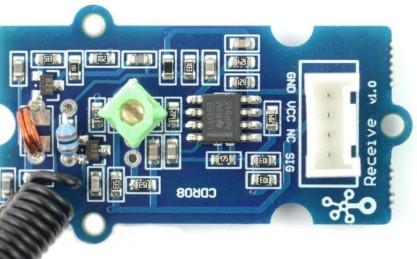
 Design with Emetteur in Cirkit Designer
Introduction
An emitter is a crucial part of a semiconductor device, specifically in bipolar junction transistors (BJTs). It is responsible for injecting charge carriers (electrons or holes) into the base region, enabling the transistor to control current flow. The emitter is heavily doped to ensure a high concentration of charge carriers, which facilitates efficient current injection.
Explore Projects Built with Emetteur
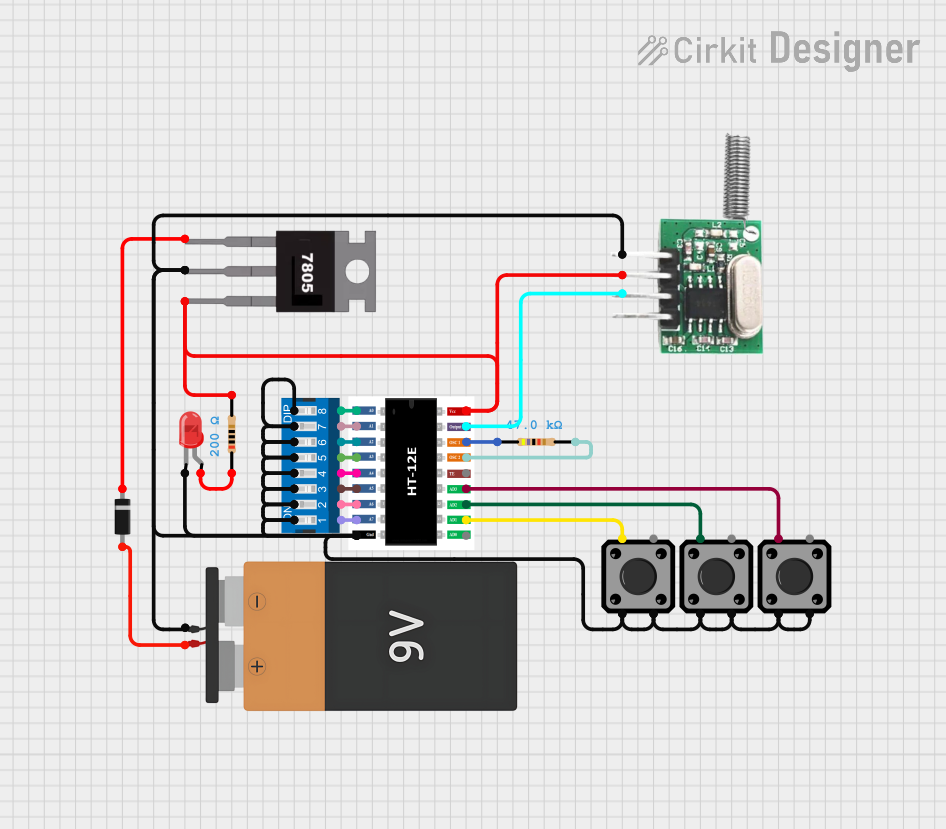 Open Project in Cirkit Designer
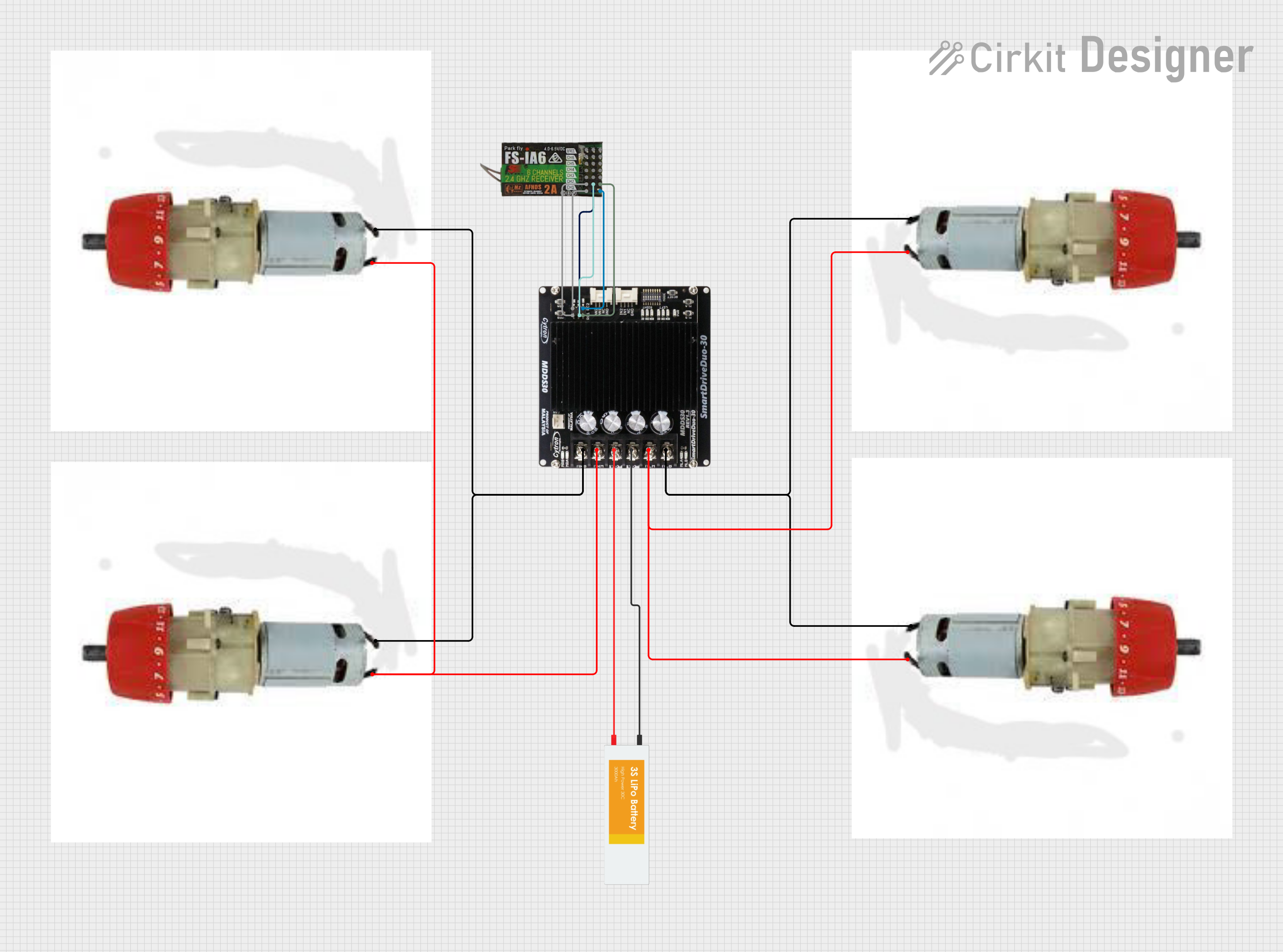 Open Project in Cirkit Designer
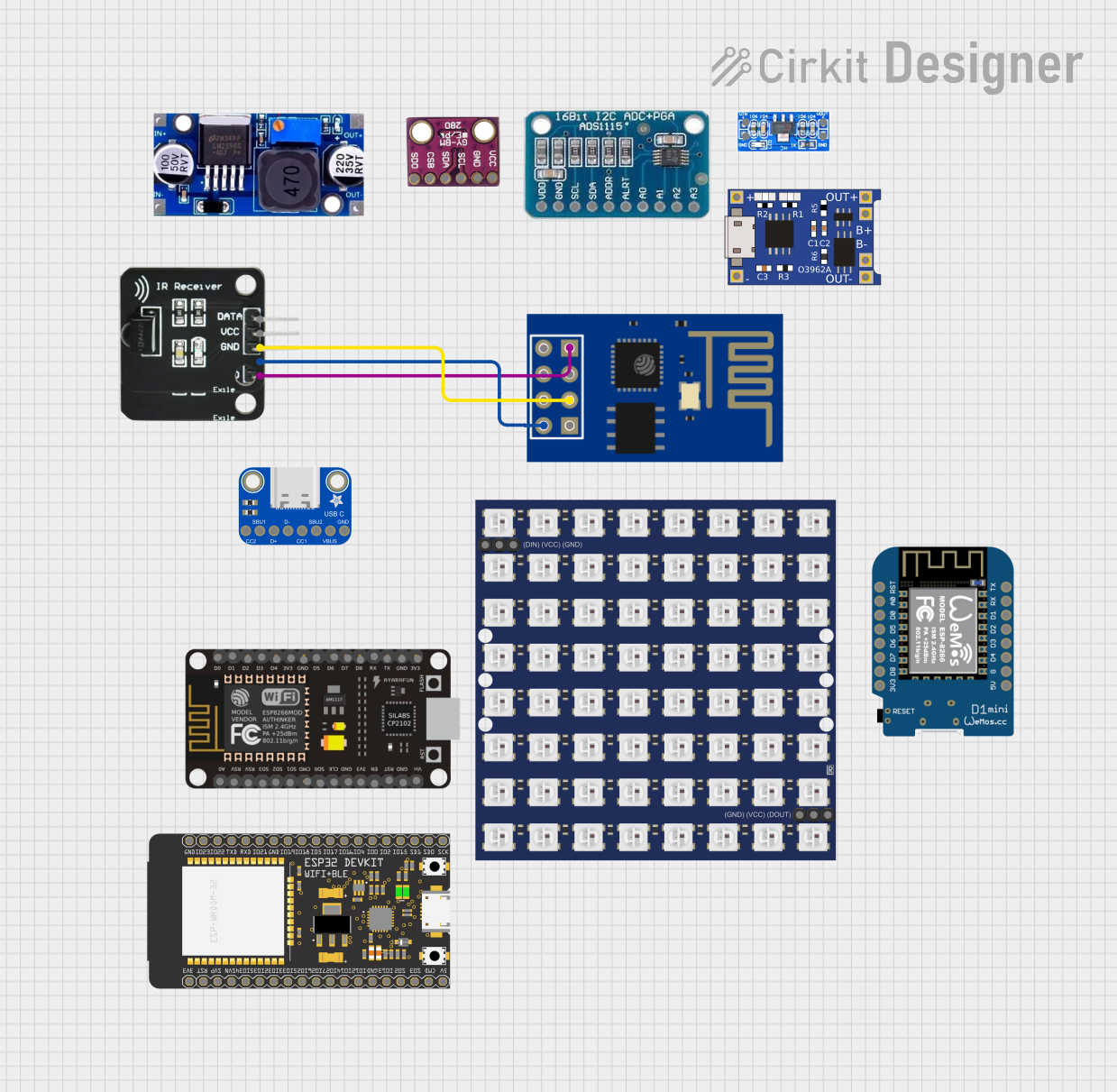 Open Project in Cirkit Designer
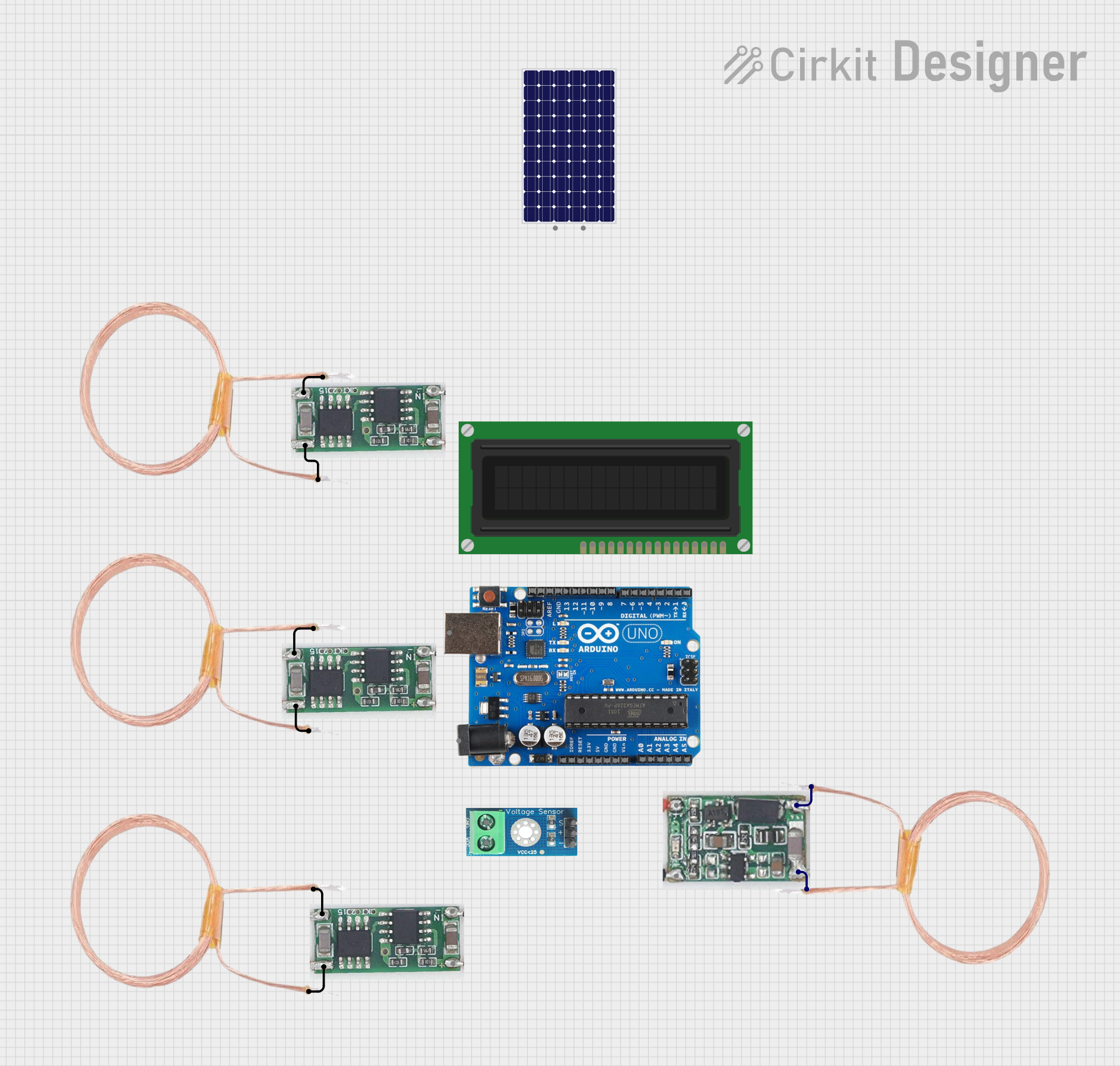 Open Project in Cirkit Designer
Explore Projects Built with Emetteur
Open Project in Cirkit DesignerOpen Project in Cirkit DesignerOpen Project in Cirkit DesignerOpen Project in Cirkit DesignerCommon Applications and Use Cases
- Amplification circuits in audio and RF systems
- Switching applications in digital circuits
- Current regulation in power supplies
- Signal processing in communication devices
Technical Specifications
The emitter is typically part of a BJT, and its specifications depend on the transistor model. Below are general technical details for the emitter in a standard NPN or PNP transistor:
Key Technical Details
- Material: Silicon or Germanium (depending on the transistor type)
- Doping Level: Heavily doped for high carrier injection
- Voltage Ratings: Depends on the transistor; typically ranges from 5V to 1000V
- Current Ratings: Typically ranges from a few milliamps to several amps
- Power Dissipation: Varies by transistor, usually between 0.2W and 150W
Pin Configuration and Descriptions
The emitter is one of the three terminals of a BJT. Below is a typical pin configuration for a TO-92 package transistor:
| Pin Number | Name | Description |
|---|---|---|
| 1 | Emitter | Injects charge carriers into the base region; connected to the negative terminal in NPN transistors or positive terminal in PNP transistors. |
| 2 | Base | Controls the flow of charge carriers between the emitter and collector. |
| 3 | Collector | Collects charge carriers from the emitter via the base. |
Usage Instructions
How to Use the Emitter in a Circuit
- Identify the Transistor Type: Determine whether the transistor is NPN or PNP, as this affects the polarity of the emitter connection.
- Connect the Emitter:
- For an NPN transistor, connect the emitter to the ground or negative terminal of the power supply.
- For a PNP transistor, connect the emitter to the positive terminal of the power supply.
- Base Resistor: Use a resistor to limit the current flowing into the base to prevent damage to the transistor.
- Load Connection: Connect the load between the collector and the power supply.
Important Considerations and Best Practices
- Polarity: Ensure the emitter is connected to the correct polarity based on the transistor type.
- Heat Dissipation: Use a heat sink if the transistor is expected to dissipate significant power.
- Current Limiting: Always use appropriate resistors to limit current through the base and collector.
- Voltage Ratings: Do not exceed the maximum voltage ratings of the transistor to avoid breakdown.
Example: Using an NPN Transistor with Arduino UNO
Below is an example of using an NPN transistor (e.g., 2N2222) to control an LED with an Arduino UNO:
// Define the pin connected to the base of the transistor
const int basePin = 9; // Digital pin 9 on Arduino

void setup() {
  pinMode(basePin, OUTPUT); // Set the base pin as an output
}

void loop() {
  digitalWrite(basePin, HIGH); // Turn on the transistor (LED will light up)
  delay(1000);                 // Wait for 1 second
  digitalWrite(basePin, LOW);  // Turn off the transistor (LED will turn off)
  delay(1000);                 // Wait for 1 second
}
Circuit Notes:
- Connect the emitter to the ground.
- Connect the collector to one terminal of the LED, and the other terminal of the LED to a current-limiting resistor, which is then connected to the positive power supply.
- The base is connected to the Arduino pin through a 1kΩ resistor to limit the base current.
Troubleshooting and FAQs
Common Issues
Transistor Not Switching:
- Cause: Insufficient base current.
- Solution: Check the base resistor value and ensure it allows enough current to flow into the base.
Overheating:
- Cause: Excessive current through the transistor.
- Solution: Verify the load current and ensure it is within the transistor's rated limits. Use a heat sink if necessary.
LED Not Lighting Up:
- Cause: Incorrect wiring or damaged transistor.
- Solution: Double-check the circuit connections and test the transistor with a multimeter.
FAQs
Q1: Can I use the emitter without a base resistor?
A1: No, a base resistor is essential to limit the current flowing into the base and prevent damage to the transistor.
Q2: How do I identify the emitter pin on a transistor?
A2: Refer to the datasheet of the specific transistor. For common packages like TO-92, the emitter is usually the first pin when the flat side of the package is facing you.
Q3: What happens if I reverse the emitter and collector connections?
A3: The transistor will not function correctly, as the emitter and collector are designed for specific polarities and doping levels. Reversing them may also damage the transistor.