The INA226, manufactured by Sensor, is a high-side current shunt monitor with an integrated I2C interface. It is designed to measure voltage, current, and power in a wide range of applications. The device features a precision analog-to-digital converter (ADC) and operates with a supply voltage of 2.7V to 5.5V, making it ideal for battery-powered devices and energy monitoring systems.
Explore Projects Built with INA226
Use Cirkit Designer to design, explore, and prototype these projects online. Some projects support real-time simulation. Click "Open Project" to start designing instantly!
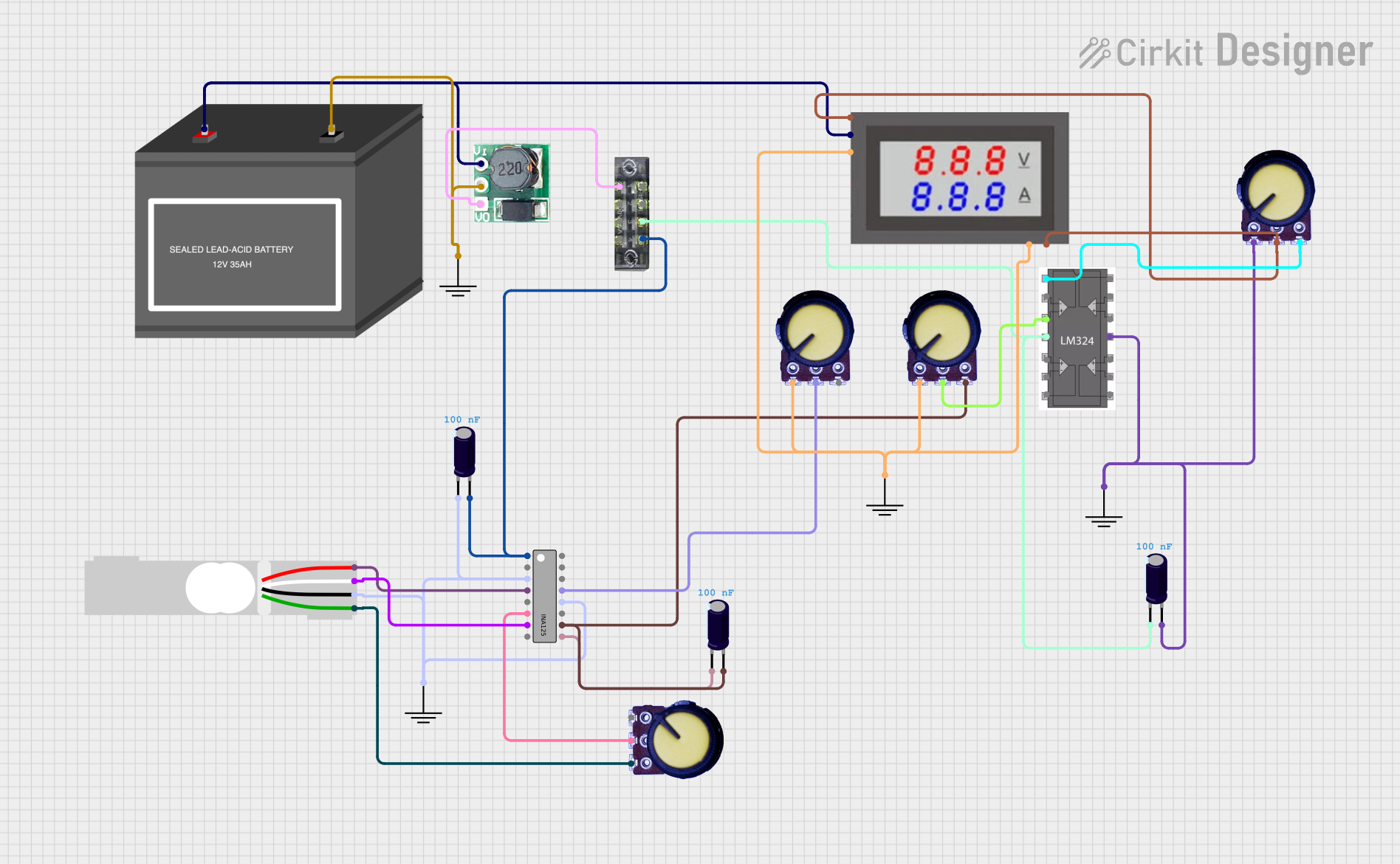
This circuit is a load cell signal conditioning and amplification system. It uses an INA125 instrumentation amplifier to amplify the differential signal from a load cell, with additional filtering and gain control provided by potentiometers and capacitors. The amplified signal is then monitored by a digital voltmeter, and the entire system is powered by a 12V battery with a step-up boost converter to provide stable voltage.
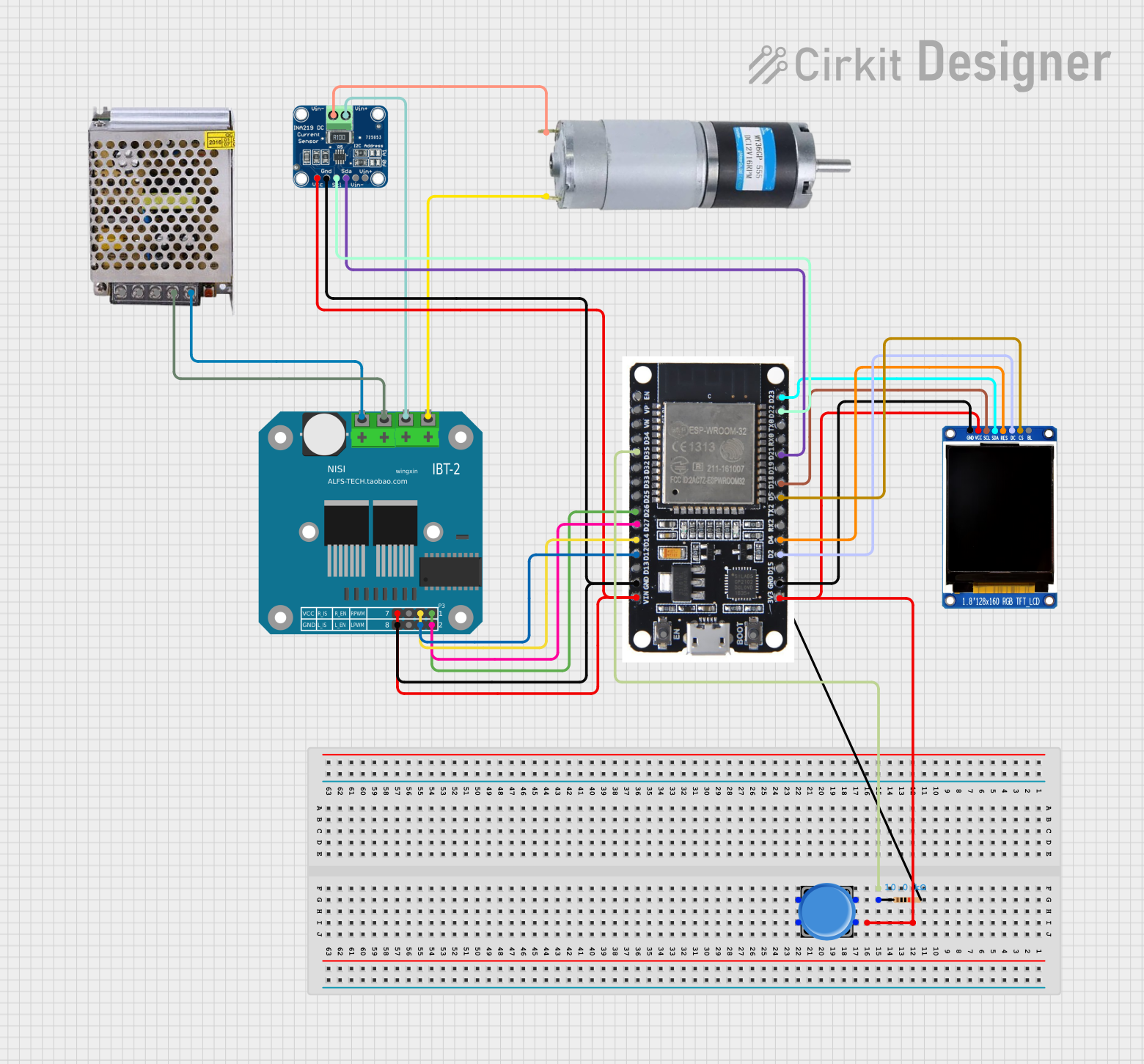
This circuit is a motor control system using an ESP32 microcontroller, an INA219 current sensor, and a BTS7960 motor driver. The ESP32 reads current data from the INA219 and controls the motor driver, while a display module shows relevant information. A pushbutton is included for user interaction.
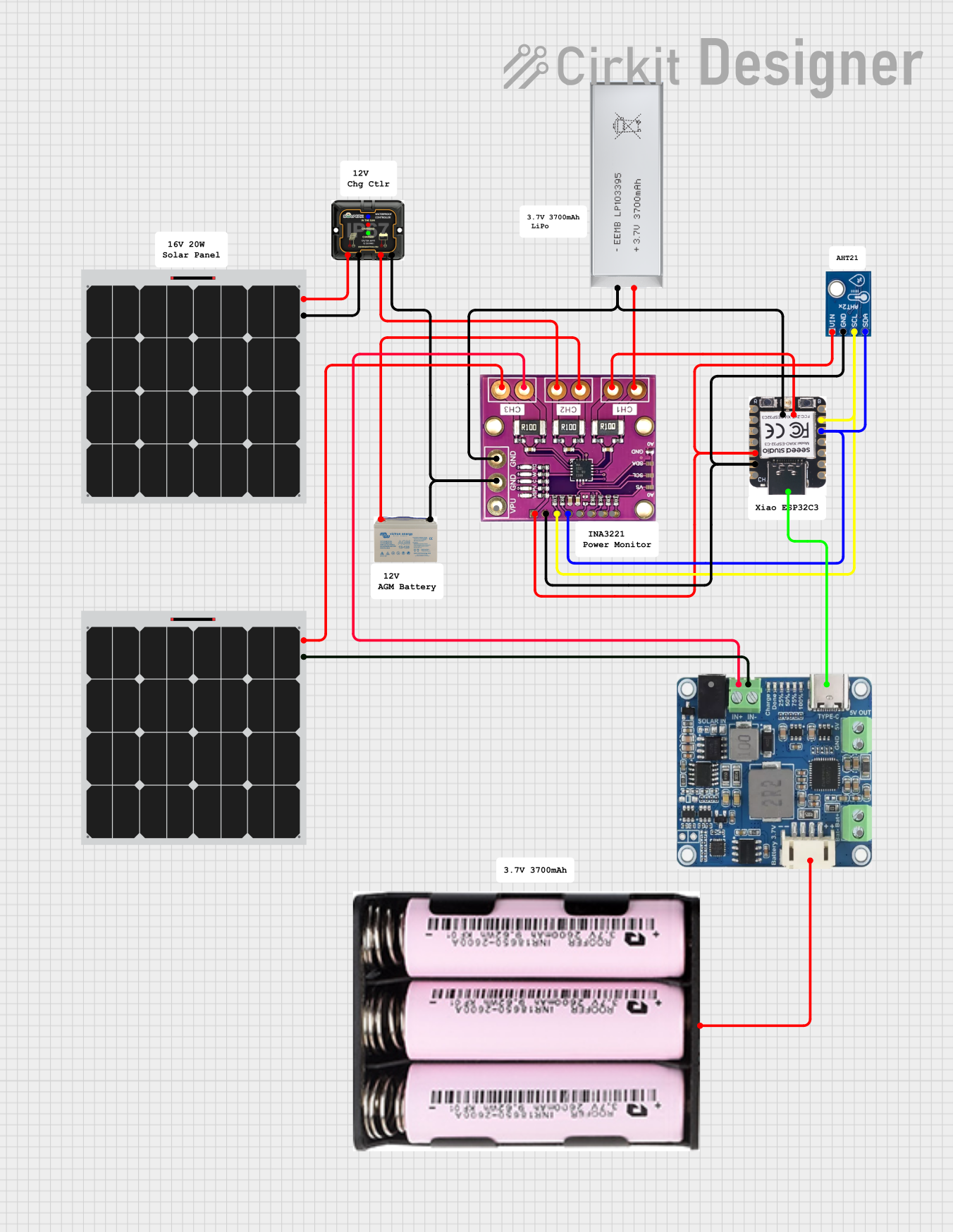
This circuit is designed for solar energy management and monitoring. It includes a 12V AGM battery charged by solar panels through an MPPT charge controller, with voltage monitoring provided by an INA3221 sensor. Additionally, a 3.7V battery is connected to an ESP32-C3 microcontroller and an AHT21 sensor for environmental data collection, with power management handled by a Waveshare Solar Manager.
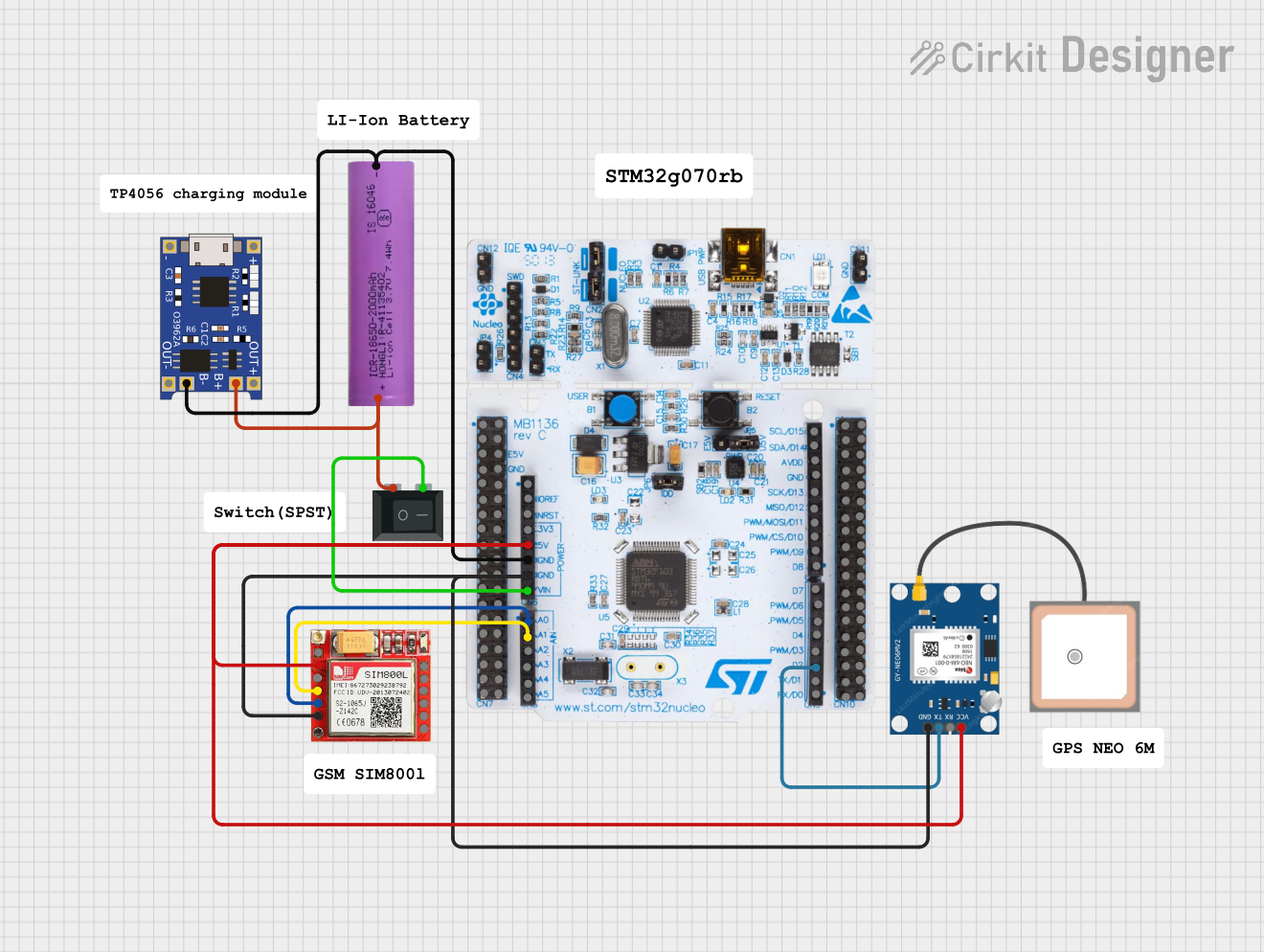
This circuit is an emergency alert system that uses a NUCLEO-F072RB microcontroller to send SMS alerts and make calls via a SIM800L GSM module, while obtaining location data from a GPS NEO 6M module. The system is powered by a Li-ion battery and includes a TP4056 module for battery charging and protection, with a rocker switch to control power to the microcontroller.
The INA226 is a versatile and precise component. Below are its key technical details:
Key Specifications
Parameter
Value
Supply Voltage (Vcc)
2.7V to 5.5V
Input Voltage Range
0V to 36V
Current Measurement Range
Configurable (based on shunt)
ADC Resolution
16-bit
Communication Interface
I2C (up to 1 MHz)
Operating Temperature
-40°C to +125°C
Power Consumption
330 µA (typical)
Pin Configuration and Descriptions
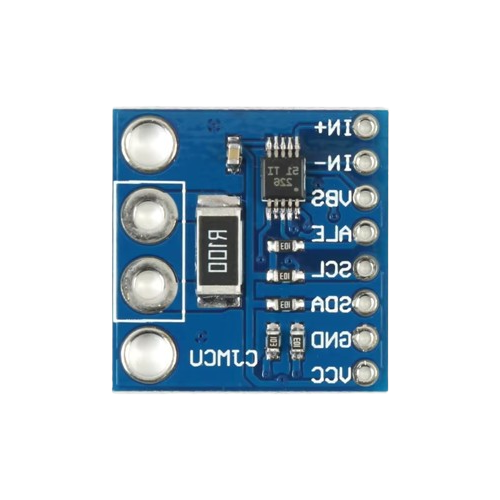
The INA226 is available in a small 10-pin VSSOP package. Below is the pinout and description:
Pin Number
Pin Name
Description
1
VBUS
Voltage input to measure bus voltage
2
GND
Ground connection
3
SCL
I2C clock input
4
SDA
I2C data input/output
5
ALERT
Alert output (active low) for configurable thresholds
6
VSHUNT+
Positive input for shunt resistor (current measurement)
7
VSHUNT-
Negative input for shunt resistor (current measurement)
8
VCC
Power supply input (2.7V to 5.5V)
9, 10
NC
No connection (leave floating or connect to ground for stability)
Usage Instructions
The INA226 is straightforward to use in a circuit. Below are the steps and considerations for proper usage:
Connecting the INA226
Power Supply: Connect the VCC pin to a 2.7V to 5.5V power source and the GND pin to ground.
Voltage Measurement: Connect the VBUS pin to the voltage source you want to measure.
Current Measurement: Place a shunt resistor between the VSHUNT+ and VSHUNT- pins. The INA226 measures the voltage drop across this resistor to calculate current.
I2C Communication: Connect the SCL and SDA pins to the corresponding I2C lines of your microcontroller. Use pull-up resistors (typically 4.7kΩ) on these lines.
Alert Pin (Optional): Configure the ALERT pin for overcurrent, overvoltage, or other threshold-based alerts.
Important Considerations
Shunt Resistor Selection: Choose a shunt resistor with a low resistance value to minimize power loss but high enough to produce a measurable voltage drop.
I2C Address: The INA226 has a configurable I2C address, allowing multiple devices on the same bus. Refer to the datasheet for address configuration details.
Bypass Capacitor: Place a 0.1µF ceramic capacitor close to the VCC pin for power supply decoupling.
Example Code for Arduino UNO
Below is an example of how to interface the INA226 with an Arduino UNO to measure voltage and current:
#include <Wire.h>

// INA226 I2C address (default is 0x40, check datasheet for address configuration)
#define INA226_ADDRESS 0x40

// Register addresses
#define REG_BUS_VOLTAGE 0x02
#define REG_SHUNT_VOLTAGE 0x01

void setup() {
  Wire.begin(); // Initialize I2C communication
  Serial.begin(9600); // Initialize serial communication for debugging

  // Configure INA226 (e.g., calibration, averaging, etc.)
  configureINA226();
}

void loop() {
  float busVoltage = readBusVoltage(); // Read bus voltage
  float shuntVoltage = readShuntVoltage(); // Read shunt voltage
  float current = shuntVoltage / 0.1; // Calculate current (assuming 0.1Ω shunt resistor)

  // Print results to the serial monitor
  Serial.print("Bus Voltage: ");
  Serial.print(busVoltage);
  Serial.println(" V");

  Serial.print("Current: ");
  Serial.print(current);
  Serial.println(" A");

  delay(1000); // Wait 1 second before the next reading
}

void configureINA226() {
  Wire.beginTransmission(INA226_ADDRESS);
  Wire.write(0x00); // Configuration register
  Wire.write(0x45); // MSB of configuration (example value)
  Wire.write(0x27); // LSB of configuration (example value)
  Wire.endTransmission();
}

float readBusVoltage() {
  Wire.beginTransmission(INA226_ADDRESS);
  Wire.write(REG_BUS_VOLTAGE); // Bus voltage register
  Wire.endTransmission();

  Wire.requestFrom(INA226_ADDRESS, 2); // Request 2 bytes
  uint16_t rawData = (Wire.read() << 8) | Wire.read(); // Combine MSB and LSB
  return rawData * 0.00125; // Convert to volts (1.25mV per bit)
}

float readShuntVoltage() {
  Wire.beginTransmission(INA226_ADDRESS);
  Wire.write(REG_SHUNT_VOLTAGE); // Shunt voltage register
  Wire.endTransmission();

  Wire.requestFrom(INA226_ADDRESS, 2); // Request 2 bytes
  uint16_t rawData = (Wire.read() << 8) | Wire.read(); // Combine MSB and LSB
  return rawData * 0.0000025; // Convert to volts (2.5µV per bit)
}
Troubleshooting and FAQs
Common Issues
No I2C Communication:
Ensure the SCL and SDA lines have proper pull-up resistors (4.7kΩ recommended).
Verify the I2C address of the INA226 matches the one in your code.
Check for loose or incorrect wiring.
Incorrect Voltage or Current Readings:
Verify the shunt resistor value and ensure it is properly connected.
Check the calibration settings in the INA226 configuration.
Alert Pin Not Functioning:
Ensure the ALERT pin is configured correctly in the INA226 registers.
Verify the threshold values for the alert condition.
Tips for Troubleshooting
Use an I2C scanner sketch to confirm the INA226 is detected on the I2C bus.
Double-check all connections and ensure there are no shorts or loose wires.
Refer to the INA226 datasheet for detailed register descriptions and configuration options.

 Open Project in Cirkit Designer