
How to Use TDS SENSOR: Examples, Pinouts, and Specs
 Design with TDS SENSOR in Cirkit Designer
Introduction
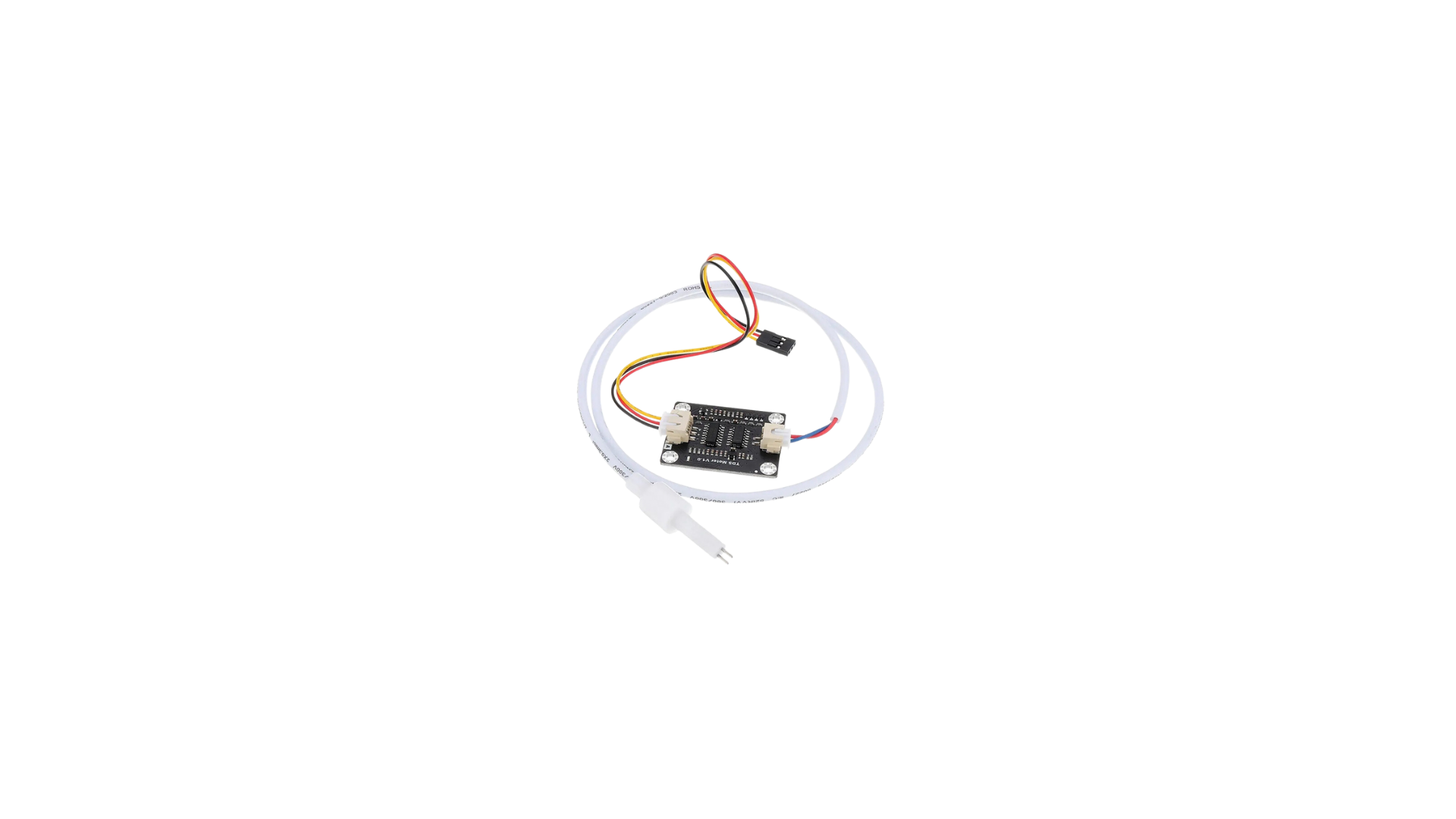
A TDS (Total Dissolved Solids) sensor measures the concentration of dissolved solids in water, providing an indication of water quality and purity. It is widely used in applications such as water filtration systems, aquariums, hydroponics, and environmental monitoring. By measuring the electrical conductivity of water, the sensor estimates the total dissolved solids, which is typically expressed in parts per million (ppm).
Explore Projects Built with TDS SENSOR
 Open Project in Cirkit Designer
 Open Project in Cirkit Designer
 Open Project in Cirkit Designer
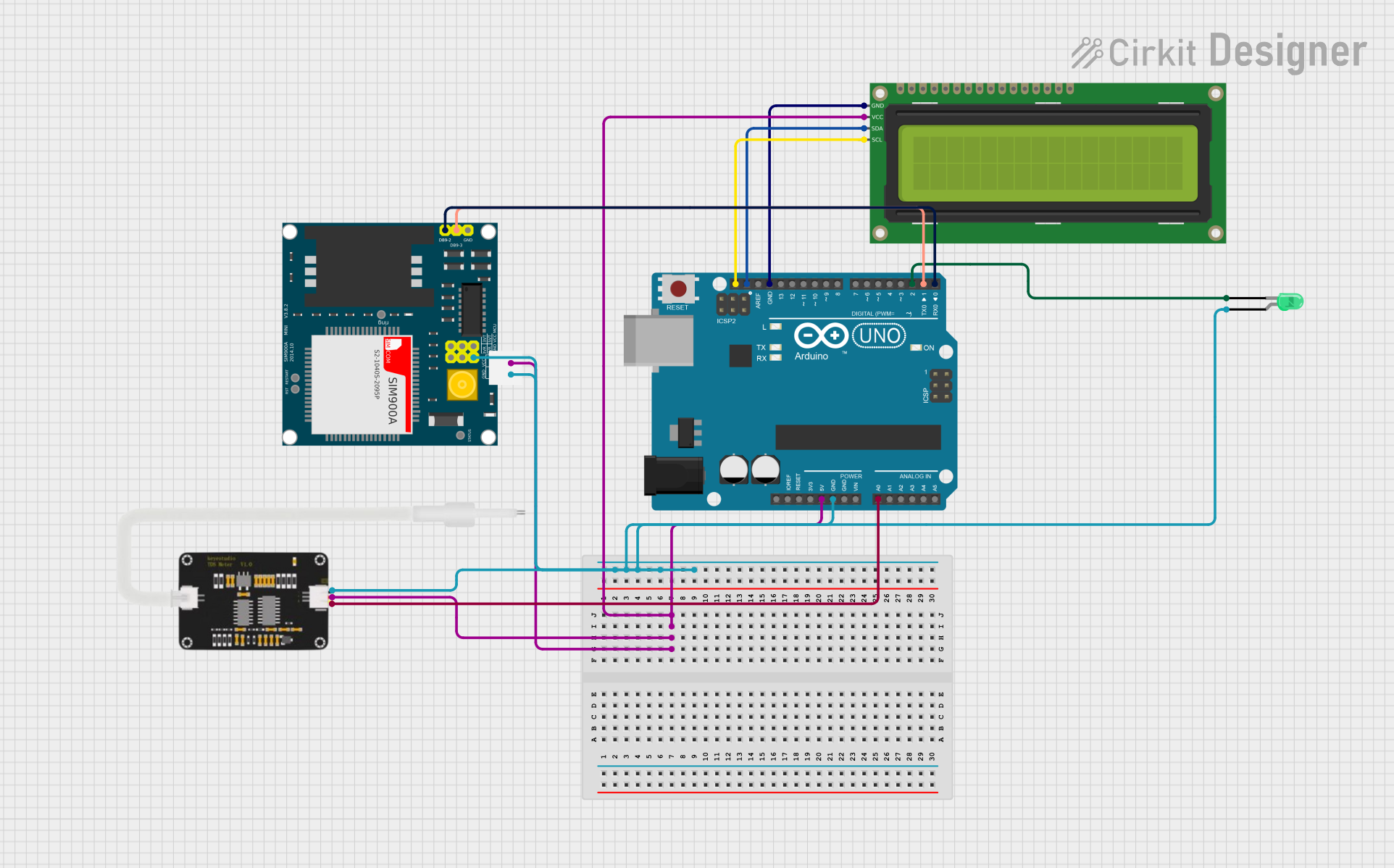 Open Project in Cirkit Designer
Explore Projects Built with TDS SENSOR
Open Project in Cirkit DesignerOpen Project in Cirkit DesignerOpen Project in Cirkit DesignerOpen Project in Cirkit DesignerTechnical Specifications
- Operating Voltage: 3.3V - 5V DC
- Output Signal: Analog voltage (0 - 2.3V)
- Measurement Range: 0 - 1000 ppm (standard version)
- Accuracy: ±10% of the measured value
- Temperature Compensation: Supported (requires external temperature sensor)
- Operating Temperature: 0°C - 60°C
- Probe Material: Stainless steel
- Cable Length: Typically 1 meter
Pin Configuration and Descriptions
The TDS sensor module typically has a 3-pin interface for connection to a microcontroller. Below is the pin configuration:
| Pin | Name | Description |
|---|---|---|
| 1 | VCC | Power supply input (3.3V - 5V DC). |
| 2 | GND | Ground connection. |
| 3 | AOUT | Analog output signal proportional to the TDS value. |
The sensor probe is connected to the module via a dedicated connector, and the module processes the signal from the probe to provide an analog output.
Usage Instructions
How to Use the TDS Sensor in a Circuit
Connect the Module:
- Connect the
VCCpin to the 5V pin of your microcontroller (e.g., Arduino UNO). - Connect the
GNDpin to the ground (GND) of your microcontroller. - Connect the
AOUTpin to an analog input pin (e.g., A0) of your microcontroller.
- Connect the
Place the Probe:
- Submerge the stainless steel probe in the water sample. Ensure the probe is fully immersed but avoid submerging the module itself.
Calibrate the Sensor:
- Use a known TDS solution to calibrate the sensor for accurate readings. Adjust the potentiometer on the module if necessary.
Read the Output:
- The analog output voltage from the
AOUTpin corresponds to the TDS value. Use the microcontroller to convert this voltage into a ppm value using the appropriate formula.
- The analog output voltage from the
Important Considerations and Best Practices
- Avoid Corrosion: Clean the probe regularly to prevent buildup of contaminants that may affect accuracy.
- Temperature Compensation: For precise measurements, use a temperature sensor to compensate for temperature variations in the water.
- Avoid Immersing the Module: Only the probe is waterproof; the module should remain dry.
- Power Supply: Ensure a stable power supply to avoid fluctuations in readings.
Example Code for Arduino UNO
Below is an example code to interface the TDS sensor with an Arduino UNO:
// Include necessary libraries
#define TdsSensorPin A0  // Define the analog pin connected to the TDS sensor
#define VREF 5.0         // Reference voltage of the Arduino (5V for UNO)
#define ADC_RES 1024.0   // ADC resolution (10-bit ADC = 1024 levels)

float tdsValue = 0;      // Variable to store the TDS value
float voltage = 0;       // Variable to store the sensor output voltage

void setup() {
  Serial.begin(9600);    // Initialize serial communication at 9600 baud
  pinMode(TdsSensorPin, INPUT);  // Set the TDS sensor pin as input
}

void loop() {
  int sensorValue = analogRead(TdsSensorPin);  // Read the analog value
  voltage = (sensorValue / ADC_RES) * VREF;    // Convert ADC value to voltage
  tdsValue = (voltage / VREF) * 1000;          // Convert voltage to TDS (ppm)

  // Print the TDS value to the Serial Monitor
  Serial.print("TDS Value: ");
  Serial.print(tdsValue);
  Serial.println(" ppm");

  delay(1000);  // Wait for 1 second before the next reading
}
Troubleshooting and FAQs
Common Issues and Solutions
Inaccurate Readings:
- Cause: Probe contamination or improper calibration.
- Solution: Clean the probe with distilled water and recalibrate using a known TDS solution.
No Output or Fluctuating Values:
- Cause: Loose connections or unstable power supply.
- Solution: Check all connections and ensure a stable 5V power supply.
Module Overheating:
- Cause: Incorrect voltage input.
- Solution: Ensure the input voltage is within the specified range (3.3V - 5V).
Sensor Not Responding:
- Cause: Damaged probe or module.
- Solution: Inspect the probe and module for physical damage and replace if necessary.
FAQs
Q: Can the TDS sensor measure salinity?
A: While the TDS sensor indirectly measures salinity, it is not specifically designed for this purpose. Use a dedicated salinity sensor for precise measurements.Q: How often should I calibrate the sensor?
A: Calibration frequency depends on usage. For critical applications, calibrate weekly; otherwise, monthly calibration is sufficient.Q: Can I use the TDS sensor in hot water?
A: The sensor operates within 0°C - 60°C. Avoid using it in water outside this range to prevent damage.Q: Is the probe safe for drinking water?
A: Yes, the stainless steel probe is safe for use in drinking water analysis.