
How to Use winch solenoid: Examples, Pinouts, and Specs
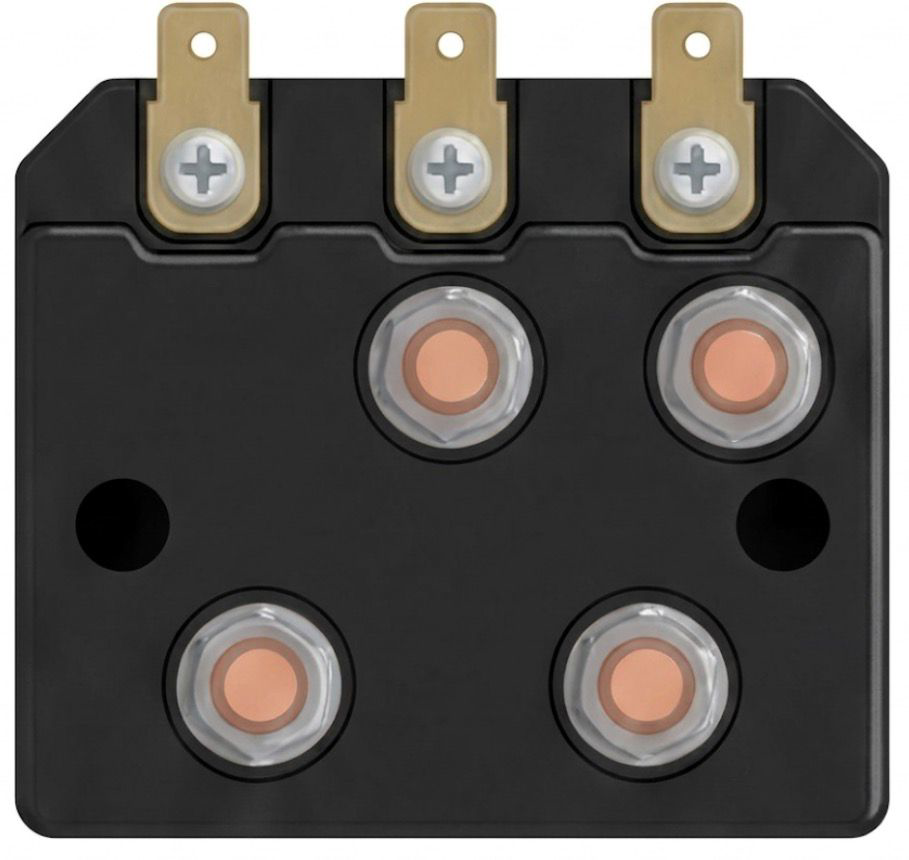
 Design with winch solenoid in Cirkit Designer
Introduction
A winch solenoid is an electromagnetic switch designed to control the operation of a winch motor. It acts as a relay, allowing a low-voltage control signal to engage or disengage the high-current circuit required to power the winch motor. This component is essential for safely and efficiently operating winches in various applications.
Explore Projects Built with winch solenoid
 Open Project in Cirkit Designer
 Open Project in Cirkit Designer
 Open Project in Cirkit Designer
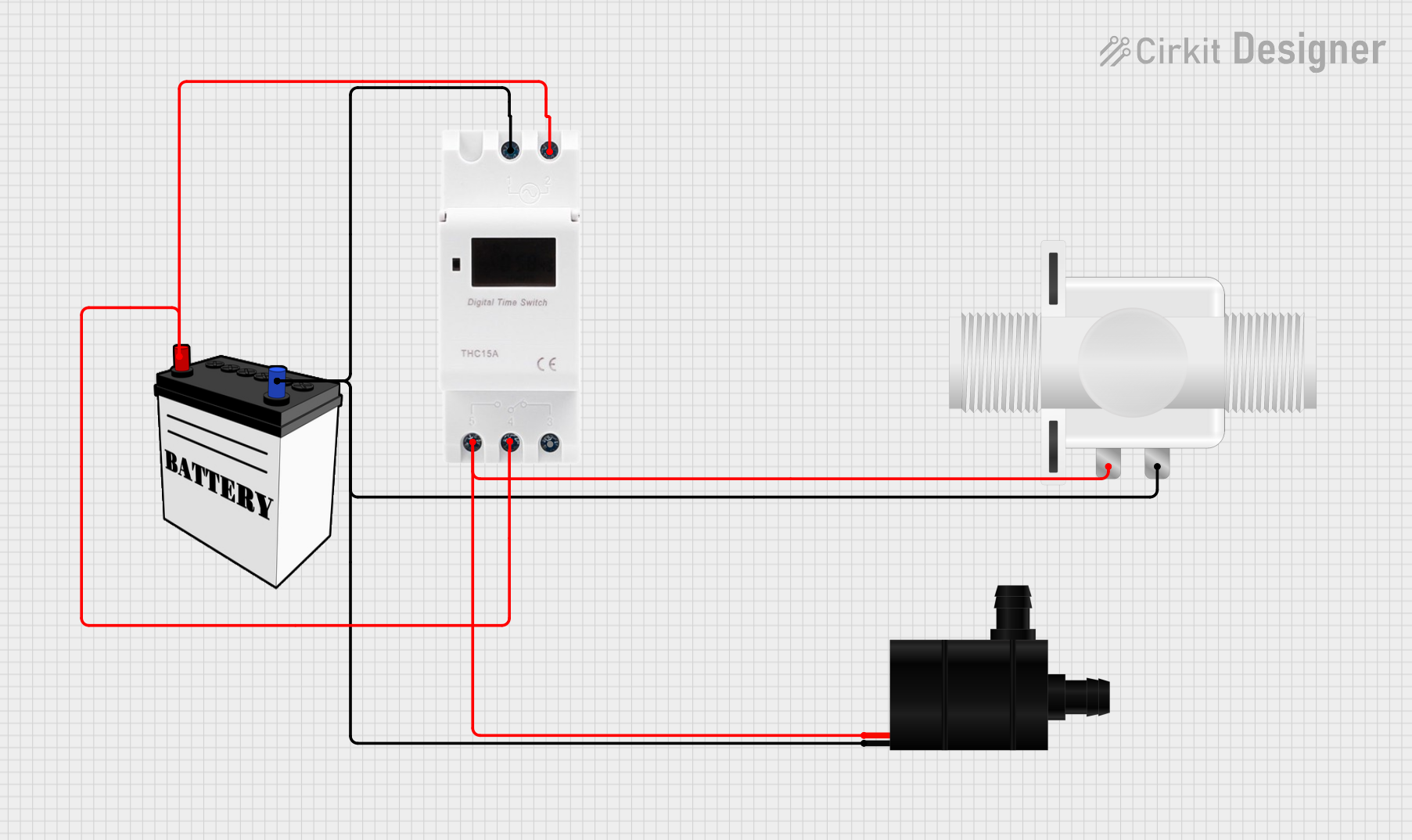 Open Project in Cirkit Designer
Explore Projects Built with winch solenoid
Open Project in Cirkit DesignerOpen Project in Cirkit DesignerOpen Project in Cirkit DesignerOpen Project in Cirkit DesignerCommon Applications and Use Cases
- Off-road vehicles for towing or recovery operations
- Industrial equipment for lifting or pulling heavy loads
- Marine applications for anchor winches
- Construction machinery for cable pulling
- Recreational vehicles (RVs) for trailer winches
Technical Specifications
Below are the key technical details of a typical winch solenoid:
| Parameter | Specification |
|---|---|
| Operating Voltage | 12V or 24V DC |
| Maximum Current Rating | 200A to 500A (depending on model) |
| Coil Resistance | 3Ω to 10Ω |
| Contact Material | Copper or Silver Alloy |
| Operating Temperature | -40°C to 85°C |
| Duty Cycle | Intermittent (e.g., 30% at 25°C) |
| Housing Material | Metal or High-Durability Plastic |
Pin Configuration and Descriptions
The winch solenoid typically has four terminals or pins. Below is a description of each:
| Pin | Label | Description |
|---|---|---|
| 1 | Battery (+) | Connects to the positive terminal of the battery to supply power to the solenoid. |
| 2 | Motor (+) | Connects to the positive terminal of the winch motor. |
| 3 | Control Signal | Receives the low-voltage signal from the switch to activate the solenoid. |
| 4 | Ground (-) | Connects to the negative terminal of the battery or chassis ground. |
Usage Instructions
How to Use the Component in a Circuit
Wiring the Solenoid:
- Connect the Battery (+) terminal of the solenoid to the positive terminal of the battery using a heavy-duty cable.
- Connect the Motor (+) terminal to the positive terminal of the winch motor.
- Connect the Control Signal terminal to the output of a switch or control module.
- Connect the Ground (-) terminal to the negative terminal of the battery or a reliable chassis ground.
Activating the Solenoid:
- When the control signal is applied (typically 12V or 24V, depending on the solenoid), the solenoid engages, completing the circuit between the battery and the winch motor.
- This allows the winch motor to operate and pull or release the cable.
Deactivating the Solenoid:
- When the control signal is removed, the solenoid disengages, breaking the circuit and stopping the winch motor.
Important Considerations and Best Practices
- Cable Sizing: Use appropriately rated cables for the high-current connections to prevent overheating or voltage drops.
- Fuse Protection: Install a fuse or circuit breaker between the battery and the solenoid to protect against short circuits.
- Mounting: Securely mount the solenoid in a location protected from water, dirt, and excessive heat.
- Control Signal Voltage: Ensure the control signal voltage matches the solenoid's rated operating voltage (e.g., 12V or 24V).
- Intermittent Duty Cycle: Avoid prolonged activation of the solenoid to prevent overheating. Follow the manufacturer's duty cycle recommendations.
Example Arduino Code for Control
If you are using an Arduino UNO to control the winch solenoid, you can use the following code:
// Define the pin connected to the solenoid control signal
const int solenoidPin = 7;

void setup() {
  // Set the solenoid pin as an output
  pinMode(solenoidPin, OUTPUT);
}

void loop() {
  // Activate the solenoid for 5 seconds
  digitalWrite(solenoidPin, HIGH); // Send 12V signal to engage solenoid
  delay(5000);                     // Wait for 5 seconds

  // Deactivate the solenoid for 5 seconds
  digitalWrite(solenoidPin, LOW);  // Remove signal to disengage solenoid
  delay(5000);                     // Wait for 5 seconds
}
Note: Use a relay module or transistor circuit to interface the Arduino with the solenoid, as the Arduino cannot directly supply the required current.
Troubleshooting and FAQs
Common Issues and Solutions
Solenoid Does Not Engage:
- Cause: No control signal or insufficient voltage.
- Solution: Check the control signal voltage and ensure it matches the solenoid's rated voltage. Verify wiring connections.
Winch Motor Does Not Operate:
- Cause: Faulty solenoid or loose connections.
- Solution: Test the solenoid by applying the control signal directly. Inspect and tighten all connections.
Solenoid Overheats:
- Cause: Prolonged activation or excessive current.
- Solution: Follow the duty cycle recommendations and ensure the winch motor is not drawing more current than the solenoid's rating.
Intermittent Operation:
- Cause: Poor grounding or damaged cables.
- Solution: Check the ground connection and inspect all cables for damage or corrosion.
FAQs
Q: Can I use a 12V solenoid with a 24V system?
A: No, using a 12V solenoid in a 24V system can damage the solenoid. Always match the solenoid's voltage rating to the system voltage.Q: How do I test if the solenoid is working?
A: Apply the rated control signal voltage to the solenoid's control terminal. You should hear a clicking sound, indicating the solenoid is engaging.Q: Can I mount the solenoid in any orientation?
A: Most solenoids can be mounted in any orientation, but consult the manufacturer's guidelines for specific recommendations.Q: What happens if the solenoid fails?
A: If the solenoid fails, the winch motor will not operate. Replace the solenoid to restore functionality.
By following this documentation, you can effectively use and troubleshoot a winch solenoid in your application.