
How to Use Limit Switch: Examples, Pinouts, and Specs
 Design with Limit Switch in Cirkit Designer
Introduction
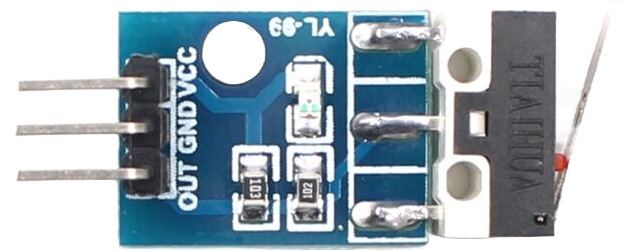
A limit switch is an electromechanical device designed to detect the presence or absence of an object or the position of a moving part. It operates by making or breaking an electrical connection when a physical actuator is engaged. Limit switches are widely used in industrial and automation systems to control machinery, ensure safety, and provide feedback on mechanical movements.
Explore Projects Built with Limit Switch
 Open Project in Cirkit Designer
 Open Project in Cirkit Designer
 Open Project in Cirkit Designer
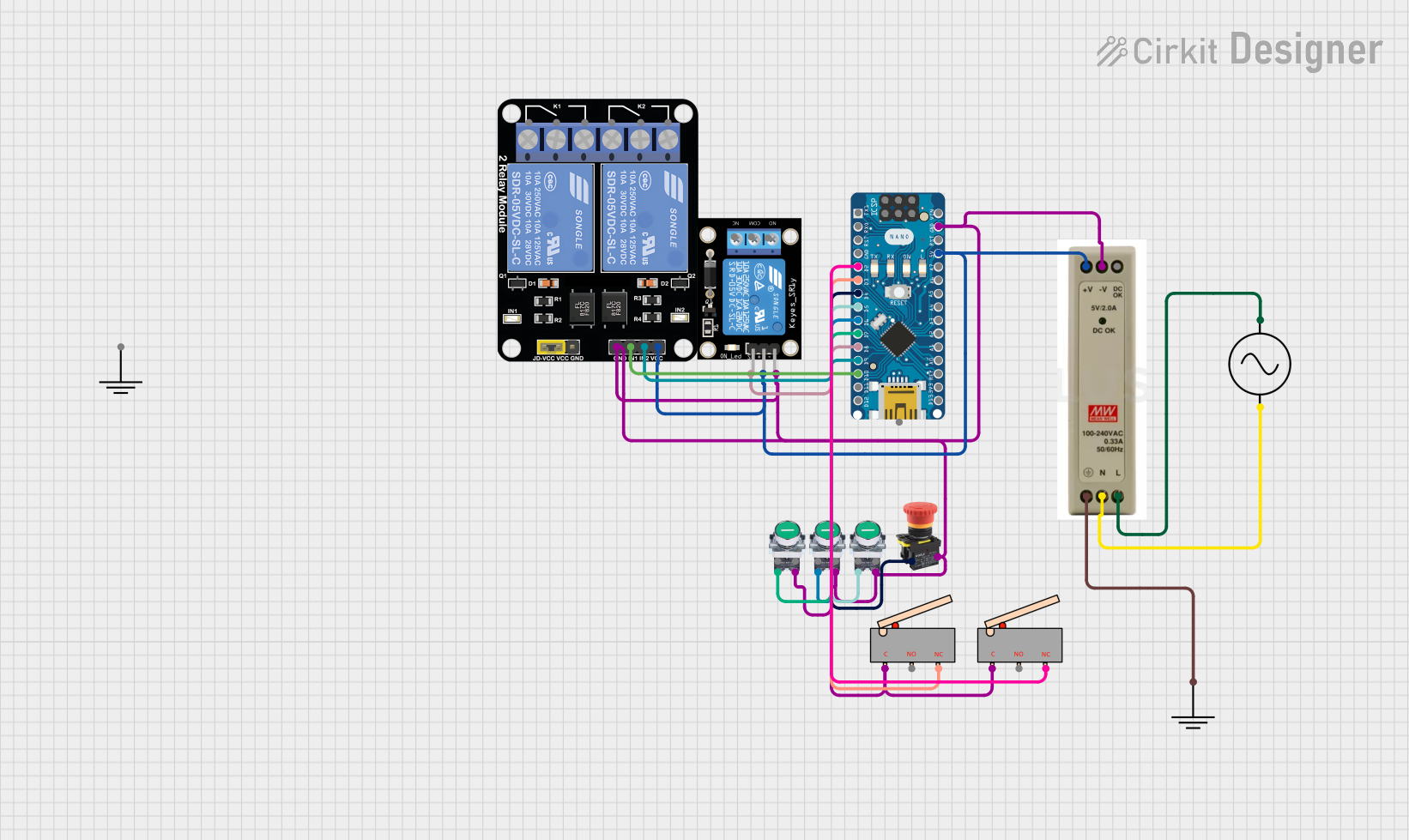 Open Project in Cirkit Designer
Explore Projects Built with Limit Switch
Open Project in Cirkit DesignerOpen Project in Cirkit DesignerOpen Project in Cirkit DesignerOpen Project in Cirkit DesignerCommon Applications and Use Cases
- Detecting the end position of a moving part in machinery (e.g., conveyor belts, robotic arms).
- Safety interlocks to prevent equipment from operating in unsafe conditions.
- Position sensing in elevators, garage doors, and CNC machines.
- Automated systems requiring precise mechanical feedback.
Technical Specifications
Key Technical Details
- Operating Voltage: Typically 5V to 250V AC/DC (varies by model).
- Current Rating: Commonly 5A to 15A (check specific model for exact rating).
- Contact Configuration: SPDT (Single Pole Double Throw) or DPDT (Double Pole Double Throw).
- Actuator Type: Roller lever, plunger, or whisker (varies by design).
- Mechanical Durability: Up to 10 million operations (depending on model).
- Operating Temperature: -25°C to 80°C (typical range).
Pin Configuration and Descriptions
The pin configuration of a limit switch depends on its contact type. Below is a general description for a standard SPDT limit switch:
| Pin Name | Description |
|---|---|
| COM | Common terminal. Connects to the power source or signal input. |
| NO | Normally Open terminal. Connects to the load when the switch is actuated. |
| NC | Normally Closed terminal. Connects to the load when the switch is not actuated. |
Usage Instructions
How to Use the Component in a Circuit
- Identify the Terminals: Locate the COM, NO, and NC terminals on the limit switch.
- Connect the Power Source: Connect the COM terminal to the power source or signal input.
- Choose the Desired Output:
- For a normally open (NO) configuration, connect the load to the NO terminal. The circuit will close when the switch is actuated.
- For a normally closed (NC) configuration, connect the load to the NC terminal. The circuit will open when the switch is actuated.
- Secure the Switch: Mount the limit switch in the desired position where the actuator can interact with the moving part or object.
- Test the Circuit: Verify the operation by moving the object or part to engage the actuator.
Important Considerations and Best Practices
- Voltage and Current Ratings: Ensure the limit switch is rated for the voltage and current of your application to avoid damage.
- Mechanical Alignment: Properly align the actuator with the moving part to ensure reliable operation.
- Debouncing: If using the limit switch with a microcontroller, implement software or hardware debouncing to handle signal noise.
- Environmental Protection: Use a limit switch with an appropriate IP rating for harsh environments (e.g., dust, water).
Example: Connecting a Limit Switch to an Arduino UNO
Below is an example of how to connect and use a limit switch with an Arduino UNO:
Circuit Setup
- Connect the COM terminal of the limit switch to the Arduino's GND pin.
- Connect the NO terminal to a digital input pin (e.g., pin 2) on the Arduino.
- Use a pull-up resistor (10kΩ) between the digital input pin and the Arduino's 5V pin.
Arduino Code
// Define the pin connected to the limit switch
const int limitSwitchPin = 2;

// Variable to store the state of the limit switch
int switchState = 0;

void setup() {
  // Set the limit switch pin as input with an internal pull-up resistor
  pinMode(limitSwitchPin, INPUT_PULLUP);

  // Initialize serial communication for debugging
  Serial.begin(9600);
}

void loop() {
  // Read the state of the limit switch
  switchState = digitalRead(limitSwitchPin);

  // Check if the limit switch is pressed
  if (switchState == LOW) {
    // Limit switch is pressed (NO terminal connected to GND)
    Serial.println("Limit switch activated!");
  } else {
    // Limit switch is not pressed
    Serial.println("Limit switch not activated.");
  }

  // Add a small delay to avoid spamming the serial monitor
  delay(200);
}
Troubleshooting and FAQs
Common Issues and Solutions
The limit switch does not respond when actuated:
- Verify the wiring and ensure the correct terminals (COM, NO, NC) are connected.
- Check the voltage and current ratings to ensure compatibility with your circuit.
- Inspect the actuator for mechanical misalignment or damage.
The Arduino reads inconsistent or noisy signals:
- Implement software debouncing in your code to filter out signal noise.
- Use a pull-up or pull-down resistor to stabilize the input signal.
The limit switch wears out quickly:
- Ensure the switch is not subjected to excessive mechanical force.
- Use a switch with a higher mechanical durability rating for high-frequency applications.
FAQs
Q: Can I use a limit switch with AC power?
A: Yes, many limit switches are designed to handle both AC and DC power. Check the voltage and current ratings of your specific model.
Q: What is the difference between NO and NC terminals?
A: The NO (Normally Open) terminal connects to the load when the switch is actuated, while the NC (Normally Closed) terminal connects to the load when the switch is not actuated.
Q: How do I protect the limit switch in outdoor environments?
A: Use a limit switch with a high IP rating (e.g., IP65 or higher) to protect against dust and water ingress. Additionally, consider using a protective enclosure.