
How to Use LiPo 2s Battery: Examples, Pinouts, and Specs
 Design with LiPo 2s Battery in Cirkit Designer
Introduction
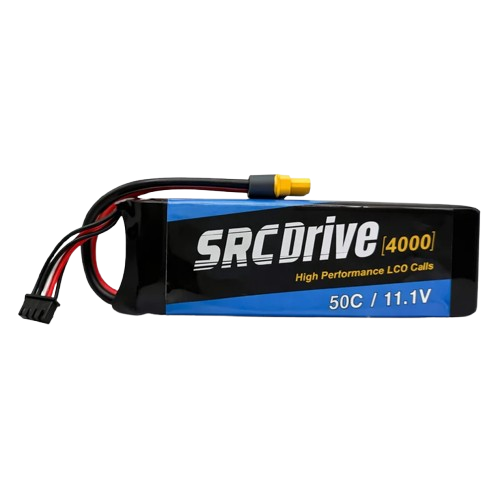
The LiPo 2s Battery (Manufacturer: Russian Guitar, Part ID: 2 Cell Lithium Polymer) is a rechargeable lithium polymer battery with two cells connected in series. It provides a nominal voltage of 7.4V and is widely recognized for its high energy density, lightweight design, and ability to deliver high discharge currents. These features make it an ideal power source for applications such as RC vehicles, drones, and portable electronics.
Explore Projects Built with LiPo 2s Battery
 Open Project in Cirkit Designer
 Open Project in Cirkit Designer
 Open Project in Cirkit Designer
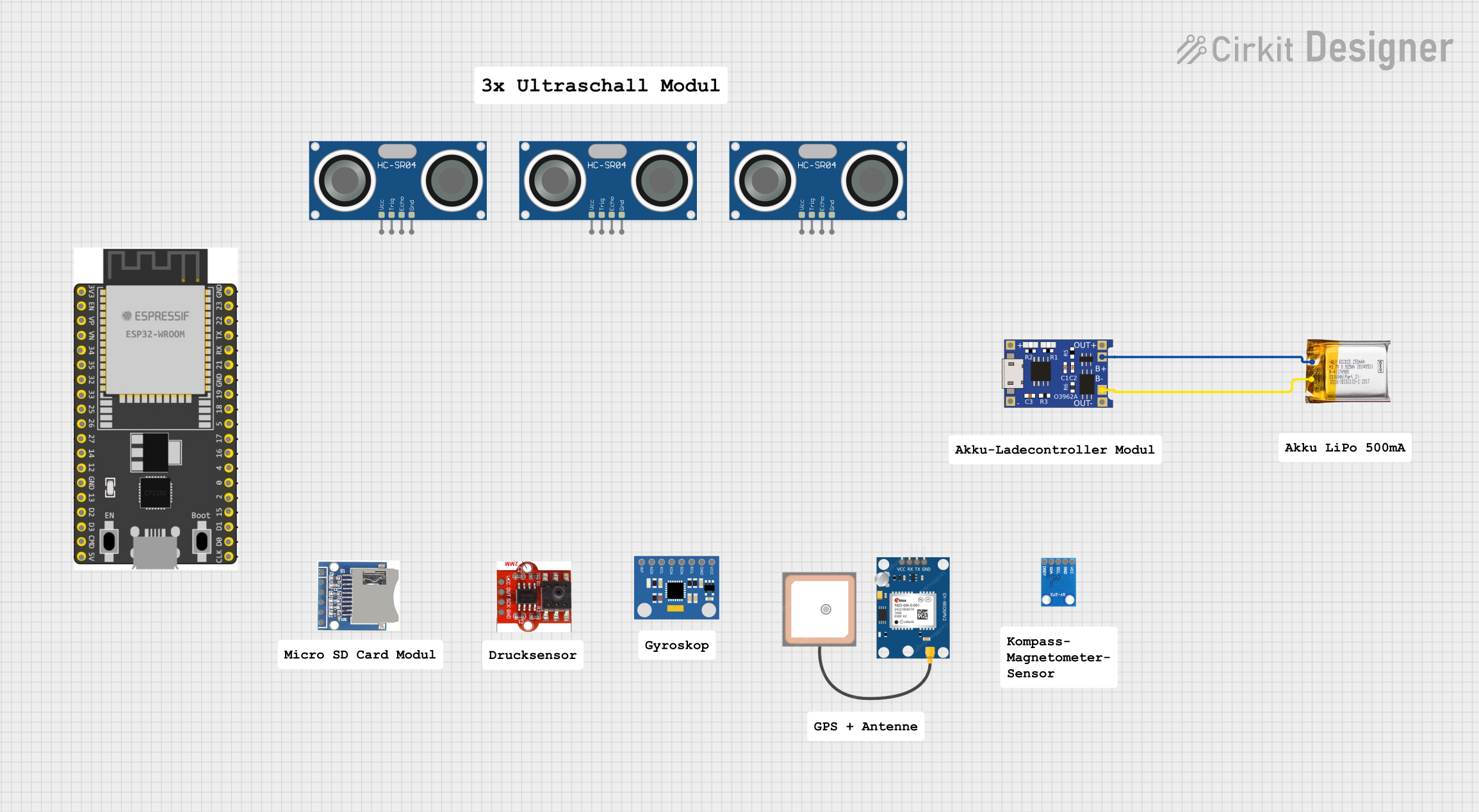 Open Project in Cirkit Designer
Explore Projects Built with LiPo 2s Battery
Open Project in Cirkit DesignerOpen Project in Cirkit DesignerOpen Project in Cirkit DesignerOpen Project in Cirkit DesignerCommon Applications:
- Remote-controlled (RC) cars, boats, and drones
- Robotics and hobbyist projects
- Portable electronic devices
- Backup power supplies for small systems
Technical Specifications
Key Specifications:
| Parameter | Value |
|---|---|
| Nominal Voltage | 7.4V (2 cells in series) |
| Fully Charged Voltage | 8.4V |
| Minimum Discharge Voltage | 6.0V (3.0V per cell) |
| Capacity Range | 500mAh to 5000mAh (varies by model) |
| Discharge Rate (C-rating) | Typically 20C to 50C |
| Connector Type | XT60, JST, or similar (varies by model) |
| Dimensions | Varies by capacity |
| Weight | Lightweight (varies by capacity) |
| Chemistry | Lithium Polymer (LiPo) |
Pin Configuration:
The LiPo 2s battery typically has two connectors:
- Main Power Connector: Supplies power to the load.
- Balance Connector: Used for charging and balancing the cells.
Main Power Connector Pinout:
| Pin Number | Description |
|---|---|
| 1 | Positive Terminal (+) |
| 2 | Negative Terminal (-) |
Balance Connector Pinout:
| Pin Number | Description |
|---|---|
| 1 | Cell 1 Negative (-) |
| 2 | Cell 1 Positive (+) / Cell 2 Negative (-) |
| 3 | Cell 2 Positive (+) |
Usage Instructions
How to Use the LiPo 2s Battery in a Circuit:
- Connect the Main Power Connector:
- Attach the positive terminal to the positive input of your circuit.
- Attach the negative terminal to the ground of your circuit.
- Use a LiPo-Compatible Charger:
- Always charge the battery using a charger designed for LiPo batteries.
- Connect the balance connector to the charger to ensure proper cell balancing.
- Monitor Voltage Levels:
- Avoid discharging the battery below 6.0V to prevent damage.
- Use a voltage alarm or battery management system (BMS) for safety.
Important Considerations:
- Charging Safety:
- Never leave the battery unattended while charging.
- Charge in a fireproof container or LiPo safety bag.
- Storage:
- Store the battery at a voltage of 3.7V to 3.85V per cell (7.4V to 7.7V total).
- Keep in a cool, dry place away from flammable materials.
- Handling:
- Avoid puncturing or bending the battery.
- Do not short-circuit the terminals.
Example: Using the LiPo 2s Battery with an Arduino UNO
To power an Arduino UNO with a LiPo 2s battery, you can use a voltage regulator to step down the voltage to 5V. Below is an example circuit and code:
Circuit:
- Connect the LiPo battery's positive terminal to the input of a 5V voltage regulator (e.g., LM7805).
- Connect the regulator's output to the Arduino's 5V pin.
- Connect the battery's negative terminal to the Arduino's GND pin.
Code Example:
// Example code to read a sensor and print data to the Serial Monitor
// Ensure the Arduino is powered via the 5V pin using a regulated supply

const int sensorPin = A0; // Analog pin connected to the sensor
int sensorValue = 0;      // Variable to store the sensor reading

void setup() {
  Serial.begin(9600); // Initialize serial communication at 9600 baud
}

void loop() {
  sensorValue = analogRead(sensorPin); // Read the sensor value
  Serial.print("Sensor Value: ");
  Serial.println(sensorValue); // Print the sensor value to the Serial Monitor
  delay(1000); // Wait for 1 second before the next reading
}
Troubleshooting and FAQs
Common Issues:
Battery Swells or Overheats:
- Cause: Overcharging, over-discharging, or physical damage.
- Solution: Stop using the battery immediately. Dispose of it safely.
Battery Does Not Charge:
- Cause: Faulty charger or damaged balance connector.
- Solution: Check the charger and connectors for damage. Replace if necessary.
Short Runtime:
- Cause: Battery capacity degradation or excessive load.
- Solution: Verify the load is within the battery's discharge rating. Replace the battery if it has aged.
Voltage Drops Below 6.0V:
- Cause: Over-discharge.
- Solution: Use a battery management system (BMS) or voltage alarm to prevent over-discharge.
FAQs:
Q: Can I use a LiPo 2s battery without a balance charger?
A: No, a balance charger is essential to ensure both cells are charged evenly, preventing damage.Q: How do I know when the battery is fully charged?
A: The battery is fully charged when the voltage reaches 8.4V (4.2V per cell).Q: Can I connect multiple LiPo 2s batteries in series or parallel?
A: Yes, but ensure the batteries are of the same capacity, voltage, and charge level. Use proper connectors and safety precautions.Q: What is the lifespan of a LiPo 2s battery?
A: Typically, 300-500 charge cycles, depending on usage and care.
This concludes the documentation for the LiPo 2s Battery. Always follow safety guidelines and manufacturer recommendations for optimal performance and longevity.