Cirkit Designer Logo
Cirkit Designer
Your all-in-one circuit design IDE
Home / 
Component Documentation

How to Use 4S LiPo battery 16.8v: Examples, Pinouts, and Specs
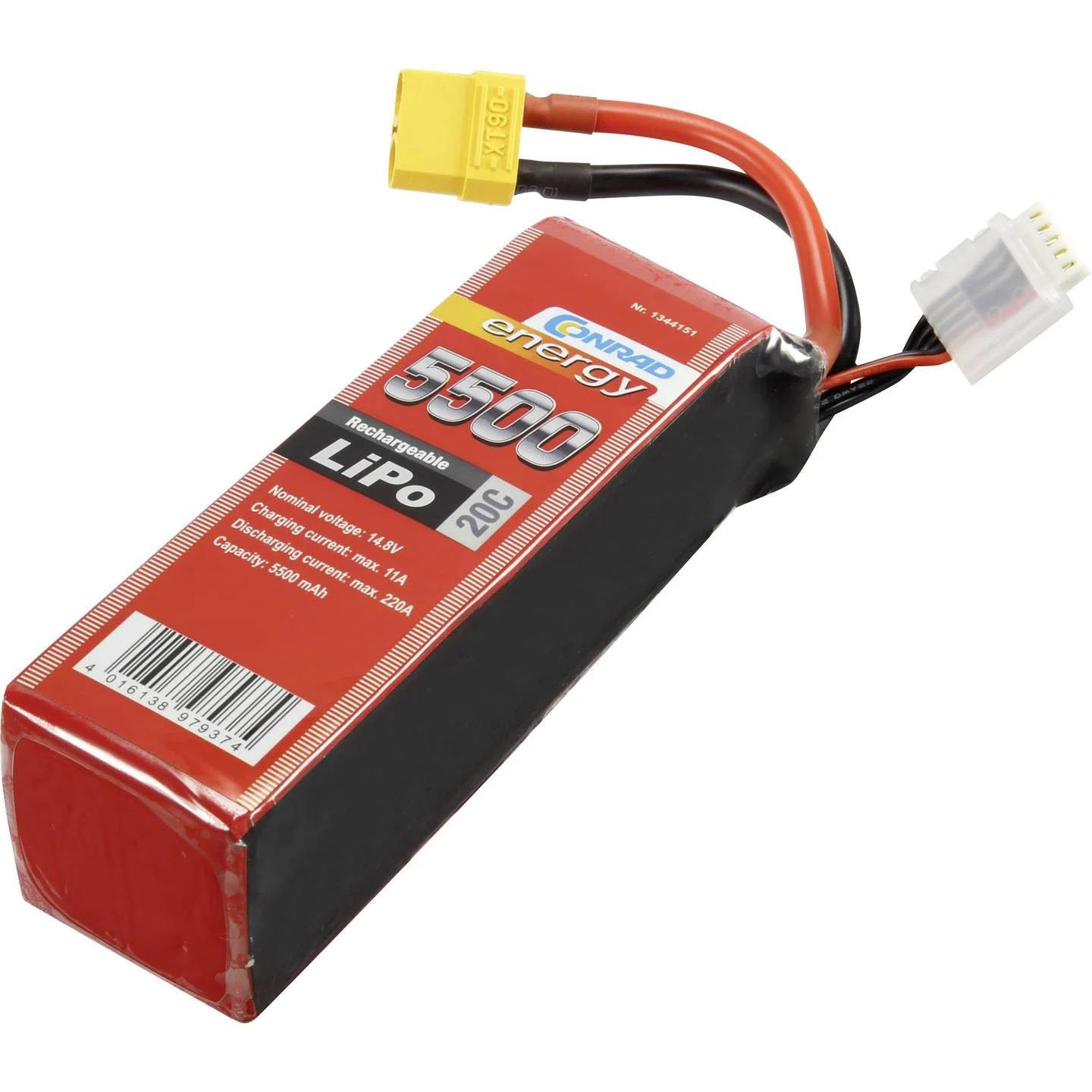

Image of 4S LiPo battery 16.8v
Cirkit Designer LogoDesign with 4S LiPo battery 16.8v in Cirkit Designer

Introduction

The 4S LiPo (Lithium Polymer) battery is a high-performance power source with a nominal voltage of 16.8 volts. It consists of four cells connected in series, each with a nominal voltage of 4.2V. This type of battery is widely used in applications requiring high energy density and discharge rates, such as drones, RC vehicles, and other high-power electronic devices.

Explore Projects Built with 4S LiPo battery 16.8v
Use Cirkit Designer to design, explore, and prototype these projects online. Some projects support real-time simulation. Click "Open Project" to start designing instantly!
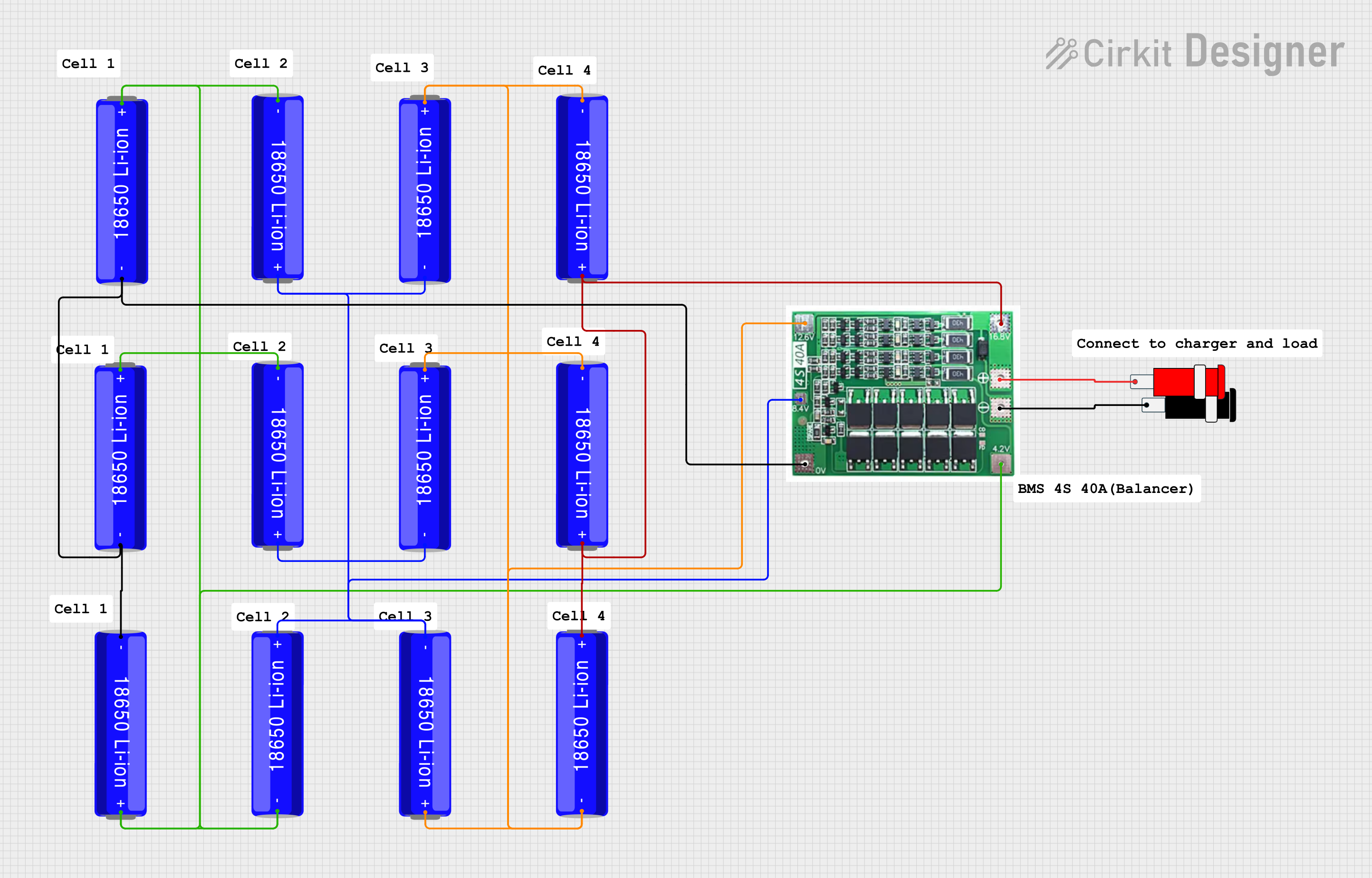
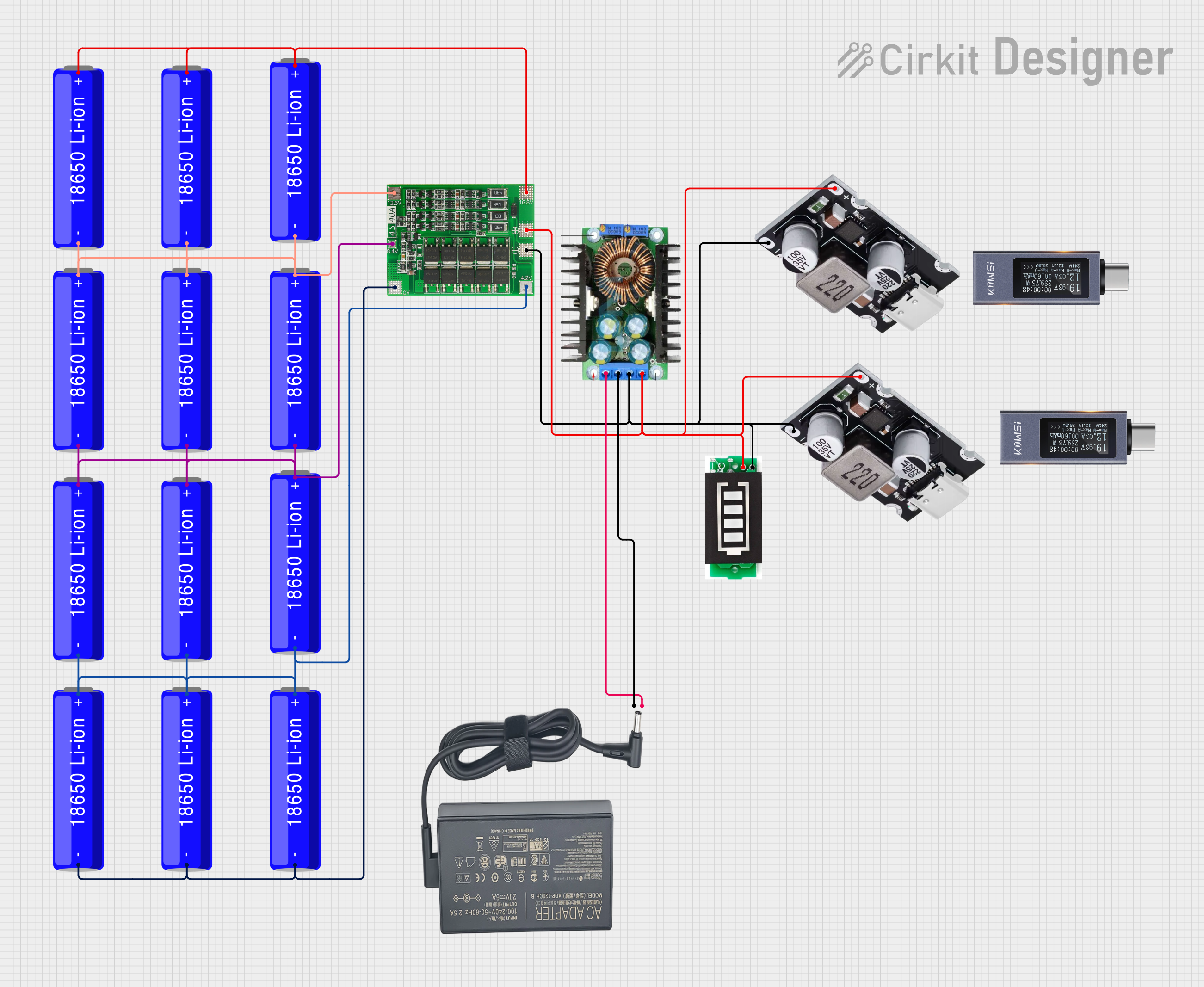
18650 Li-ion Battery Pack with 4S40A BMS and XL4016 Voltage Regulator for Battery-Powered Applications
Image of Power Bank: A project utilizing 4S LiPo battery 16.8v in a practical application
This circuit is a battery management and charging system for a 4S Li-ion battery pack. It includes multiple 18650 Li-ion batteries connected to a 4S40A BMS for balancing and protection, a battery indicator for monitoring charge status, and an XL4016 module for voltage regulation. The system is designed to be charged via a 20V input from a charger.
Cirkit Designer LogoOpen Project in Cirkit Designer
18650 Li-ion Battery Pack with BMS for 5V Power Supply
Image of battary: A project utilizing 4S LiPo battery 16.8v in a practical application
This circuit consists of a battery management system (BMS) connected to a series of 18650 Li-ion batteries arranged in a 4S configuration to provide a regulated output voltage. The BMS ensures safe charging and discharging of the batteries, while a connector provides a 5V output for external devices.
Cirkit Designer LogoOpen Project in Cirkit Designer
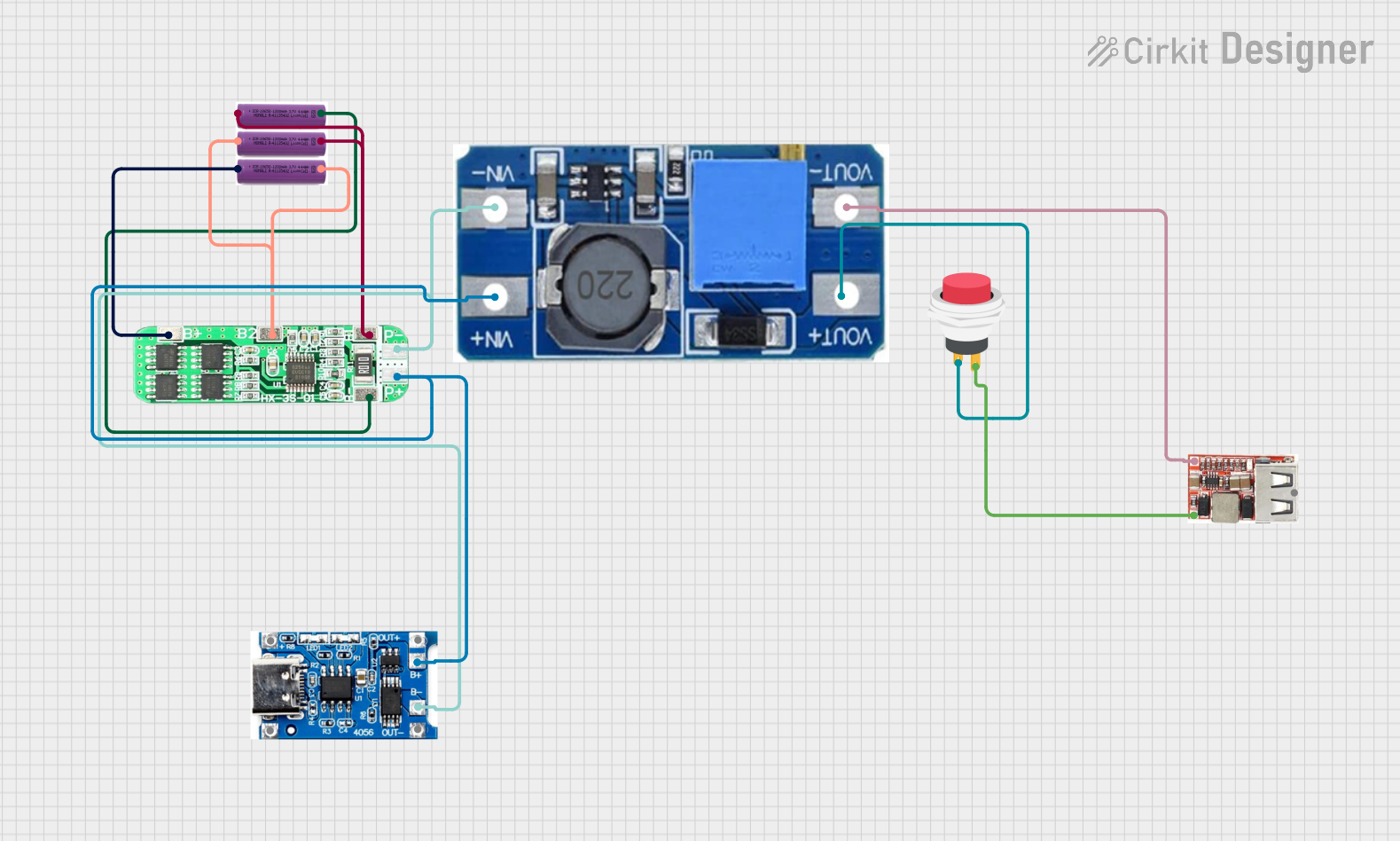
Battery-Powered 18650 Li-ion Charger with USB Output and Adjustable Voltage Regulator
Image of Breadboard: A project utilizing 4S LiPo battery 16.8v in a practical application
This circuit is a battery management and power supply system that uses three 3.7V batteries connected to a 3S 10A Li-ion 18650 Charger Protection Board Module for balanced charging and protection. The system includes a TP4056 Battery Charging Protection Module for additional charging safety, a Step Up Boost Power Converter to regulate and boost the voltage, and a USB regulator to provide a stable 5V output, controlled by a push switch.
Cirkit Designer LogoOpen Project in Cirkit Designer
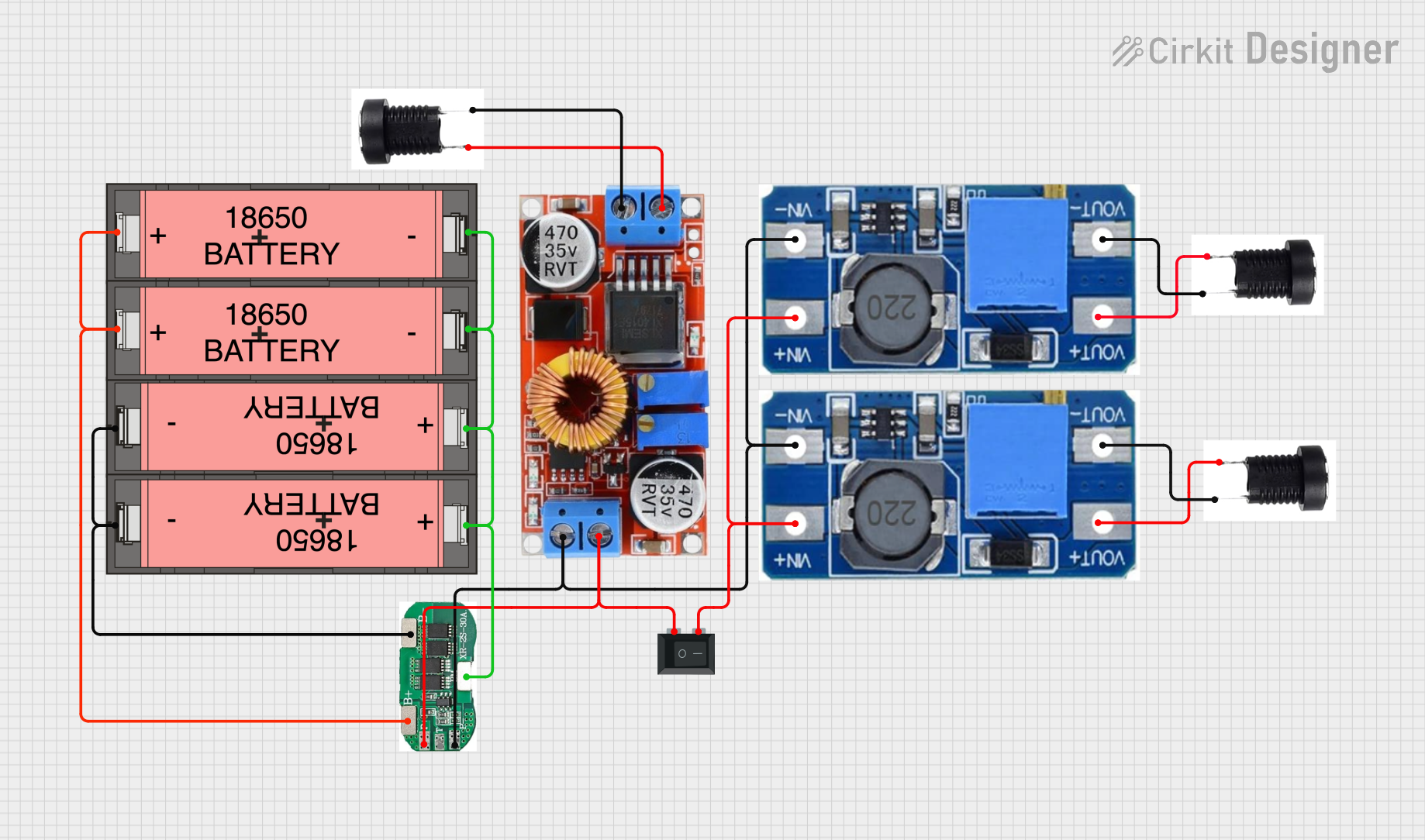
Battery-Powered Adjustable Voltage Regulator with Li-ion 18650 Batteries and BMS
Image of mini ups: A project utilizing 4S LiPo battery 16.8v in a practical application
This circuit is a power management system that uses four Li-ion 18650 batteries connected to a 2S 30A BMS for battery management and protection. The system includes step-up and step-down voltage regulators to provide adjustable output voltages, controlled by a rocker switch, and multiple DC jacks for power input and output.
Cirkit Designer LogoOpen Project in Cirkit Designer

Explore Projects Built with 4S LiPo battery 16.8v

Use Cirkit Designer to design, explore, and prototype these projects online. Some projects support real-time simulation. Click "Open Project" to start designing instantly!
Image of Power Bank: A project utilizing 4S LiPo battery 16.8v in a practical application
18650 Li-ion Battery Pack with 4S40A BMS and XL4016 Voltage Regulator for Battery-Powered Applications
This circuit is a battery management and charging system for a 4S Li-ion battery pack. It includes multiple 18650 Li-ion batteries connected to a 4S40A BMS for balancing and protection, a battery indicator for monitoring charge status, and an XL4016 module for voltage regulation. The system is designed to be charged via a 20V input from a charger.
Cirkit Designer LogoOpen Project in Cirkit Designer
Image of battary: A project utilizing 4S LiPo battery 16.8v in a practical application
18650 Li-ion Battery Pack with BMS for 5V Power Supply
This circuit consists of a battery management system (BMS) connected to a series of 18650 Li-ion batteries arranged in a 4S configuration to provide a regulated output voltage. The BMS ensures safe charging and discharging of the batteries, while a connector provides a 5V output for external devices.
Cirkit Designer LogoOpen Project in Cirkit Designer
Image of Breadboard: A project utilizing 4S LiPo battery 16.8v in a practical application
Battery-Powered 18650 Li-ion Charger with USB Output and Adjustable Voltage Regulator
This circuit is a battery management and power supply system that uses three 3.7V batteries connected to a 3S 10A Li-ion 18650 Charger Protection Board Module for balanced charging and protection. The system includes a TP4056 Battery Charging Protection Module for additional charging safety, a Step Up Boost Power Converter to regulate and boost the voltage, and a USB regulator to provide a stable 5V output, controlled by a push switch.
Cirkit Designer LogoOpen Project in Cirkit Designer
Image of mini ups: A project utilizing 4S LiPo battery 16.8v in a practical application
Battery-Powered Adjustable Voltage Regulator with Li-ion 18650 Batteries and BMS
This circuit is a power management system that uses four Li-ion 18650 batteries connected to a 2S 30A BMS for battery management and protection. The system includes step-up and step-down voltage regulators to provide adjustable output voltages, controlled by a rocker switch, and multiple DC jacks for power input and output.
Cirkit Designer LogoOpen Project in Cirkit Designer

Technical Specifications

Key Technical Details

Parameter Value
Nominal Voltage 16.8V
Cell Configuration 4S (4 cells in series)
Capacity Varies (e.g., 2200mAh, 5000mAh)
Maximum Discharge Rate Varies (e.g., 20C, 30C)
Maximum Charge Voltage 16.8V
Minimum Discharge Voltage 12.0V
Connector Type XT60, Deans, etc.
Balance Connector JST-XH

Pin Configuration and Descriptions

Main Power Connector (e.g., XT60)

Pin Description
1 Positive Terminal
2 Negative Terminal

Balance Connector (JST-XH)

Pin Description
1 Cell 1 Positive
2 Cell 1 Negative / Cell 2 Positive
3 Cell 2 Negative / Cell 3 Positive
4 Cell 3 Negative / Cell 4 Positive
5 Cell 4 Negative

Usage Instructions

How to Use the 4S LiPo Battery in a Circuit

  1. Connecting the Battery:

    • Connect the main power connector (e.g., XT60) to the power input of your device.
    • Ensure the polarity is correct: Positive to Positive, Negative to Negative.
    • Connect the balance connector (JST-XH) to a compatible balance charger for charging.
  2. Charging the Battery:

    • Use a LiPo-compatible balance charger.
    • Set the charger to 4S (16.8V) mode.
    • Set the charge current according to the battery's capacity (e.g., for a 2200mAh battery, set to 2.2A).
  3. Discharging the Battery:

    • Monitor the voltage to ensure it does not drop below 12.0V.
    • Use a LiPo alarm or voltage monitor for safety.

Important Considerations and Best Practices

  • Safety First: Always handle LiPo batteries with care. They can be dangerous if punctured, overcharged, or short-circuited.
  • Storage: Store the battery at a voltage of around 3.8V per cell (15.2V for a 4S) in a cool, dry place.
  • Balancing: Regularly balance charge the battery to ensure all cells are at the same voltage.
  • Temperature: Avoid charging or discharging the battery at extreme temperatures.

Troubleshooting and FAQs

Common Issues Users Might Face

  1. Battery Not Charging:

    • Solution: Check the charger settings and ensure it is set to 4S mode. Verify all connections are secure.
  2. Battery Swelling:

    • Solution: This indicates overcharging or over-discharging. Stop using the battery immediately and dispose of it safely.
  3. Uneven Cell Voltages:

    • Solution: Perform a balance charge to equalize the cell voltages.
  4. Shortened Flight Time (for drones):

    • Solution: Check for any damaged cells. Ensure the battery is fully charged and balanced.

FAQs

Q: Can I use a 4S LiPo battery with an Arduino UNO? A: Directly connecting a 4S LiPo battery to an Arduino UNO is not recommended due to the high voltage. Use a voltage regulator to step down the voltage to 5V or 7-12V for the Arduino's input.

Q: How do I safely dispose of a LiPo battery? A: Discharge the battery completely, then take it to a local battery recycling center.

Q: What is the maximum safe discharge rate? A: The maximum discharge rate is specified by the manufacturer (e.g., 20C, 30C). Exceeding this rate can damage the battery.

Q: How often should I balance charge my LiPo battery? A: It is recommended to balance charge the battery every time you charge it to maintain cell health and performance.

By following these guidelines and best practices, you can ensure the safe and efficient use of your 4S LiPo battery in various high-power applications.