
How to Use Hirose DF13 Series Header: Examples, Pinouts, and Specs
 Design with Hirose DF13 Series Header in Cirkit Designer
Introduction
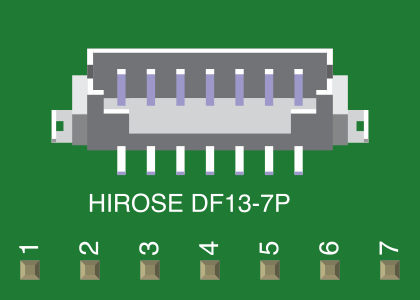
The Hirose DF13 Series Header (Manufacturer Part ID: DF13-7P-1.25V) is a compact, high-density connector designed for wire-to-board applications. It features a secure locking mechanism to ensure reliable connections and is available in various pin counts, making it suitable for a wide range of electronic designs. Its small form factor and robust design make it ideal for applications where space is limited but reliable connectivity is essential.
Explore Projects Built with Hirose DF13 Series Header
 Open Project in Cirkit Designer
 Open Project in Cirkit Designer
 Open Project in Cirkit Designer
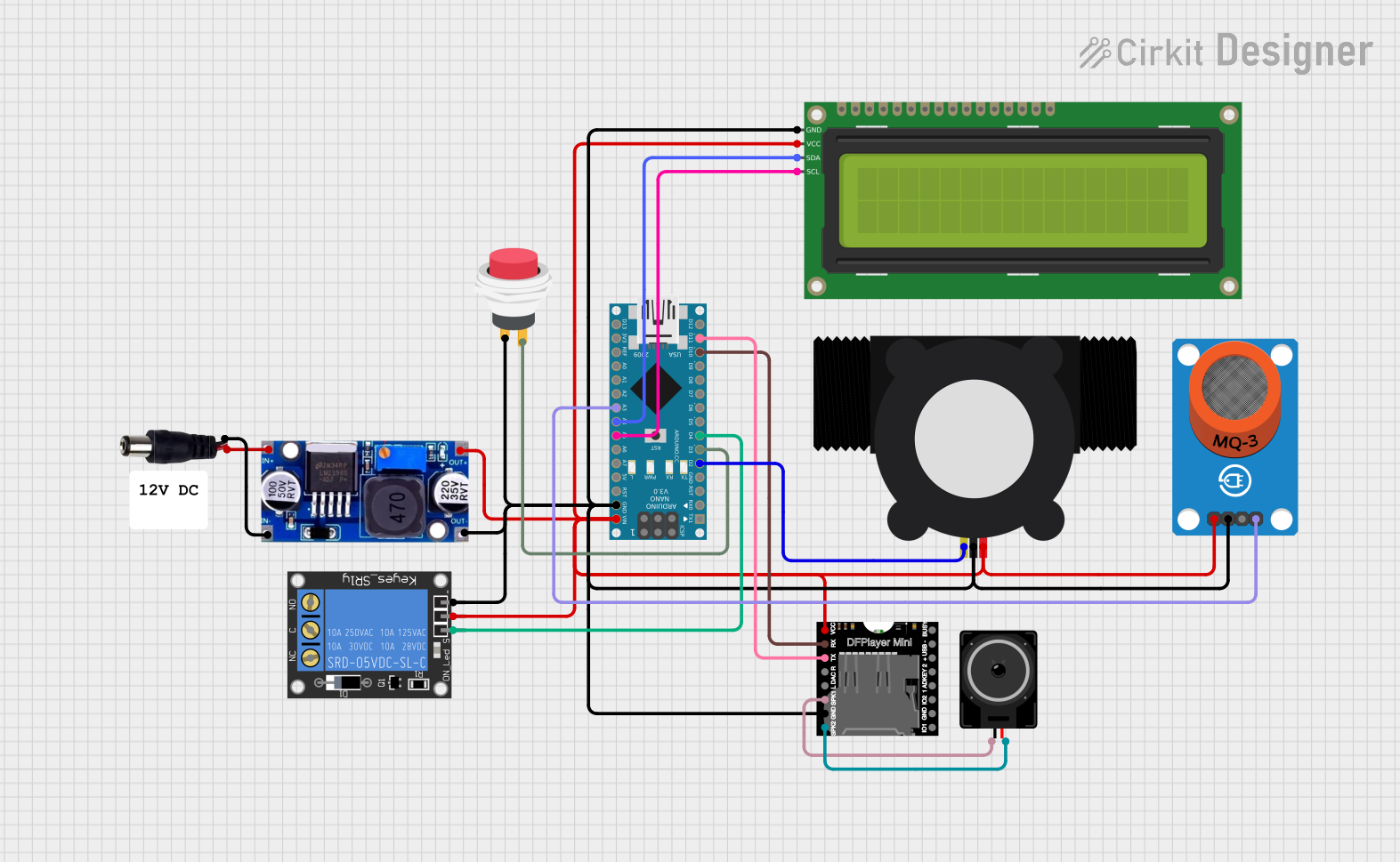 Open Project in Cirkit Designer
Explore Projects Built with Hirose DF13 Series Header
Open Project in Cirkit DesignerOpen Project in Cirkit DesignerOpen Project in Cirkit DesignerOpen Project in Cirkit DesignerCommon Applications
- Consumer electronics (e.g., cameras, handheld devices)
- Industrial equipment
- Robotics and automation systems
- Medical devices
- Communication equipment
Technical Specifications
Key Technical Details
| Parameter | Specification |
|---|---|
| Manufacturer | Hirose |
| Series | DF13 |
| Part Number | DF13-7P-1.25V |
| Connector Type | Wire-to-Board |
| Number of Positions | 7 |
| Pitch | 1.25 mm |
| Mounting Type | Surface Mount (SMT) |
| Current Rating | 1 A per pin |
| Voltage Rating | 100 V AC/DC |
| Operating Temperature Range | -35°C to +85°C |
| Locking Mechanism | Friction lock |
| Contact Material | Phosphor bronze |
| Contact Plating | Tin |
| Housing Material | Polyamide (UL94V-0 flame retardant) |
Pin Configuration and Descriptions
The DF13-7P-1.25V has 7 pins arranged in a single row with a 1.25 mm pitch. Below is the pin configuration:
| Pin Number | Description | Notes |
|---|---|---|
| 1 | Signal/Power Line 1 | Can be used for signal or power |
| 2 | Signal/Power Line 2 | |
| 3 | Signal/Power Line 3 | |
| 4 | Signal/Power Line 4 | |
| 5 | Signal/Power Line 5 | |
| 6 | Signal/Power Line 6 | |
| 7 | Signal/Power Line 7 |
Usage Instructions
How to Use the DF13-7P-1.25V in a Circuit
- PCB Design:
- Ensure the PCB footprint matches the 1.25 mm pitch of the DF13-7P-1.25V.
- Use the recommended pad layout provided in the Hirose datasheet for optimal soldering.
- Soldering:
- Use a reflow soldering process for surface-mount installation.
- Ensure the soldering temperature does not exceed the component's thermal limits.
- Mating:
- Pair the DF13-7P-1.25V header with a compatible DF13 series receptacle.
- Align the connectors carefully to avoid bending or damaging the pins.
- Wiring:
- Use appropriate wire gauges (e.g., AWG 28–30) for the current rating.
- Crimp the wires securely to the mating receptacle to ensure a reliable connection.
Important Considerations and Best Practices
- Avoid exceeding the voltage and current ratings to prevent damage to the connector.
- Ensure proper alignment during mating to avoid pin misalignment or damage.
- Use strain relief mechanisms for wires to reduce mechanical stress on the connector.
- Store the connectors in a dry environment to prevent oxidation of the contacts.
Example: Connecting to an Arduino UNO
The DF13-7P-1.25V can be used to connect sensors or modules to an Arduino UNO. Below is an example of wiring a sensor with a DF13 connector to an Arduino UNO:
Circuit Diagram
- Pin 1: VCC (5V from Arduino)
- Pin 2: GND (Ground)
- Pin 3: Signal (Connect to Arduino digital pin 2)
Arduino Code Example
// Example code for reading a digital signal from a sensor connected via DF13 connector

const int sensorPin = 2; // Pin connected to the sensor's signal line
int sensorValue = 0;     // Variable to store the sensor's state

void setup() {
  pinMode(sensorPin, INPUT); // Set the sensor pin as an input
  Serial.begin(9600);        // Initialize serial communication
}

void loop() {
  sensorValue = digitalRead(sensorPin); // Read the sensor's state
  Serial.print("Sensor Value: ");
  Serial.println(sensorValue);          // Print the sensor value to the serial monitor
  delay(500);                           // Wait for 500ms before the next reading
}
Troubleshooting and FAQs
Common Issues and Solutions
| Issue | Possible Cause | Solution |
|---|---|---|
| Loose connection | Improper mating of connectors | Ensure connectors are fully mated |
| Signal loss or noise | Oxidation on contacts | Clean contacts with isopropyl alcohol |
| Overheating of connector | Exceeding current rating | Reduce current or use multiple pins |
| Pins bent or damaged | Misalignment during mating | Align connectors carefully before use |
FAQs
Q1: Can the DF13-7P-1.25V handle high-frequency signals?
A1: Yes, the DF13 series is designed to handle high-frequency signals with minimal interference, making it suitable for data transmission applications.
Q2: What is the recommended wire gauge for this connector?
A2: The recommended wire gauge is AWG 28–30, which matches the current rating and ensures a secure crimp connection.
Q3: Can I use this connector in outdoor environments?
A3: The DF13 series is not specifically designed for outdoor use. If used outdoors, ensure proper sealing and protection against moisture and dust.
Q4: Is the DF13-7P-1.25V compatible with other Hirose series?
A4: The DF13-7P-1.25V is specifically designed for the DF13 series. Compatibility with other Hirose series depends on the pitch and mating design.
By following this documentation, users can effectively integrate the Hirose DF13-7P-1.25V into their electronic designs while ensuring reliable and long-lasting performance.