
How to Use Lipo 3300 mAh: Examples, Pinouts, and Specs
 Design with Lipo 3300 mAh in Cirkit Designer
Introduction
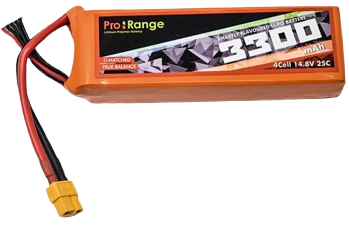
The Pro Range Lipo 3300 mAh is a high-performance lithium polymer (LiPo) battery designed for applications requiring lightweight, compact, and high-capacity power sources. With a capacity of 3300 milliamp hours (mAh), this battery is ideal for powering remote-controlled (RC) vehicles, drones, and portable electronic devices. Its high energy density and discharge capabilities make it a popular choice for demanding applications.
Explore Projects Built with Lipo 3300 mAh
 Open Project in Cirkit Designer
 Open Project in Cirkit Designer
 Open Project in Cirkit Designer
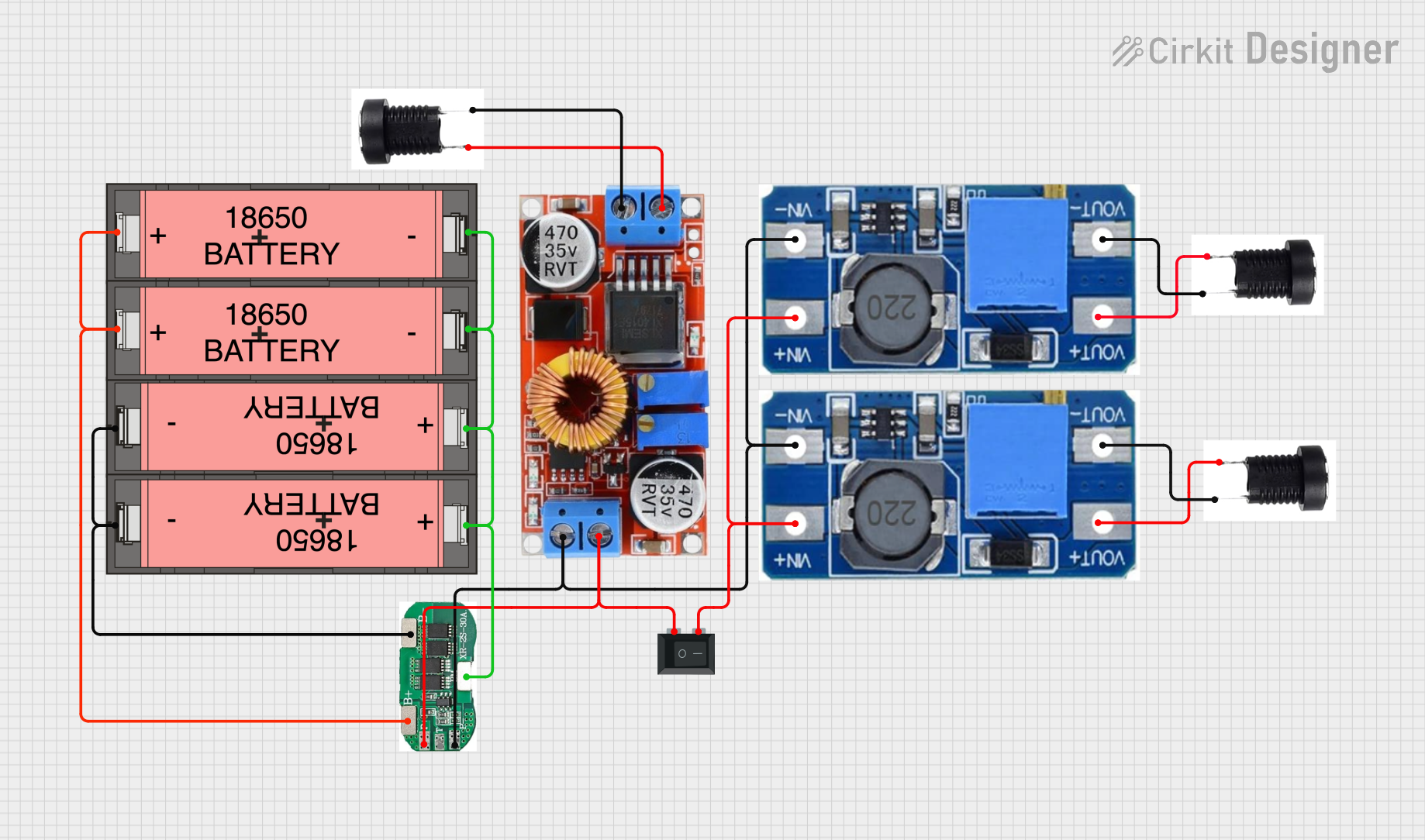 Open Project in Cirkit Designer
Explore Projects Built with Lipo 3300 mAh
Open Project in Cirkit DesignerOpen Project in Cirkit DesignerOpen Project in Cirkit DesignerOpen Project in Cirkit DesignerCommon Applications
- RC vehicles (cars, boats, planes)
- Drones and quadcopters
- Portable electronics (e.g., handheld devices, DIY projects)
- Robotics and automation systems
- Backup power for small devices
Technical Specifications
The following table outlines the key technical specifications of the Pro Range Lipo 3300 mAh battery:
| Parameter | Value |
|---|---|
| Manufacturer | Pro Range |
| Part ID | lipo |
| Battery Type | Lithium Polymer (LiPo) |
| Capacity | 3300 mAh |
| Nominal Voltage | 11.1V (3S configuration) |
| Maximum Discharge Rate | 30C |
| Maximum Charge Rate | 5C |
| Dimensions | 105mm x 35mm x 25mm |
| Weight | 210g |
| Connector Type | XT60 (standard) |
| Balancing Connector | JST-XH |
| Operating Temperature | -20°C to 60°C |
| Storage Temperature | -10°C to 45°C |
Pin Configuration
The Pro Range Lipo 3300 mAh battery includes two connectors: a power connector and a balancing connector. The pin configuration for the balancing connector (JST-XH) is as follows:
| Pin Number | Description |
|---|---|
| 1 | Cell 1 Positive (+) |
| 2 | Cell 2 Positive (+) |
| 3 | Cell 3 Positive (+) |
| 4 | Battery Ground (-) |
Usage Instructions
How to Use the Lipo 3300 mAh in a Circuit
- Connect the Power Connector: Use the XT60 connector to connect the battery to your device or power distribution board. Ensure the polarity matches (yellow for positive, black for negative).
- Use a Balancing Charger: Always charge the battery using a LiPo-compatible balancing charger to ensure all cells are charged evenly.
- Monitor Voltage Levels: Avoid discharging the battery below 3.0V per cell (9.0V for a 3S battery) to prevent damage.
- Secure the Battery: Use straps or holders to secure the battery in place during operation, especially in RC vehicles or drones.
Important Considerations and Best Practices
- Charging: Use a charger with a maximum charge rate of 5C (16.5A for this battery). Set the charger to 11.1V (3S) mode.
- Storage: Store the battery at 50% charge (approximately 3.8V per cell) in a cool, dry place to prolong its lifespan.
- Safety: Never puncture, short-circuit, or expose the battery to fire or water. Always handle with care.
- Temperature Monitoring: Avoid using the battery if it becomes excessively hot during operation or charging.
Example: Using the Lipo 3300 mAh with an Arduino UNO
To power an Arduino UNO with the Lipo 3300 mAh battery, you can use a voltage regulator or a DC-DC step-down converter to step down the 11.1V to 5V. Below is an example circuit and code:
Circuit Setup
- Connect the XT60 connector to a DC-DC step-down converter.
- Set the output voltage of the converter to 5V.
- Connect the output of the converter to the Arduino UNO's 5V and GND pins.
Example Code
// Example code to read battery voltage using Arduino UNO
// Ensure a voltage divider is used to step down the battery voltage
// to a safe level for the Arduino's analog input (max 5V).

const int batteryPin = A0; // Analog pin connected to the voltage divider
const float voltageDividerRatio = 5.7; // Adjust based on your resistor values

void setup() {
  Serial.begin(9600); // Initialize serial communication
}

void loop() {
  int rawValue = analogRead(batteryPin); // Read the analog input
  float batteryVoltage = (rawValue / 1023.0) * 5.0 * voltageDividerRatio;

  // Print the battery voltage to the Serial Monitor
  Serial.print("Battery Voltage: ");
  Serial.print(batteryVoltage);
  Serial.println(" V");

  delay(1000); // Wait for 1 second before the next reading
}
Troubleshooting and FAQs
Common Issues and Solutions
Battery Not Charging
- Cause: Incorrect charger settings or damaged balancing connector.
- Solution: Verify the charger is set to 11.1V (3S) mode and check the balancing connector for damage.
Battery Swelling
- Cause: Overcharging, over-discharging, or physical damage.
- Solution: Stop using the battery immediately and dispose of it safely.
Device Shuts Down Prematurely
- Cause: Battery voltage dropped below the device's cutoff threshold.
- Solution: Recharge the battery and monitor voltage levels during use.
Battery Overheats
- Cause: Excessive current draw or charging at a rate higher than 5C.
- Solution: Ensure the load does not exceed the maximum discharge rate (30C) and use a charger with a suitable charge rate.
FAQs
Q: Can I use this battery for a 12V device?
A: Yes, but ensure the device can operate within the voltage range of 9.0V to 12.6V (the typical range for a 3S LiPo battery).
Q: How long will the battery last on a single charge?
A: The runtime depends on the load. For example, at a 10A load, the battery will last approximately 20 minutes (3300 mAh ÷ 10A = 0.33 hours).
Q: Can I connect multiple batteries in series or parallel?
A: Yes, but ensure proper balancing and use identical batteries to avoid mismatched performance.
Q: How do I safely dispose of a damaged battery?
A: Discharge the battery completely, submerge it in saltwater for 24 hours, and take it to a local recycling center that accepts LiPo batteries.