
How to Use Battery Holders: Examples, Pinouts, and Specs

 Design with Battery Holders in Cirkit Designer
Introduction
Battery holders are devices used to securely hold batteries in place within a circuit, ensuring proper electrical contact and easy replacement. They are designed to accommodate various battery sizes, such as AA, AAA, 9V, or coin cells, and are available in different configurations, including single-cell and multi-cell holders. Battery holders are essential for portable electronic devices, DIY projects, and prototyping, as they provide a reliable and reusable power source connection.
Explore Projects Built with Battery Holders
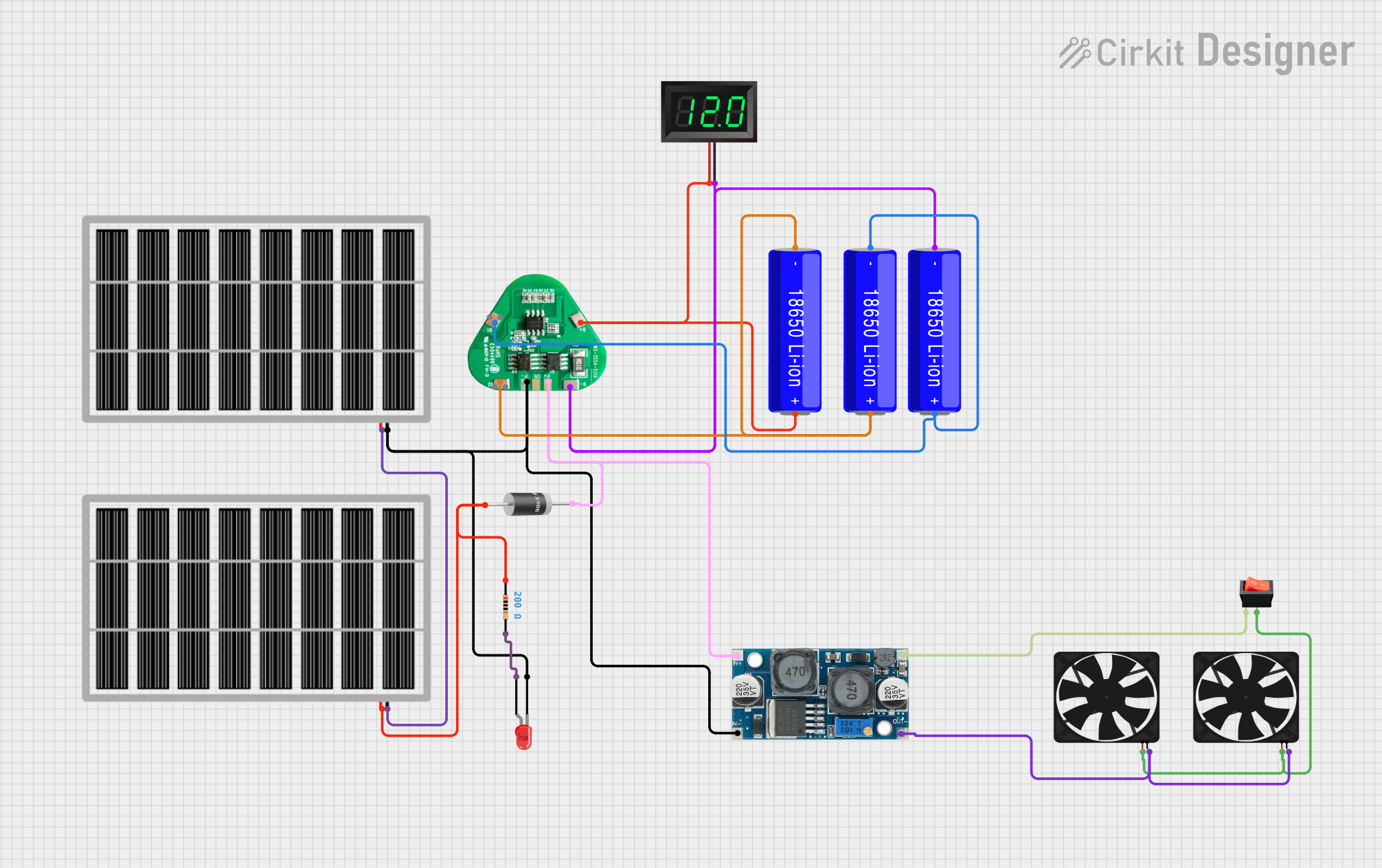 Open Project in Cirkit Designer
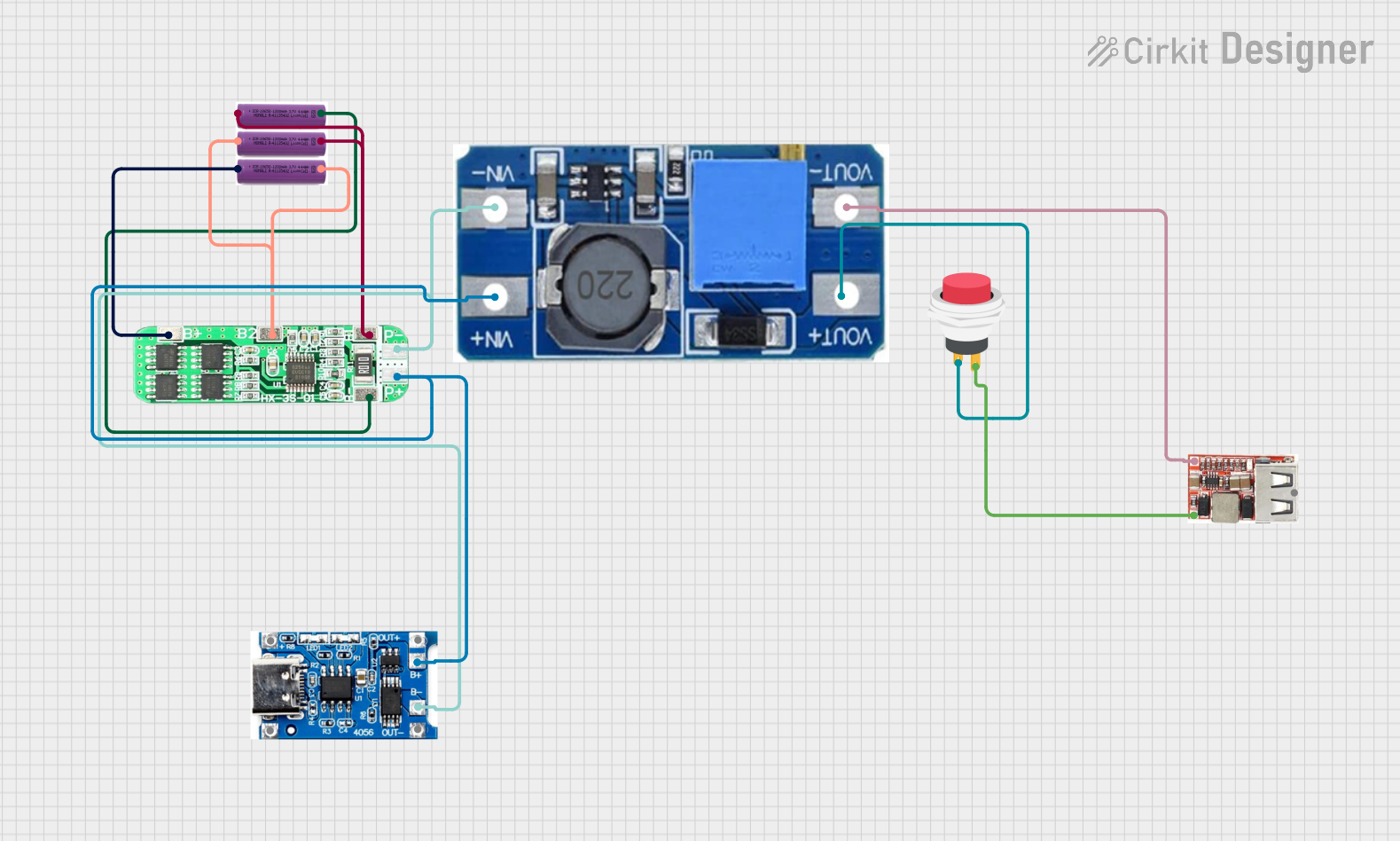 Open Project in Cirkit Designer
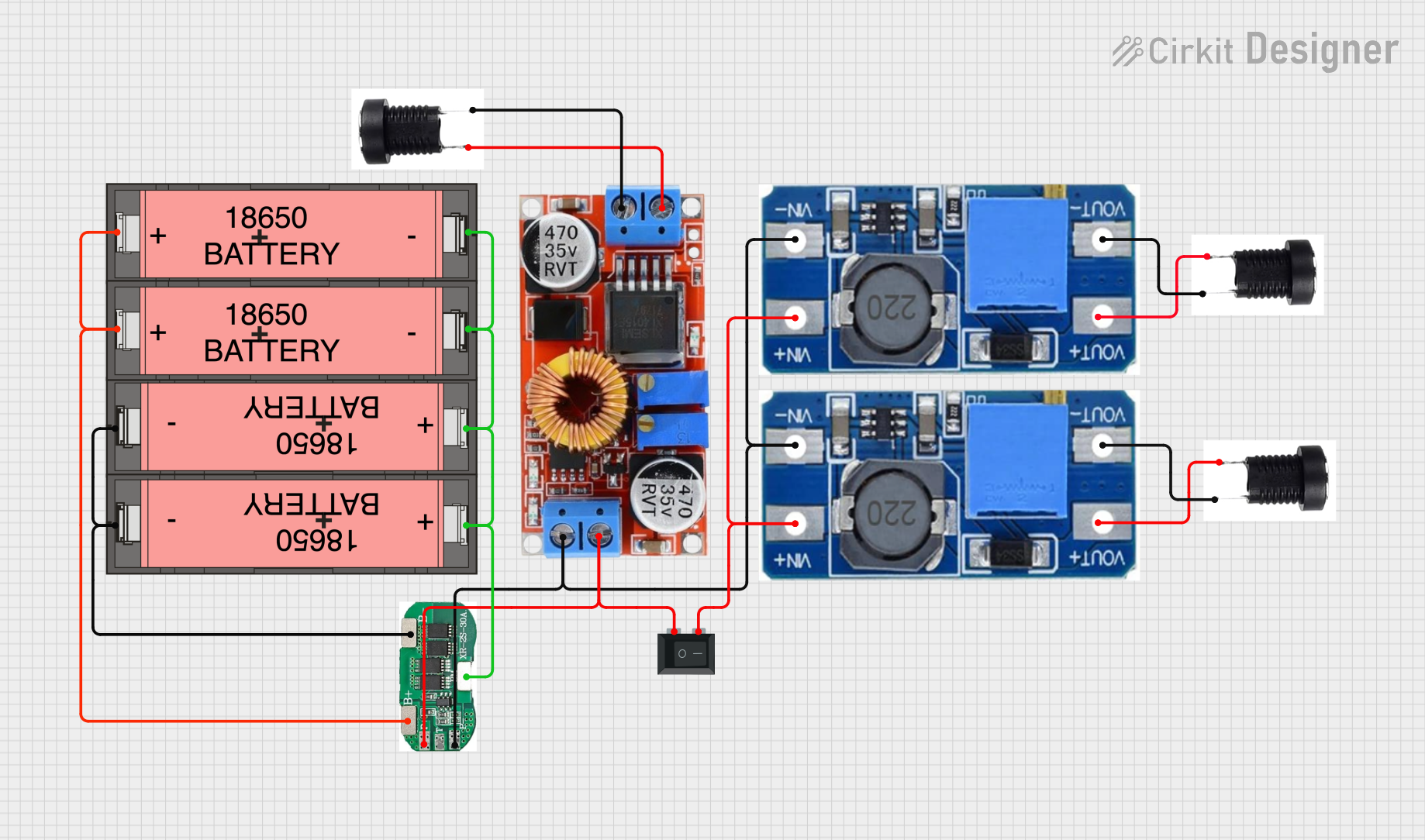 Open Project in Cirkit Designer
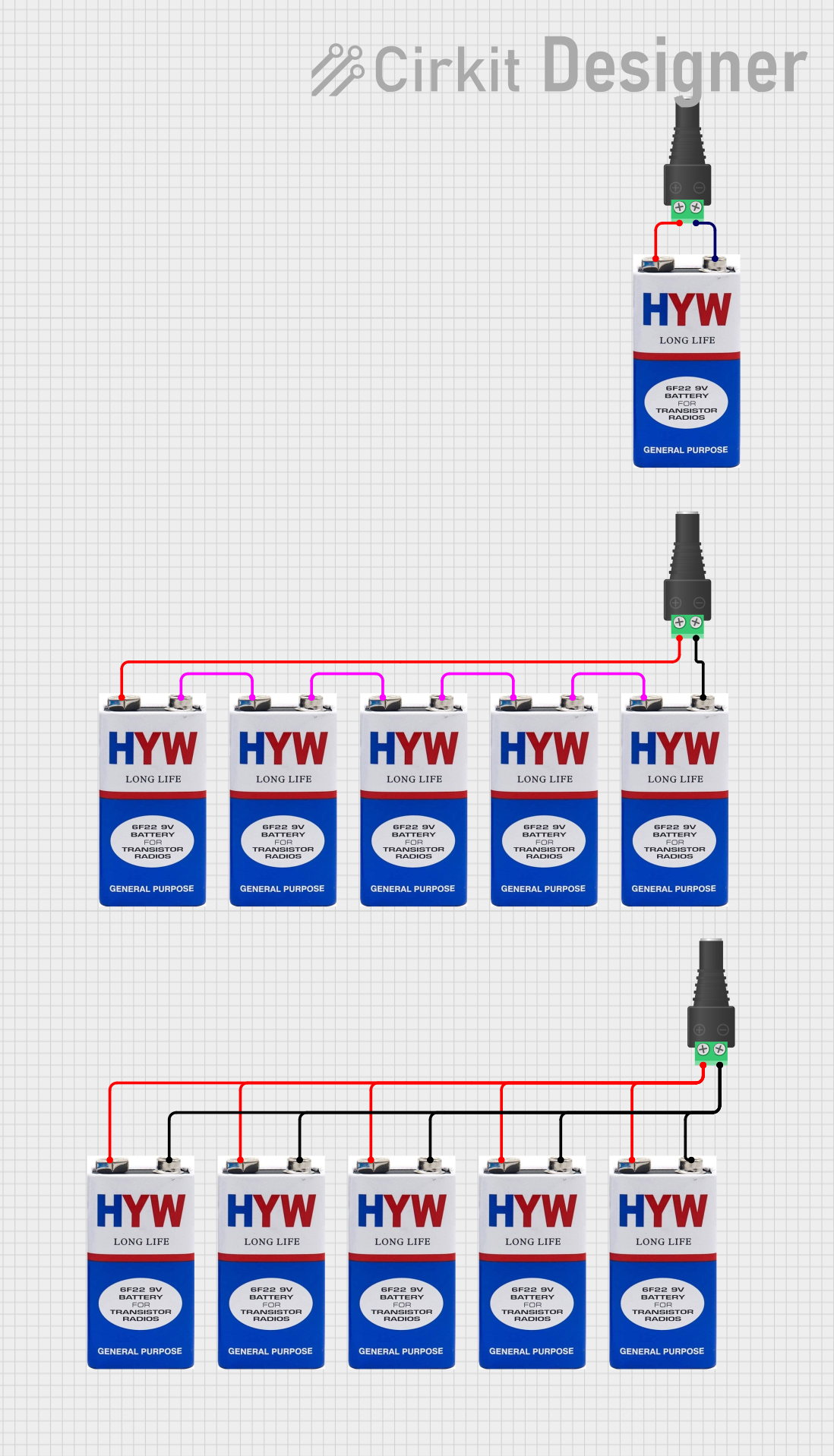 Open Project in Cirkit Designer
Explore Projects Built with Battery Holders
Open Project in Cirkit DesignerOpen Project in Cirkit DesignerOpen Project in Cirkit DesignerOpen Project in Cirkit DesignerCommon Applications and Use Cases
- Portable electronic devices (e.g., flashlights, remote controls)
- DIY electronics and prototyping
- Robotics and small motorized projects
- Educational kits and STEM projects
- Backup power systems
Technical Specifications
Key Technical Details
- Material: Typically made of plastic (ABS or polycarbonate) with metal contacts (nickel-plated or stainless steel).
- Voltage Rating: Depends on the number and type of batteries used (e.g., 1.5V per AA/AAA cell, 9V for 9V battery holders).
- Current Rating: Varies based on the battery type and holder design, typically up to 2-3A for standard holders.
- Mounting Options: Panel mount, PCB mount, or free-standing with wires/leads.
- Battery Sizes Supported: AA, AAA, C, D, 9V, coin cells (CR2032, CR2025, etc.).
Pin Configuration and Descriptions
Battery holders may have different connection types depending on their design. Below is a table for common configurations:
Table 1: Wire Lead Battery Holders
| Pin/Lead | Description |
|---|---|
| Red Wire | Positive terminal (+) |
| Black Wire | Negative terminal (-) |
Table 2: PCB Mount Battery Holders
| Pin | Description |
|---|---|
| Pin 1 | Positive terminal (+) |
| Pin 2 | Negative terminal (-) |
Table 3: Snap Connector for 9V Battery Holders
| Pin | Description |
|---|---|
| Snap Terminal 1 | Positive terminal (+) |
| Snap Terminal 2 | Negative terminal (-) |
Usage Instructions
How to Use the Component in a Circuit
- Select the Appropriate Holder: Choose a battery holder that matches the size and number of batteries required for your circuit.
- Insert Batteries: Place the batteries into the holder, ensuring correct polarity (match the "+" and "-" markings on the holder).
- Connect to Circuit:
- For wire lead holders, connect the red wire to the positive power rail and the black wire to the ground.
- For PCB mount holders, solder the pins to the appropriate pads on the PCB.
- For snap connectors, attach the terminals to the corresponding 9V battery terminals.
- Secure the Holder: If necessary, use screws, adhesive, or clips to secure the holder to your project enclosure.
Important Considerations and Best Practices
- Polarity: Always double-check the polarity of the batteries and connections to avoid damage to your circuit.
- Current Rating: Ensure the battery holder can handle the current draw of your circuit.
- Mounting: Secure the holder properly to prevent loose connections or accidental dislodging of batteries.
- Battery Type: Use the correct battery chemistry (e.g., alkaline, NiMH, lithium) as per your circuit's requirements.
- Avoid Short Circuits: Ensure no exposed wires or terminals can accidentally short.
Example: Using a Battery Holder with Arduino UNO
Below is an example of connecting a 4xAA battery holder to power an Arduino UNO:
Circuit Connection
- Connect the red wire (positive) of the battery holder to the VIN pin of the Arduino.
- Connect the black wire (negative) of the battery holder to the GND pin of the Arduino.
Sample Code
// Example code to blink an LED using an Arduino powered by a battery holder
// Ensure the battery holder provides sufficient voltage (e.g., 6V from 4xAA batteries).

const int ledPin = 13; // Pin connected to the onboard LED

void setup() {
  pinMode(ledPin, OUTPUT); // Set the LED pin as an output
}

void loop() {
  digitalWrite(ledPin, HIGH); // Turn the LED on
  delay(1000);               // Wait for 1 second
  digitalWrite(ledPin, LOW);  // Turn the LED off
  delay(1000);               // Wait for 1 second
}
Troubleshooting and FAQs
Common Issues Users Might Face
Loose Connections:
- Problem: The battery holder wires or terminals are not making proper contact.
- Solution: Check the connections and ensure wires are securely soldered or attached.
Incorrect Polarity:
- Problem: Batteries are inserted incorrectly, or wires are connected in reverse.
- Solution: Verify the polarity of the batteries and connections.
Overheating:
- Problem: The battery holder or wires become hot during operation.
- Solution: Ensure the current draw of the circuit does not exceed the holder's rating.
Battery Drain:
- Problem: Batteries discharge quickly.
- Solution: Check for short circuits or excessive current draw in the circuit.
Solutions and Tips for Troubleshooting
- Use a multimeter to verify voltage and continuity in the circuit.
- Inspect the battery holder for physical damage or corrosion on the terminals.
- Replace batteries if they are old or depleted.
- For PCB mount holders, ensure solder joints are clean and secure.
By following these guidelines, you can effectively use battery holders in your electronic projects and ensure reliable performance.