
How to Use ESP32: Examples, Pinouts, and Specs
 Design with ESP32 in Cirkit Designer
Introduction
The ESP32, manufactured by ESP, is a low-cost, low-power system on a chip (SoC) that integrates Wi-Fi and Bluetooth capabilities. It is widely recognized for its versatility, making it a popular choice for Internet of Things (IoT) applications, smart devices, and embedded systems. The ESP32 is designed to deliver high performance while maintaining energy efficiency, making it suitable for battery-powered devices and real-time applications.
Explore Projects Built with ESP32
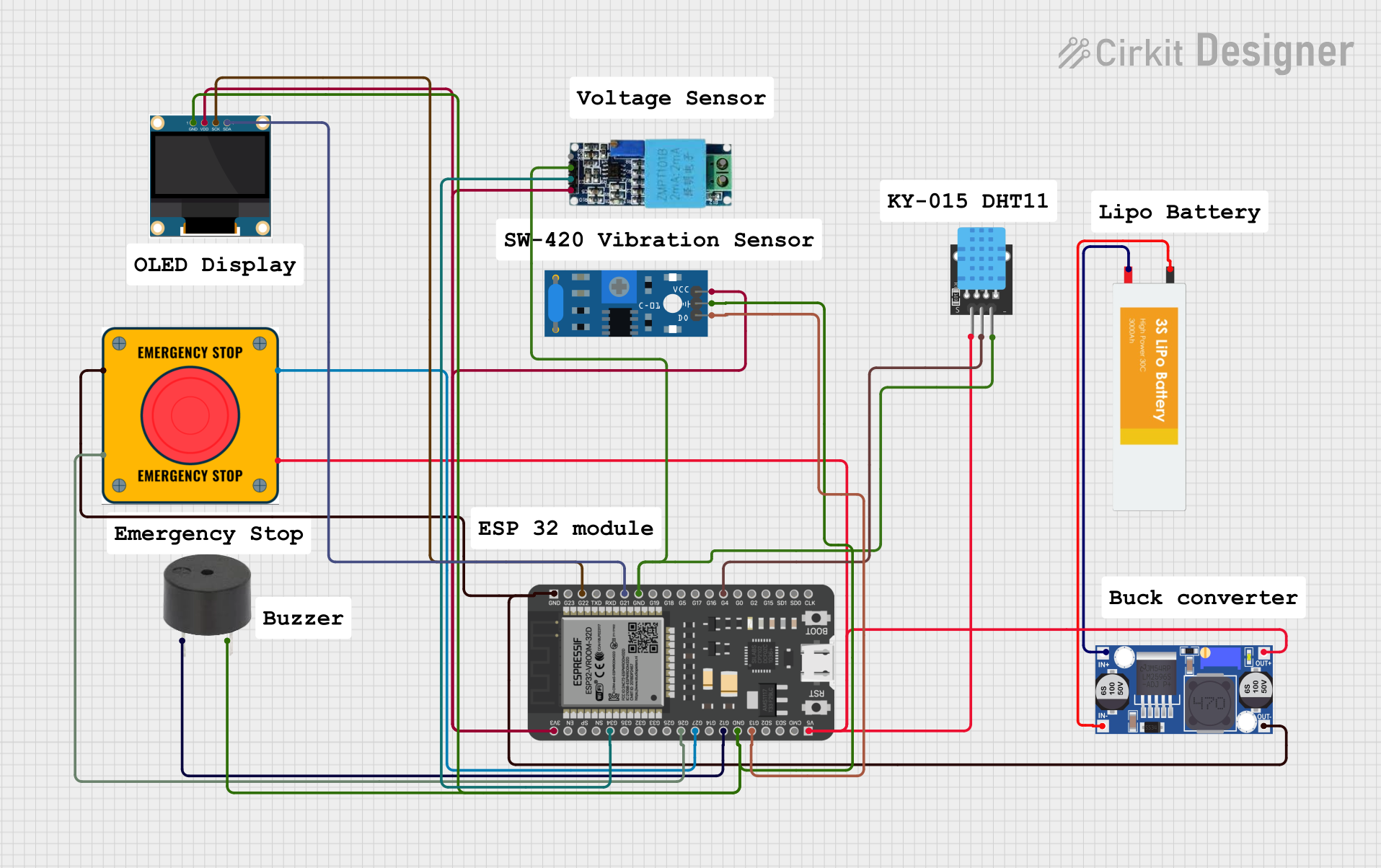 Open Project in Cirkit Designer
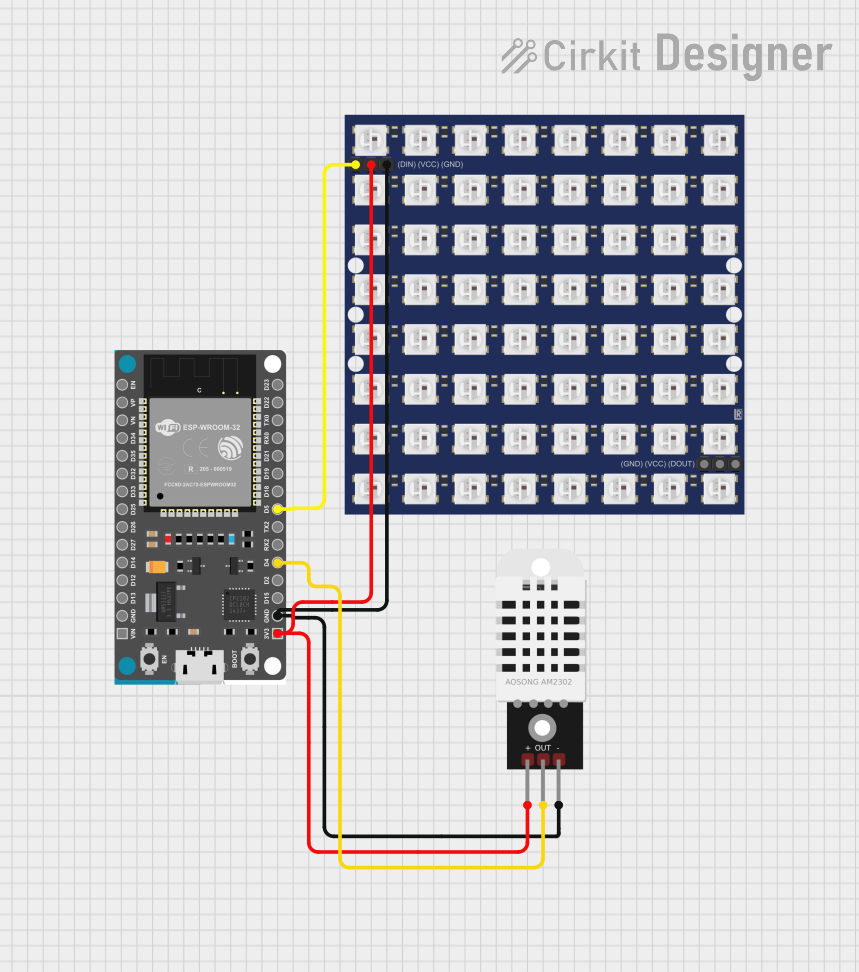 Open Project in Cirkit Designer
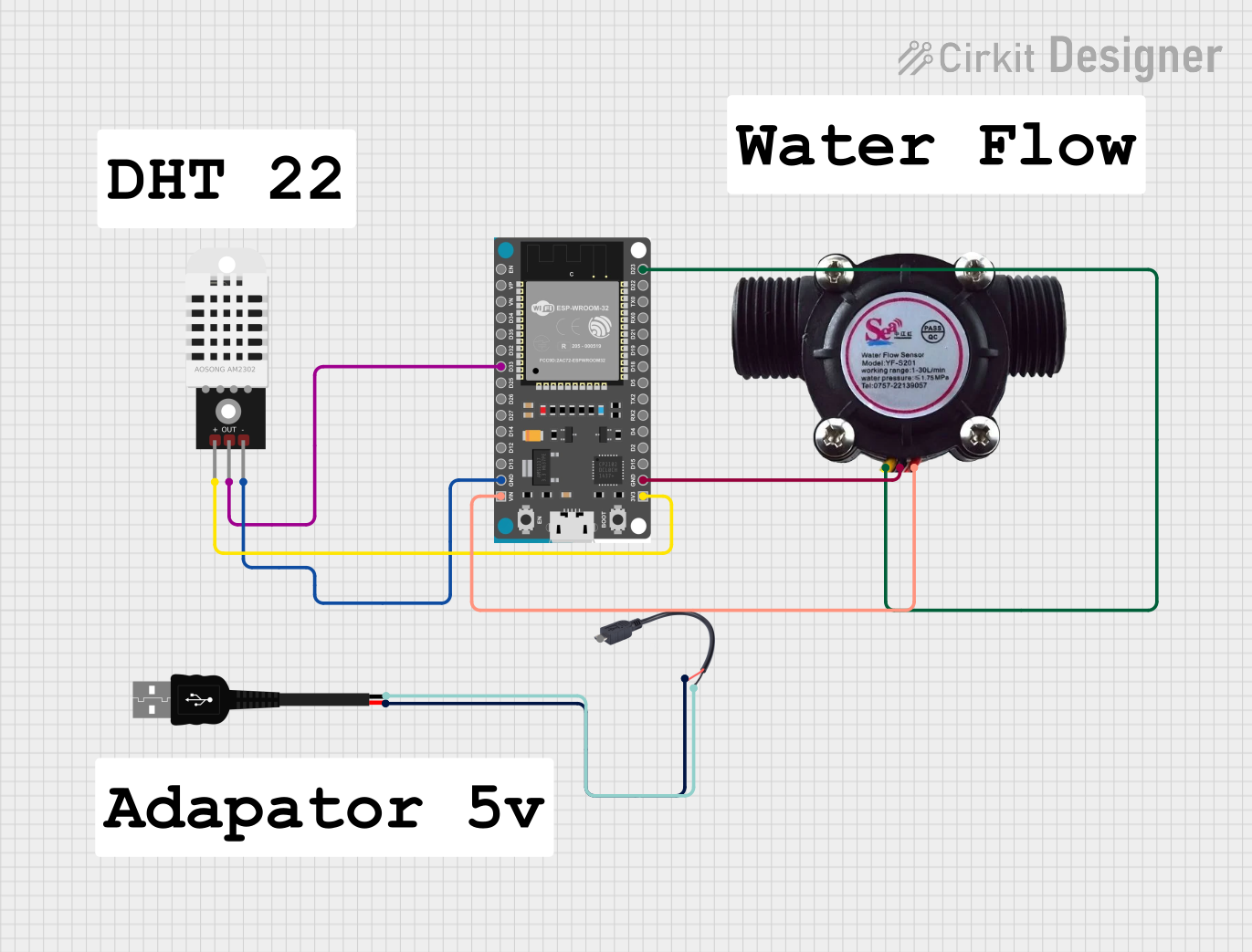 Open Project in Cirkit Designer
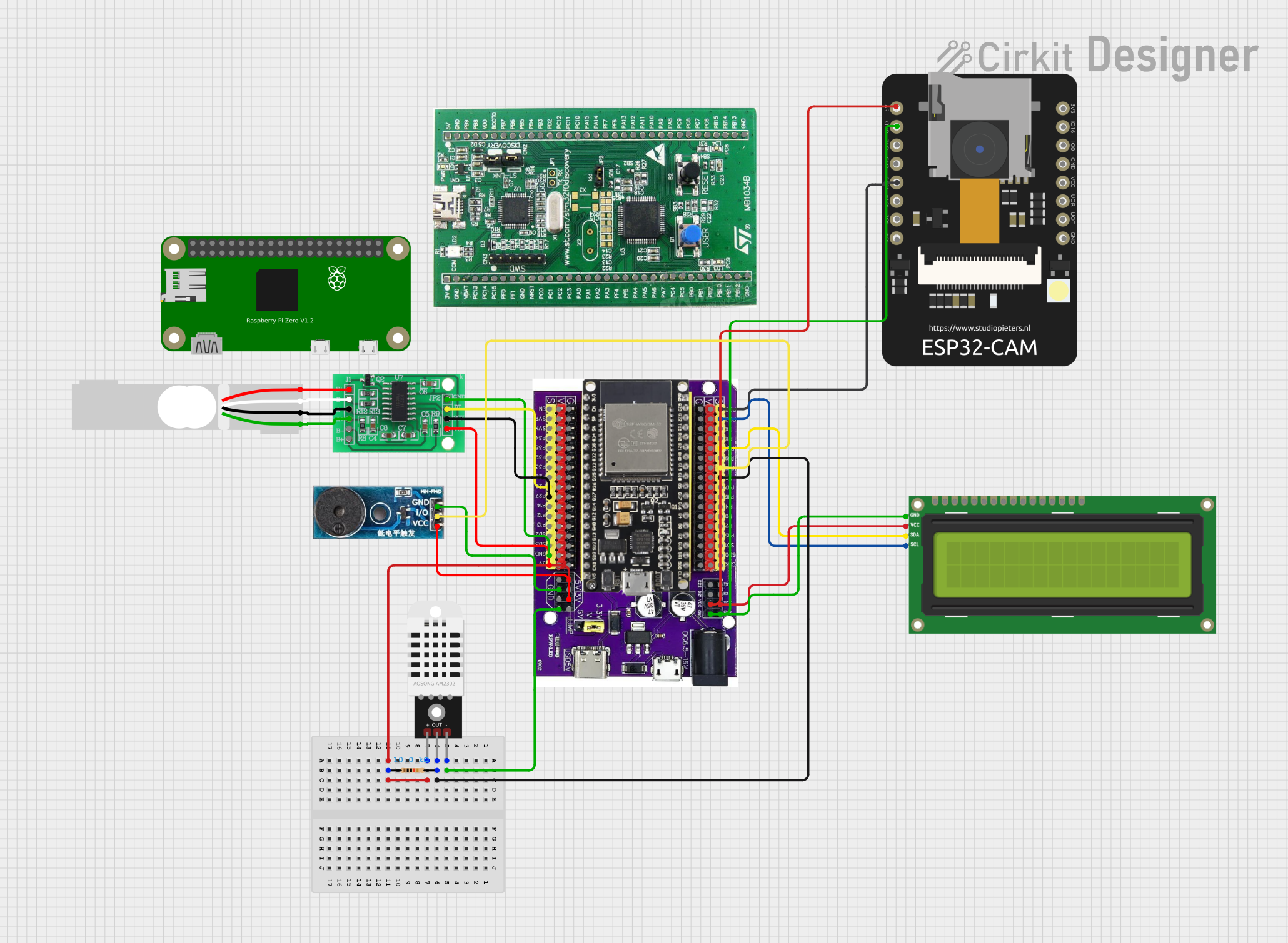 Open Project in Cirkit Designer
Explore Projects Built with ESP32
Open Project in Cirkit DesignerOpen Project in Cirkit DesignerOpen Project in Cirkit DesignerOpen Project in Cirkit DesignerCommon Applications and Use Cases
- IoT devices and smart home automation
- Wearable electronics
- Wireless sensor networks
- Robotics and drones
- Industrial automation
- Real-time data monitoring and logging
- Prototyping and development of connected devices
Technical Specifications
The ESP32 is a feature-rich SoC with the following key technical specifications:
| Parameter | Specification |
|---|---|
| Manufacturer | ESP |
| Part ID | ESP |
| Processor | Dual-core Xtensa® 32-bit LX6 microprocessor |
| Clock Speed | Up to 240 MHz |
| Flash Memory | 4 MB (varies by module) |
| SRAM | 520 KB |
| Wireless Connectivity | Wi-Fi 802.11 b/g/n, Bluetooth v4.2 + BLE |
| Operating Voltage | 3.0V to 3.6V |
| GPIO Pins | Up to 34 GPIO pins (multiplexed with other functions) |
| ADC Channels | 18 (12-bit resolution) |
| DAC Channels | 2 (8-bit resolution) |
| Communication Interfaces | UART, SPI, I2C, I2S, CAN, PWM |
| Power Consumption | Ultra-low power consumption in deep sleep mode (as low as 10 µA) |
| Operating Temperature | -40°C to +125°C |
Pin Configuration and Descriptions
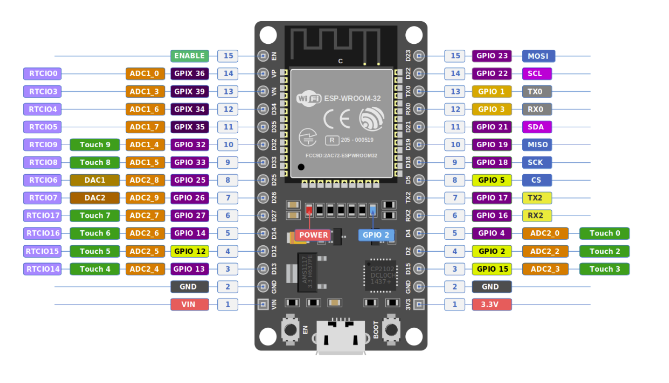
The ESP32 has a flexible pinout, with pins that can serve multiple functions. Below is a general pin configuration for the ESP32:
| Pin | Function | Description |
|---|---|---|
| GPIO0 | GPIO, Boot Mode Selection | General-purpose I/O, used for boot mode selection during startup. |
| GPIO2 | GPIO, ADC, DAC | General-purpose I/O, analog-to-digital conversion, or digital-to-analog output. |
| GPIO12 | GPIO, ADC, Touch Sensor | General-purpose I/O, analog input, or capacitive touch sensing. |
| GPIO13 | GPIO, ADC, PWM | General-purpose I/O, analog input, or pulse-width modulation output. |
| GPIO15 | GPIO, ADC, UART | General-purpose I/O, analog input, or UART communication. |
| EN | Enable | Chip enable pin. Pull high to enable the chip. |
| 3V3 | Power Supply | 3.3V power input. |
| GND | Ground | Ground connection. |
Note: The exact pinout may vary depending on the specific ESP32 module or development board being used.
Usage Instructions
How to Use the ESP32 in a Circuit
- Power Supply: Provide a stable 3.3V power supply to the
3V3pin and connect theGNDpin to ground. - Boot Mode: To upload code, ensure GPIO0 is pulled low during reset to enter bootloader mode.
- Programming: Use a USB-to-serial adapter or a development board with built-in USB connectivity to program the ESP32.
- Connections: Connect peripherals (e.g., sensors, actuators) to the GPIO pins. Use appropriate pull-up or pull-down resistors if required.
- Communication: Utilize UART, SPI, or I2C interfaces to communicate with other devices.
Important Considerations and Best Practices
- Voltage Levels: Ensure all connected devices operate at 3.3V logic levels to avoid damaging the ESP32.
- Power Supply: Use a decoupling capacitor (e.g., 10 µF) near the power pins to stabilize the power supply.
- Heat Management: If operating at high loads, consider adding a heatsink or ensuring proper ventilation.
- Deep Sleep Mode: Use deep sleep mode to conserve power in battery-operated applications.
- Firmware Updates: Regularly update the firmware to benefit from performance improvements and bug fixes.
Example: Connecting the ESP32 to an Arduino IDE
The ESP32 can be programmed using the Arduino IDE. Below is an example of how to blink an LED connected to GPIO2:
// Blink an LED connected to GPIO2 on the ESP32

// Define the GPIO pin for the LED
#define LED_PIN 2

void setup() {
  pinMode(LED_PIN, OUTPUT); // Set GPIO2 as an output pin
}

void loop() {
  digitalWrite(LED_PIN, HIGH); // Turn the LED on
  delay(1000);                 // Wait for 1 second
  digitalWrite(LED_PIN, LOW);  // Turn the LED off
  delay(1000);                 // Wait for 1 second
}
Tip: Install the ESP32 board package in the Arduino IDE before uploading the code. Go to
File > Preferences, add the ESP32 board URL to the Additional Board Manager URLs, and install the package via the Board Manager.
Troubleshooting and FAQs
Common Issues and Solutions
ESP32 Not Detected by Computer
- Ensure the correct USB driver is installed for your development board.
- Check the USB cable for damage or try a different cable.
Code Upload Fails
- Verify that GPIO0 is pulled low during reset to enter bootloader mode.
- Select the correct COM port and board type in the Arduino IDE.
Wi-Fi Connection Issues
- Double-check the SSID and password in your code.
- Ensure the router is within range and supports 2.4 GHz Wi-Fi (ESP32 does not support 5 GHz).
Random Resets or Instability
- Check the power supply for sufficient current (at least 500 mA recommended).
- Add decoupling capacitors to stabilize the power supply.
FAQs
Q: Can the ESP32 operate on 5V?
A: No, the ESP32 operates at 3.3V. Connecting 5V directly to its pins may damage the chip. Use a level shifter if interfacing with 5V devices.
Q: How many devices can the ESP32 connect to via Bluetooth?
A: The ESP32 supports up to 7 simultaneous Bluetooth connections in classic mode and multiple connections in BLE mode.
Q: Can I use the ESP32 for audio applications?
A: Yes, the ESP32 supports I2S for audio input/output and can be used for applications like streaming audio or voice recognition.
Q: What is the maximum range of the ESP32's Wi-Fi?
A: The range depends on environmental factors but typically extends up to 100 meters in open spaces.
By following this documentation, users can effectively integrate the ESP32 into their projects and troubleshoot common issues with ease.