
How to Use C14 Plug - Female: Examples, Pinouts, and Specs
 Design with C14 Plug - Female in Cirkit Designer
Introduction
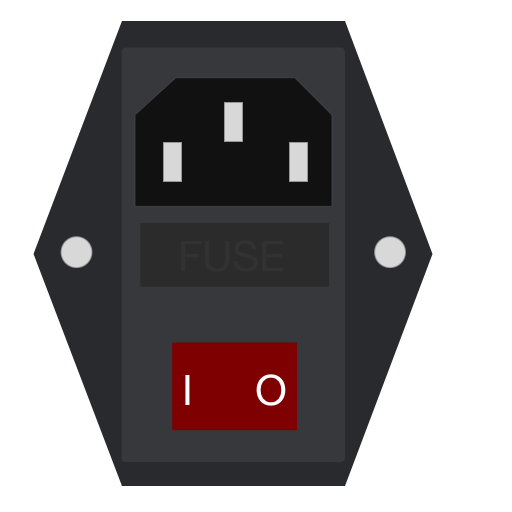
The C14 Female Plug is a standardized electrical connector commonly used in power supply applications. It is part of the IEC 60320 standard and is widely found in computer equipment, power supplies, and other electronic devices. The plug features a rectangular housing with three pins (live, neutral, and ground) and is designed to mate with a C13 male connector. Its robust design ensures secure and reliable power connections.
Explore Projects Built with C14 Plug - Female
 Open Project in Cirkit Designer
 Open Project in Cirkit Designer
 Open Project in Cirkit Designer
 Open Project in Cirkit Designer
Explore Projects Built with C14 Plug - Female
Open Project in Cirkit DesignerOpen Project in Cirkit DesignerOpen Project in Cirkit DesignerOpen Project in Cirkit DesignerCommon Applications and Use Cases
- Powering desktop computers, monitors, and servers
- Connecting power supplies for industrial and consumer electronics
- Used in uninterruptible power supplies (UPS) and power distribution units (PDUs)
- Suitable for test equipment and laboratory devices
Technical Specifications
The following table outlines the key technical details of the C14 Female Plug:
| Parameter | Specification |
|---|---|
| Manufacturer | Generic |
| Manufacturer Part ID | C14 Female |
| Standard Compliance | IEC 60320 |
| Rated Voltage | 250V AC |
| Rated Current | 10A or 15A (depending on model) |
| Operating Temperature | -25°C to +70°C |
| Housing Material | Thermoplastic (UL94 V-0 flame retardant) |
| Contact Material | Brass or Copper Alloy (Nickel-plated) |
| Mounting Style | Panel Mount |
| Dimensions | 34.5mm x 23.5mm x 29mm (approximate) |
Pin Configuration and Descriptions
The C14 Female Plug has three pins, as described in the table below:
| Pin Number | Name | Description |
|---|---|---|
| 1 | Live (L) | Connects to the live wire of the AC power source |
| 2 | Neutral (N) | Connects to the neutral wire of the AC power source |
| 3 | Ground (G) | Provides a safety ground connection |
Usage Instructions
How to Use the C14 Female Plug in a Circuit
Mounting the Plug:
- Secure the C14 Female Plug to a panel or enclosure using screws or clips. Ensure the mounting hole matches the plug's dimensions.
- Verify that the plug is firmly attached to prevent movement during operation.
Wiring the Plug:
- Strip the insulation from the wires of the power cord (live, neutral, and ground).
- Connect the wires to the corresponding terminals on the plug:
- Live wire to the Live (L) terminal.
- Neutral wire to the Neutral (N) terminal.
- Ground wire to the Ground (G) terminal.
- Tighten the terminal screws securely to ensure a reliable connection.
Testing the Connection:
- Use a multimeter to verify continuity between the plug's pins and the connected wires.
- Check for proper grounding to ensure safety.
Connecting to a C13 Male Plug:
- Insert the C13 male connector into the C14 female plug. Ensure a snug fit for a secure electrical connection.
Important Considerations and Best Practices
- Always disconnect the power source before wiring or handling the plug.
- Use wires with appropriate current and voltage ratings to prevent overheating or damage.
- Ensure proper grounding to avoid electrical hazards.
- Avoid exposing the plug to excessive moisture or extreme temperatures.
- For high-current applications, verify that the plug's current rating matches the load requirements.
Example: Using the C14 Female Plug with an Arduino UNO
While the C14 Female Plug is not directly connected to an Arduino UNO, it can be used to supply power to an external power supply that powers the Arduino. Below is an example of how to use the plug in such a setup:
- Connect the C14 Female Plug to an AC power source.
- Wire the plug to the input terminals of a 5V DC power supply.
- Use the 5V output from the power supply to power the Arduino UNO via its VIN and GND pins.
// Example Arduino code to blink an LED
// This assumes the Arduino is powered via a 5V DC power supply connected to the C14 plug.

const int ledPin = 13; // Pin connected to the onboard LED

void setup() {
  pinMode(ledPin, OUTPUT); // Set the LED pin as an output
}

void loop() {
  digitalWrite(ledPin, HIGH); // Turn the LED on
  delay(1000);               // Wait for 1 second
  digitalWrite(ledPin, LOW);  // Turn the LED off
  delay(1000);               // Wait for 1 second
}
Troubleshooting and FAQs
Common Issues and Solutions
| Issue | Possible Cause | Solution |
|---|---|---|
| No power output from the plug | Loose or incorrect wiring | Verify wiring connections and tighten screws. |
| Overheating of the plug | Exceeding current rating or poor connections | Ensure load does not exceed the plug's rating and check for secure connections. |
| Plug does not fit the C13 connector | Mismatched or damaged connectors | Ensure both connectors comply with IEC 60320 standards and inspect for damage. |
| Ground connection not working | Improper grounding or broken wire | Check the ground wire and ensure proper connection. |
FAQs
Can the C14 Female Plug handle 110V AC?
Yes, the plug is rated for up to 250V AC, so it can safely handle 110V AC.Is the C14 Female Plug waterproof?
No, the standard C14 Female Plug is not waterproof. Use it in dry environments or consider a waterproof variant for outdoor applications.Can I use the C14 Female Plug for DC power?
While it is designed for AC power, it can be used for DC applications if the voltage and current ratings are within the specified limits.What wire gauge should I use with the C14 Female Plug?
Use wires with a gauge suitable for the current rating of the plug (e.g., 16 AWG for 10A applications).
By following this documentation, users can safely and effectively integrate the C14 Female Plug into their projects and devices.