Introduction
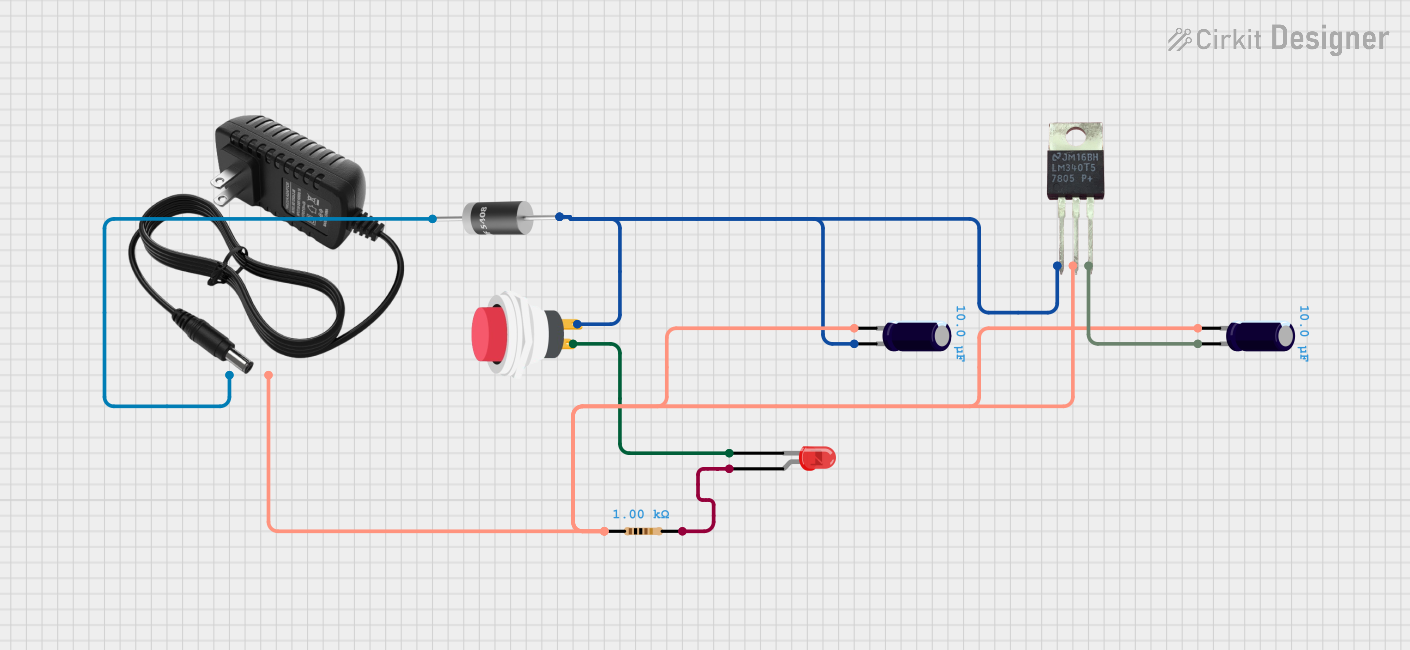
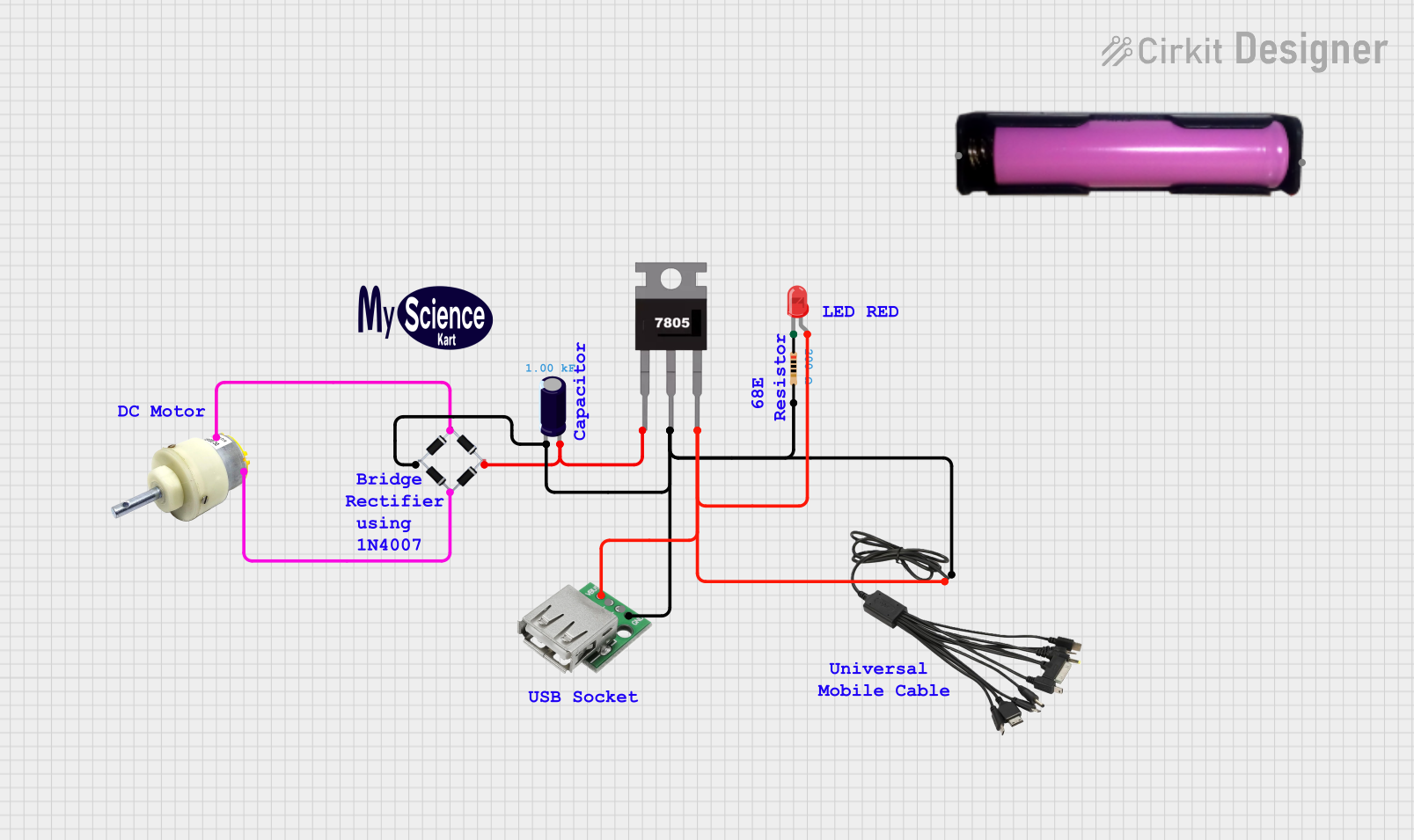
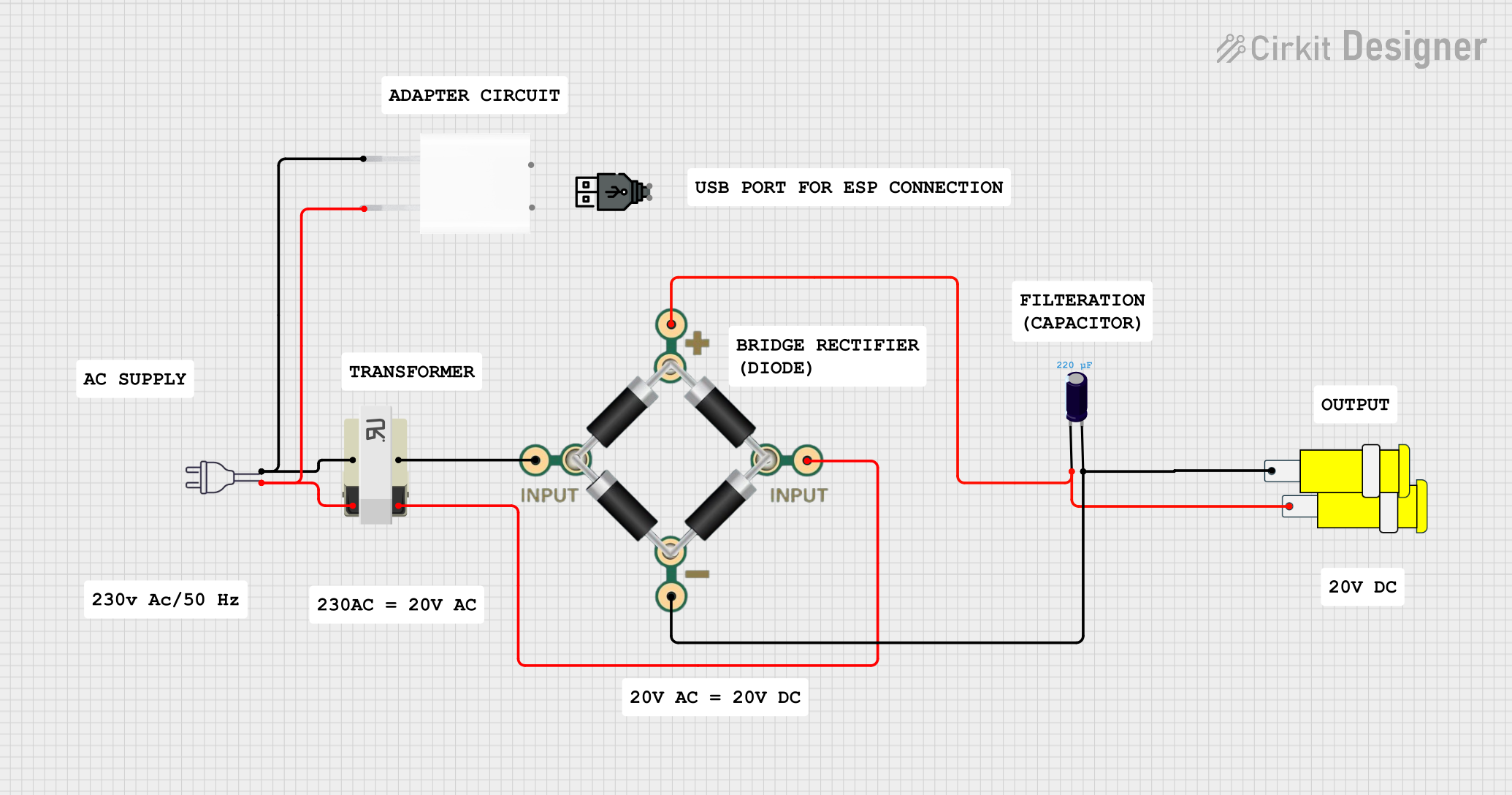
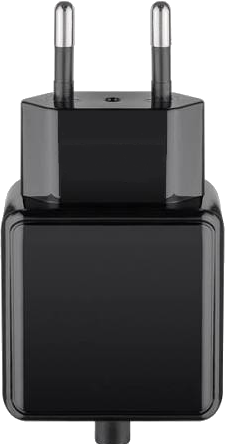
The Plug Power Supply 5V is a compact and reliable device designed to convert standard AC voltage from a wall outlet (typically 100-240V AC) into a stable 5V DC output. This component is widely used to power low-voltage electronic devices, microcontrollers, sensors, and other circuits requiring a regulated 5V power source. Its ease of use and universal compatibility make it an essential tool for hobbyists, engineers, and professionals alike.
Common Applications and Use Cases
- Powering microcontroller boards such as Arduino, Raspberry Pi, and ESP32.
- Supplying power to sensors, modules, and small electronic devices.
- Charging USB-powered devices like smartphones and tablets.
- Providing a stable 5V DC source for prototyping and testing circuits.
Technical Specifications
The following table outlines the key technical details of the Plug Power Supply 5V:
Pin Configuration and Descriptions
For models with a barrel jack connector, the pin configuration is as follows:
For USB-based models, the pinout follows the USB standard:
Usage Instructions
How to Use the Plug Power Supply 5V in a Circuit
- Verify Compatibility: Ensure the device or circuit you are powering operates at 5V DC and does not exceed the current rating of the power supply.
- Connect the Output:
- For barrel jack models, connect the center pin to the positive terminal of your circuit and the outer pin to ground.
- For USB models, plug the USB connector into the device or a USB breakout board.
- Plug into an AC Outlet: Insert the power supply into a standard wall outlet (100-240V AC).
- Power On: The connected device or circuit should now receive a stable 5V DC supply.
Important Considerations and Best Practices
- Check Polarity: For barrel jack models, ensure the polarity matches your circuit's requirements to avoid damage.
- Avoid Overloading: Do not connect devices that draw more current than the power supply's maximum rating.
- Use in a Ventilated Area: Ensure proper ventilation to prevent overheating during prolonged use.
- Test with a Multimeter: Before connecting to sensitive electronics, measure the output voltage with a multimeter to confirm it is within the expected range.
Example: Using with an Arduino UNO
The Plug Power Supply 5V can be used to power an Arduino UNO via its barrel jack or USB port. Below is an example of Arduino code to blink an LED when powered by the 5V supply:
// This code blinks an LED connected to pin 13 of the Arduino UNO.
// Ensure the Arduino is powered by the Plug Power Supply 5V.

void setup() {
  pinMode(13, OUTPUT); // Set pin 13 as an output pin
}

void loop() {
  digitalWrite(13, HIGH); // Turn the LED on
  delay(1000);            // Wait for 1 second
  digitalWrite(13, LOW);  // Turn the LED off
  delay(1000);            // Wait for 1 second
}
Troubleshooting and FAQs
Common Issues Users Might Face
No Output Voltage:
- Cause: The power supply may not be properly plugged into the wall outlet.
- Solution: Check the connection to the outlet and ensure the outlet is functional.
Device Not Powering On:
- Cause: The device may require more current than the power supply can provide.
- Solution: Verify the current requirements of the device and use a power supply with a higher current rating if needed.
Overheating:
- Cause: The power supply may be overloaded or used in a poorly ventilated area.
- Solution: Reduce the load or move the power supply to a well-ventilated location.
Voltage Fluctuations:
- Cause: The power supply may be faulty or incompatible with the device.
- Solution: Test the output voltage with a multimeter and replace the power supply if necessary.
FAQs
Q: Can I use the Plug Power Supply 5V to charge my smartphone?
A: Yes, if the power supply has a USB output and meets the current requirements of your smartphone.
Q: Is it safe to leave the power supply plugged in when not in use?
A: While most modern power supplies are designed to be energy-efficient and safe, it is recommended to unplug them when not in use to save energy and reduce wear.
Q: Can I use this power supply with a 12V device?
A: No, this power supply is designed for 5V devices only. Using it with a 12V device may result in insufficient power or damage to the device.
Q: How do I know if the power supply is compatible with my circuit?
A: Check that the circuit operates at 5V DC and that its current requirements do not exceed the power supply's maximum current rating.

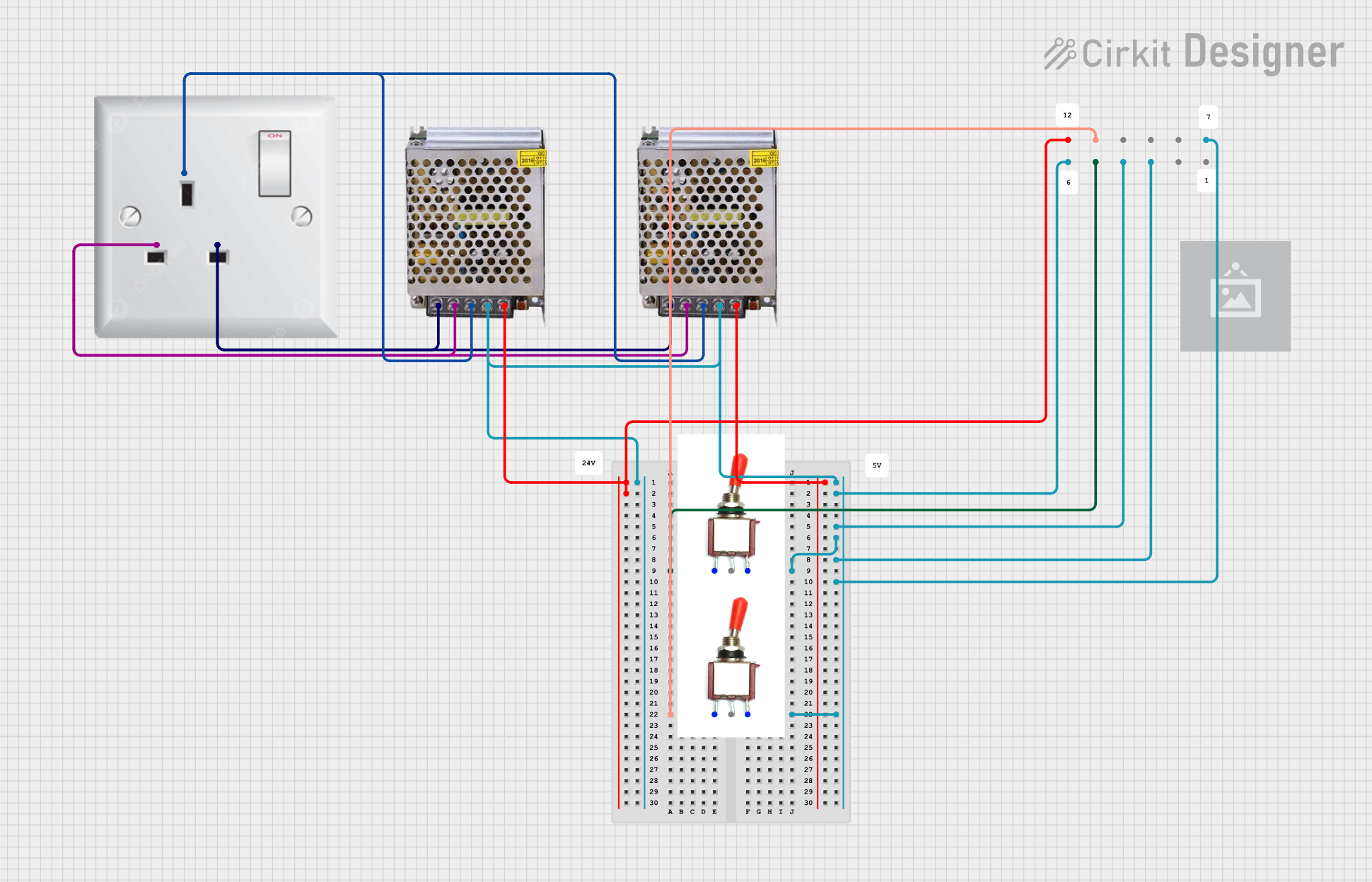
 Open Project in Cirkit Designer