
How to Use ESP32 S3 CUSTOM: Examples, Pinouts, and Specs
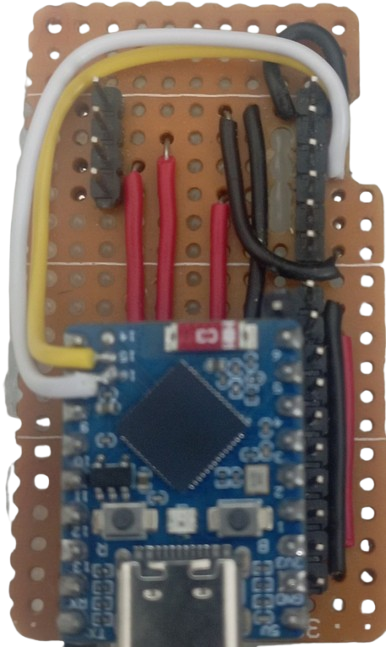
 Design with ESP32 S3 CUSTOM in Cirkit Designer
Introduction
The ESP32 S3 CUSTOM is a powerful microcontroller designed for Internet of Things (IoT) applications. It features integrated Wi-Fi and Bluetooth capabilities, dual-core processing, and a wide range of GPIO pins. This versatile microcontroller supports various peripherals, making it ideal for custom embedded projects such as smart home devices, wearable electronics, and industrial automation systems.
Explore Projects Built with ESP32 S3 CUSTOM
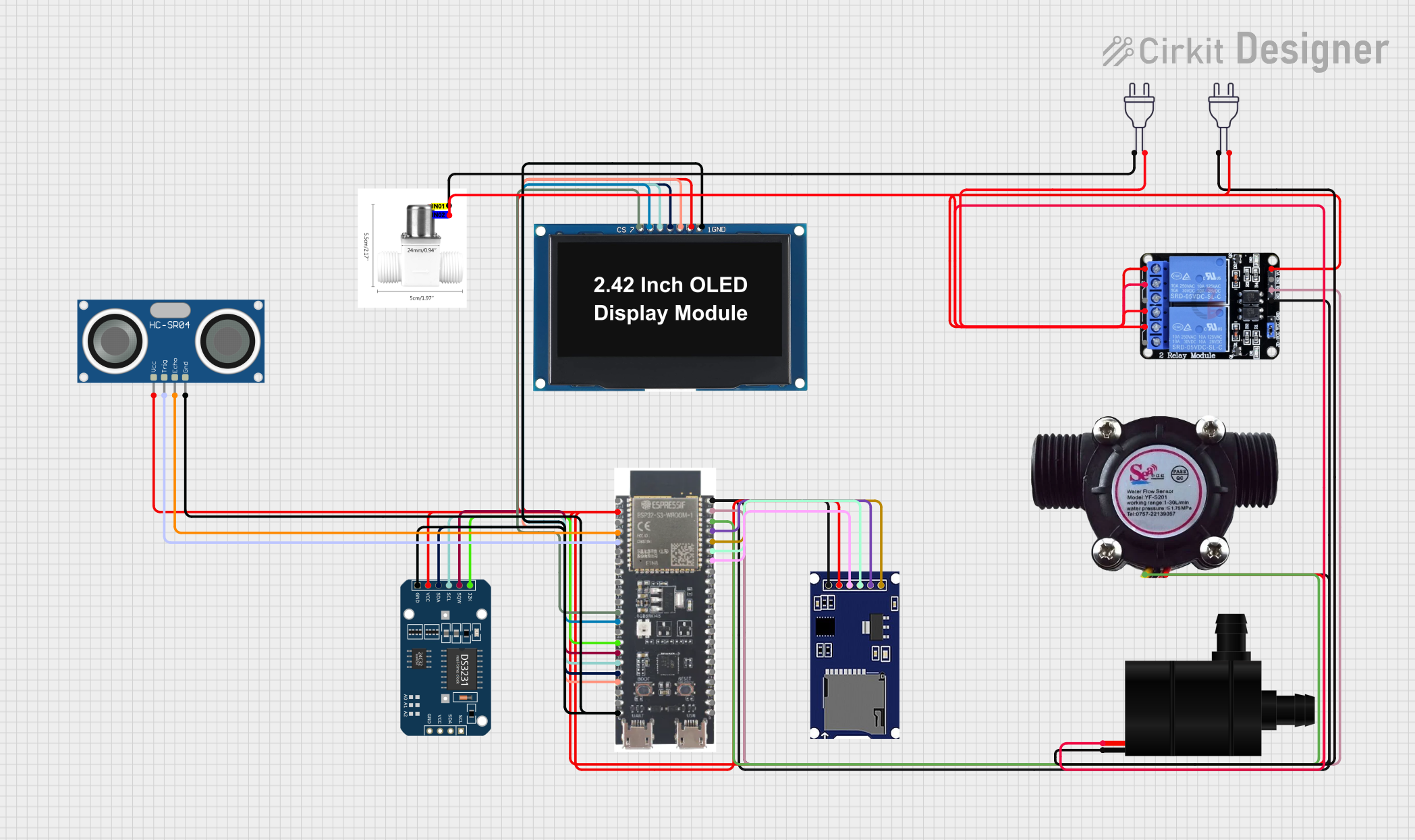 Open Project in Cirkit Designer
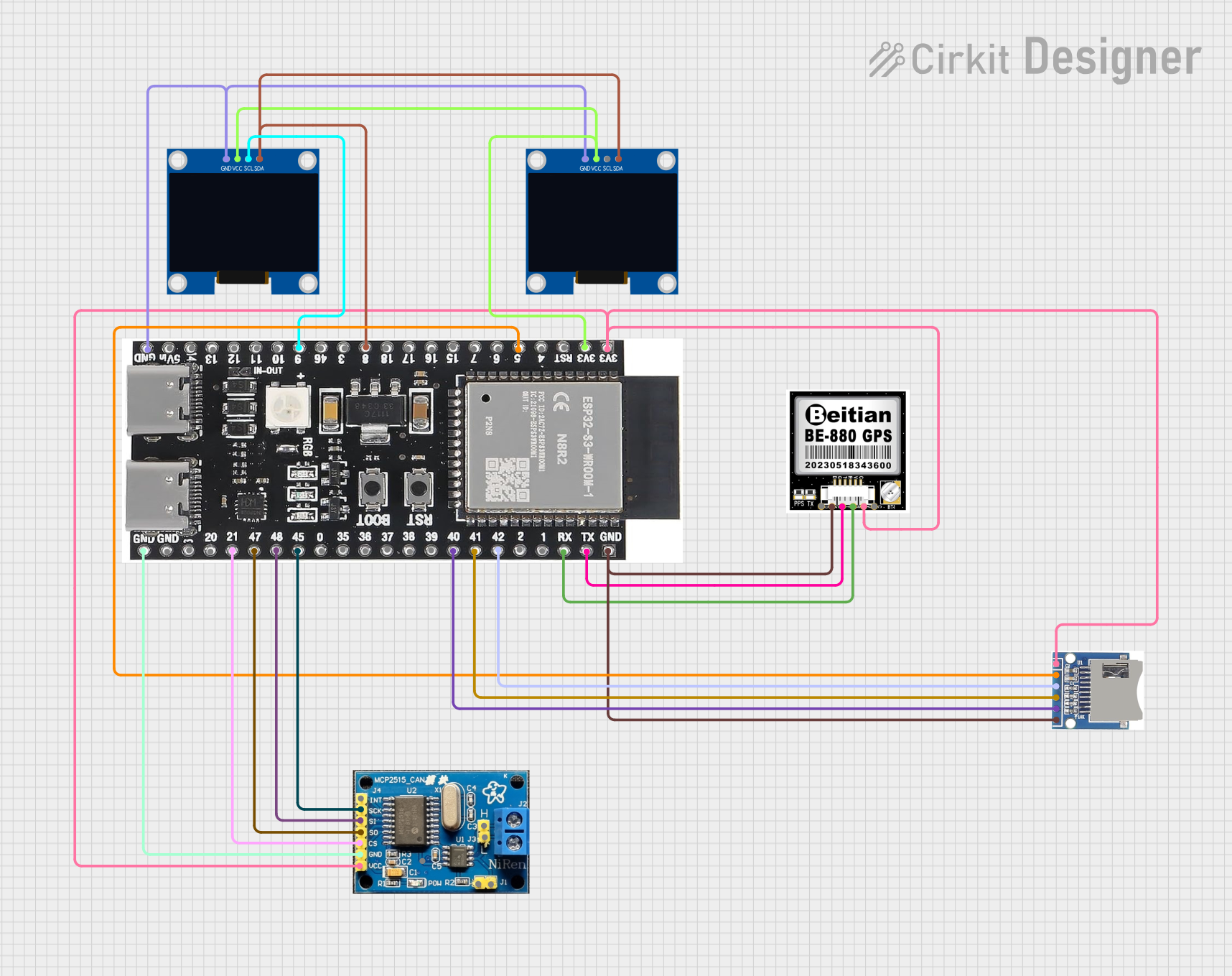 Open Project in Cirkit Designer
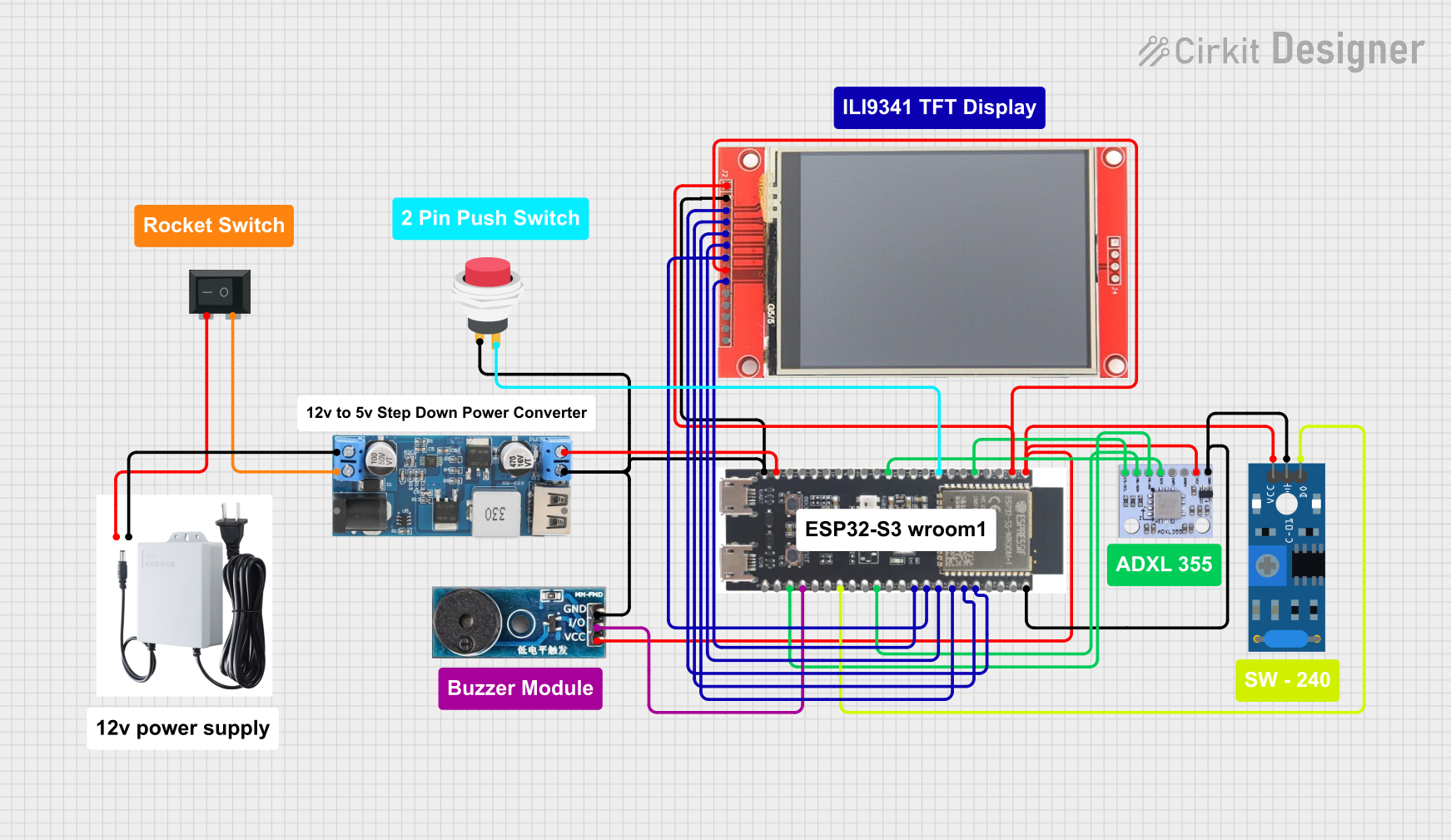 Open Project in Cirkit Designer
 Open Project in Cirkit Designer
Explore Projects Built with ESP32 S3 CUSTOM
Open Project in Cirkit DesignerOpen Project in Cirkit DesignerOpen Project in Cirkit DesignerOpen Project in Cirkit DesignerCommon Applications and Use Cases
- IoT devices and smart home automation
- Wearable technology
- Industrial control systems
- Wireless sensor networks
- Robotics and automation
- Prototyping and custom embedded systems
Technical Specifications
The ESP32 S3 CUSTOM offers robust performance and flexibility for a wide range of applications. Below are its key technical specifications:
Key Technical Details
| Specification | Value |
|---|---|
| Microcontroller Architecture | Xtensa® 32-bit LX7 dual-core CPU |
| Clock Speed | Up to 240 MHz |
| Flash Memory | Up to 16 MB |
| SRAM | 512 KB |
| Wi-Fi | 802.11 b/g/n (2.4 GHz) |
| Bluetooth | Bluetooth 5.0 (LE) |
| GPIO Pins | 45 (configurable) |
| ADC Channels | 20 |
| DAC Channels | 2 |
| Communication Interfaces | UART, SPI, I2C, I2S, CAN, PWM |
| Operating Voltage | 3.3V |
| Power Consumption | Ultra-low power modes available |
| Operating Temperature Range | -40°C to +85°C |
Pin Configuration and Descriptions
The ESP32 S3 CUSTOM has a flexible pinout that supports multiple functions. Below is a table of the most commonly used pins and their descriptions:
| Pin Number | Pin Name | Functionality |
|---|---|---|
| 1 | GND | Ground |
| 2 | 3V3 | 3.3V Power Supply |
| 3 | EN | Enable Pin (Active High) |
| 4 | GPIO0 | General Purpose I/O, Boot Mode Select |
| 5 | GPIO1 | UART TX, General Purpose I/O |
| 6 | GPIO2 | UART RX, General Purpose I/O |
| 7 | GPIO12 | ADC, General Purpose I/O |
| 8 | GPIO13 | ADC, General Purpose I/O |
| 9 | GPIO25 | DAC, General Purpose I/O |
| 10 | GPIO26 | DAC, General Purpose I/O |
| 11 | GPIO33 | PWM, General Purpose I/O |
| 12 | GPIO34 | ADC, General Purpose I/O |
Note: Many GPIO pins are multiplexed and can serve multiple functions. Refer to the ESP32 S3 CUSTOM datasheet for a complete pinout and configuration details.
Usage Instructions
The ESP32 S3 CUSTOM is easy to integrate into custom circuits and projects. Below are the steps and best practices for using this microcontroller.
How to Use the ESP32 S3 CUSTOM in a Circuit
Power Supply:
- Provide a stable 3.3V power supply to the
3V3pin. - Connect the
GNDpin to the ground of your circuit.
- Provide a stable 3.3V power supply to the
Boot Mode:
- To upload code, connect
GPIO0to GND during reset to enter bootloader mode. - After uploading, disconnect
GPIO0from GND and reset the board.
- To upload code, connect
Programming:
- Use the Arduino IDE or ESP-IDF (Espressif IoT Development Framework) for programming.
- Connect the ESP32 S3 CUSTOM to your computer via a USB-to-Serial adapter.
Peripherals:
- Use the GPIO pins to connect sensors, actuators, and other peripherals.
- Configure the pins in your code according to the required functionality (e.g., ADC, PWM, UART).
Important Considerations and Best Practices
- Voltage Levels: Ensure all connected peripherals operate at 3.3V logic levels to avoid damaging the microcontroller.
- Decoupling Capacitors: Place decoupling capacitors (e.g., 0.1 µF) near the power pins to reduce noise.
- Wi-Fi Antenna Placement: For optimal Wi-Fi performance, ensure the onboard antenna is not obstructed by metal or other conductive materials.
- Heat Management: If running at high clock speeds or under heavy loads, consider adding a heatsink or ensuring proper ventilation.
Example Code for Arduino UNO Integration
Below is an example of how to use the ESP32 S3 CUSTOM with the Arduino IDE to blink an LED connected to GPIO2:
// Example: Blink an LED connected to GPIO2 on the ESP32 S3 CUSTOM

// Define the GPIO pin for the LED
#define LED_PIN 2

void setup() {
  // Initialize the LED pin as an output
  pinMode(LED_PIN, OUTPUT);
}

void loop() {
  // Turn the LED on
  digitalWrite(LED_PIN, HIGH);
  delay(1000); // Wait for 1 second

  // Turn the LED off
  digitalWrite(LED_PIN, LOW);
  delay(1000); // Wait for 1 second
}
Tip: Install the ESP32 board package in the Arduino IDE before uploading code. Go to
File > Preferences, add the ESP32 board URL, and install the package via the Board Manager.
Troubleshooting and FAQs
Common Issues and Solutions
Problem: The ESP32 S3 CUSTOM does not power on.
- Solution: Verify the power supply is providing a stable 3.3V. Check all connections.
Problem: Unable to upload code to the microcontroller.
- Solution: Ensure
GPIO0is connected to GND during reset to enter bootloader mode. Check the USB-to-Serial adapter connection.
- Solution: Ensure
Problem: Wi-Fi signal is weak or unstable.
- Solution: Ensure the onboard antenna is not obstructed. Avoid placing the ESP32 S3 CUSTOM near metal objects.
Problem: Peripherals are not responding.
- Solution: Double-check the GPIO pin configuration in your code. Ensure the peripherals are compatible with 3.3V logic levels.
FAQs
Q: Can the ESP32 S3 CUSTOM operate on 5V?
A: No, the ESP32 S3 CUSTOM operates at 3.3V. Use a voltage regulator if your power source is 5V.Q: How do I reset the ESP32 S3 CUSTOM?
A: Press the onboard reset button or momentarily connect theENpin to GND.Q: Can I use the ESP32 S3 CUSTOM for battery-powered projects?
A: Yes, the ESP32 S3 CUSTOM supports ultra-low power modes, making it suitable for battery-powered applications.Q: What development tools are recommended?
A: The Arduino IDE and ESP-IDF are the most commonly used tools for programming the ESP32 S3 CUSTOM.
By following this documentation, you can effectively integrate the ESP32 S3 CUSTOM into your projects and troubleshoot common issues.