
How to Use HLK-LD2402: Examples, Pinouts, and Specs
 Design with HLK-LD2402 in Cirkit Designer
Introduction
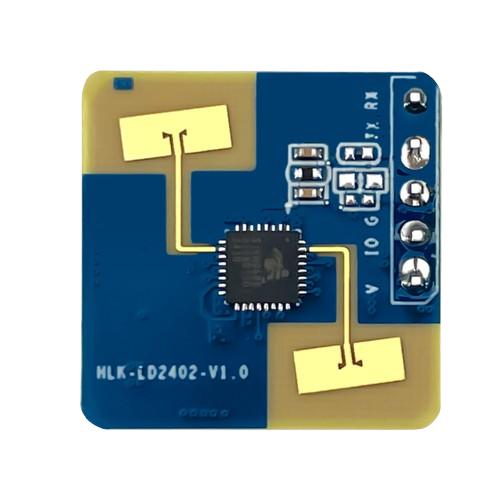
The HLK-LD2402-24G is a compact and efficient AC-DC power supply module manufactured by Hi-Link. It is designed to convert a wide range of AC input voltages (85-265V AC) into a stable 5V DC output, making it ideal for powering low-power electronic devices. Its small size and high efficiency make it a popular choice for embedded systems, IoT devices, and other applications requiring reliable DC power.
Explore Projects Built with HLK-LD2402
 Open Project in Cirkit Designer
 Open Project in Cirkit Designer
 Open Project in Cirkit Designer
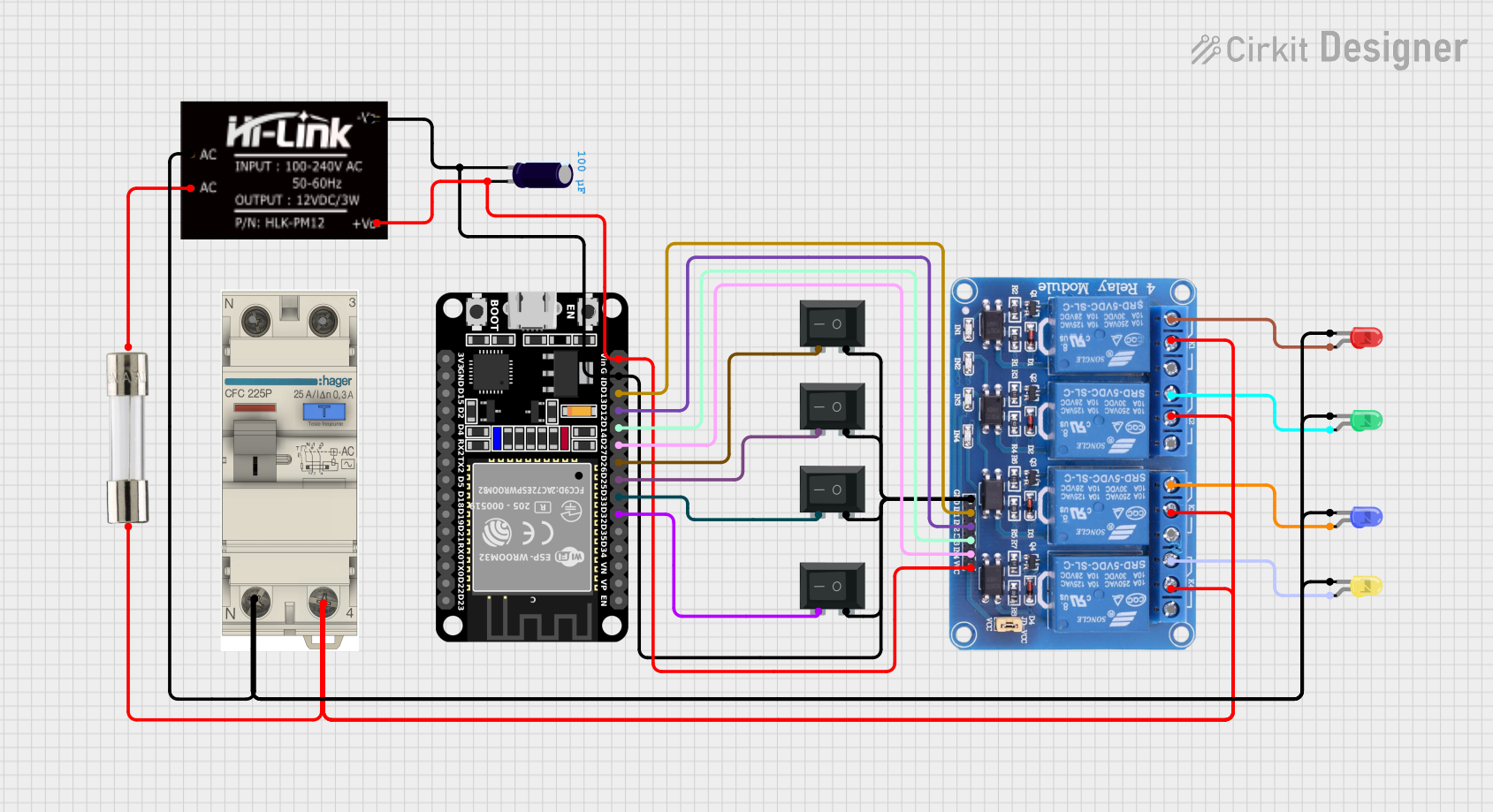 Open Project in Cirkit Designer
Explore Projects Built with HLK-LD2402
Open Project in Cirkit DesignerOpen Project in Cirkit DesignerOpen Project in Cirkit DesignerOpen Project in Cirkit DesignerCommon Applications and Use Cases
- Powering microcontrollers (e.g., Arduino, ESP32, Raspberry Pi Pico)
- IoT devices and smart home systems
- Industrial control systems
- Low-power sensors and actuators
- Consumer electronics
Technical Specifications
The following table outlines the key technical specifications of the HLK-LD2402-24G:
| Parameter | Value |
|---|---|
| Input Voltage Range | 85-265V AC |
| Output Voltage | 5V DC |
| Output Current | 400mA |
| Output Power | 2W |
| Efficiency | ≥ 70% |
| Operating Temperature | -25°C to +70°C |
| Storage Temperature | -40°C to +85°C |
| Dimensions | 35mm x 18mm x 15mm |
| Isolation Voltage | 3000V AC |
| Safety Standards | CE, RoHS compliant |
Pin Configuration and Descriptions
The HLK-LD2402-24G module has six pins, as described in the table below:
| Pin Number | Pin Name | Description |
|---|---|---|
| 1 | AC-L | Live input for AC voltage (85-265V AC) |
| 2 | AC-N | Neutral input for AC voltage |
| 3 | NC | No connection (leave unconnected) |
| 4 | GND | Ground for DC output |
| 5 | +5V | 5V DC output |
| 6 | NC | No connection (leave unconnected) |
Usage Instructions
How to Use the HLK-LD2402 in a Circuit
Connect the AC Input:
- Connect the AC-L pin to the live wire of the AC power source.
- Connect the AC-N pin to the neutral wire of the AC power source.
- Ensure proper insulation and safety precautions when working with high-voltage AC.
Connect the DC Output:
- Use the +5V pin to power your device or circuit.
- Connect the GND pin to the ground of your circuit.
Mounting and Placement:
- Place the module on a PCB or securely mount it in your project enclosure.
- Ensure adequate ventilation to prevent overheating.
Safety Considerations:
- Avoid touching the module while it is powered, as it handles high-voltage AC.
- Use proper fuses and surge protection to safeguard the module and connected devices.
Example: Using HLK-LD2402 with an Arduino UNO
The HLK-LD2402 can be used to power an Arduino UNO by providing a stable 5V DC supply. Below is an example circuit and code to blink an LED using the Arduino UNO powered by the HLK-LD2402.
Circuit Connections
- Connect the +5V pin of the HLK-LD2402 to the 5V pin of the Arduino UNO.
- Connect the GND pin of the HLK-LD2402 to the GND pin of the Arduino UNO.
- Connect an LED to pin 13 of the Arduino UNO with a 220-ohm resistor in series.
Arduino Code
// This code blinks an LED connected to pin 13 of the Arduino UNO.
// Ensure the HLK-LD2402 is properly connected to power the Arduino.

void setup() {
  pinMode(13, OUTPUT); // Set pin 13 as an output pin
}

void loop() {
  digitalWrite(13, HIGH); // Turn the LED on
  delay(1000);            // Wait for 1 second
  digitalWrite(13, LOW);  // Turn the LED off
  delay(1000);            // Wait for 1 second
}
Best Practices
- Use a heat sink or ensure proper ventilation if the module operates near its maximum load.
- Avoid exceeding the rated output current (400mA) to prevent damage.
- Use a multimeter to verify the output voltage before connecting sensitive devices.
Troubleshooting and FAQs
Common Issues and Solutions
No Output Voltage:
- Check the AC input connections (AC-L and AC-N) for proper wiring.
- Verify that the AC input voltage is within the specified range (85-265V AC).
- Ensure the module is not damaged or overloaded.
Output Voltage is Unstable:
- Check for loose connections on the output pins.
- Ensure the load connected to the module does not exceed 400mA.
- Add a capacitor (e.g., 100µF) across the output pins to stabilize the voltage.
Module Overheating:
- Reduce the load to stay within the rated output power (2W).
- Improve ventilation or add a heat sink to dissipate heat.
Arduino Not Powering On:
- Verify the connections between the HLK-LD2402 and the Arduino.
- Check the output voltage of the module using a multimeter.
FAQs
Q: Can the HLK-LD2402 power a Raspberry Pi?
A: No, the HLK-LD2402 provides a maximum current of 400mA, which is insufficient for most Raspberry Pi models. Consider using a higher-capacity power supply for Raspberry Pi devices.
Q: Is the HLK-LD2402 safe to use in consumer electronics?
A: Yes, the module is CE and RoHS compliant, ensuring safety and environmental standards. However, proper insulation and safety precautions must be followed during installation.
Q: Can I use the HLK-LD2402 with a 12V DC input?
A: No, the HLK-LD2402 is designed to work with an AC input voltage range of 85-265V. It cannot operate with a DC input.
Q: What happens if I exceed the output current limit?
A: Exceeding the 400mA limit may cause the module to overheat, shut down, or become permanently damaged. Always ensure the connected load is within the rated capacity.
By following this documentation, you can safely and effectively use the HLK-LD2402-24G in your projects.